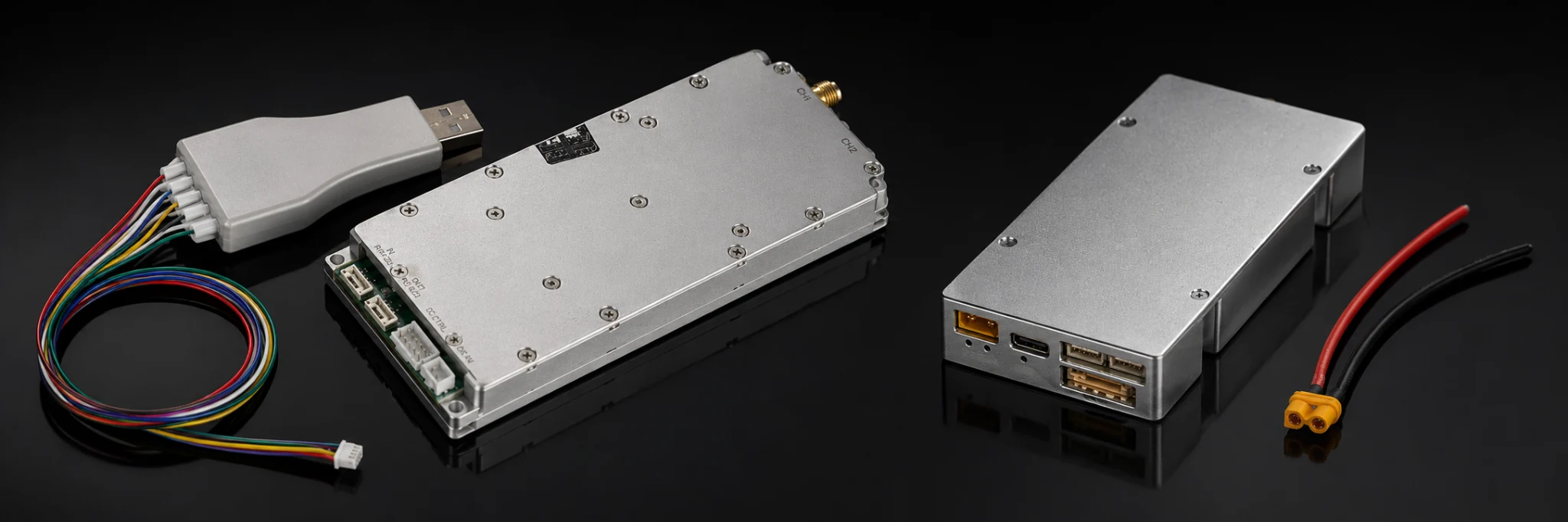
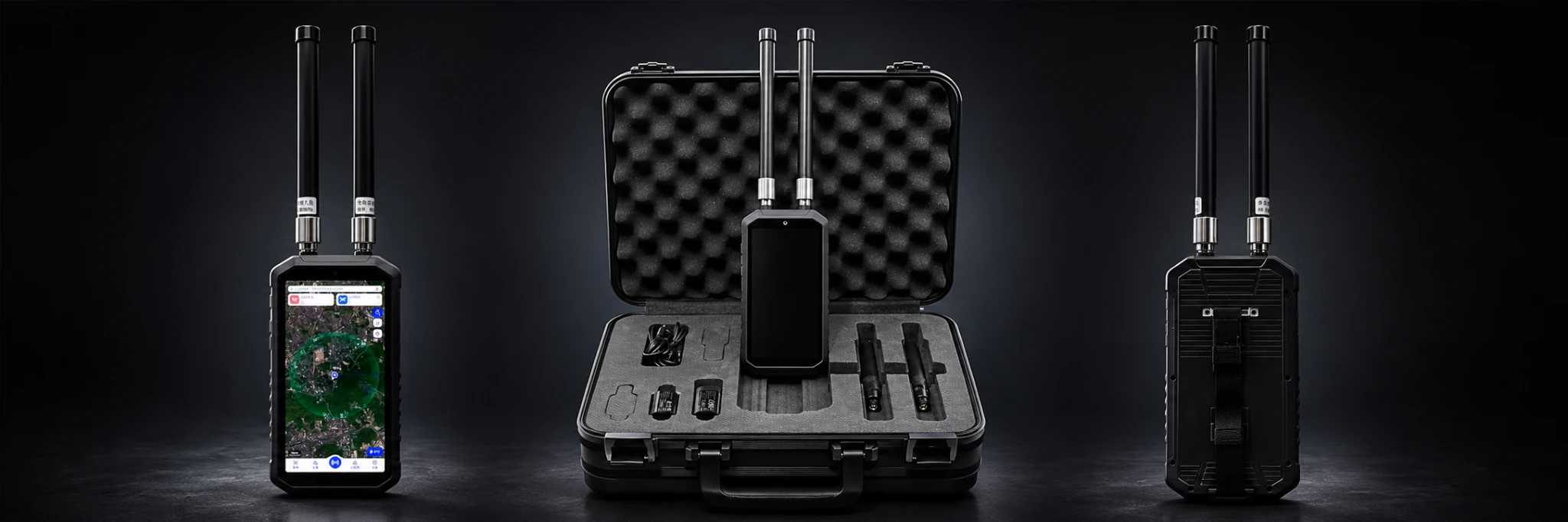

SDR Signal Source
Can a Drone Jammer Module Claim Protocol Coverage From Frequency Range Alone?
A frequency range in a drone jammer module quote describes a hardware boundary, not verified on-air protocol support. This article distinguishes PA specifications, SDR source functions, and authorized protocol-level evidence, then shows how to compare supplier claims and record outstanding proof in an RFQ….
RF Signal Source Control Interfaces: What an Integrator Must Define Before Release
A valid RS422 reply can arrive before an SDR source reaches its required RF state. This article shows how to define commands, addresses, feedback, startup behavior, firmware revisions, and recovery tests for the HZS1006000-F1 and HZSDR1006000-A01 before approving a host interface….
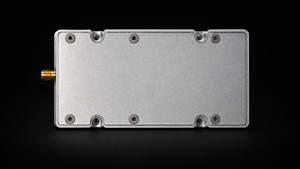
Dual-Output SDR Signal Source: Bandwidth, Isolation, and Acceptance
A 200 MHz specification may describe one wider RF path or two separate 100 MHz channels. This article shows how to check a dual-output SDR at its SMA connectors, including bandwidth allocation, channel leakage, both-active spectral quality, independent control, and documented acceptance results….
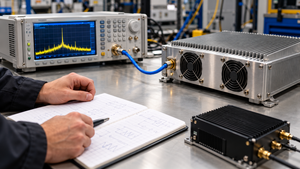
RF Signal Generator for PA Drive: Analog, VSG, or SDR?
The right PA drive source depends on more than RF frequency and a front-panel output setting. This article compares analog RF generators, VSGs, and transmitting SDRs for CW, modulation, custom I/Q, and embedded tasks—and identifies the evidence needed before models can be compared fairly….
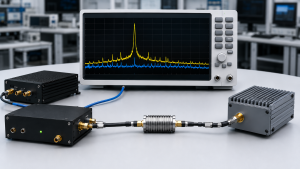
Drone Jammer Testing Before PA Integration
Drone jammer testing should verify actual SDR output before PA integration, including occupied bandwidth, Actual Pin, spectral quality, and repeatability….
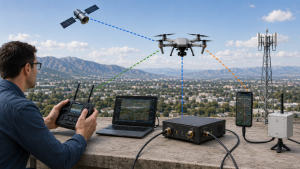
What Frequency Do Drones Use? Control, Video, GNSS and Frequency-Hopping Links
Drones do not use one universal frequency. Learn how control, telemetry, video, GNSS, Remote ID and frequency hopping shape real SDR requirements….