
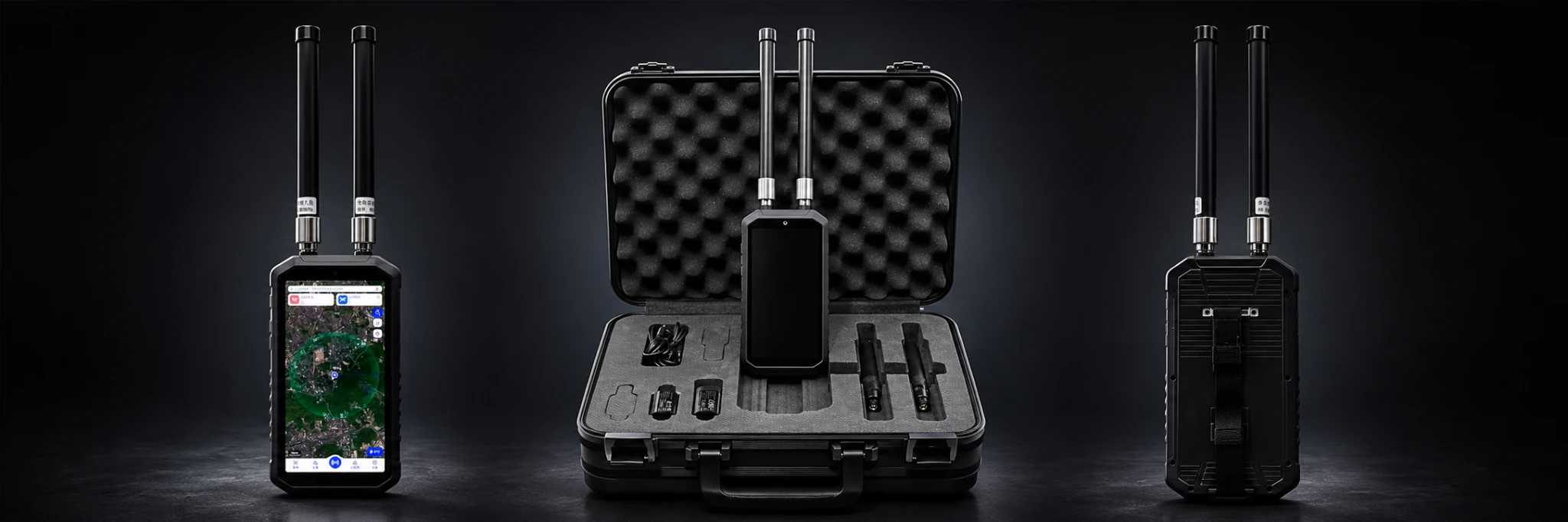


300–1700 MHz
RF Power Amplifier Modules
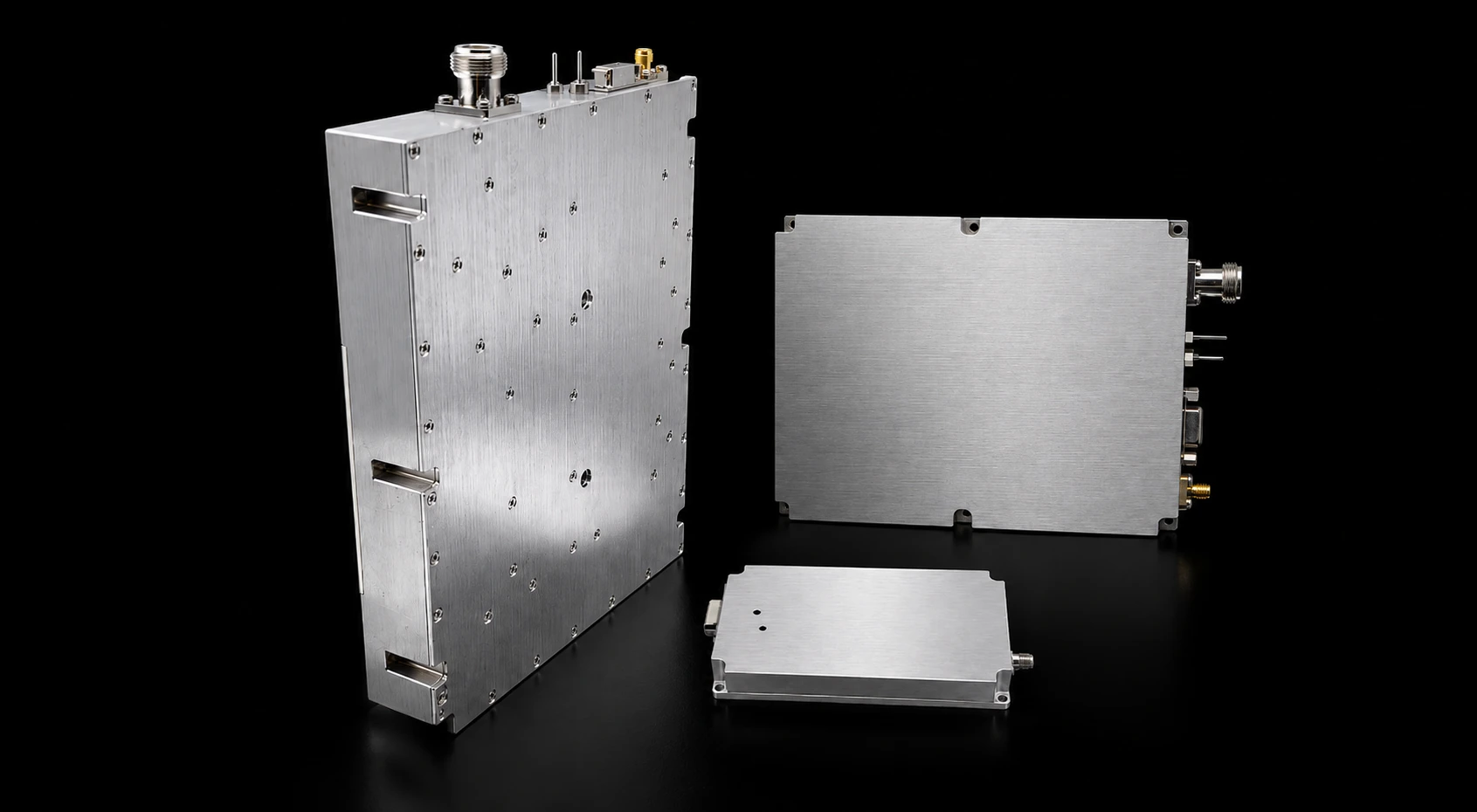
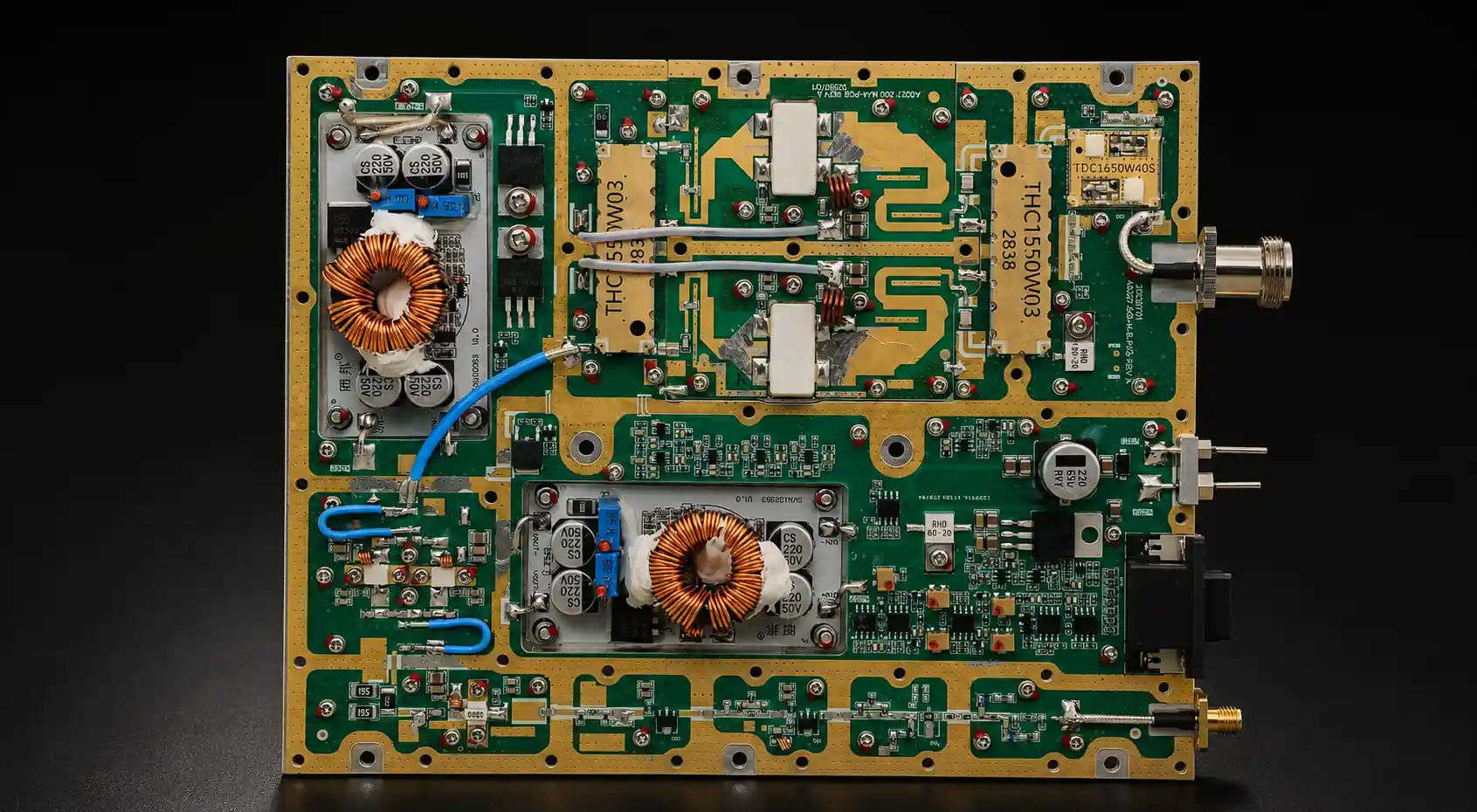
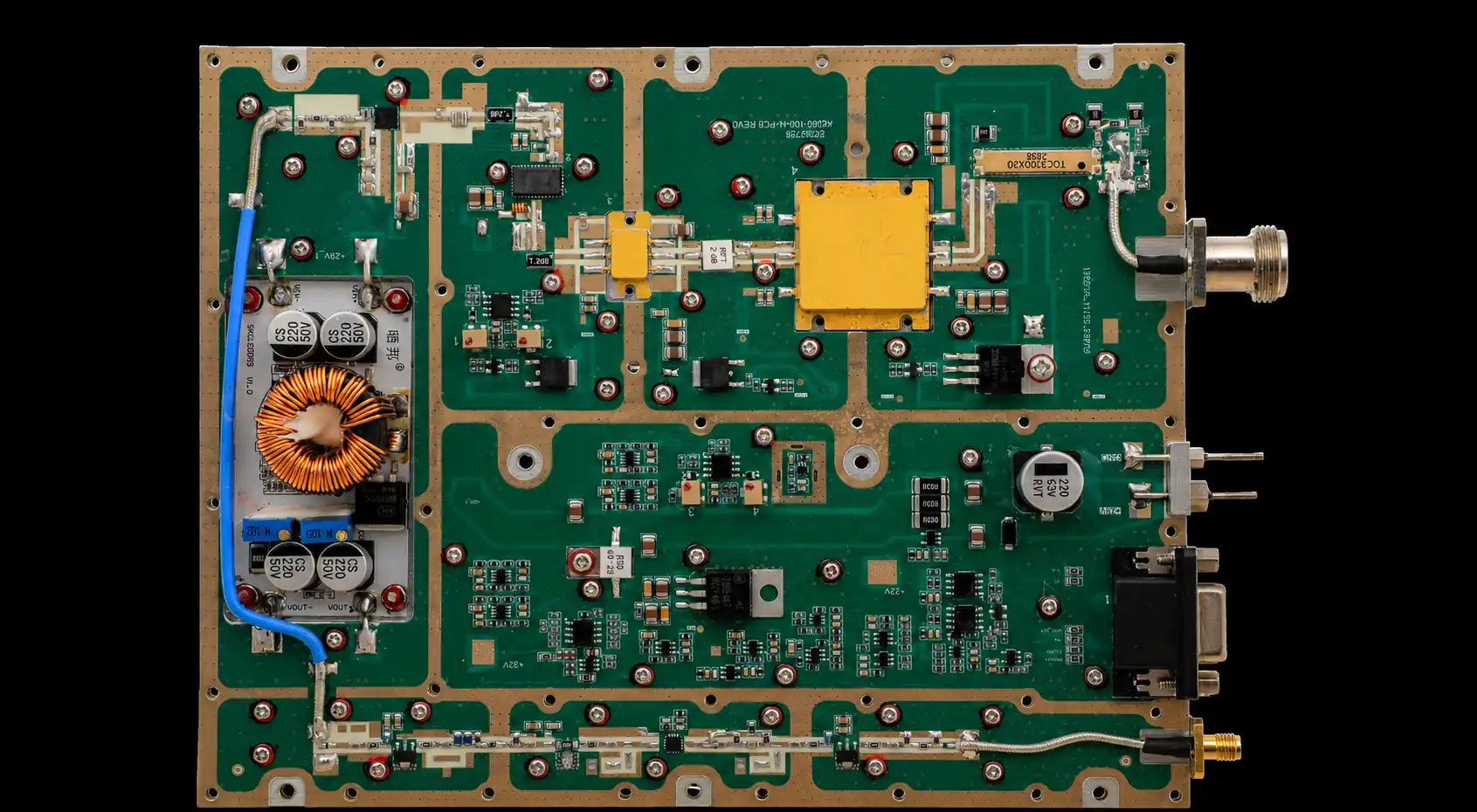
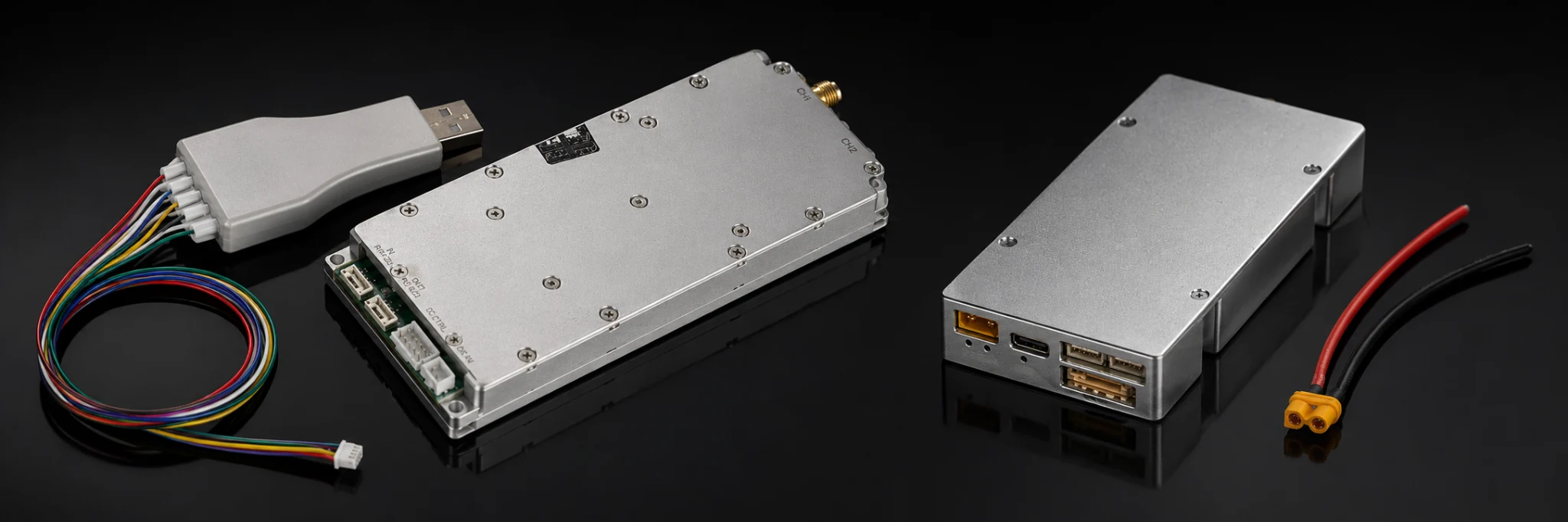
Compare the 300–1700 MHz RF power amplifier modules by model and the listed 30 W, 50 W, 100 W, 150 W and 200 W output classes. Confirm the selected configuration and datasheet before ordering.
300–1700 MHz RF Power Amplifier Models and Power Options
Select the exact output level your integration project requires. From compact portable systems to high-power vehicle-mounted and fixed-site C-UAS platforms, every module is engineered for wideband suppression, stable thermal behavior, and direct system integration.

HZ3001700-30
30 WattsCompact 300–1700MHz module for portable and manpack C-UAS systems where size, weight, and power efficiency are critical.

HZ3001700-50
50 WattsBalanced power and footprint for portable stations, compact vehicle platforms, and small-area perimeter defense systems.

HZ3001700-100
100 WattsDesigned for standard vehicle-mounted C-UAS systems requiring stable mid-low band suppression and reliable long-duration field operation.

HZ3001700-150
150 WattsHigh-duty-cycle configuration for fixed-site systems, multi-antenna arrays, and wide-area security deployments requiring stronger continuous output.

HZ3001700-200
200 WattsHigh-power wideband module for critical infrastructure, border security, airport perimeter protection, and long-range C-UAS suppression systems.
Need a non-standard frequency split or customized power output?
Calculate Thermal & Size FitThe Advantage of Buying from the Source
As the source manufacturer, we connect your project directly with RF engineers, customize the module around your system architecture, and control the full delivery process from prototype confirmation to batch shipment.

Direct RF Engineer Communication
Your system architects communicate directly with our RF engineers to confirm gain, input/output power, antenna matching, connector selection, protection logic, control interface, and thermal layout before production starts.

In-House Diagnostic Workflow
Our RF lab can verify failure points through VNA testing, load simulation, thermal checks, full-band sweep validation, and protection-logic review. Instead of guessing or replacing samples blindly, we identify the root cause and close the issue through a controlled engineering feedback loop.

Controlled Prototype-to-Batch Rhythm
We manage prototype build, BOM locking, production scheduling, in-process control, and final QC under one factory-controlled workflow, helping your project stay aligned with acceptance deadlines.
Ready to secure a reliable, factory-direct supply chain?
Partner With the Source FactoryFrom Concept to Deployment: 4-Week Sprint
Our streamlined development process delivered field-ready modules in record time without compromising quality or performance.

Requirements Lock
- Client technical review sessions
- Frequency allocation mapping
- Interface specification freeze
- Thermal envelope analysis

Rapid Prototyping
- Schematic design completion
- PCB layout optimization
- Component procurement (parallel)
- Simulation validation

Build & Validate
- Prototype assembly
- RF performance verification
- Environmental stress screening
- Client witness testing

Batch & Ship
- Production run (50 units)
- 100% RF burn-in testing
- Documentation package
- Secure logistics delivery
Urgent deployment timeline? We specialize in accelerated development cycles.
Run Thermal & Dimension SimulationFull-Band Tested
Not Single-Point Claimed
We don't just verify a single frequency point. Our stringent testing protocols ensure stable output, thermal endurance, and consistent wideband suppression across the entire operational spectrum.

Full-Band Power Sweep
Output power is checked across key points within the 300–1700MHz range to verify real wideband suppression capability.

Gain Flatness Verification
Gain flatness is tested across the full operating band to ensure stable output performance and avoid frequency-to-frequency power imbalance.

Thermal Cycling Test
Modules are subjected to high and low temperature cycles to verify stable electronic performance across extreme temperatures.

Continuous Burn-In Test
Long-duration full-load operation tracks power drift, current change, temperature rise, and protection behavior.
Building a mission-critical C-UAS system? Review our testing criteria.
Request Testing ReportsInside Our Factory Workflow
See the facility behind the specs. We invite you to witness our production standards, ensuring every module you integrate comes from a highly controlled manufacturing environment.
Aging & Vibration Test
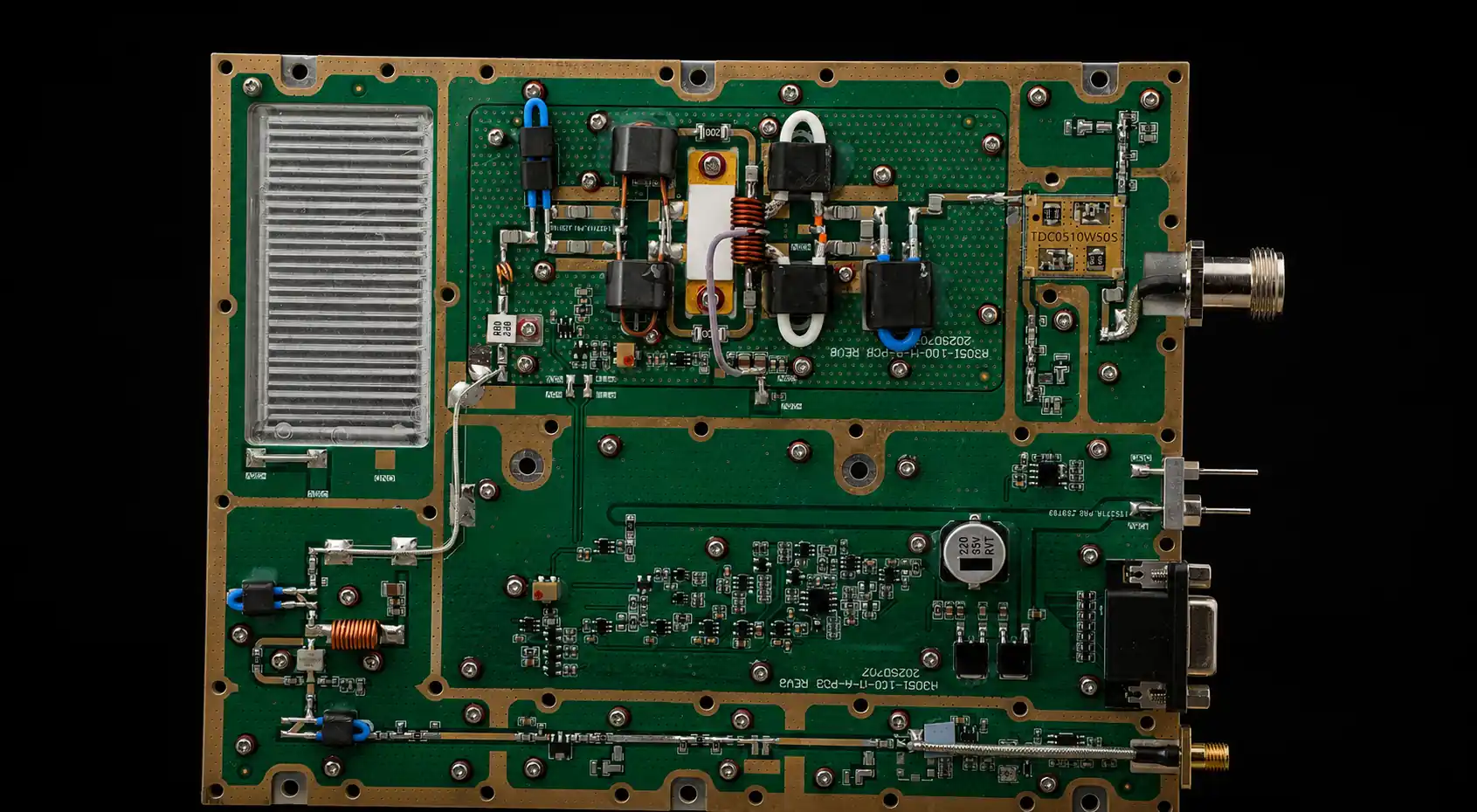
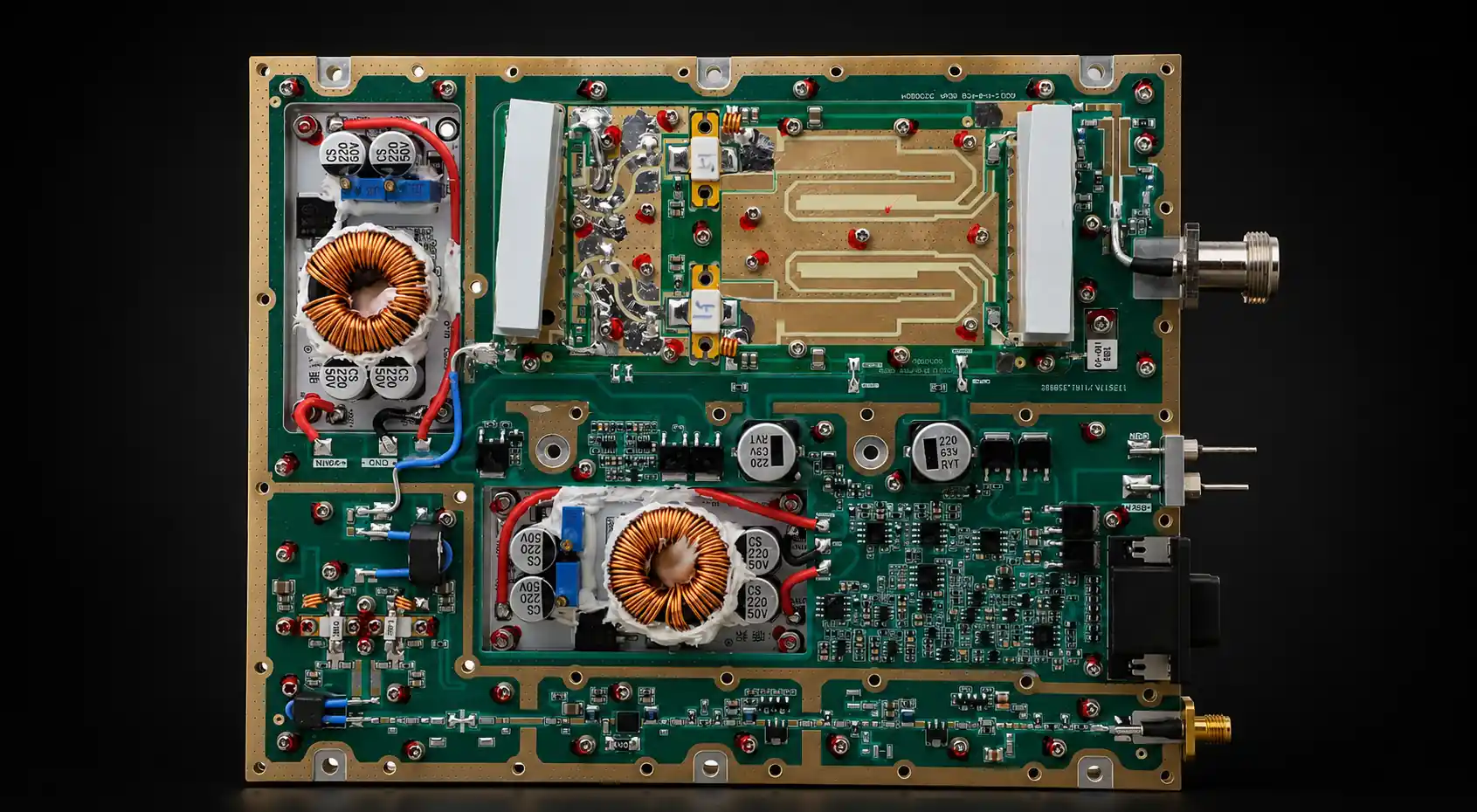
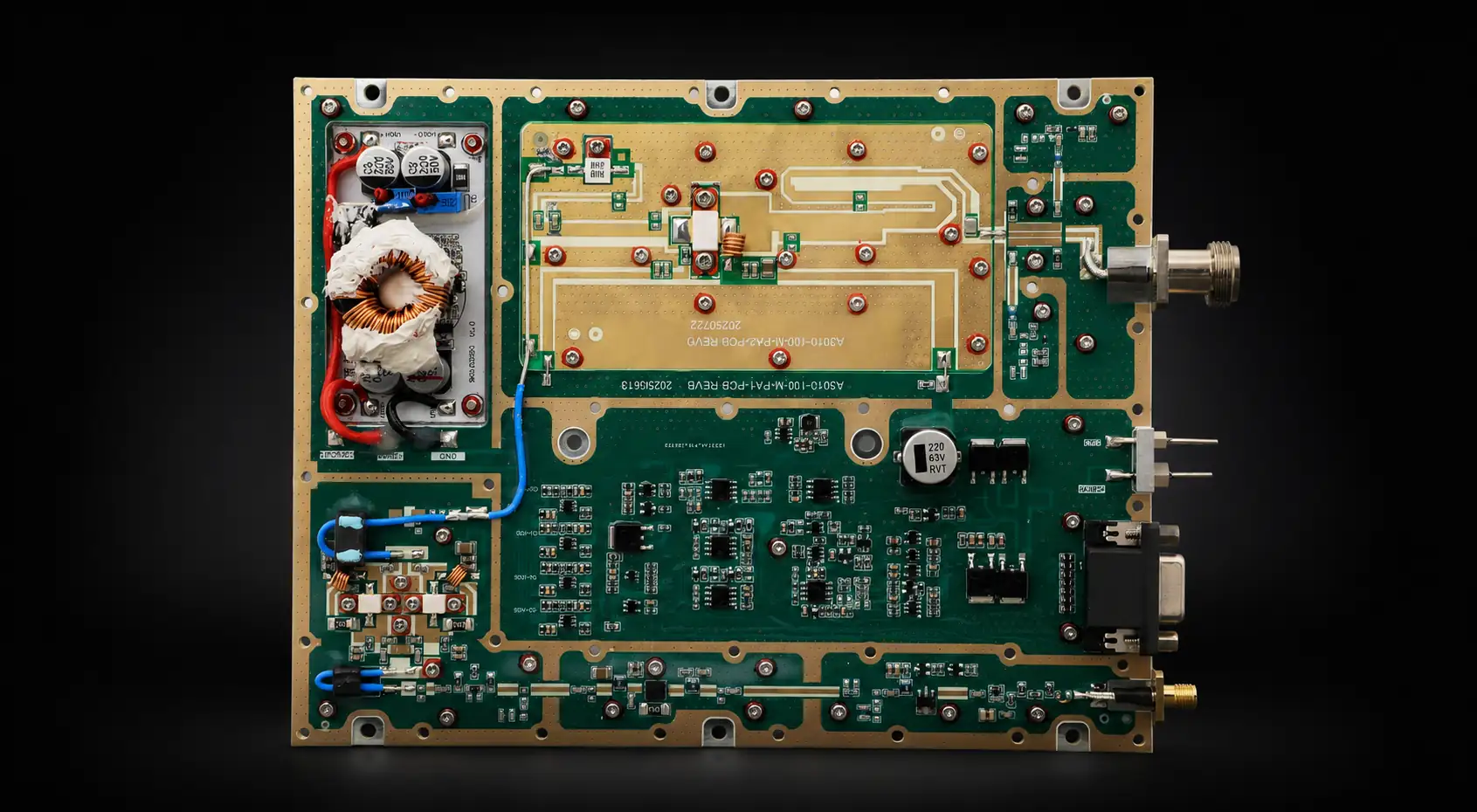
RF modules undergo continuous burn-in, thermal cycling, and vibration testing to ensure long-duration stability, structural reliability, and consistent performance in vehicle-mounted, mobile, and fixed-site deployments.
In-House CNC Machining
Our in-house CNC machining ensures precision production of heat sinks, housings, and structural components, providing tighter process control, faster customization, and reliable integration into your systems..
Planning a factory audit? We welcome remote and on-site visits.
Schedule a Virtual TourExtended Mid-High Band Mastery
Engineered for the 300–1700 MHz spectrum, our modules neutralize low-, mid-, and high-frequency drones, providing comprehensive multi-protocol suppression for critical defense and infrastructure environments.

FPV & Racing Drone Defense
Rogue FPV and racing drones use low- and mid-frequency FHSS/ELRS links. Our 200–300 MHz instantaneous bandwidth and 10 μs ultra-fast switching instantly lock and suppress these agile drones before they breach protected perimeters.

Tactical Multi-Rotor Neutralization
Vehicle-mounted patrol systems face multi-rotor reconnaissance drones. Our modules cut command and telemetry links in real time, preventing tactical evasions across all supported mid-bands.

Commercial & High-Speed Drones
High-speed industrial and delivery drones rely on telemetry, video feeds, and FPV links. Wideband 300–1700 MHz suppression ensures continuous coverage across the full operational spectrum, protecting critical infrastructure from evasive commercial UAVs.

Airports & Restricted Zones
Provides robust multi-band coverage for airports, prisons, and government facilities. Eliminates blind spots and neutralizes drones regardless of protocol or hopping pattern.
Not sure which power level fits your scenario?
Consult an RF ArchitectBuilt-In Protection for Field Use
We protect not only the hardware from field damage, but also your project from supply chain inconsistencies.

VSWR and Reflected Power Protection
High-speed hardware protection logic helps prevent amplifier damage instantaneously when antenna mismatch or cable failure causes abnormal reflected power bursts.
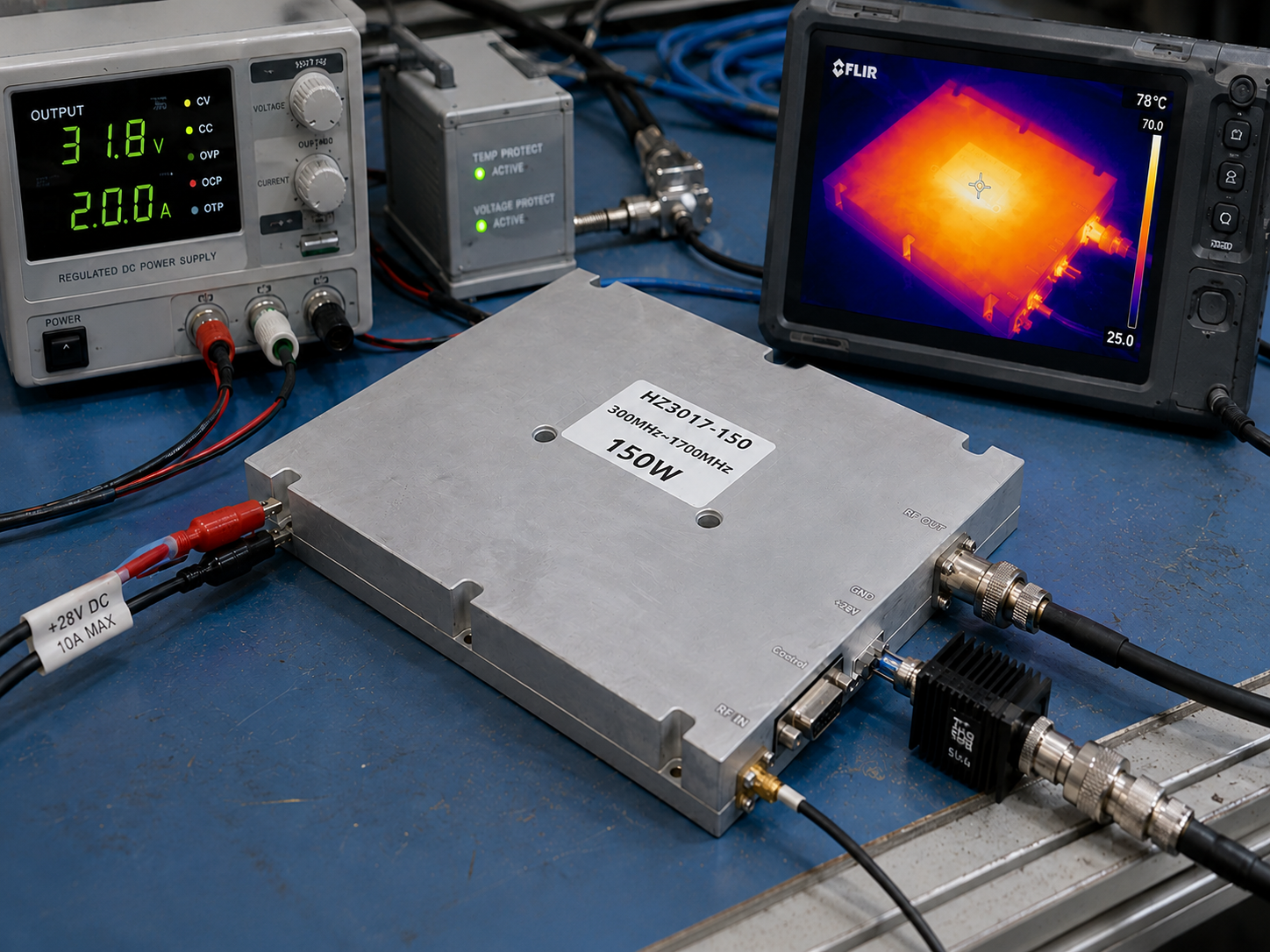
Thermal and Voltage Protection
Intelligent over-temperature and over-voltage protection algorithms drastically reduce the risk of failure during long-duty operation and unstable generator power conditions in the field.

Locked BOM and Golden Sample Mirroring
After your engineering team's approval, every production batch strictly follows the same RF component matrix, connector selection, mechanical structure, and test criteria.
Need specific safety protocols for military or civil aviation integration?
Review Protocol SpecsMore Than a Module Supplier
We don't just sell modules; we act as the RF extension of your integration team, offering deep technical capabilities to ensure your project's success.

In-House RF R&D Team
Your requirements are reviewed directly by RF engineers who deeply understand circuit behavior, thermal design, connector matching, and control integration.

Controlled Production Workflow
From initial assembly to testing and final QC, key production stages are heavily controlled inside our factory to drastically reduce delivery and batch consistency risks.
Integration-Oriented Custom Support
We provide comprehensive, system-level customization support for vehicle-mounted, fixed-site, portable, and special-platform C-UAS projects.
Looking for a long-term RF manufacturing partner?
Learn More About Us
Proven in Security Projects
We don't just test in the lab. Our 300–1700MHz modules are actively securing real-world airspaces, supporting integrators across varied and demanding environments.
Why Integrators Stay With Us
Hear directly from the engineering leads and project managers across the globe who rely on our wideband suppression cores in the field.
Direct engineering communication saved us weeks of guesswork. Their RF team helped us confirm connector layout and thermal structure before final assembly.
The production batch matched the approved sample perfectly. It reduced our acceptance risk to zero and made our final vehicle-mounted system testing much smoother.
Wideband suppression covers all our required FPV frequencies. The modules operate seamlessly in harsh winter environments.
Stable thermal performance even in our desert deployments. The heat-sink design effectively handles continuous high-load operations.
The built-in VSWR protection literally saved our amplifiers during a severe cable fault last month. Outstanding hardware reliability.
Their custom D-Sub control interfaces mapped perfectly to our proprietary chassis, significantly reducing our internal engineering overhead.
The locked BOM policy gives us extreme confidence for our multi-year procurement and integration contracts.
Unmatched diagnostic support. When we faced antenna mismatch issues, their lab provided immediate VNA data to help us trace the root cause.
The 50W modules provided the exact balance of power and footprint we needed for our new lightweight patrol vehicles.
Zero performance drift across a batch of 100 units. The factory testing and QC standards are absolutely top-tier.
They delivered our custom-tuned 400-500MHz modules ahead of schedule without sacrificing any validation processes.
Their SDR platforms are highly versatile. We successfully integrated them into our airport defense grid seamlessly.
The pinpoint accuracy and sensitivity in their detection systems form the reliable core of our airspace monitoring setup.
Immediate remote support resolved our integration questions in minutes during our critical deployment phase.
A genuine factory partner with massive production scale. The on-site visit proved their commitment to R&D and strict testing standards.
Test Reports & Certificates


Common Technical Questions
Resolve your technical uncertainties before sending an RFQ. Here are the most common questions integrators ask regarding our 300–1700MHz modules.
Can the 300–1700MHz range be split or customized?
Can output power be customized beyond standard models?
Can RF connectors be changed to fit our chassis?
Do you support RS485 or D-Sub control interfaces?
Can you help with antenna matching?
Does the module include VSWR protection?
How do you ensure prototype-to-batch consistency?
What information should I provide before quotation?

Submit Your RF Requirements
Send your 300–1700 MHz RF amplifier requirements for engineering review: RF input drive level, required output and its reference plane, signal type, interface configuration and order quantity. State whether the output requirement is at the module connector or after downstream cable and antenna losses.
Strict NDA Protection
Your intellectual property and technical designs are fully secured.
Direct R&D Access
Talk directly with our RF system architects, not just sales representatives.
2-Week Prototyping
Rapid iterative design and sample delivery for urgent project timelines.