

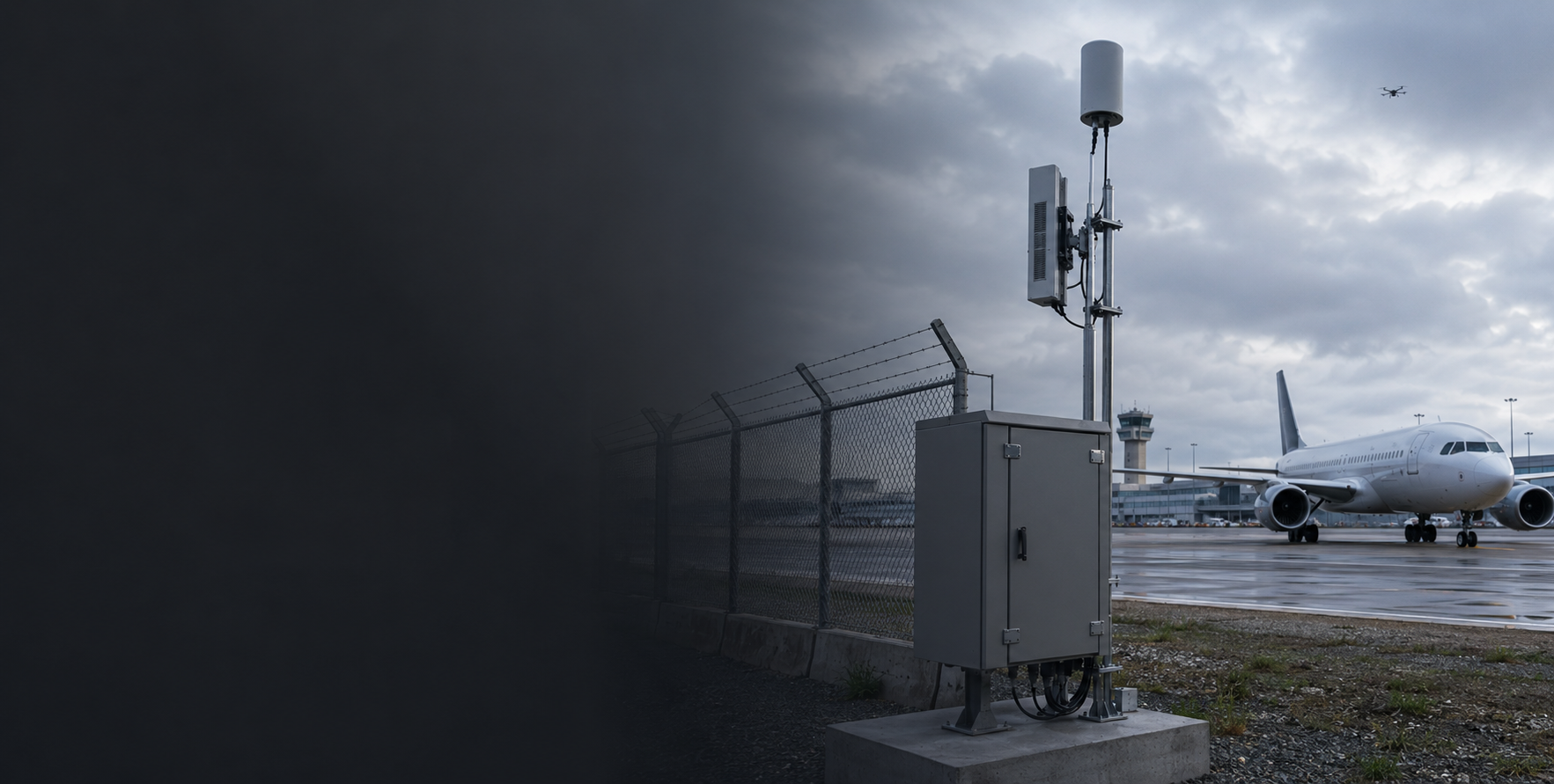
Aviation-Safe Counter-UAS Defense: 5KM Airport Perimeter
Protecting runways, control towers, and critical airport airspace with factory-validated RF modules designed for continuous, compliant, and precise operation.
Protected Tower Communications
Built with precise frequency isolation, preventing signal spillage to guarantee uninterrupted tower and radar coordination.
365-Day Fixed-Site Operation
Engineered with advanced CNC thermal pathways that eliminate heat throttling, securing non-stop perimeter protection year-round.
Mounting-Ready Architecture
Equipped with standardized, multi-position brackets allowing seamless attachment to existing structures, drastically cutting deployment time.
Airport Airspace Leaves No Room for RF Mistakes
Dense aviation communications and strict civil aviation regulations demand precision RF deployment without collateral interference.
Dense RF Environment
Airports concentrate tower comms, radar, and Wi-Fi in tight spaces. Precision RF filtering intercepts drones without blinding essential navigation systems.
Civil Aviation Compliance
Strict aviation laws penalize spurious emissions. Factory-validated spectrum purity keeps your defense system fully compliant and online without legal backlash.
Distributed Infrastructure
Vast perimeters require decentralized setups. Daisy-chained RF modules deliver synchronized multi-point defense across far-reaching runways and remote cabinets.
Why Conventional Solutions Fail in Airports
Contaminated RF Output
Low-tier components bleed spurious emissions into nearby bands, polluting radar channels and exposing operators to severe regulatory penalties and operational restrictions.
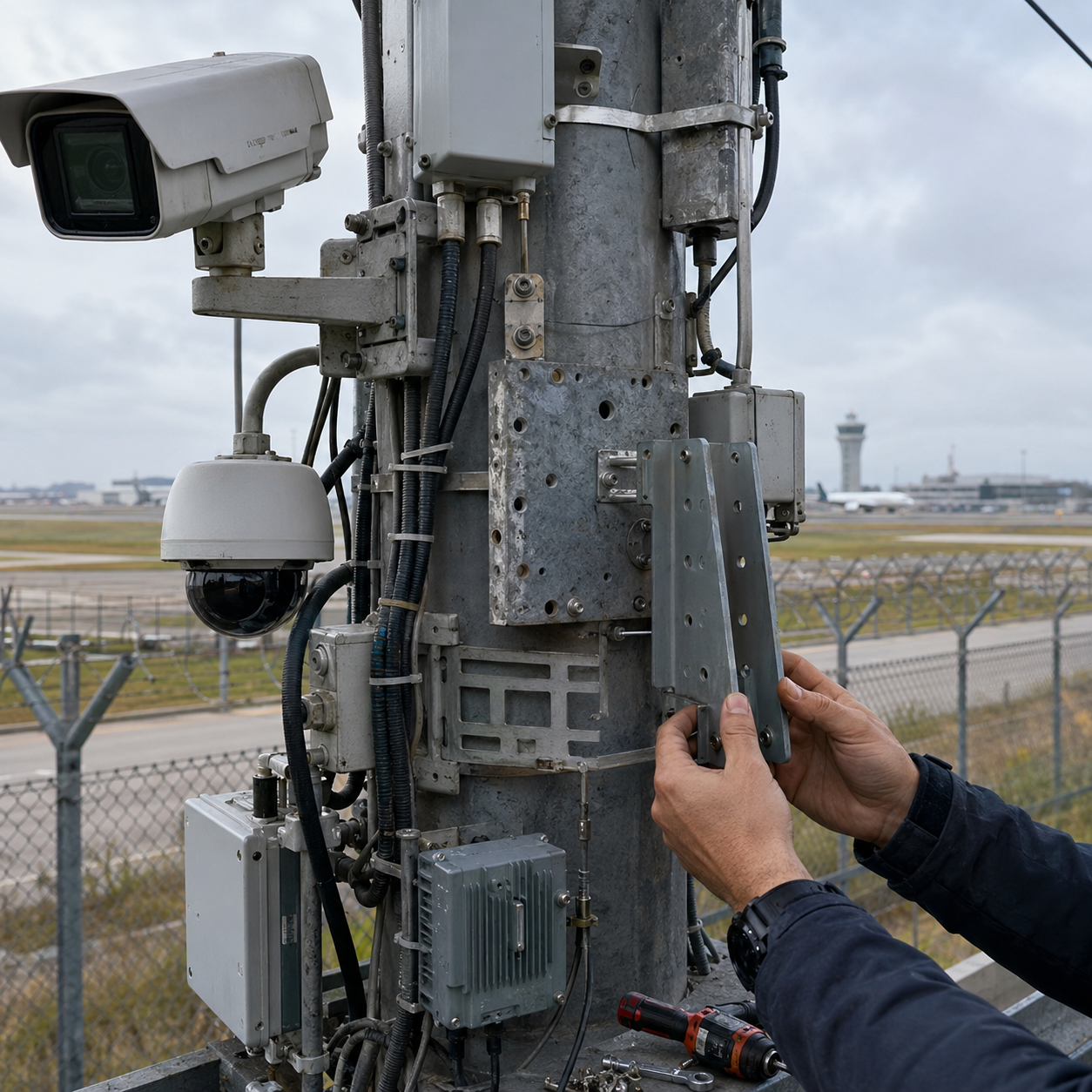
Mechanical Conflicts
Standardized enclosures fail to match unique tower constraints, forcing onsite modifications that drastically delay deployment and compromise structural integrity.
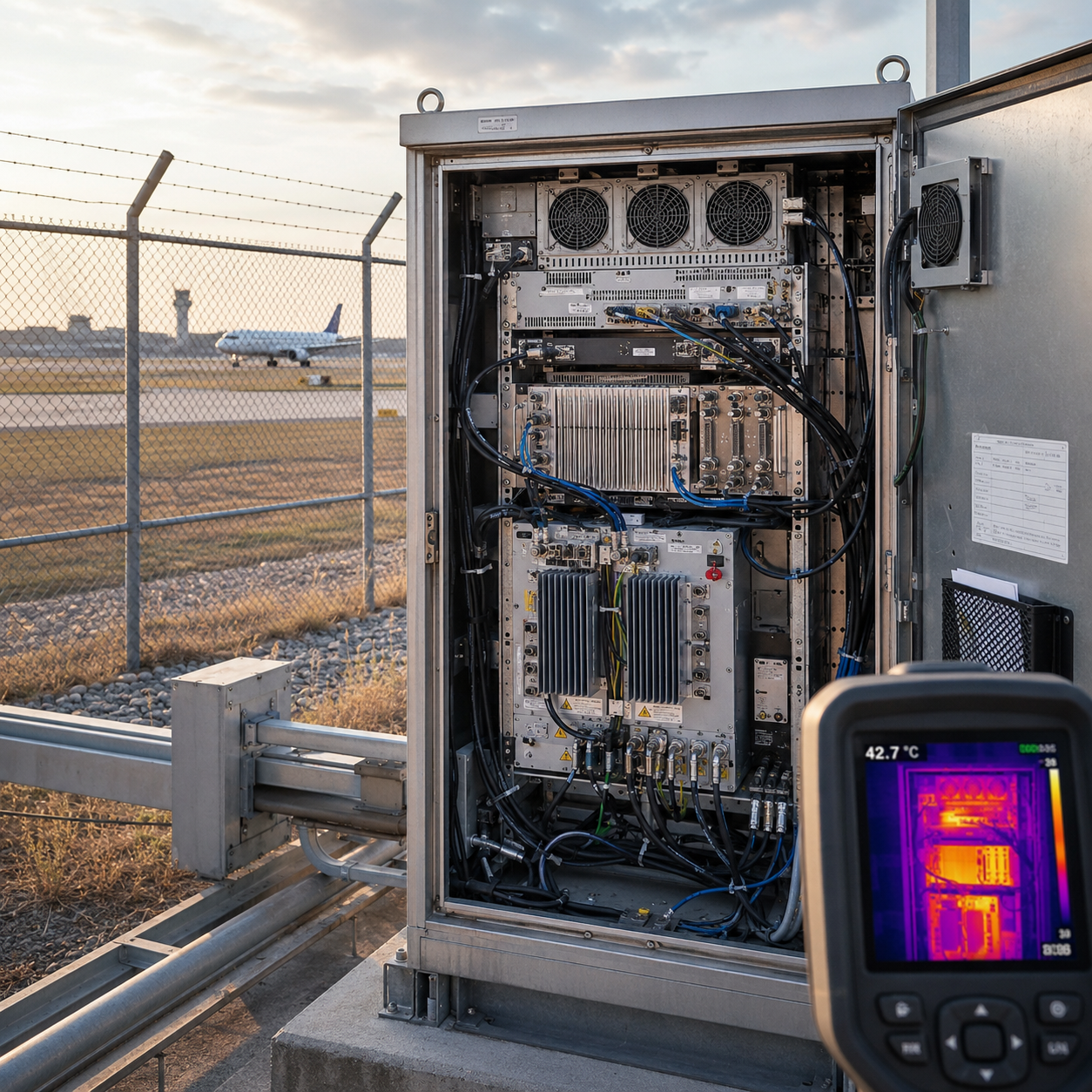
Thermal Failure
Continuous 24/7 fixed-site operation builds trapped heat. Unmanaged thermal stress triggers frequent protection shutdowns, leaving the airspace entirely unprotected.
From Airport Failures to Controlled Deployment Layers
Three airport-specific failure risks were converted into controlled engineering layers: clean RF output, mounting-ready mechanical integration, and continuous thermal stability.
Mechanical Fit Control
RF Purity Control
Thermal Stability Control
SDR Access & Security
Rapid Deployment & Maintenance-Friendly Modules
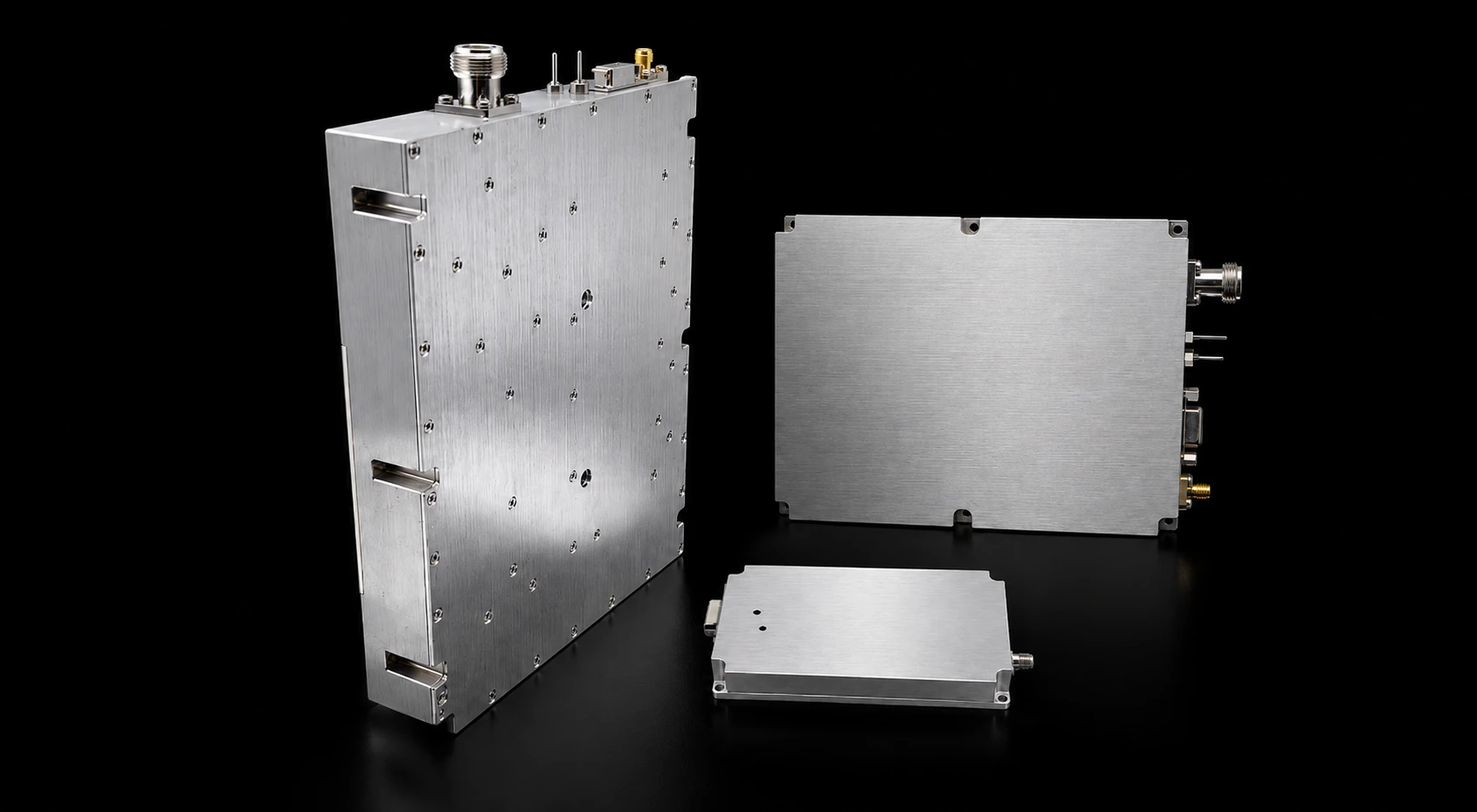
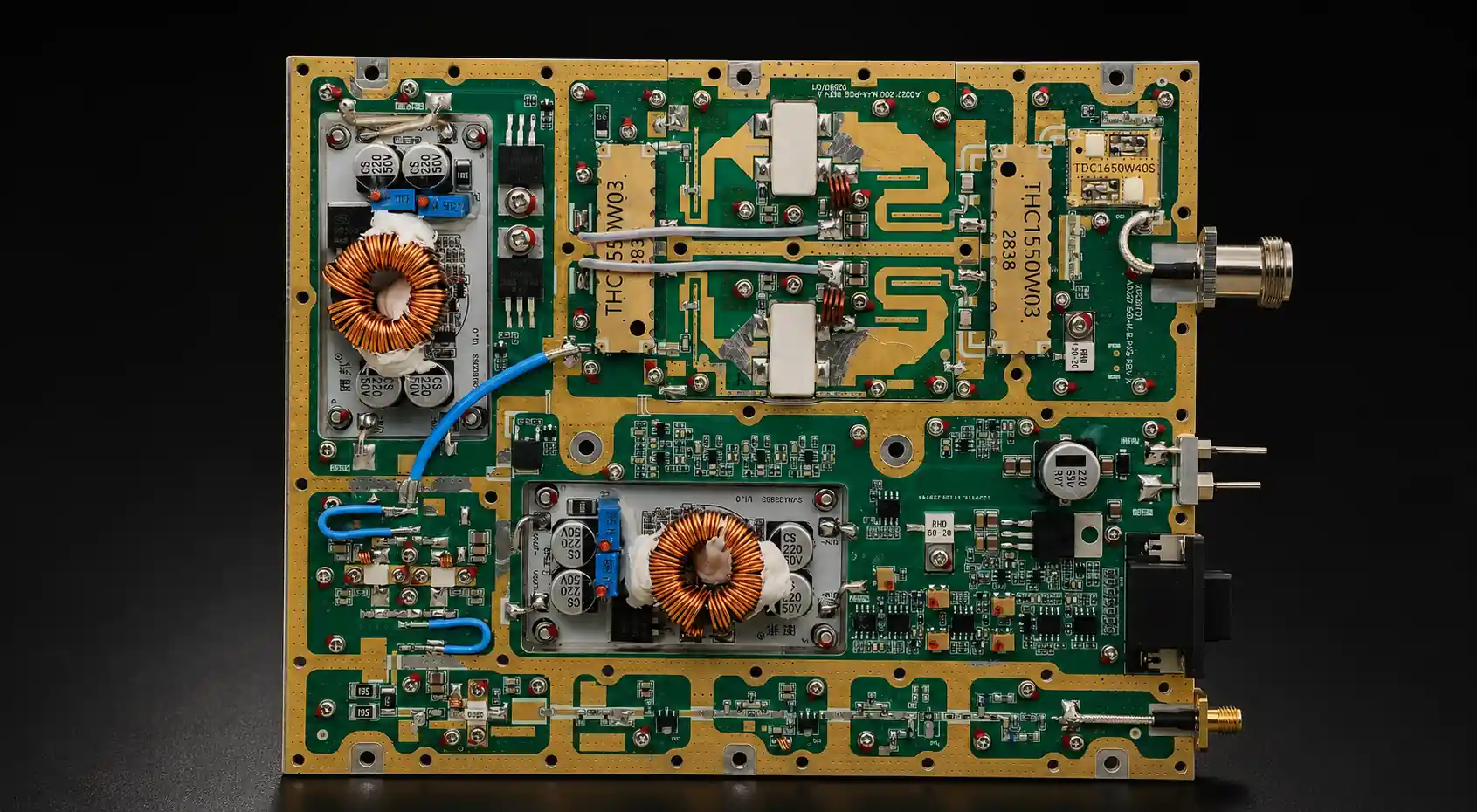
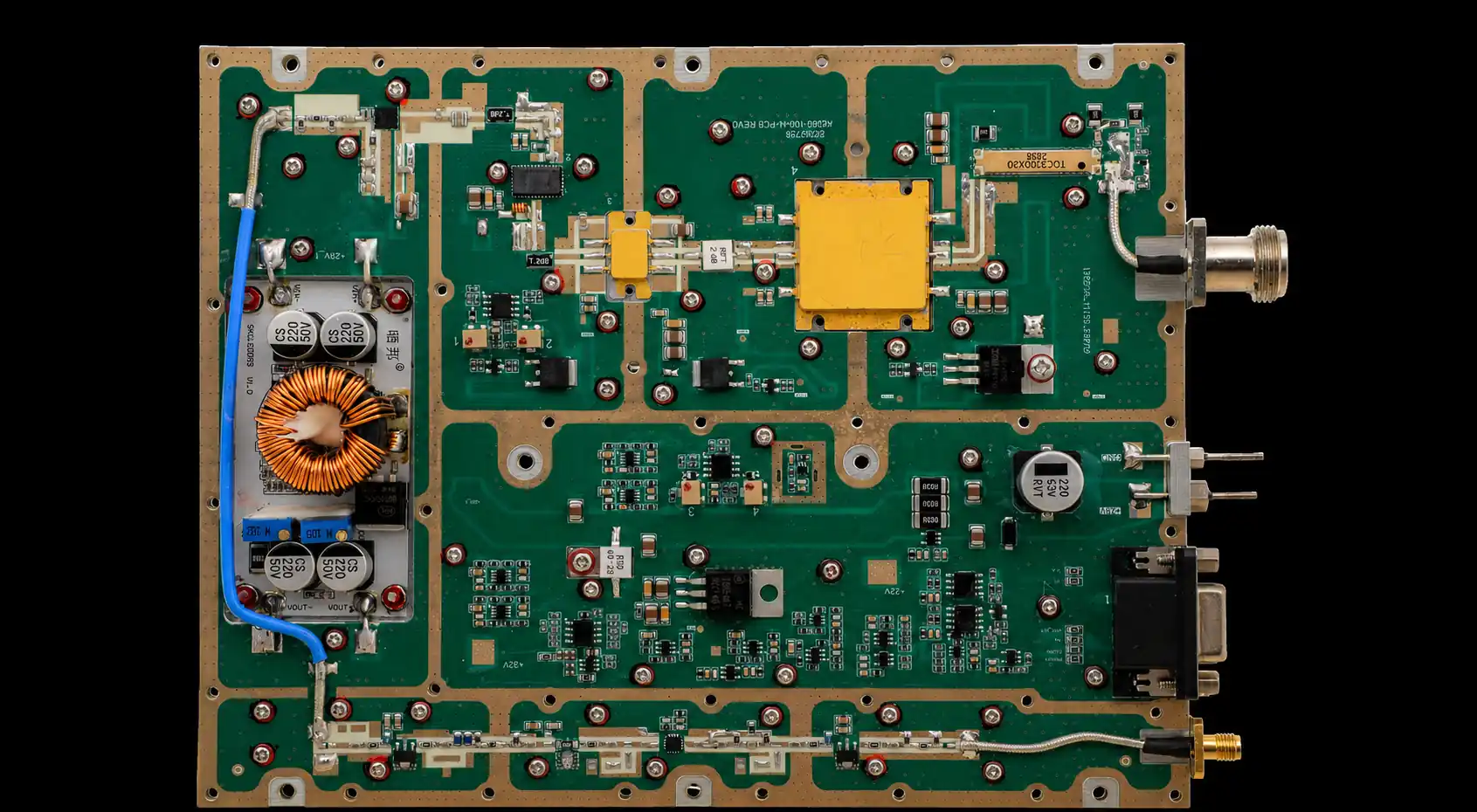
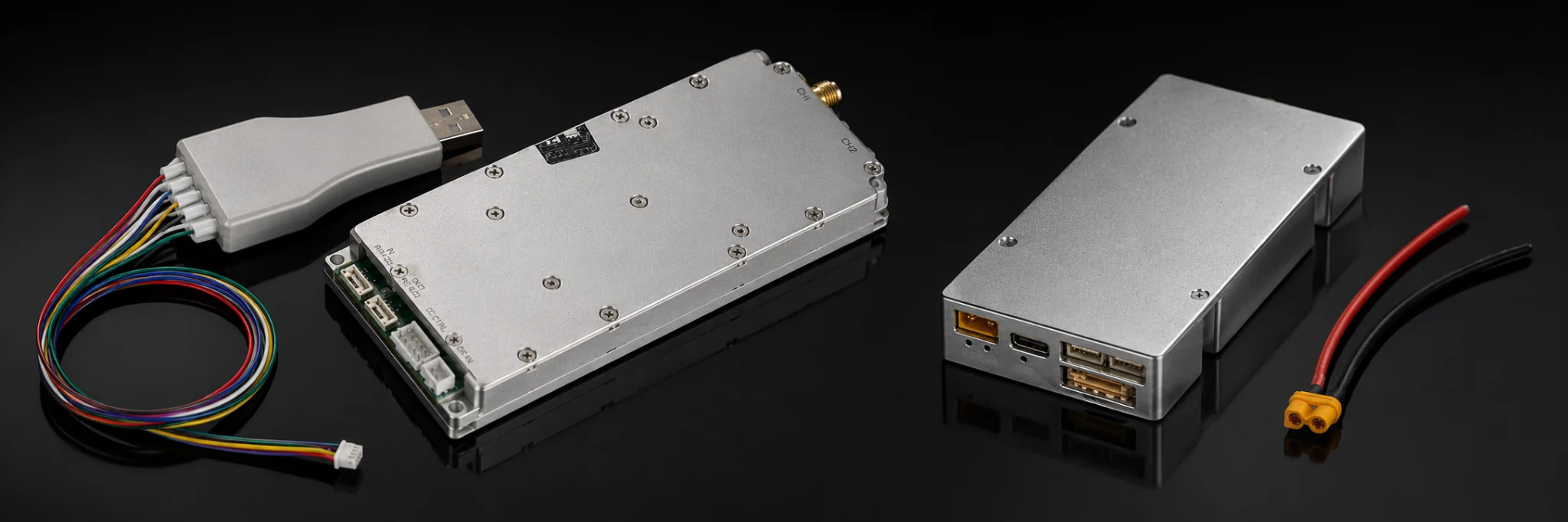
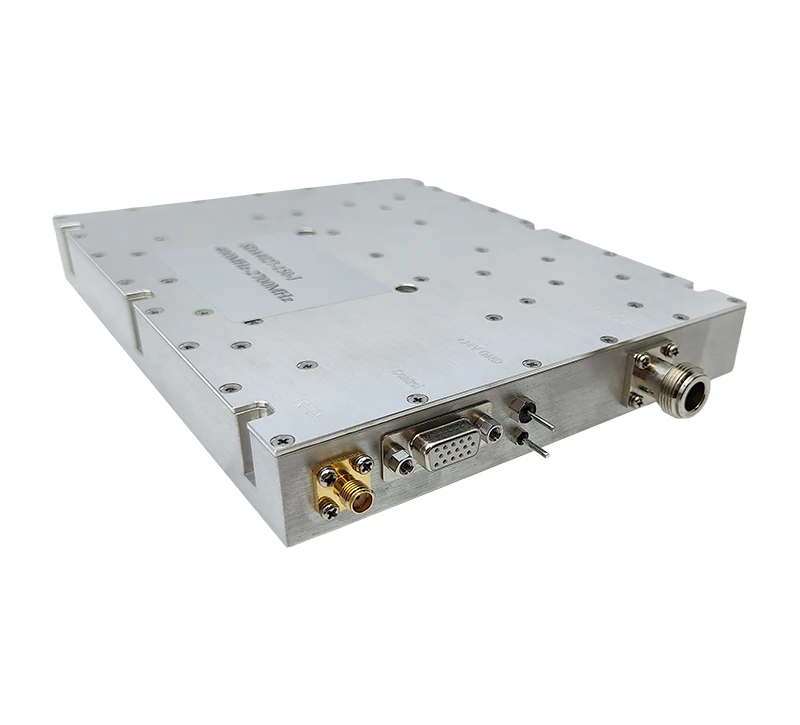
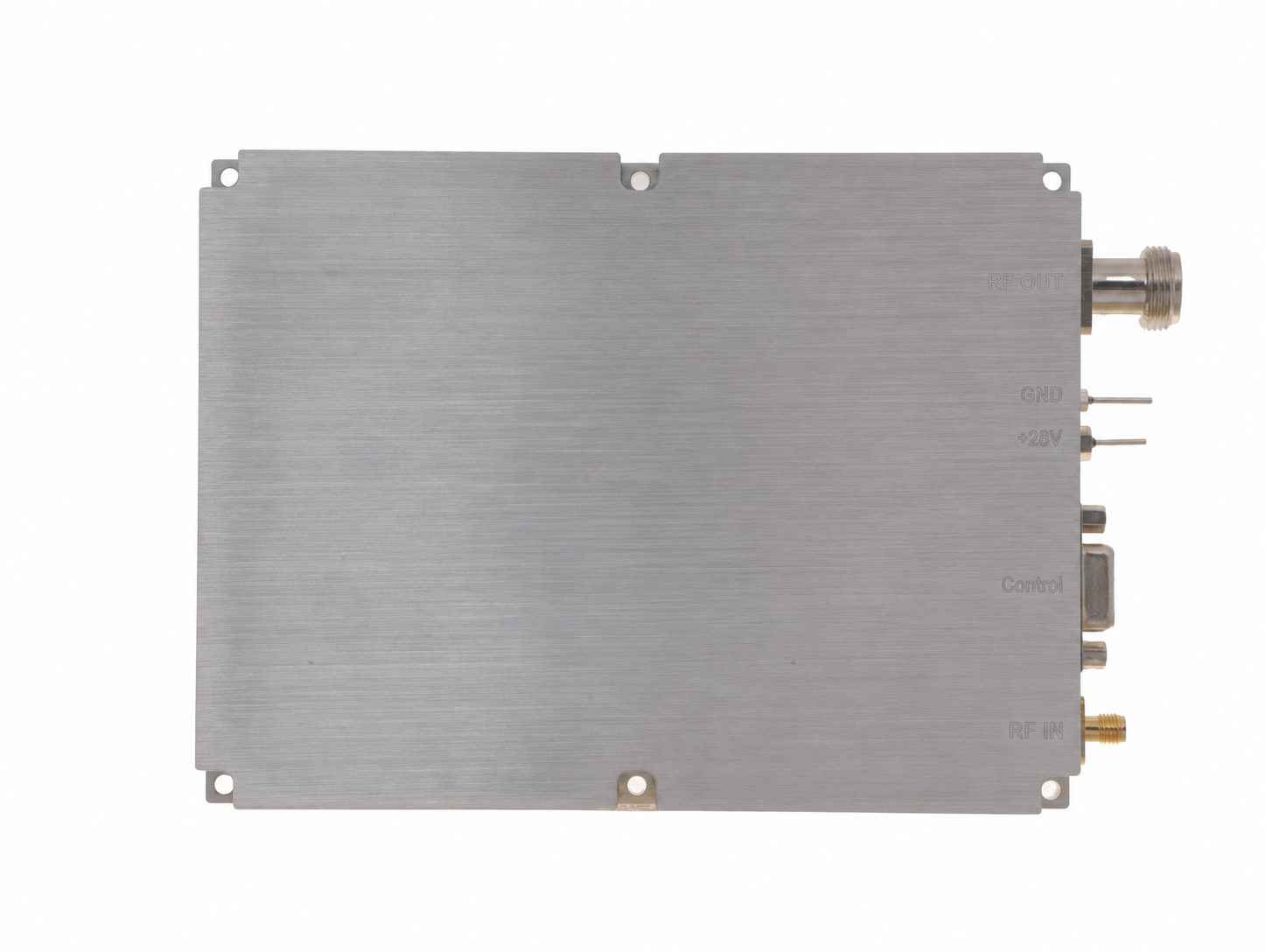
Modular, CNC-machined RF units designed for tower, pole, and cabinet integration under airport constraints.
High-Durability RF Connections
Premium N/SMA connectors engineered for 500+ mating cycles, ensuring stable connections without physical degradation during repeated field maintenance.
Custom Multi-Point CNC Housing
Pre-drilled multi-hole positions compatible with a wide range of tower, pole, and cabinet mountings, entirely removing the need for risky on-site drilling.
SDR-Controlled Feeder Loss Compensation
AT-command adjustable software protocols dynamically compensate for long cable runs, guaranteeing maximum effective power reaches the antenna side.
Precision RF Architecture for Sensitive Airport Bands
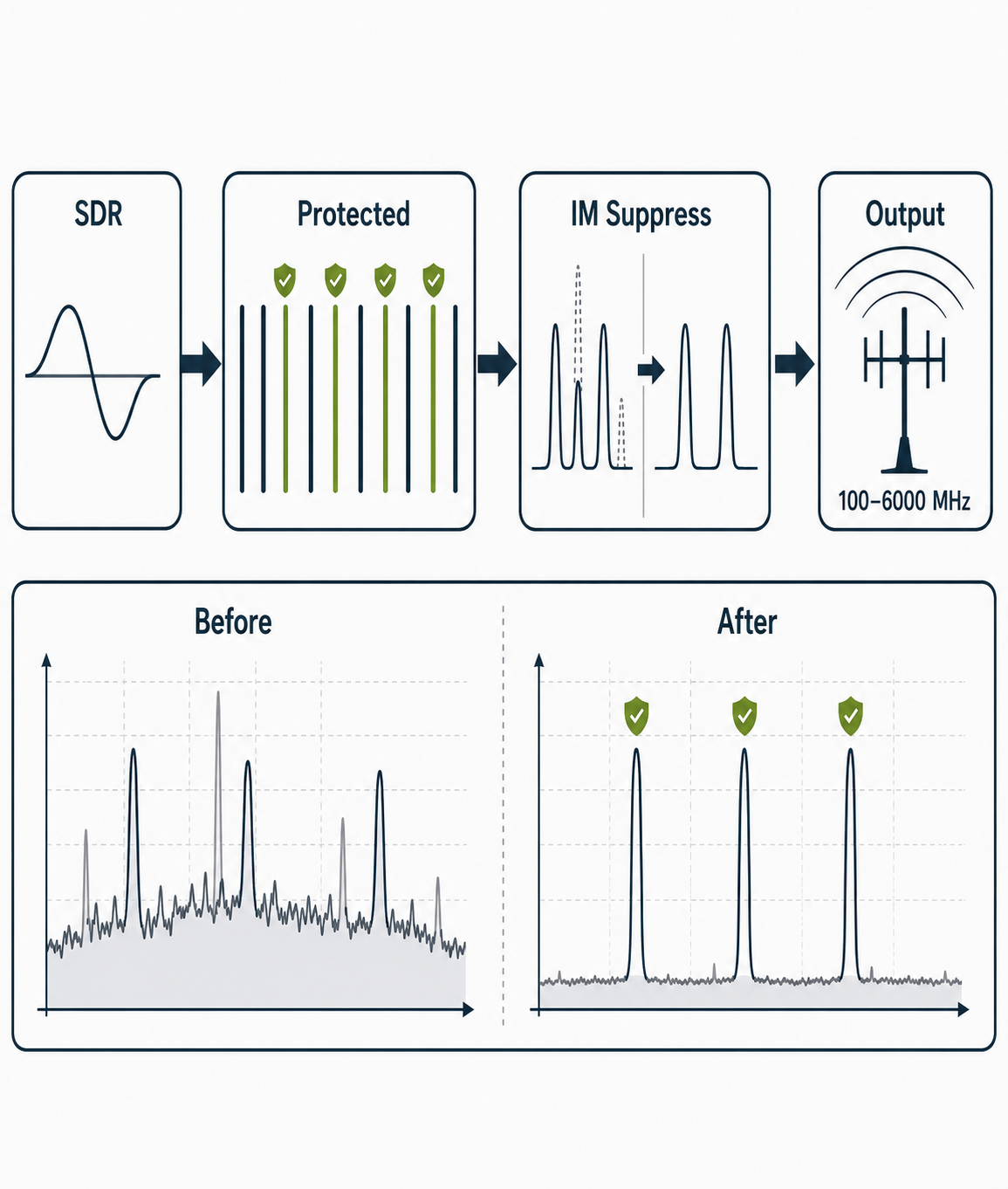
SDR-driven RF modules suppress targeted rogue links while strictly maintaining the integrity of tower communications, radar, and protected airport channels.
Controlled Output Spectrum
Ensures full-band verification prior to deployment, eliminating out-of-band spurious emissions to guarantee adjacent aviation frequencies remain perfectly clear.
Multi-Band Intermodulation Management
Seamlessly supports 100MHz–6000MHz bands while suppressing internal cross-band distortion, preventing rogue signal generation within complex RF environments.
Protected Channel Planning
Allows integrators to map critical frequencies, directing the SDR to actively bypass these channels to safely preserve security and navigation radio operations.
Thermal & Long-Duty Operation
Fixed-site modules validated for continuous 24/7 operation in sealed enclosures with optimized thermal management.
Full-Load Burn-In
Modules endure rigorous maximum-output stress tests to verify thermal stability, ensuring flawless and predictable operation before critical perimeter deployment. This removes unpredictable field overheating failures.
CNC Thermal Path
The solid aviation-grade aluminum housing acts as a massive integrated heatsink. By relying on conductive mass rather than just airflow, it efficiently dissipates core heat to prevent thermal throttling in high-ambient conditions.
Over-Temperature Protection
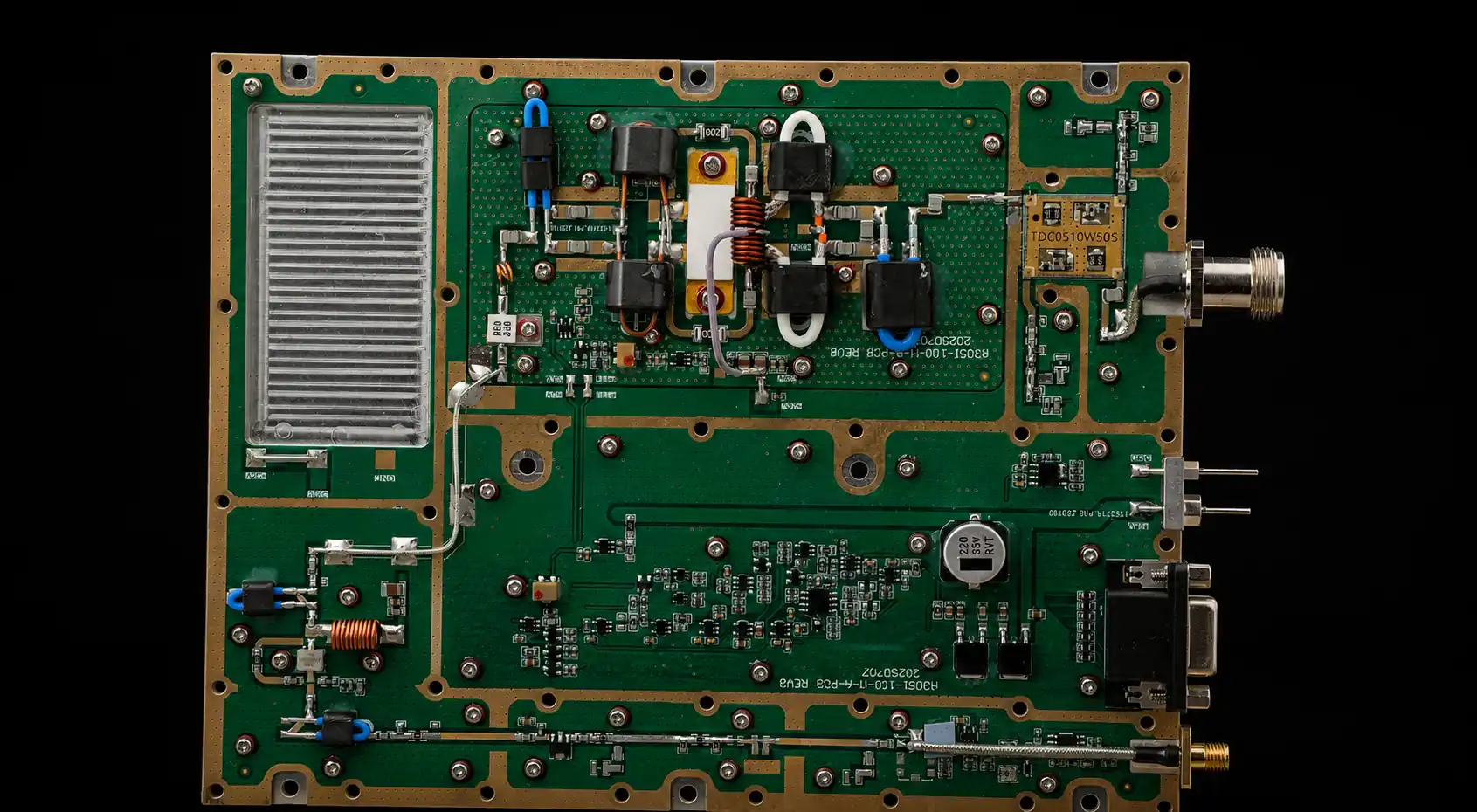
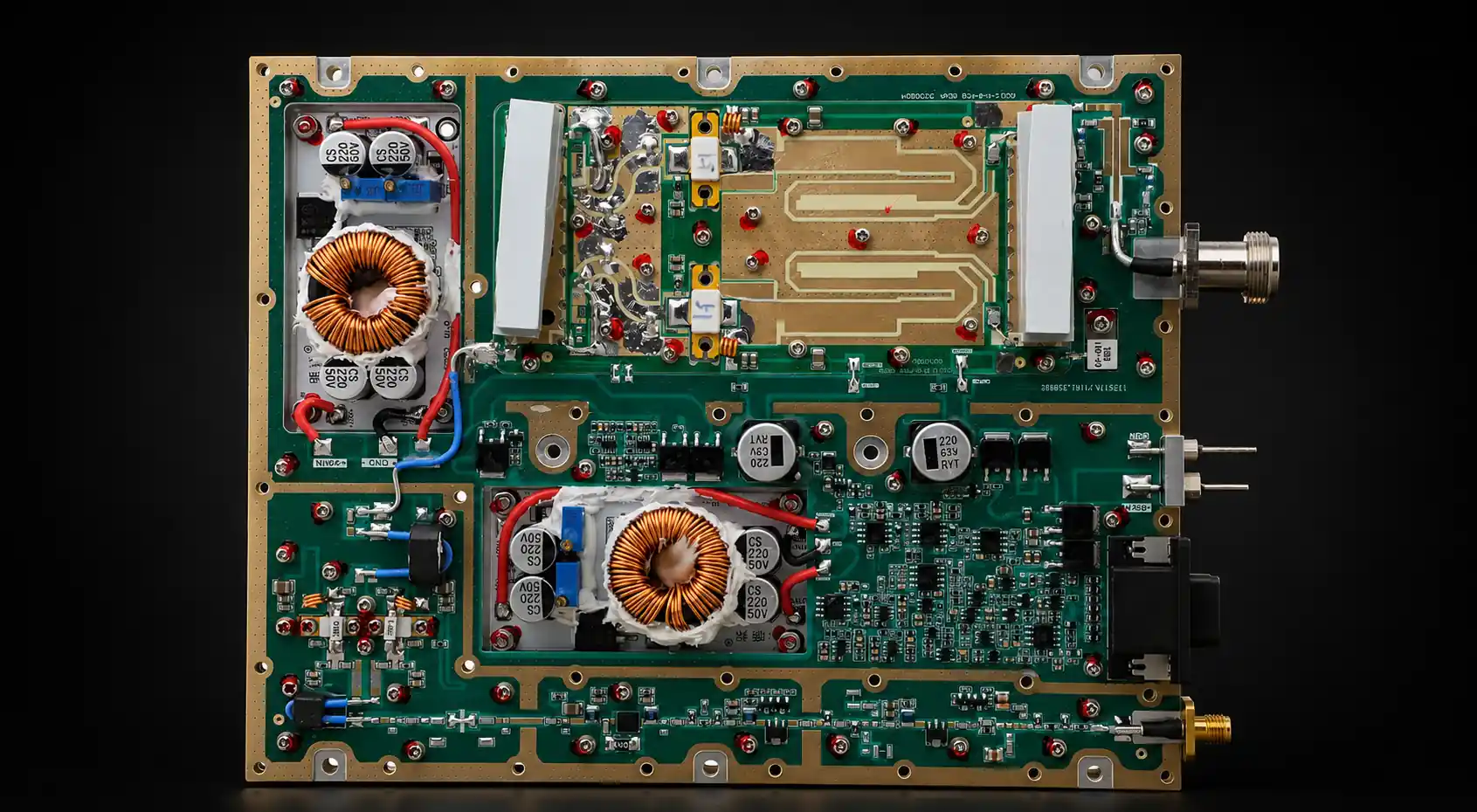
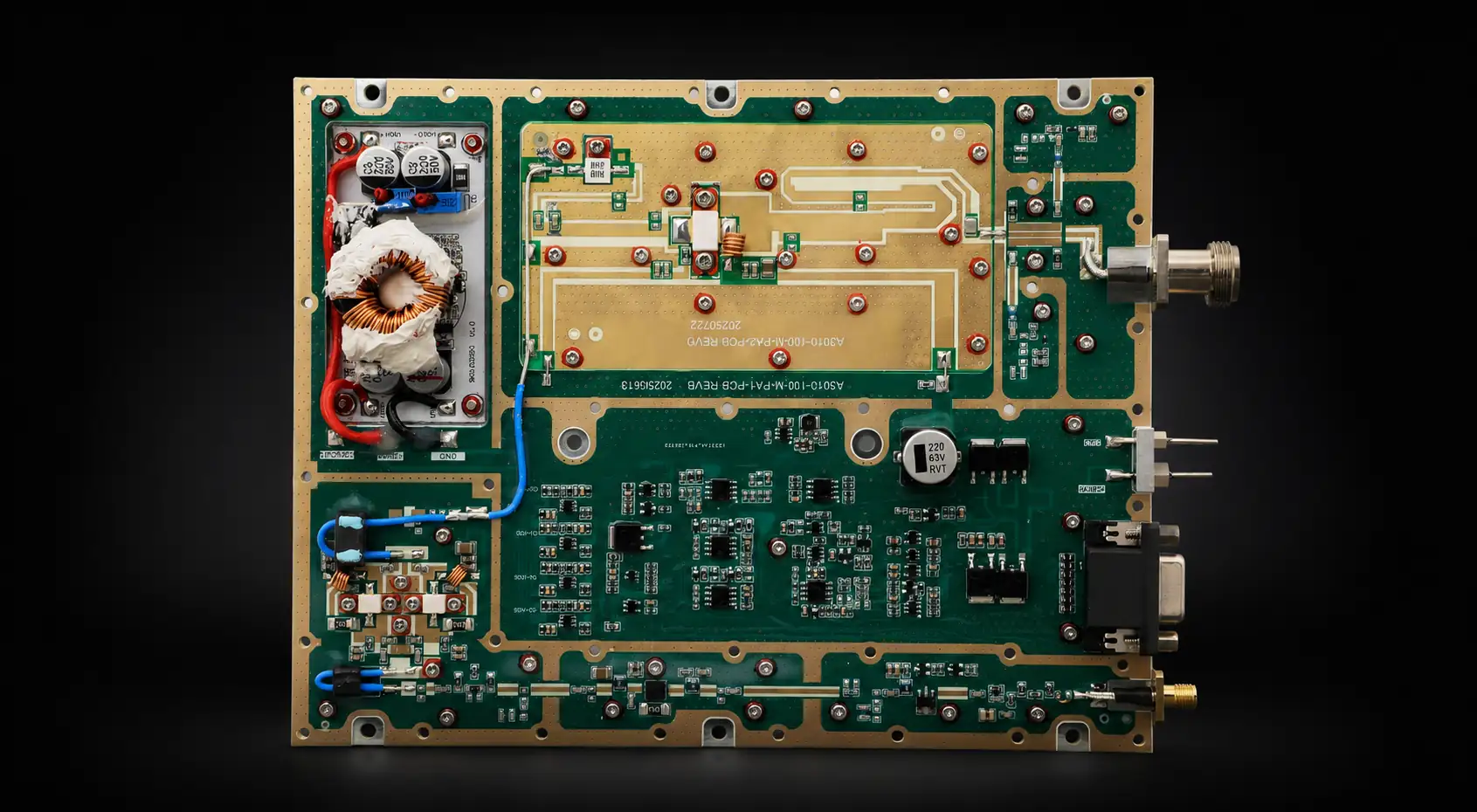
Integrated VSWR and thermal sensors continuously monitor the amplifier's internal health. These sensors safely regulate power output before extreme enclosure temperatures can cause hardware failure.
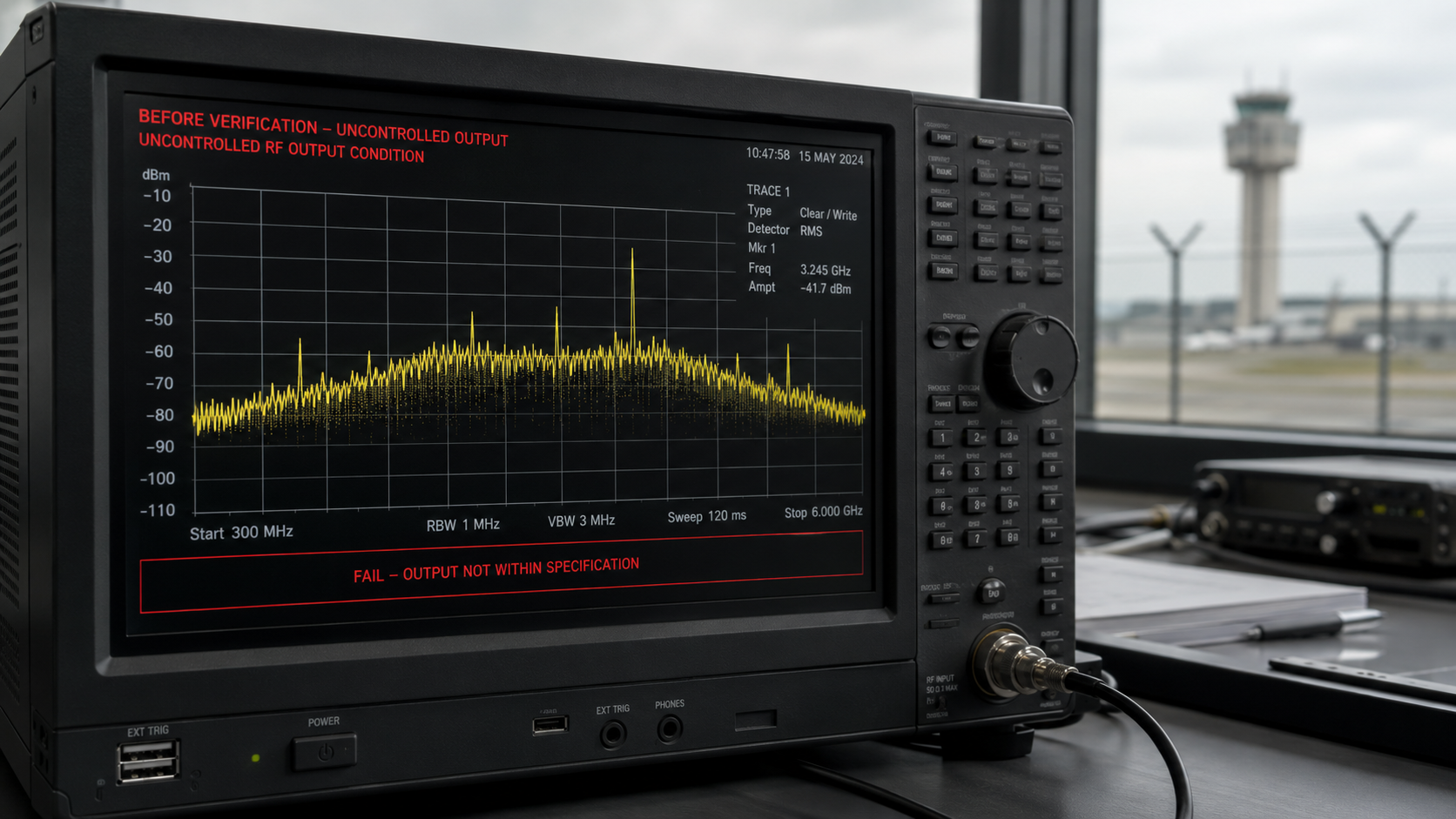
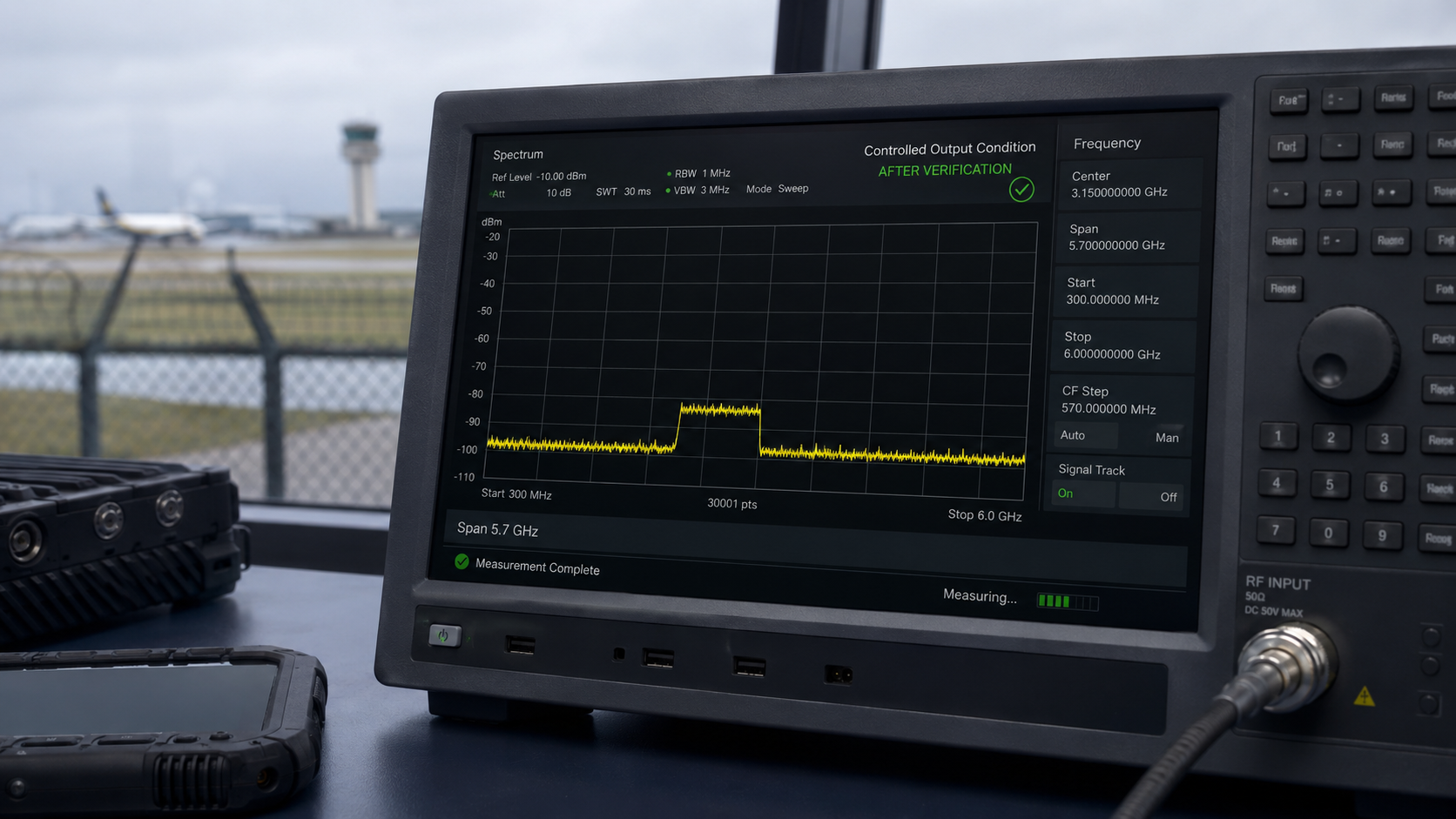
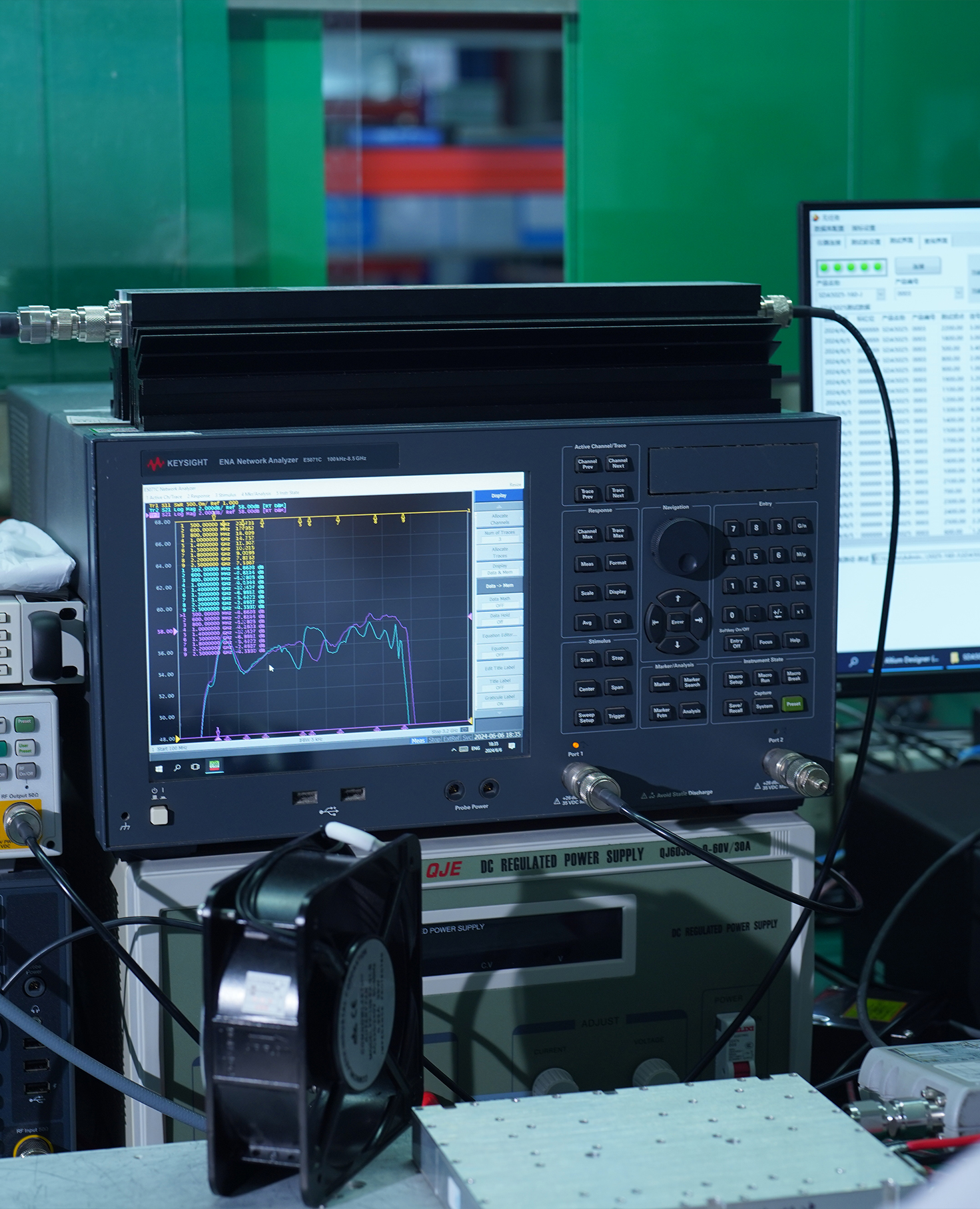
Spectrum Cleanliness Verification
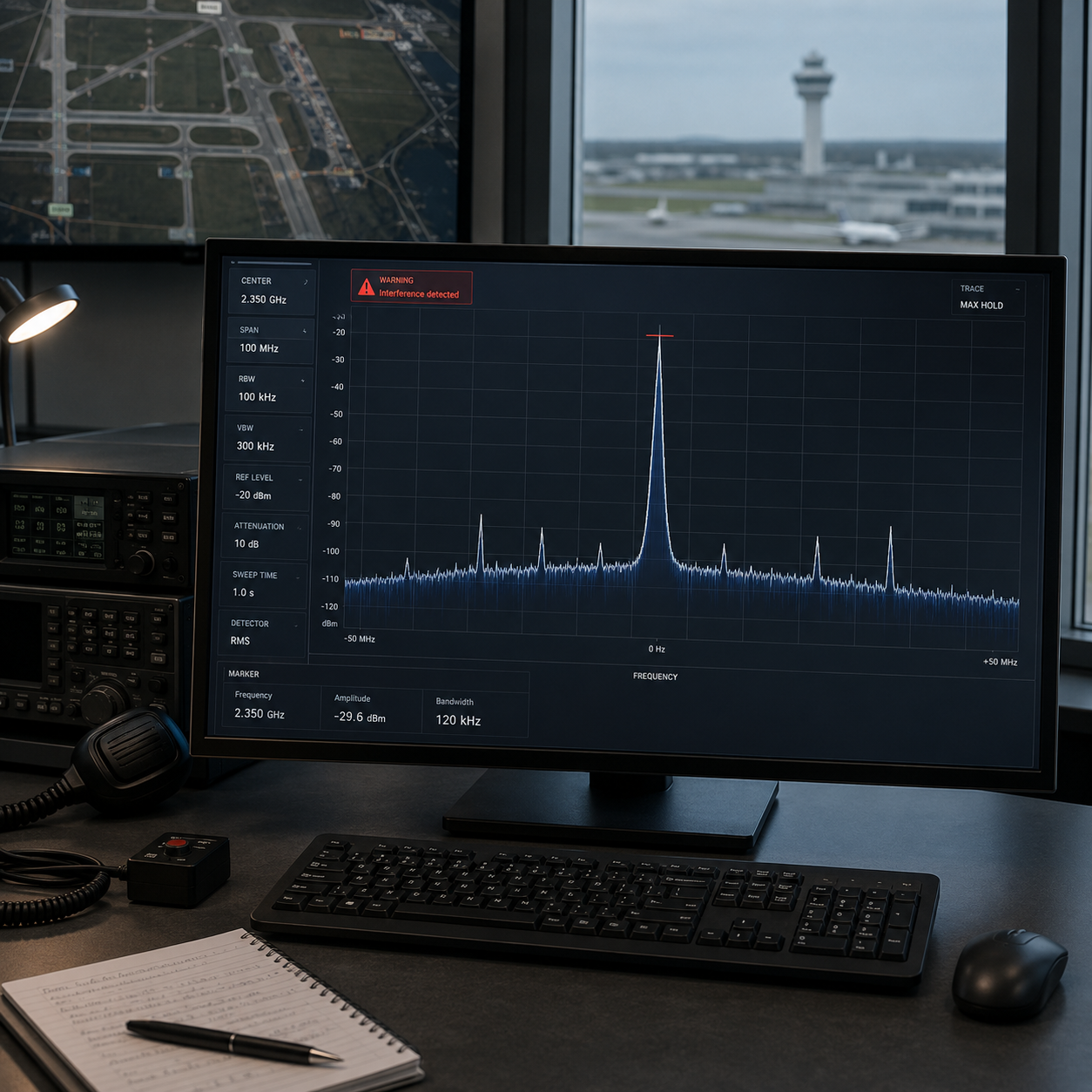
Objective measurement ensures rogue drone links are suppressed while protected communication channels remain fully intact.
Full-Band Sweep Verification
Validates module output stability across all operational bands, confirming target frequency saturation is achieved without bleeding energy into adjacent bands.
Spurious Emission Check
Rigorously monitors out-of-band energy output, certifying absolute zero RF leakage into strictly protected civil aviation navigation frequencies.
Protected-Channel Confirmation
Actively measures designated safe zones during active suppression mode, proving zero disruptive impact on critical tower and radar communications.
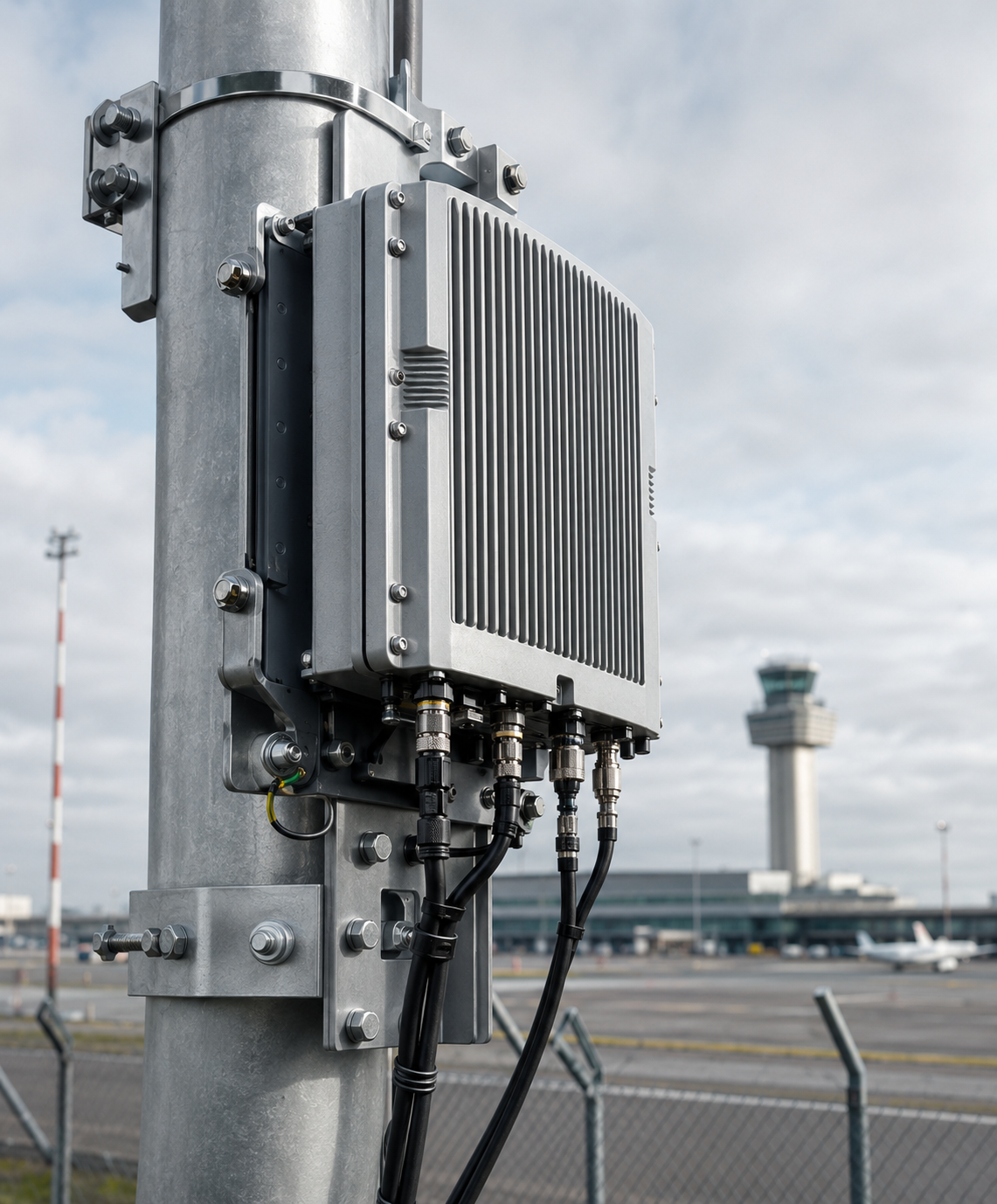
Mechanical & Installation Verification
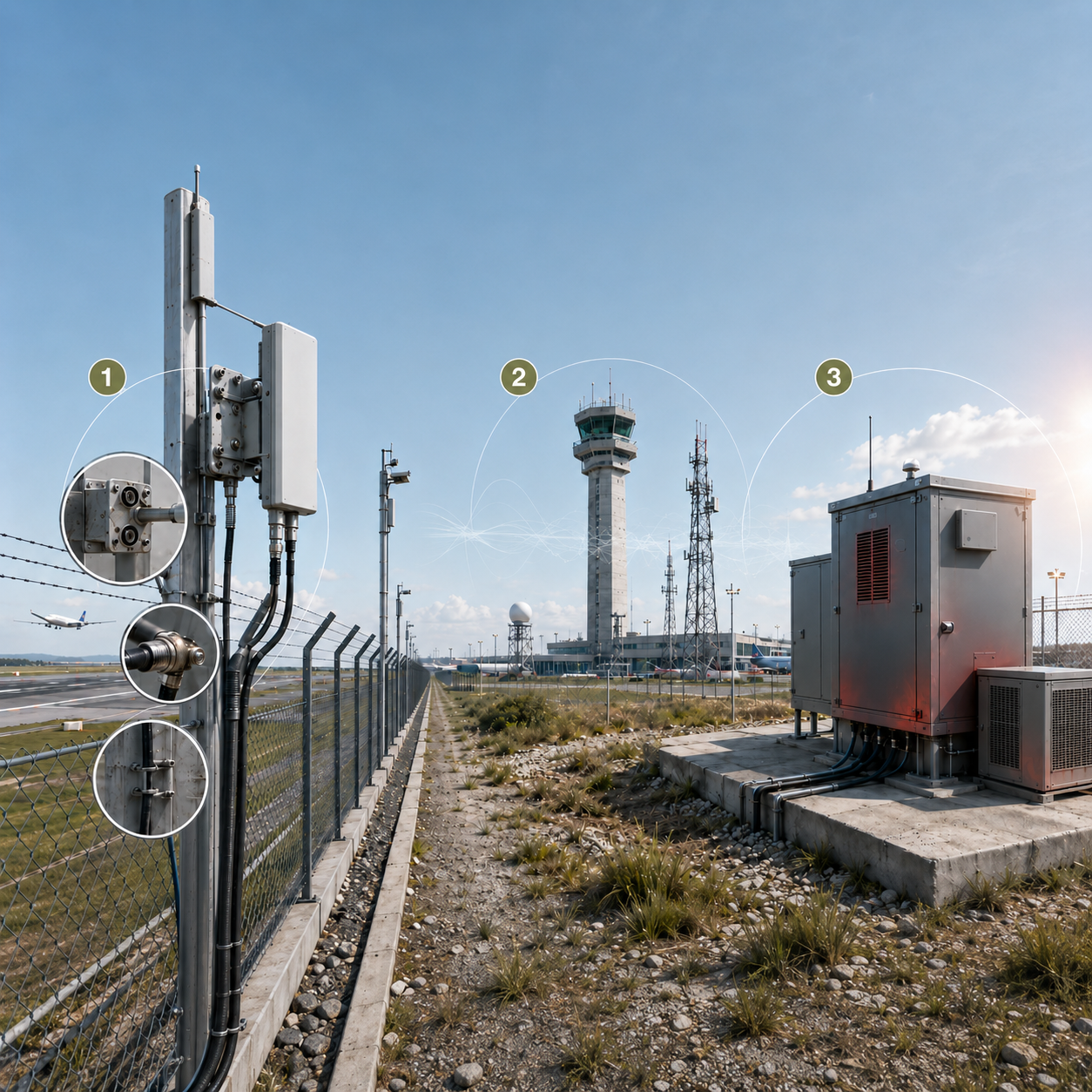
Confirmed module fit on airport towers, perimeter poles, and cabinets to completely prevent on-site deployment delays.
Screw-Hole Layout Validation
Pre-mapped mounting patterns match standard airport brackets perfectly, facilitating immediate bolt-on installation without custom drilling.
Connector Orientation Check
Optimized physical layout ensures strain-free cabling and unobstructed airflow, safeguarding both the connection integrity and cooling efficiency.
Tower & Cabinet Compatibility
Engineered to adapt to diverse infrastructure, ensuring a secure grip on varying pole diameters and tight cabinet spaces without structural compromise.
Thermal & Continuous Operation Verification
Extended burn-in and temperature stress tests confirm uninterrupted performance for fixed-site airport modules.
Full-Load Burn-In
Simulates relentless 24/7 operational profiles to expose potential weaknesses, guaranteeing maximum uptime and reliability under real-world pressure.
Thermal Stress Monitoring
Tracks core component temperatures throughout maximum load cycles, proving the CNC housing effectively prevents heat accumulation and throttling.
Output Stability Validation
Continually measures power and RF delivery over extended durations, confirming suppression capabilities never degrade during crucial long shifts.
Built for 24/7 RF Stability
A ruggedized physical layer engineered to maintain structural integrity and thermal balance against outdoor heat, signal reflection, and continuous voltage stress.
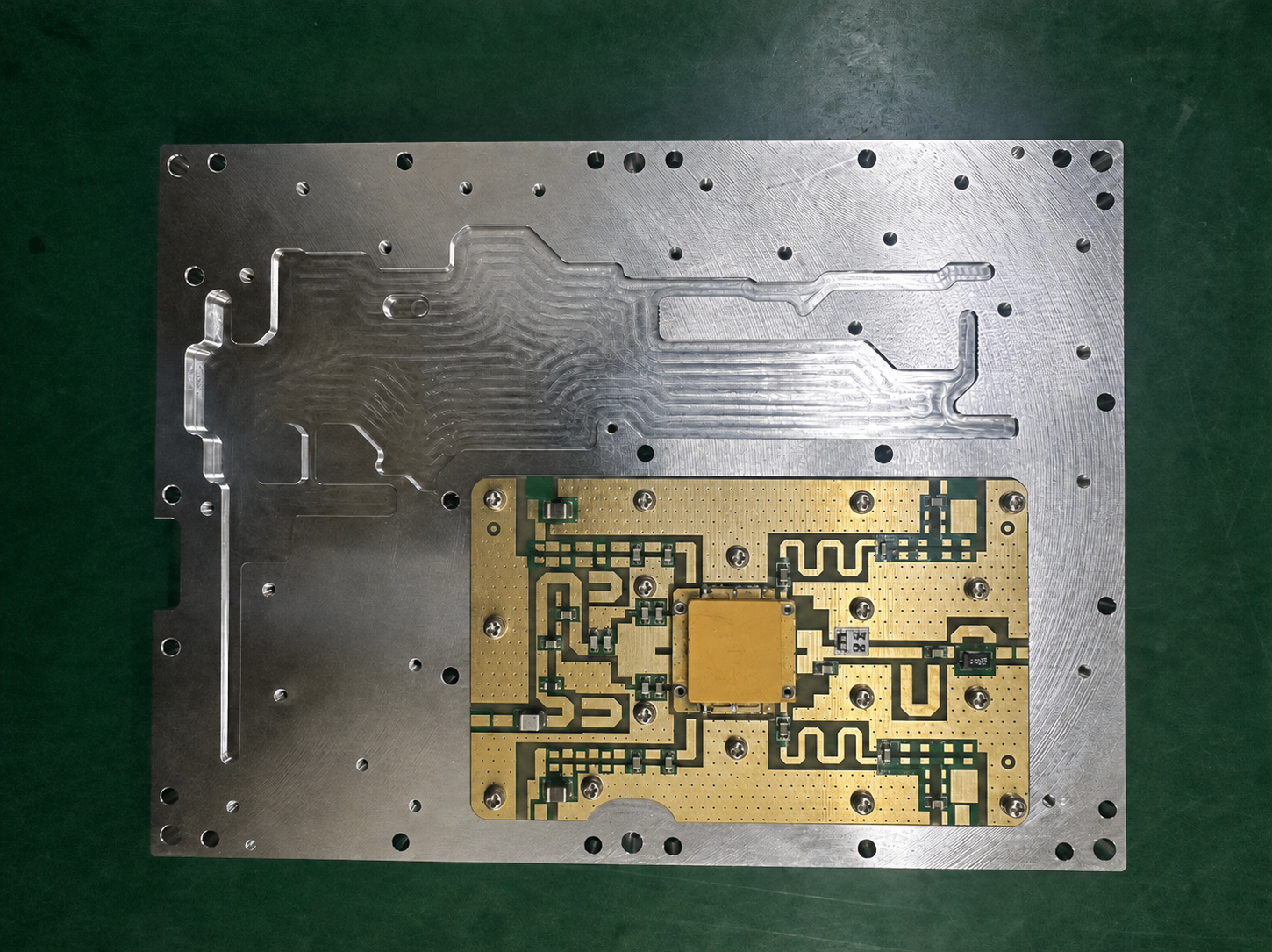
CNC Thermal Structure
Fabricated entirely from aviation-grade aluminum, the dense CNC chassis acts as a primary heat sink. This prevents high-power modules from experiencing thermal collapse during peak summer daylight, supporting honest 100% duty-cycle operation.
View Module Details →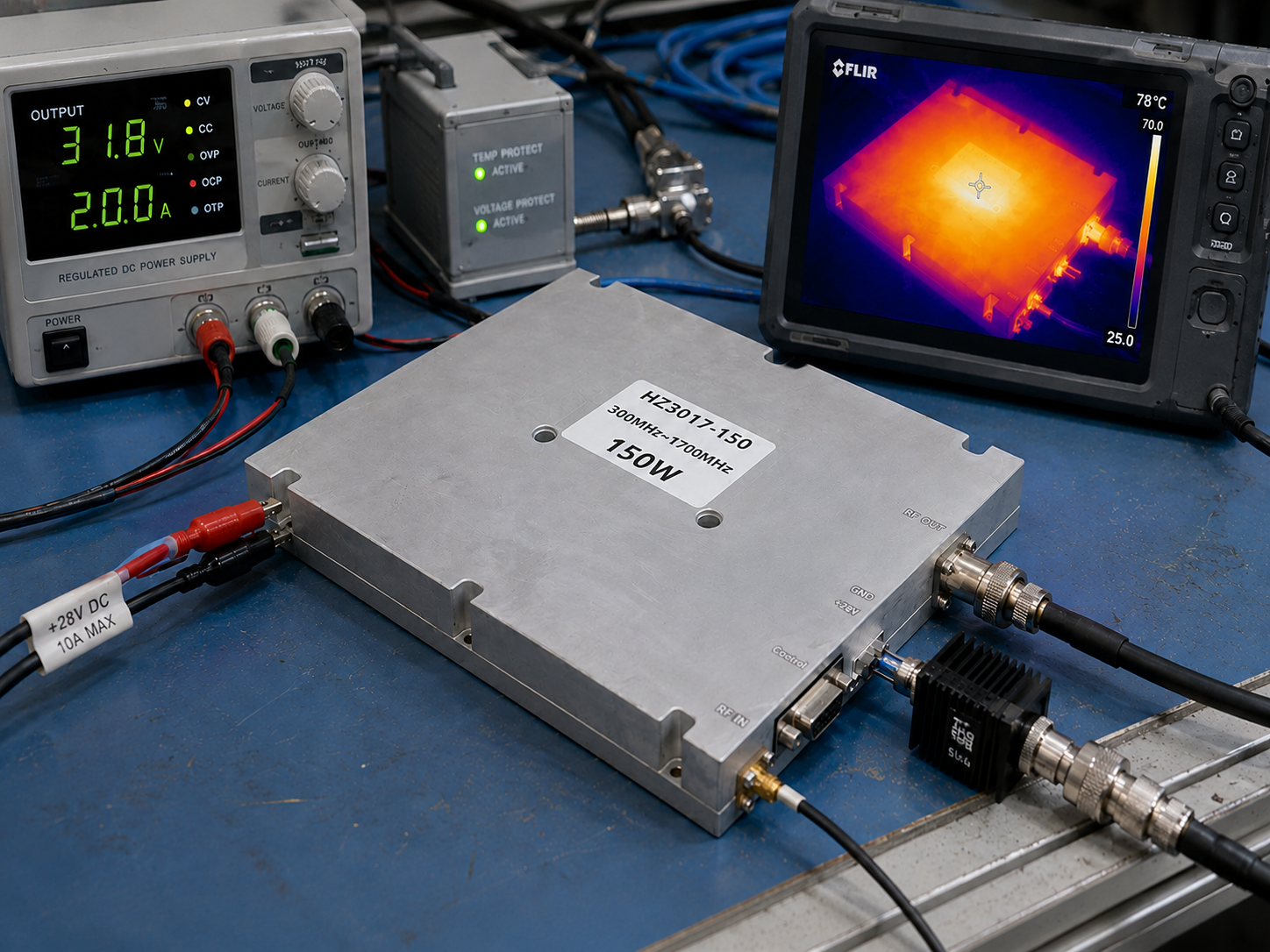
VSWR & Thermal Protection
Incorporates embedded logic to actively detect mismatched antennas and power reflections. Automatic shutdown protocols trigger instantly upon reaching threshold limits, saving the core amplifier from irreversible burn-out.
Custom PA Specs →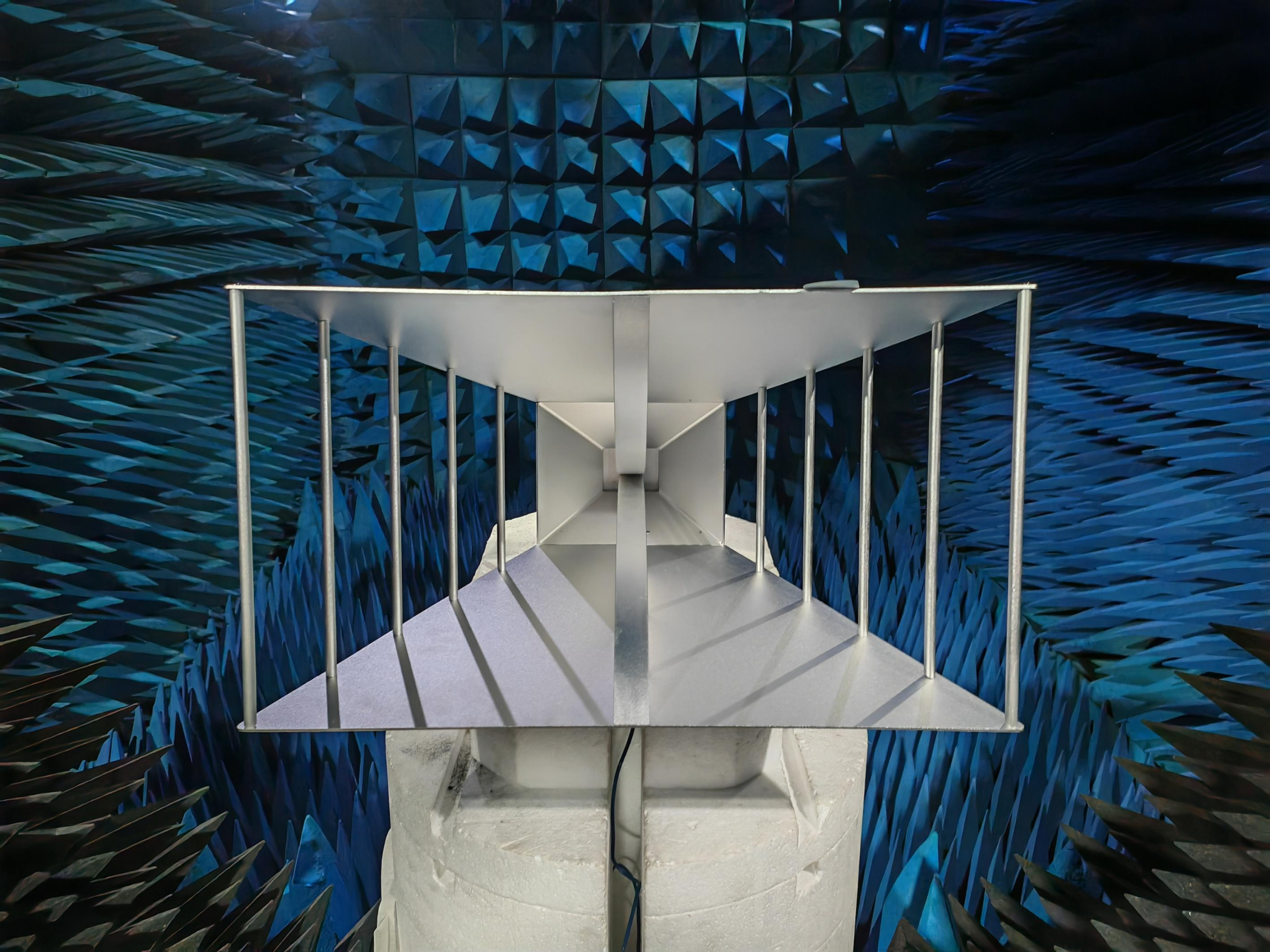
Low-Distortion Wideband Antenna
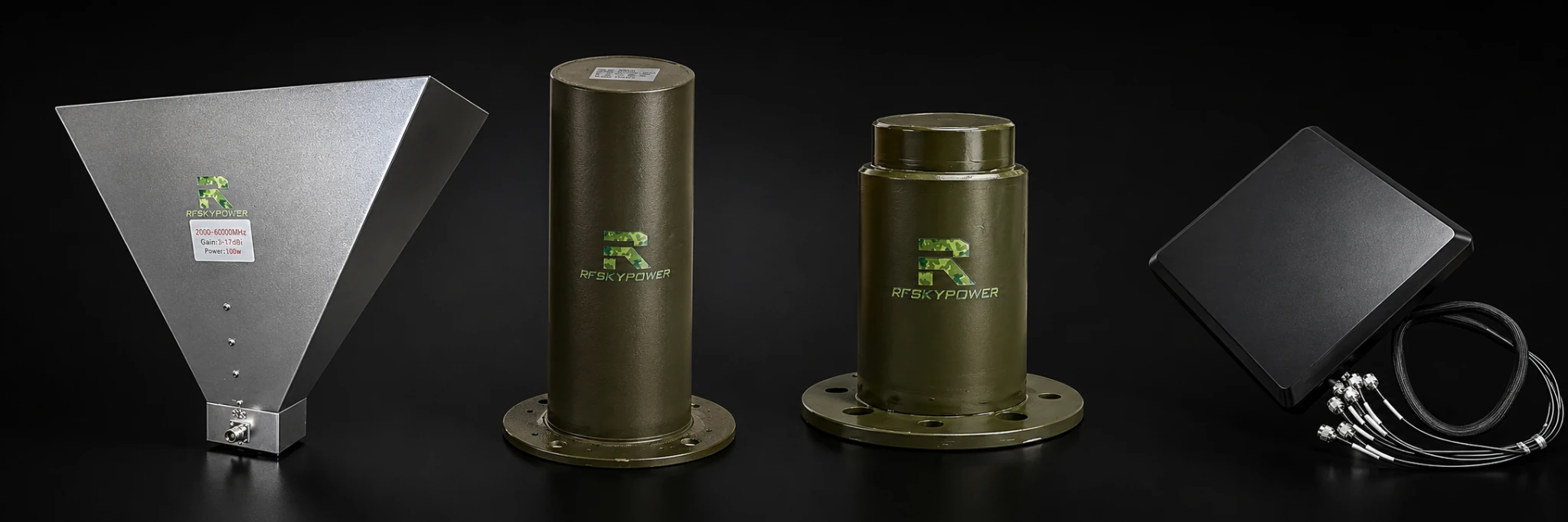
Matched high-linearity antenna arrays resist physical deformation across severe -40°C to +70°C seasonal swings, ensuring targeted signal projection remains consistent and reliable year over year.
See Antenna Series →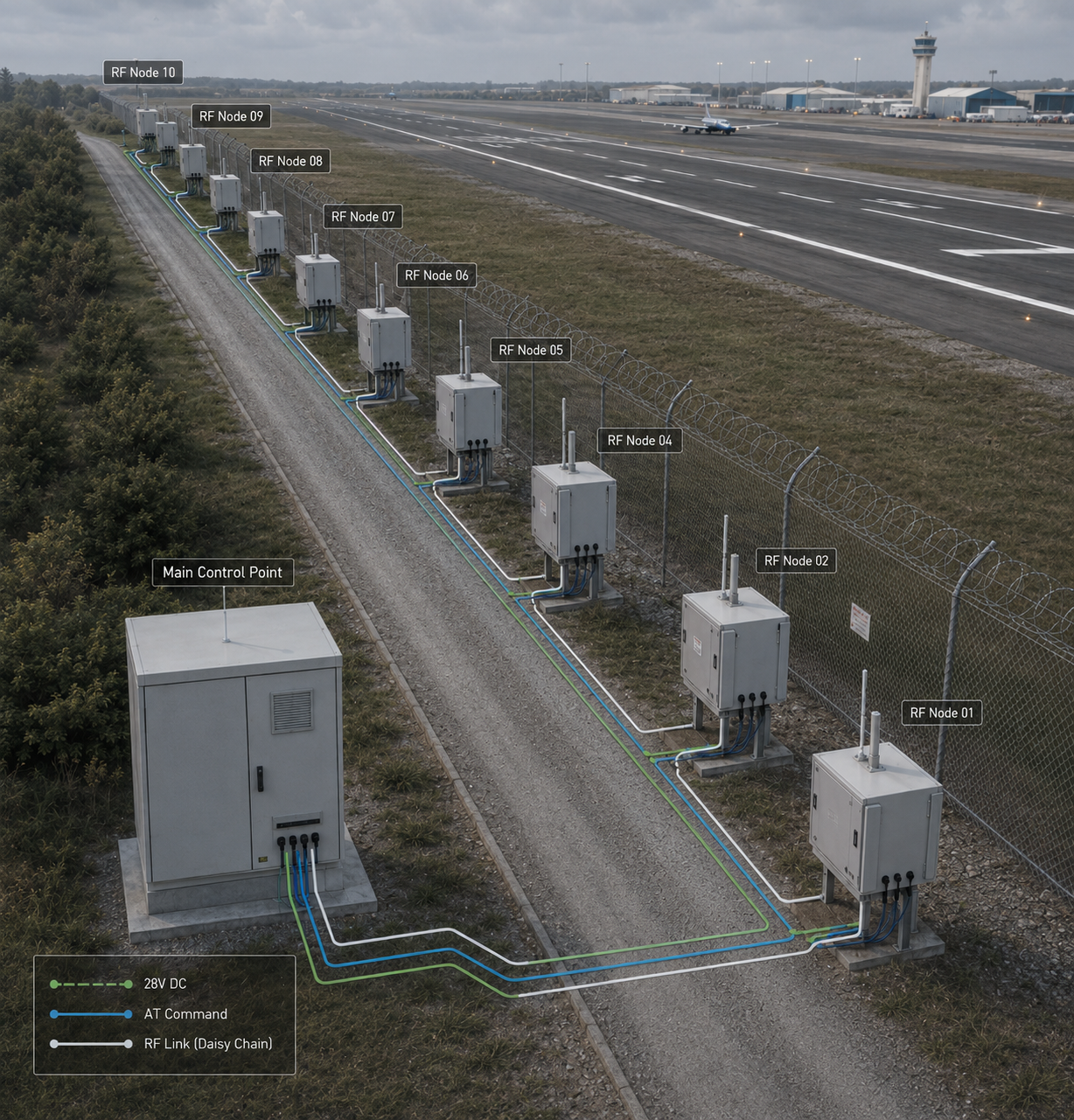
Standardized Architecture for Long-Term Maintenance
Transform complex airport perimeter wiring into an organized, easily upgradeable RF asset.
Unified 28V Industrial Power Alignment
Streamlines power infrastructure across widely distributed perimeter sectors, simplifying electrical planning and reducing the risk of component damage from voltage mismatches.
Standard AT Command Control Set
Replaces fragmented proprietary interfaces with an open, predictable command structure, empowering integrators to rapidly fuse these modules into central security dashboards.
10-Device Daisy-Chaining
Allows logical expansion of up to 10 interconnected RF nodes without massive rewiring overhead, ensuring future perimeter extensions are both cost-effective and structurally sound.
Structural Consistency from Engineering Drawings to Batch Housings
Airport projects cannot afford a prototype that fits perfectly while the mass-produced batch fails on site.
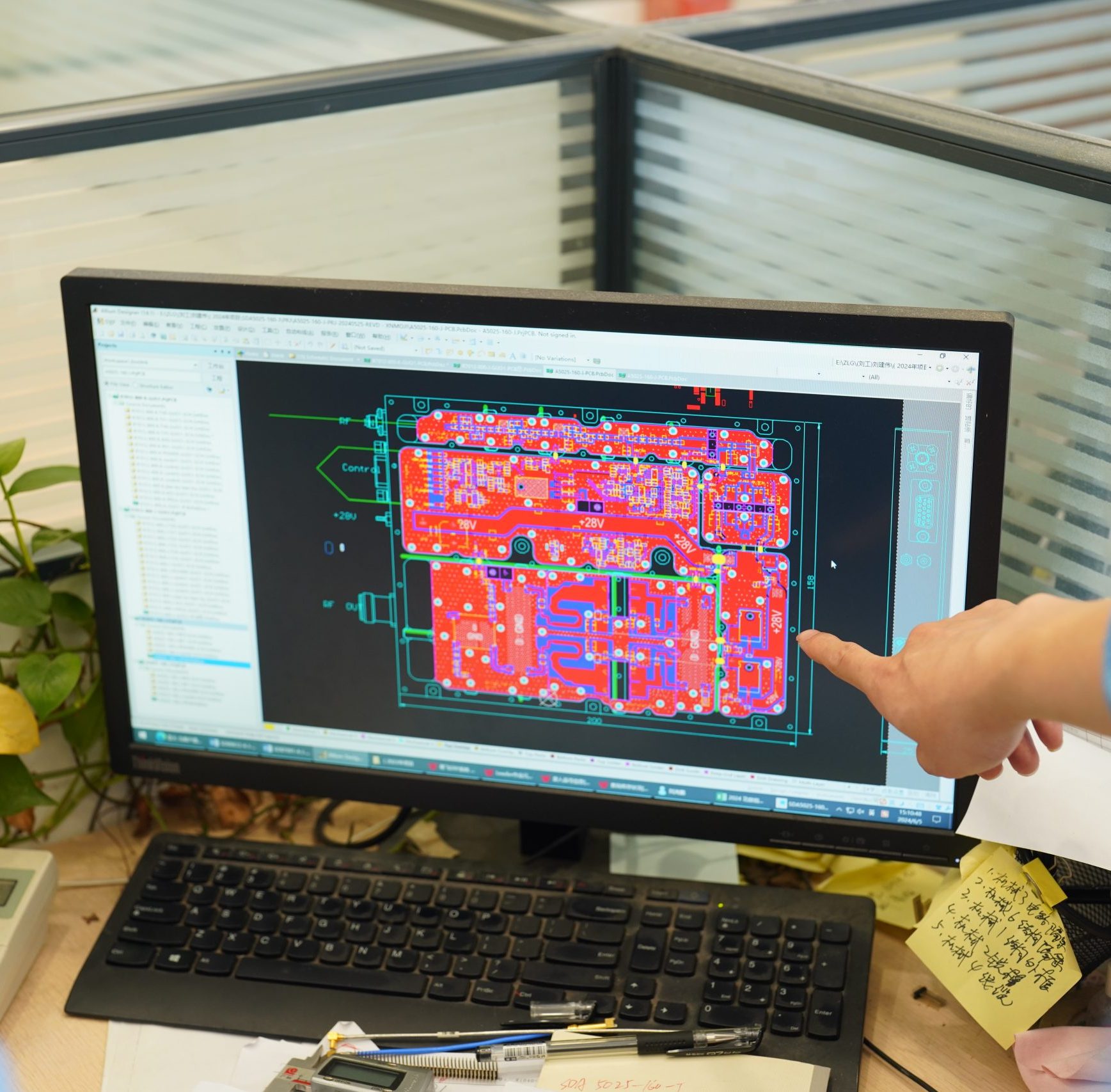
Controlled from Drawing Stage
Critical mounting coordinates and thermal dissipation fins are locked during the initial CAD phase, preventing reactive, error-prone adjustments once production begins.
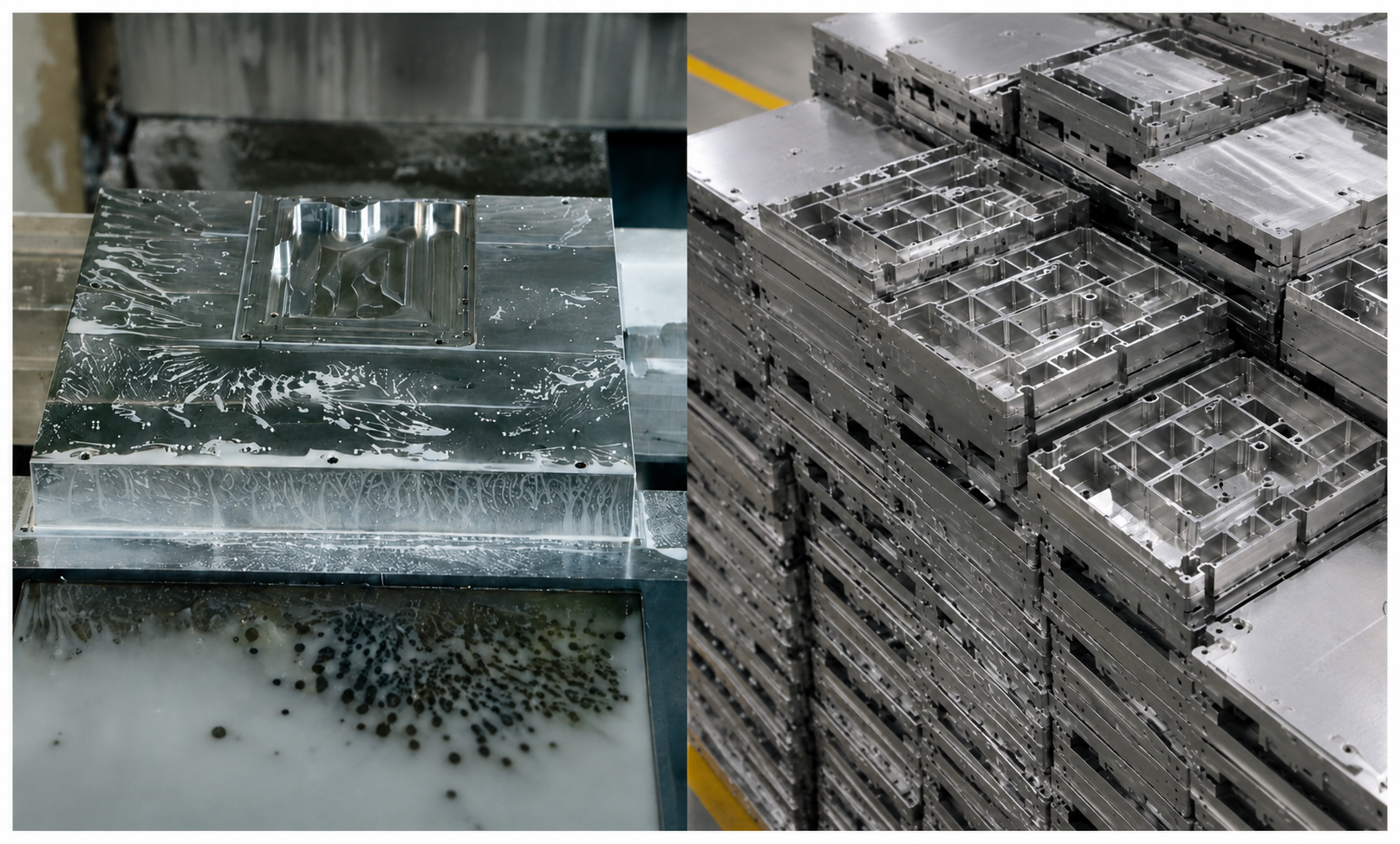
In-House CNC Machining
Relying on internalized precision milling rather than outsourced fabricators keeps structural tolerances tight, ensuring every screw hole aligns perfectly with your tower brackets.
Batch-to-Batch Structural Baseline
Enforces a strict manufacturing standard across all production runs. When a module requires field replacement five years from now, the new unit will slot in flawlessly.
Digital Birth Certificate: Accountability for Every Module
Every custom component ships with transparent, measurable proof before entering your security infrastructure.
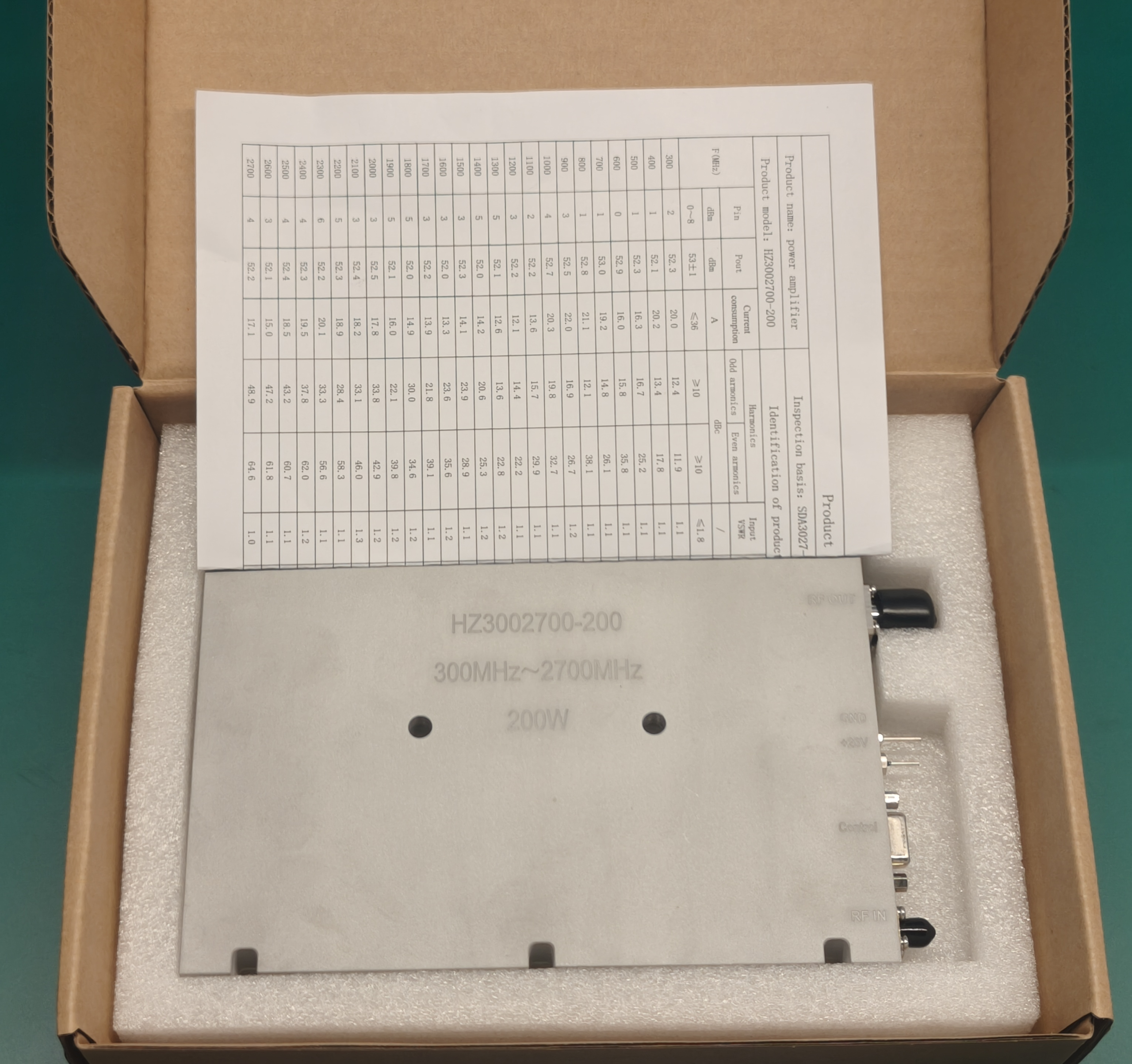
One Report for Every Component
We supply a serialized, independent digital performance audit linked directly to the specific RF module or SDR unit leaving our factory doors.
Measured Distortion & Purity
Rather than quoting theoretical specs, the report provides concrete evidence of real-world operational efficiency and spectral cleanliness mapped to airport standards.
Compliance Support for Integrators
Empowers you with hard data to confidently assure airport authorities that the deployed defense grid will strictly adhere to civil aviation non-interference mandates.
Start Your Industry-Grade Airspace Customization
Skip the sales talk. Align directly with our RF engineers.
Every operational perimeter is different. Coverage length, local communication channels, cabinet environment, and maintenance workflow all affect how the RF chain should be designed. Share your project conditions to initiate a precise technical evaluation.