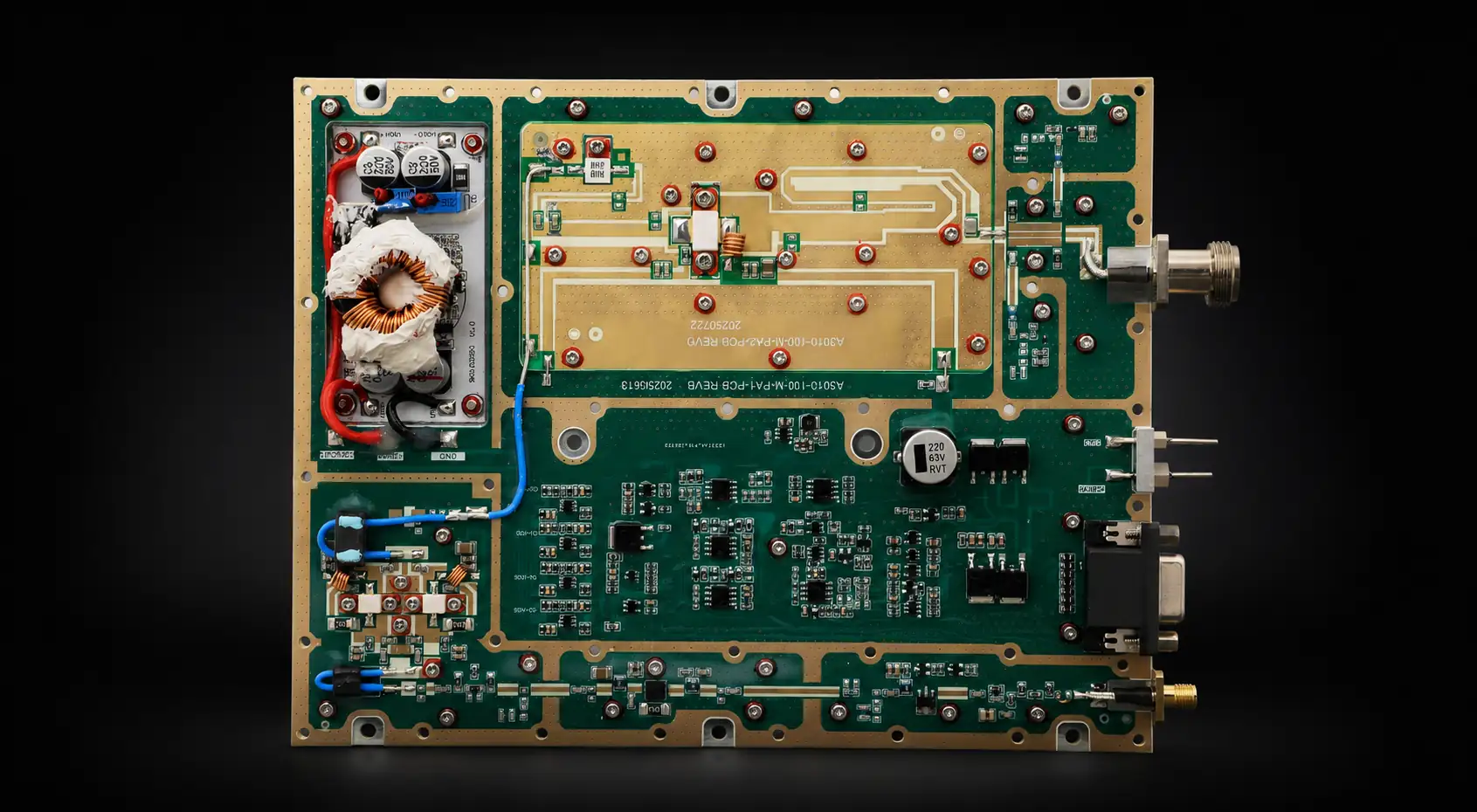
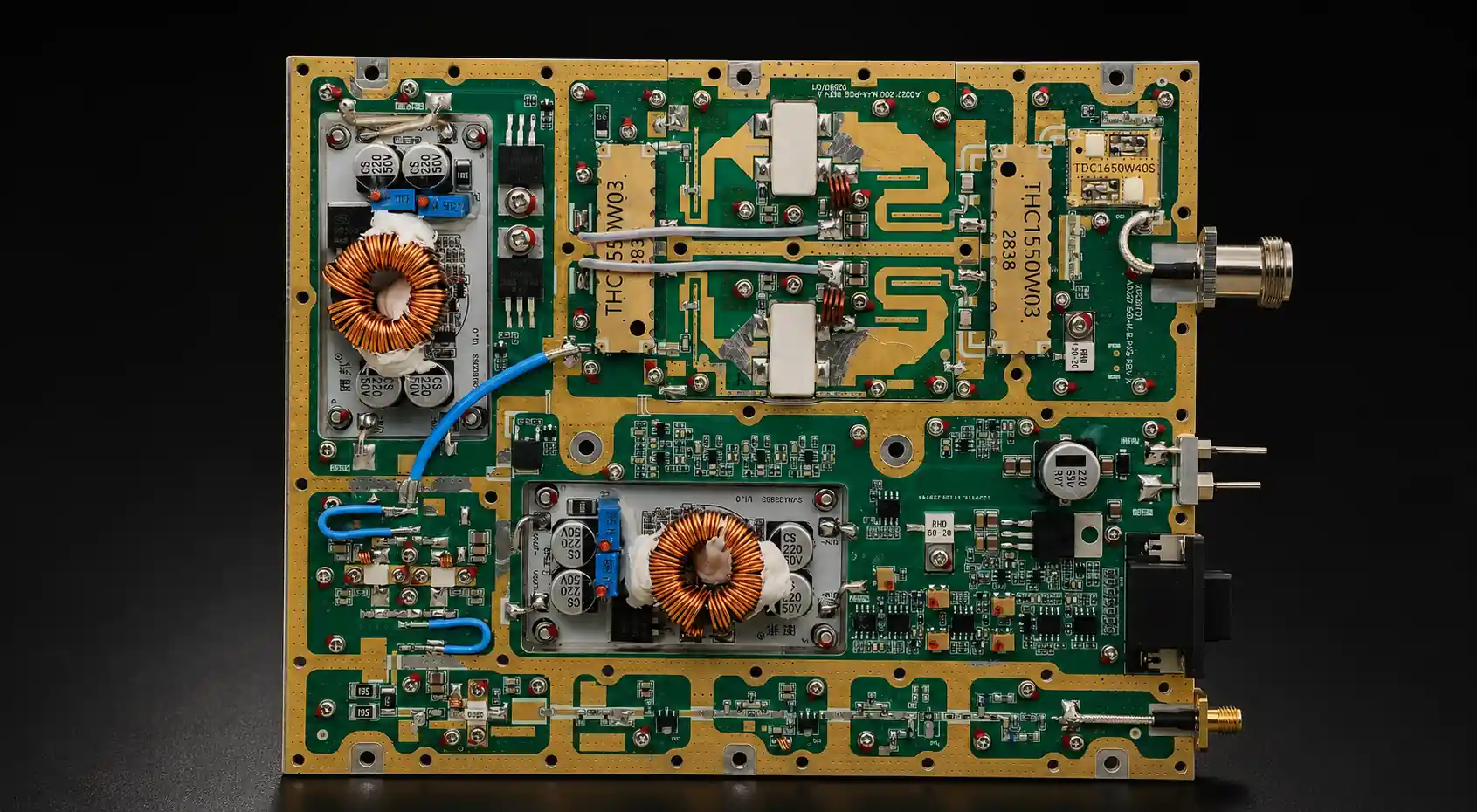
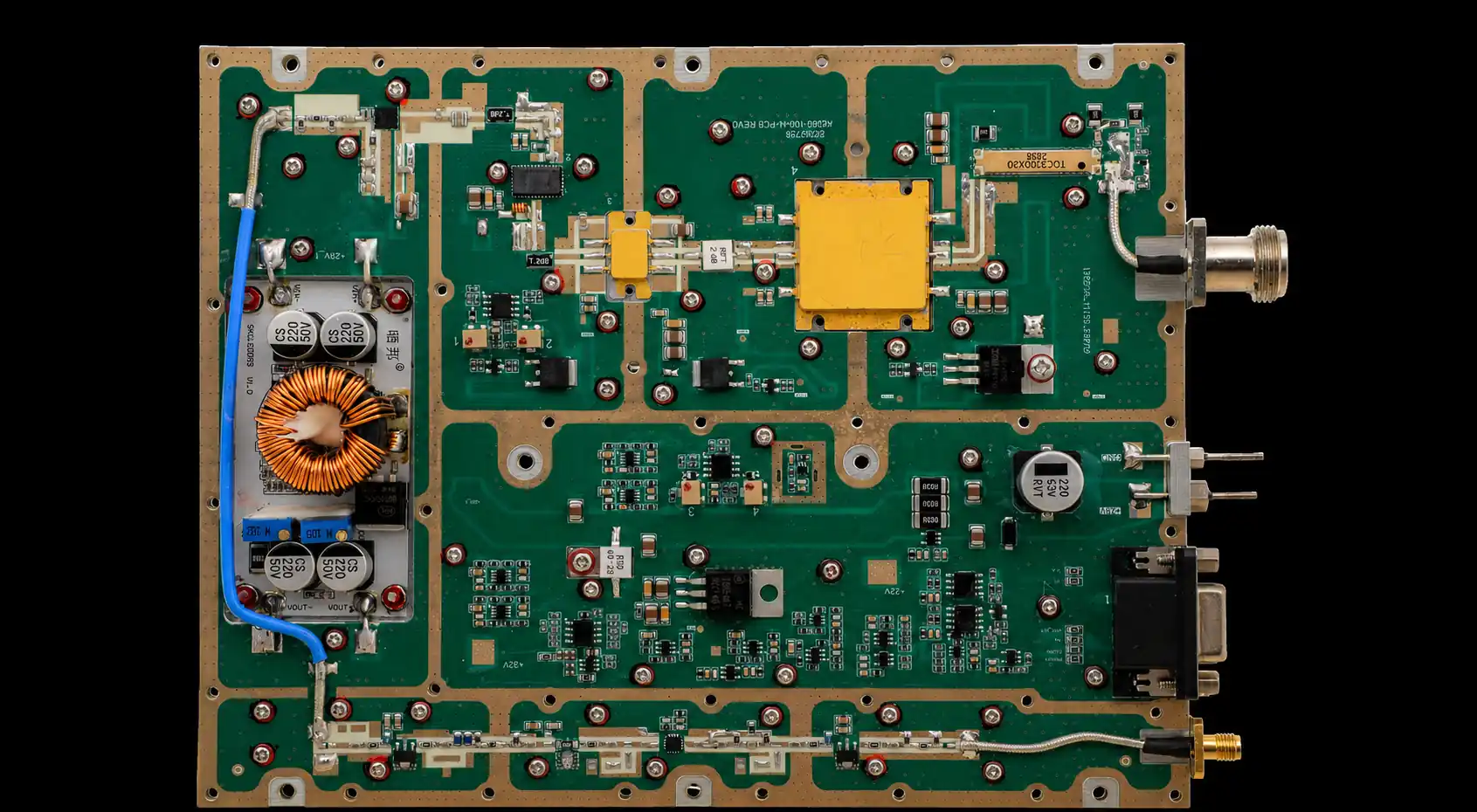
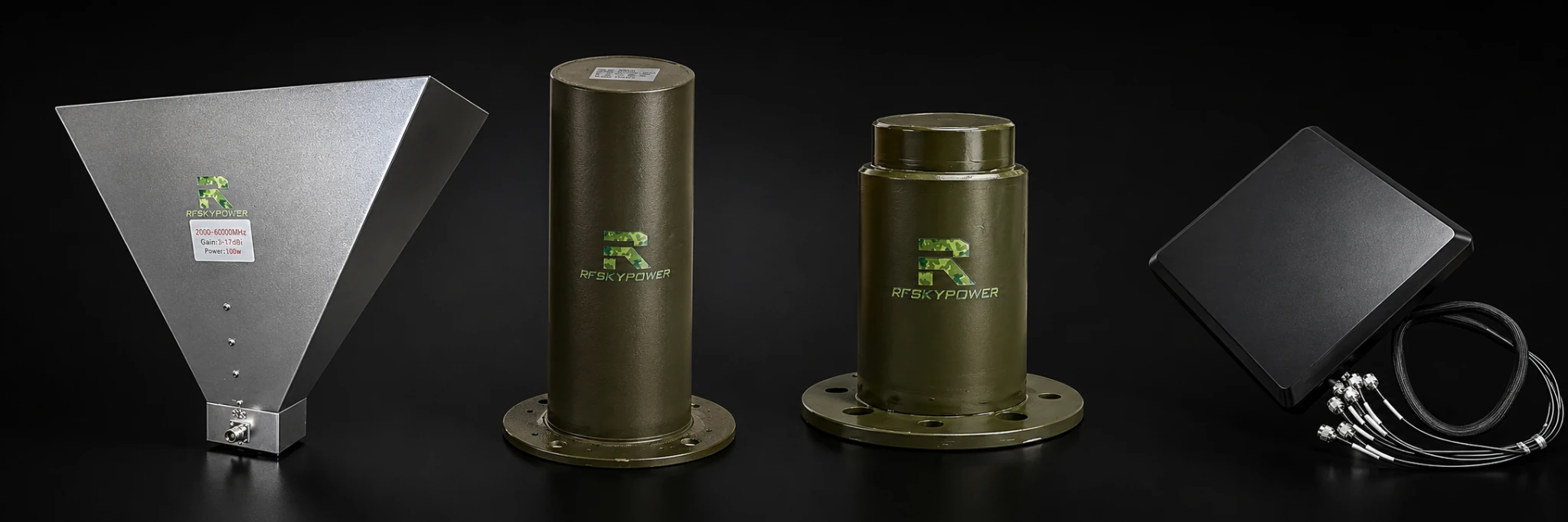
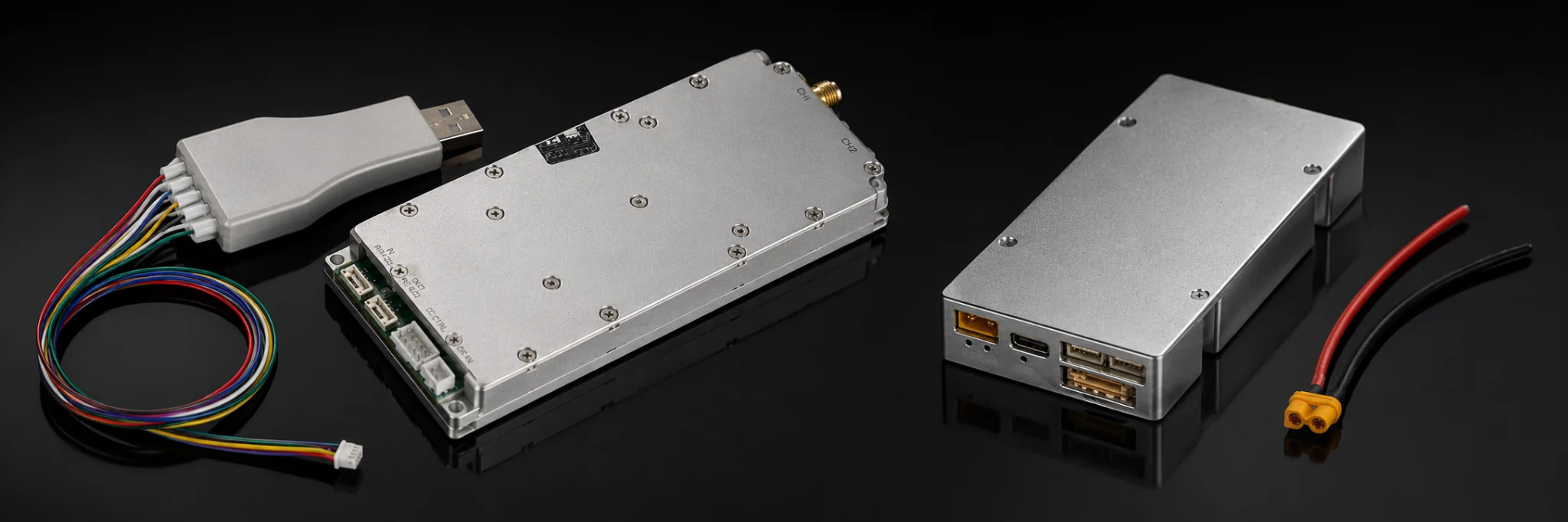



RF PA incoming inspection should decide whether critical parts can enter production, not only whether the shipment quantity, labels, and part numbers are correct. A component may look undamaged and match the approved purchasing record while its lot data, electrical parameters, mechanical condition, or source record no longer matches the accepted production baseline.
The inspection depth should follow the component’s influence on RF output, gain flatness, bias, impedance, heat transfer, protection feedback, or measurement repeatability. Low-risk packaging may need only a visual receiving check, while active RF devices, filters, matching parts, connectors, PCB materials, thermal materials, and sensing components may require additional evidence before release.
The practical decision is:
What arrived → Which module path it can affect → What evidence is required → RELEASE, RETEST, or QUARANTINE
Incoming inspection answers whether approved parts entered production within the required material and lot conditions. It does not replace supplier-change approval, assembly-process control, or final RF PA testing.
A supplier review controls where the material comes from. Incoming inspection controls what actually arrived. Process control governs how the material is assembled. Final RF testing verifies the completed module.
1. Why Visual Inspection Cannot Release RF-Critical Parts
Visual inspection is necessary, but it proves only the physical condition that can be seen during receiving.
It can identify:
- Damaged packaging
- Wrong or missing markings
- Bent pins or leads
- Corrosion
- Contamination
- Cracked housings
- Quantity mismatch
- Obvious mechanical damage
- Improper storage or handling indicators
These checks prevent visibly damaged or incorrectly identified material from entering production. They do not prove that an RF-critical part still matches the approved electrical, thermal, mechanical, or lot condition used for the accepted production baseline.
A filter can look undamaged while its insertion loss or center-frequency response differs from the approved condition. An RF transistor can carry the correct marking while its lot evidence or applicable screening data does not support the required production state. A connector can look clean while its dimensions, plating condition, contact integrity, or mechanical fit create loss or reflection after assembly.
The same limitation applies to thermal-interface materials, PCB materials, sensing components, couplers, matching parts, and harness terminals. Their relevant risks are not always visible at receiving.
Visual inspection is normally sufficient only when:
- The defect being screened is purely physical.
- The item cannot influence RF, thermal, grounding, supply, control, mechanical fit, or test behavior.
- Identity and traceability requirements remain satisfied.
- The approved inspection plan classifies the item as low risk.
Typical low-risk items may include some packaging materials, labels, non-functional accessories, or general hardware outside critical interfaces.
Visual approval should stop when the part can affect:
- RF output
- Gain response
- Frequency coverage
- Impedance or matching
- Bias or current
- Heat transfer
- Protection feedback
- Mechanical RF contact
- Test repeatability
- Batch consistency
The question is not whether every incoming item requires an RF bench test. The question is whether the selected receiving check can detect the failure mode associated with that part.
2. Which RF PA Incoming Parts Need Parameter Verification
Incoming parts deserve the highest attention when they sit directly in the RF path or can change power conversion, impedance, heat transfer, grounding, control feedback, or measurement repeatability.
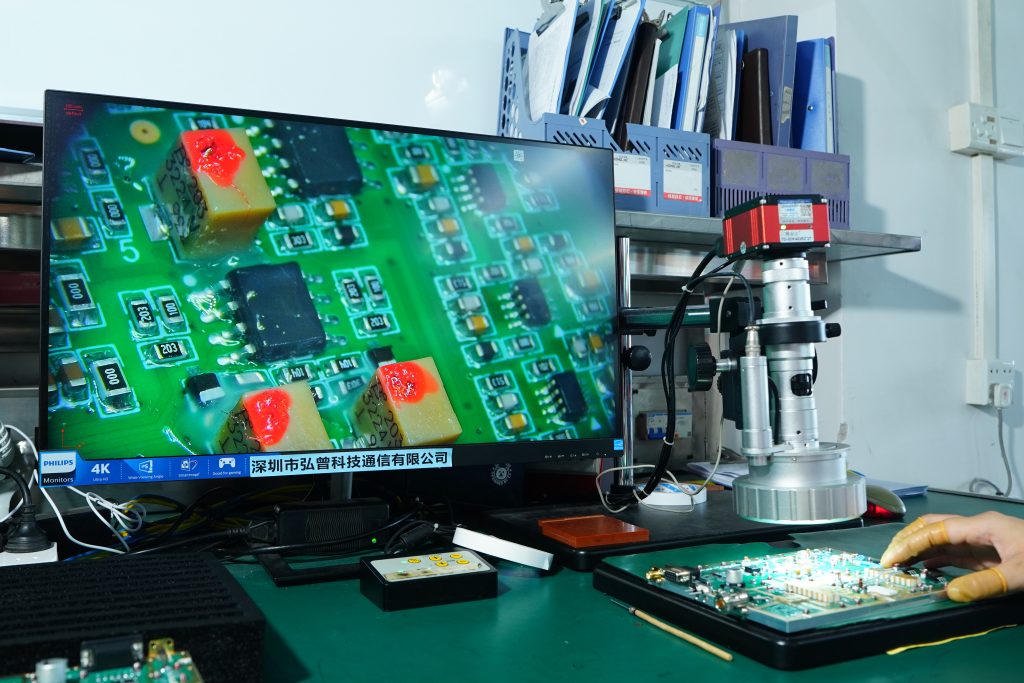
Typical categories include:
- GaN power devices
- LDMOS transistors
- RF filters
- Mixers
- Couplers
- Power dividers
- RF capacitors and inductors
- Matching-network components
- RF connectors and transition parts
- PCB and substrate materials
- Thermal-interface materials
- Harness terminals
- Current, voltage, or temperature sensing components
The applicable evidence depends on the part’s function and the way it enters production.
Active RF Devices
GaN and LDMOS devices can influence:
- Output capability
- Bias behavior
- Current consumption
- Efficiency
- Heat generation
- Gain response
- Unit-to-unit consistency
Incoming control may include approved-source confirmation, lot identity, packaging and handling review, supplier data, applicable electrical screening evidence, or controlled sample verification.
It does not mean every device must receive the same complete RF test before assembly. The inspection method should follow the approved device-control plan and the consequence of an undetected deviation.
Filters, Mixers, Couplers, and Matching Parts
These parts can influence:
- Insertion loss
- Band coverage
- Conversion loss
- Frequency response
- Gain flatness
- Coupling behavior
- Impedance
- Reflected-power behavior
Required evidence may include approved lot data, applicable parameter measurements, dimensional verification, supplier comparison data, or sampling against an accepted baseline.
The receiving record should state which characteristic is being controlled and why it matters to the completed module.
RF Connectors and Transition Parts
RF connectors affect both electrical and mechanical performance.
Relevant checks may include:
- Correct connector type
- Mechanical dimensions
- Pin condition
- Contact integrity
- Plating or surface condition
- Thread condition
- Mounting interface
- Source and lot identity
- Applicable electrical evidence
A connector problem may later appear as loss, reflection, intermittent output, unstable readings, or vibration-related behavior. Receiving inspection should therefore control more than appearance when the connector is part of the RF output path.
PCB, Thermal, and Sensing Materials
PCB materials, thermal-interface materials, grounding components, and sensing parts can affect:
- Heat transfer
- Grounding continuity
- Device mounting
- Protection thresholds
- Temperature feedback
- Current feedback
- Assembly repeatability
Their incoming evidence may depend on material identity, source record, dimensions, storage condition, shelf life, applicable material data, or controlled inspection results.
Parameter verification does not mean that every incoming part must receive the same test. Depending on the component and failure risk, the inspection method may use:
- Document review
- Source and lot verification
- Visual inspection
- Dimensional inspection
- Mechanical checks
- Electrical measurement
- RF sampling
- Supplier-data comparison
- Golden Sample comparison
- Controlled sample build
3. How to Set Inspection Depth by Component Risk
Inspection depth should be based on the consequence of an undetected deviation, not only on component price or shipment quantity.
A practical incoming-control plan can divide materials into three risk levels.
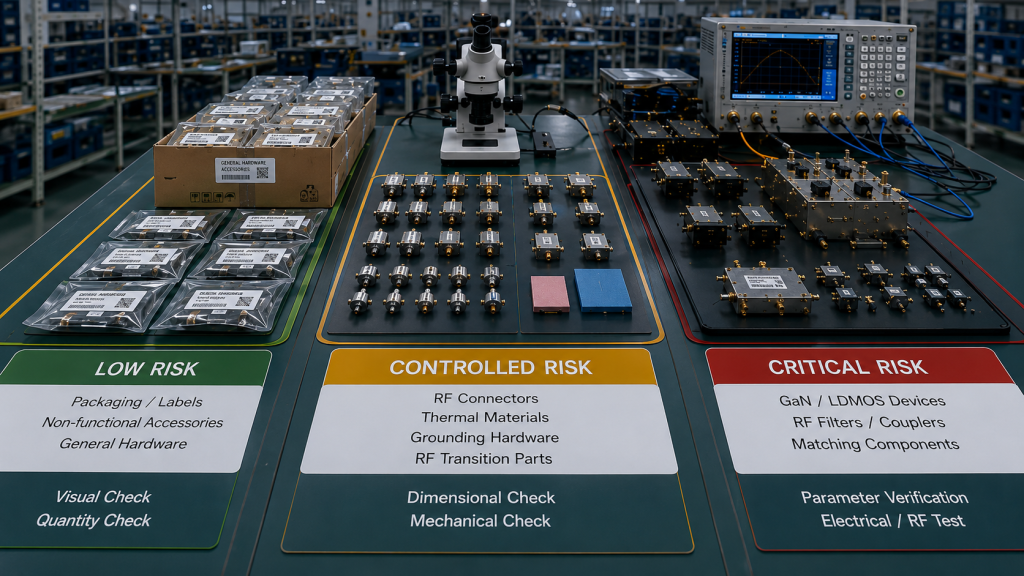
Low Risk
Low-risk items do not influence functional RF, thermal, grounding, supply, control, mechanical-interface, or measurement behavior.
Examples may include:
- Non-functional packaging
- Label materials
- Some general fasteners
- Non-critical accessories
- Protective shipping materials
Typical control may include:
- Quantity check
- Identity check
- Visual inspection
- Packaging condition
- Receiving record
Controlled Risk
Controlled-risk items can influence assembly quality, contact condition, heat transfer, mechanical reliability, or repeatability but do not directly define the main active RF performance.
Examples may include:
- RF connector hardware
- Harness terminals
- PCB or enclosure interface materials
- Thermal-interface materials
- Grounding hardware
- Mechanical transition parts
- Selected sensing components
Typical control may include:
- Approved-source verification
- Lot identity
- Visual and dimensional inspection
- Storage-condition review
- Applicable mechanical or electrical checks
- Sampling against the approved condition
Critical Risk
Critical-risk items can directly change RF output, gain, frequency response, impedance, current, heat, protection behavior, or batch consistency.
Examples may include:
- GaN or LDMOS devices
- Filters
- Mixers
- Couplers
- Matching components
- Critical RF capacitors and inductors
- RF-path transition parts
- Protection or feedback components with direct acceptance impact
Typical control may include:
- Approved supplier and source confirmation
- Lot traceability
- Applicable parameter evidence
- Defined sampling plan
- Baseline comparison
- Engineering review of inconsistent results
- Controlled sample build when direct incoming measurement is insufficient
The inspection plan should define:
- Which parts are RF-critical
- Which characteristics require evidence
- Which method is used
- Whether inspection is full or sampled
- Which acceptance limits apply
- What triggers escalation
- Who can approve release after retest
- How substitutions are controlled
The approved supplier and material state should remain connected to the incoming decision. Supplier approval establishes the allowed source, but incoming inspection must still confirm that the delivered lot matches that approved state.
When an approved material enters production under changed assembly, thermal, grounding, routing, or test conditions, the issue moves from incoming control to RF PA process-change control.
4. What Evidence Should Release, Retest, or Quarantine a Lot
Incoming inspection should end with a documented production decision.
The result should not remain as a vague note such as “checked,” “looks acceptable,” or “engineering reviewed.” The record should show what was checked, which limit applied, and what action was authorized.
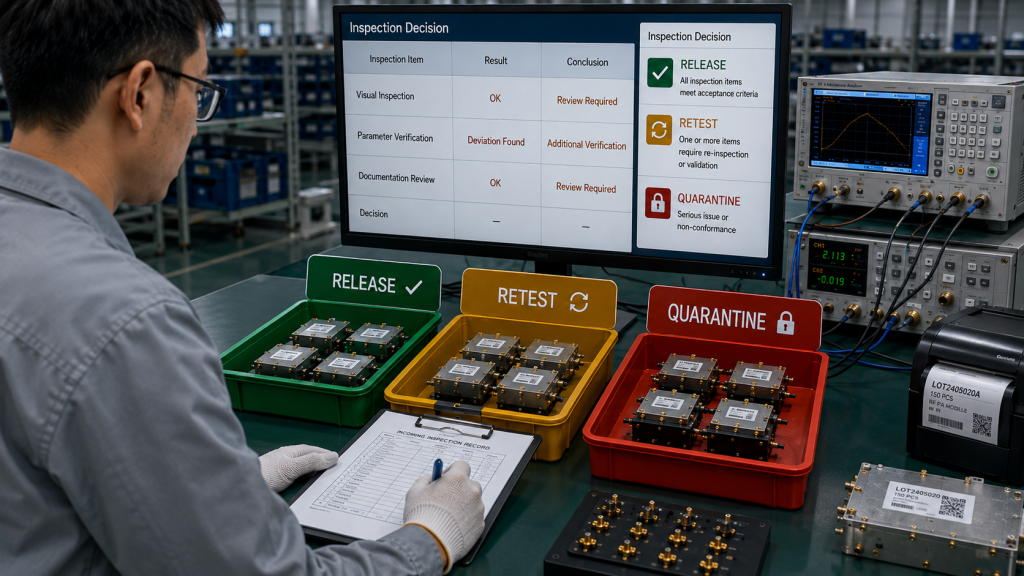
The incoming inspection result should lead to one of three decisions:
- RELEASE: Identity, lot data, required measurements, physical condition, and approved-source records meet the defined acceptance boundary.
- RETEST: The material is likely usable, but one measurement, sample result, document, or comparison must be repeated before release.
- QUARANTINE: A critical parameter is outside the approved limit, lot identity is unclear, the source is not approved, or the material cannot be connected to a valid acceptance record.
Incoming Part Risk and Release Matrix
| Incoming Part Category | Possible Module Impact | Required Evidence | Release Condition | Retest or Quarantine Condition |
|---|---|---|---|---|
| Packaging, labels, and non-functional items | Identity, handling, or storage | Visual check and receiving record | No damage, mismatch, or missing identity | Damage, incorrect marking, or missing record |
| RF connectors and transition parts | Loss, reflection, fit, and mechanical contact | Source record, dimensions, physical condition, and applicable electrical evidence | Matches approved type and condition | Damage, source mismatch, dimensional issue, or inconsistent result |
| Filters, mixers, couplers, and matching parts | Band coverage, loss, gain response, coupling, or impedance | Approved lot data and applicable parameter verification | Results remain within the defined boundary | Parameter drift, missing comparison data, or inconsistent samples |
| GaN, LDMOS, and active RF devices | Output, current, efficiency, gain, and heat | Approved source, lot traceability, handling record, and applicable electrical evidence | Matches the approved device and acceptance state | Unapproved lot, out-of-limit evidence, damaged handling condition, or unstable samples |
| PCB, thermal, grounding, and sensing materials | Heat transfer, grounding, mounting, protection, or feedback | Material identity, source record, storage condition, and applicable inspection | Matches the approved production condition | Substitution, unclear source, expired condition, damage, or failed inspection |
The lot should remain in quarantine when any of the following conditions is unresolved:
- Part identity or lot number does not match the receiving record.
- A critical RF, bias, thermal, impedance, dimensional, or mechanical parameter is outside the approved limit.
- The supplier or source is not included in the approved production state.
- Measured data cannot be compared with the approved baseline.
- Packaging, storage, moisture, ESD, or handling damage may have affected the component.
- Required certificates, measurement records, or traceability data are missing.
- A material substitution entered receiving without engineering approval.
- Retest results remain inconsistent across sampled units.
- The inspection method cannot verify the identified risk.
- The lot cannot be separated from previously released or rejected material.
RETEST should not be used to bypass an out-of-limit result. It is appropriate when:
- A measurement setup requires confirmation.
- A sample result is inconsistent but not confirmed.
- A document or certificate is incomplete.
- The comparison baseline needs verification.
- The sampling plan requires additional units.
- A handling or packaging concern can be resolved through controlled inspection.
RELEASE should identify who approved the decision and which production condition the material is allowed to enter.
5. How Incoming Records Protect Batch and S/N Traceability
Incoming inspection has limited long-term value when the released lot cannot be connected to the production and test evidence created later.
The incoming record should preserve enough information to determine:
- What material arrived
- Where it came from
- Which lot was inspected
- Which method was used
- Which result was obtained
- Which limit applied
- Who approved release
- Which modules later used that lot
At minimum, record:
- Part identity
- Approved supplier or source code
- Manufacturer lot or date code
- Internal receiving-lot number
- Quantity received
- Packaging and handling condition
- Inspection method
- Sample quantity
- Measured or reviewed result
- Acceptance limit
- Inspection date
- Inspector or test station
- RELEASE, RETEST, or QUARANTINE decision
- Engineering disposition when required
- Substitution or deviation reference, if applicable
When the project requires deeper traceability, the production record should also identify which module S/N range used the released lot.
This creates a connected evidence path:
Approved source → Incoming lot → Release record → Production batch → Module S/N → Final test report
Weak incoming traceability becomes most expensive when a later batch, customer retest, or field symptom must be traced back to one supplier lot or material condition.
Incoming records should also remain separate from process records. A released lot proves that the received material met its incoming boundary. It does not prove that the material was assembled under an unchanged process.
Likewise, the incoming record does not replace the completed module report. Finished-unit evidence should use version-controlled RF PA test records to identify the applicable hardware, BOM, test method, and result.
For final shipment approval, the buyer should be able to confirm that the released material state, production record, and S/N-linked shipment acceptance evidence describe the same delivered units.
RFQ: What Buyers Should Ask About RF PA Incoming Inspection
General statements such as “all materials are checked” do not define an RF PA incoming inspection process.
Buyers and system integrators should ask:
- Which incoming parts are classified as RF-critical?
- Which items receive only visual inspection?
- Which items require parameter, dimensional, electrical, or supplier-data evidence?
- What supplier, part-identity, lot, and date-code records are retained?
- Which sampling method and acceptance limits are used?
- What conditions trigger RETEST or QUARANTINE?
- How are unapproved substitutions escalated?
- Can released lots be linked to the module S/N range that used them?
- How are inconsistent sample results handled before production?
- Which incoming records remain connected to final module test and shipment evidence?
A useful supplier answer should identify:
- Critical-component categories
- Applicable inspection methods
- Sampling rules
- Acceptance boundaries
- Lot records
- Escalation authority
- Quarantine controls
- Production and S/N traceability
A weak answer relies only on appearance, part number, or a general claim that final testing will catch any problem.
Final RF testing remains necessary, but it should not be used as the first control point for material risks that could have been stopped before assembly.
Conclusion
RF PA incoming inspection should determine whether critical materials can enter production without breaking the approved module baseline.
Visual checks can identify physical damage, identity errors, and handling problems. They cannot by themselves confirm RF, electrical, thermal, impedance, mechanical-interface, or lot consistency.
The production gate should remain clear:
Identify the received lot → Classify the affected module path → Apply the required evidence → RELEASE, RETEST, or QUARANTINE → Preserve the link to production and S/N records
For projects requiring custom RF power amplifier modules, RF SKYPOWER can align incoming-inspection evidence with the approved BOM, supplier state, lot traceability, production control, and final S/N-linked test records.
Submit the frequency range, target output, critical-component requirements, approved-source rules, lot-control method, sampling plan, acceptance limits, retest or quarantine process, and shipment-evidence requirements through our engineering RFQ.