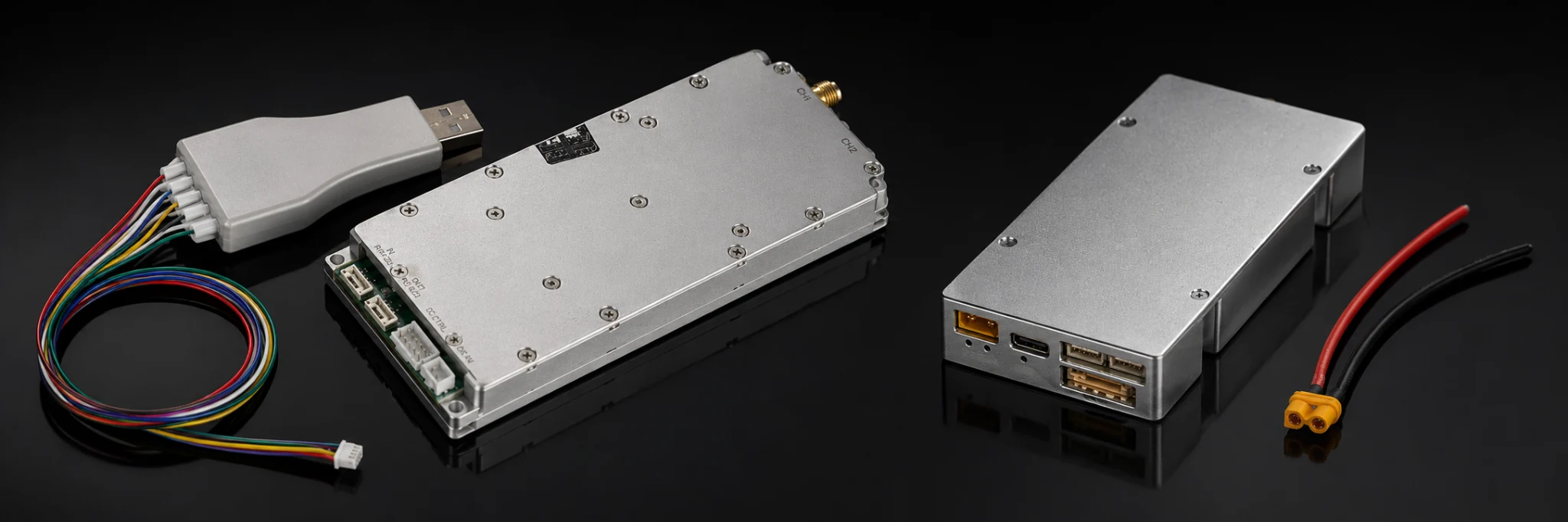
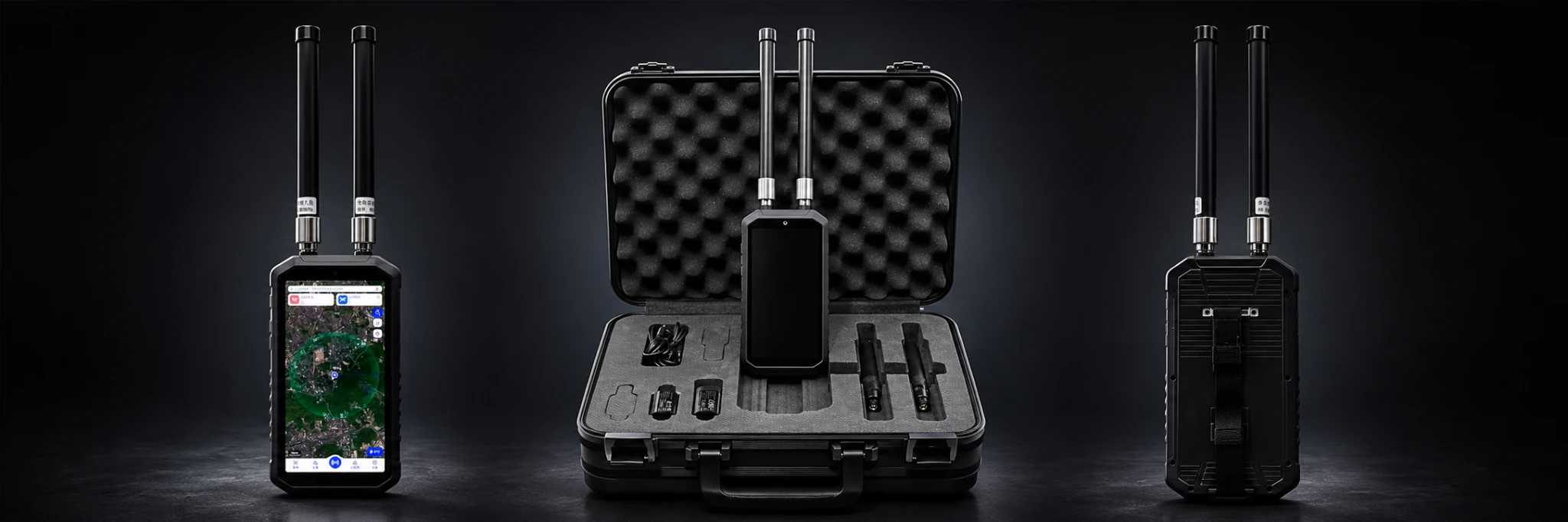

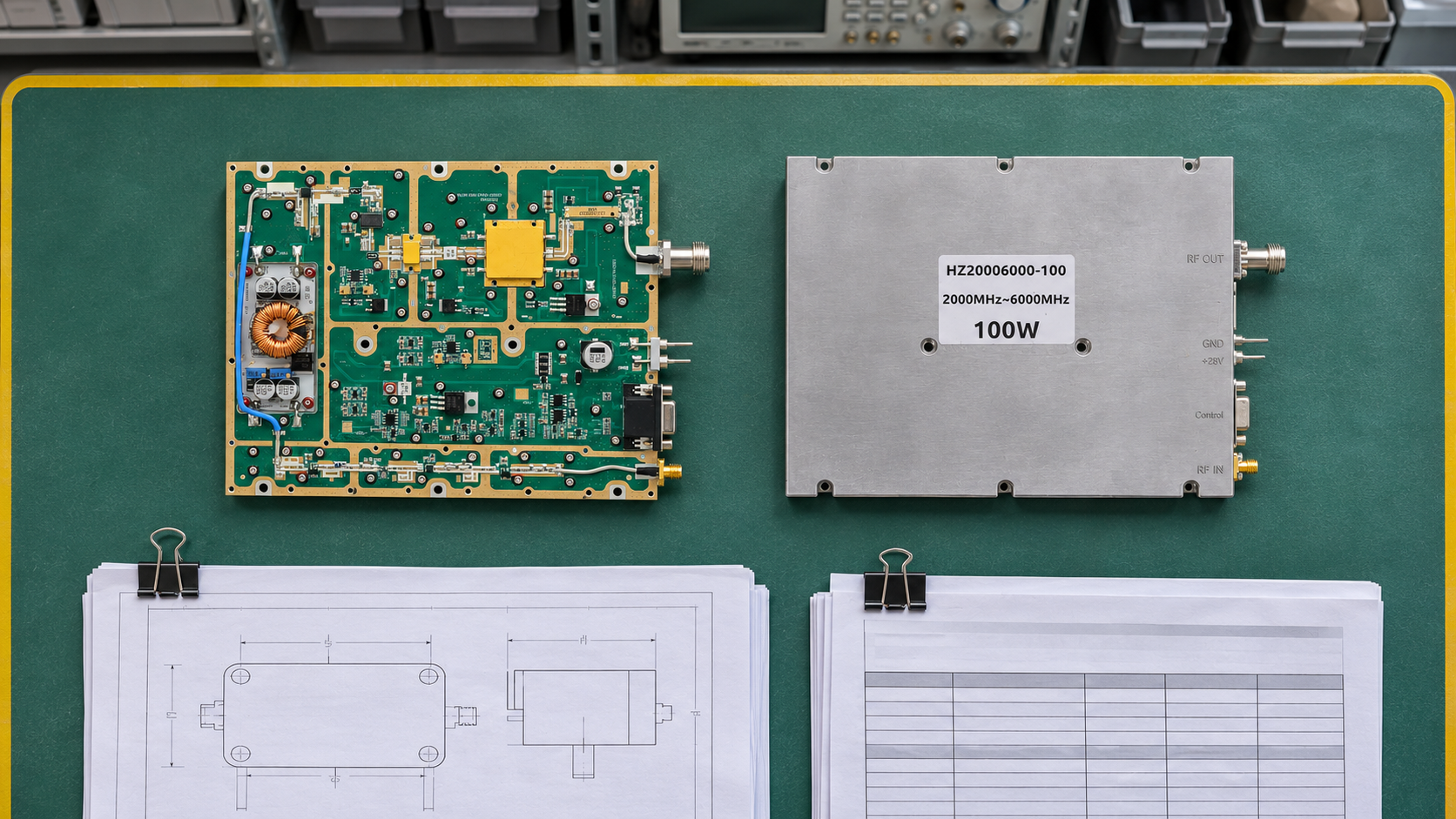
When buying an anti drone module, judge an original equipment manufacturer (OEM) offer and a retail-listed RF board by the same documents. An OEM label alone says little about the actual delivery scope, controlled revision, accountable engineering party, or test evidence. A retail seller may provide a more verifiable offer than an OEM-labeled seller.
Match the quoted item to a current specification, revision record, and written supply scope before comparing offers. Photographs, marketplace badges, and headline ratings describe an offer; they do not establish its controlled identity.
1.Are OEM Anti-Drone Modules and Retail Jammer Boards Different Products?
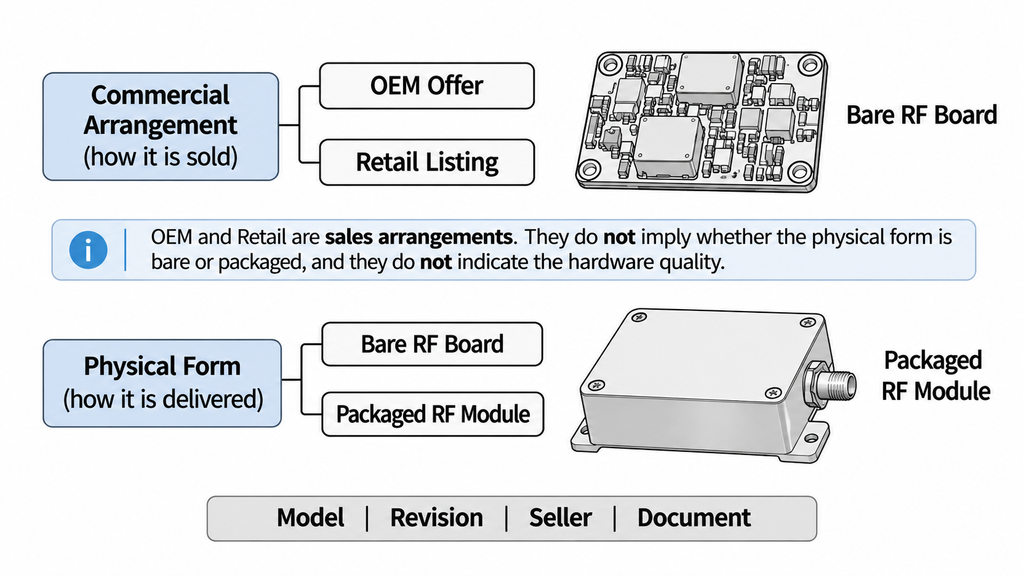
OEM and retail describe commercial arrangements, not hardware grades. On marketplaces, “OEM” may mean manufacturer-supplied hardware, customization, or private labeling. Original design manufacturer (ODM) indicates a claimed design role. Neither acronym identifies who may change the board, control its specification, or issue its test records. Those responsibilities need to be clear in the quotation and agreement.
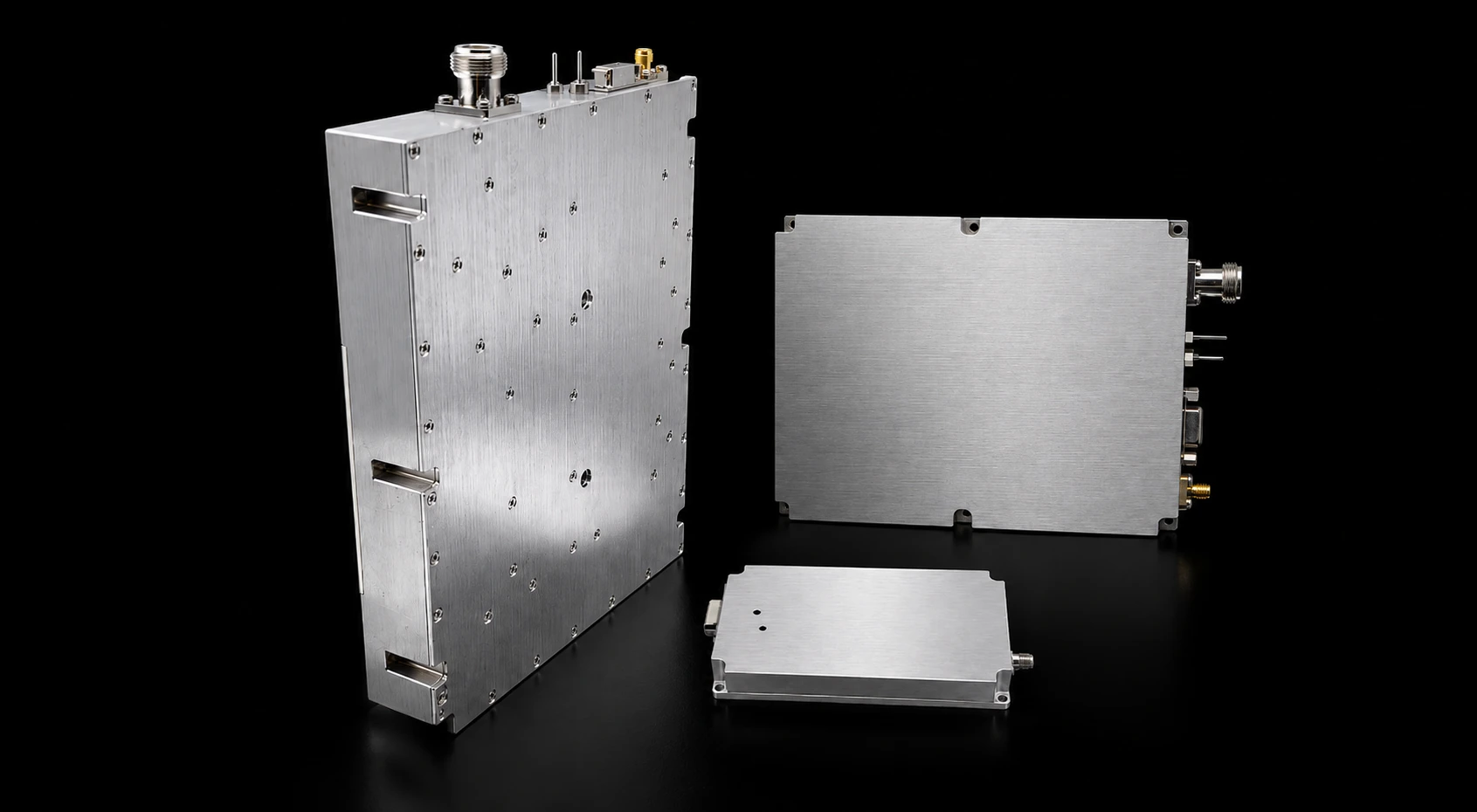
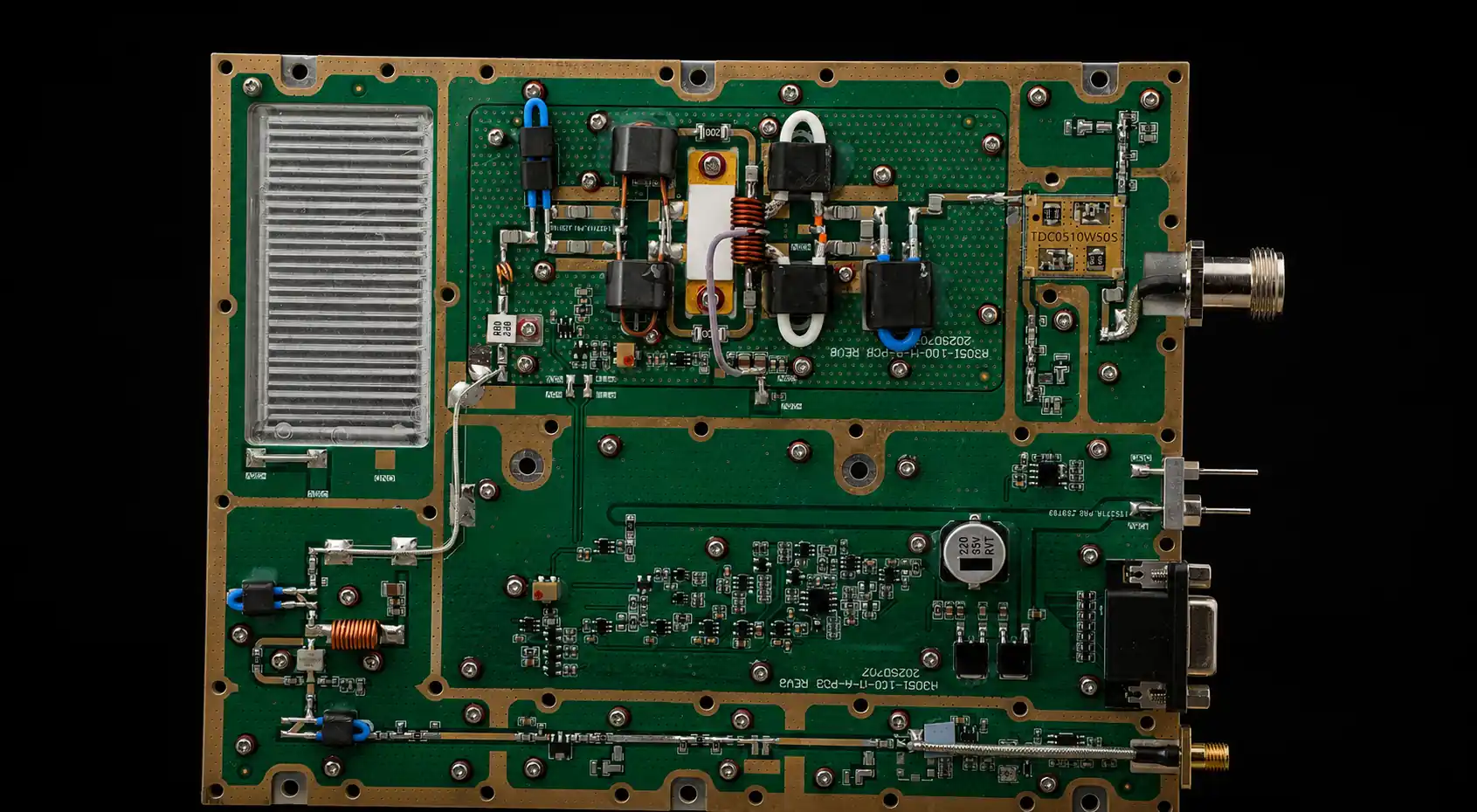
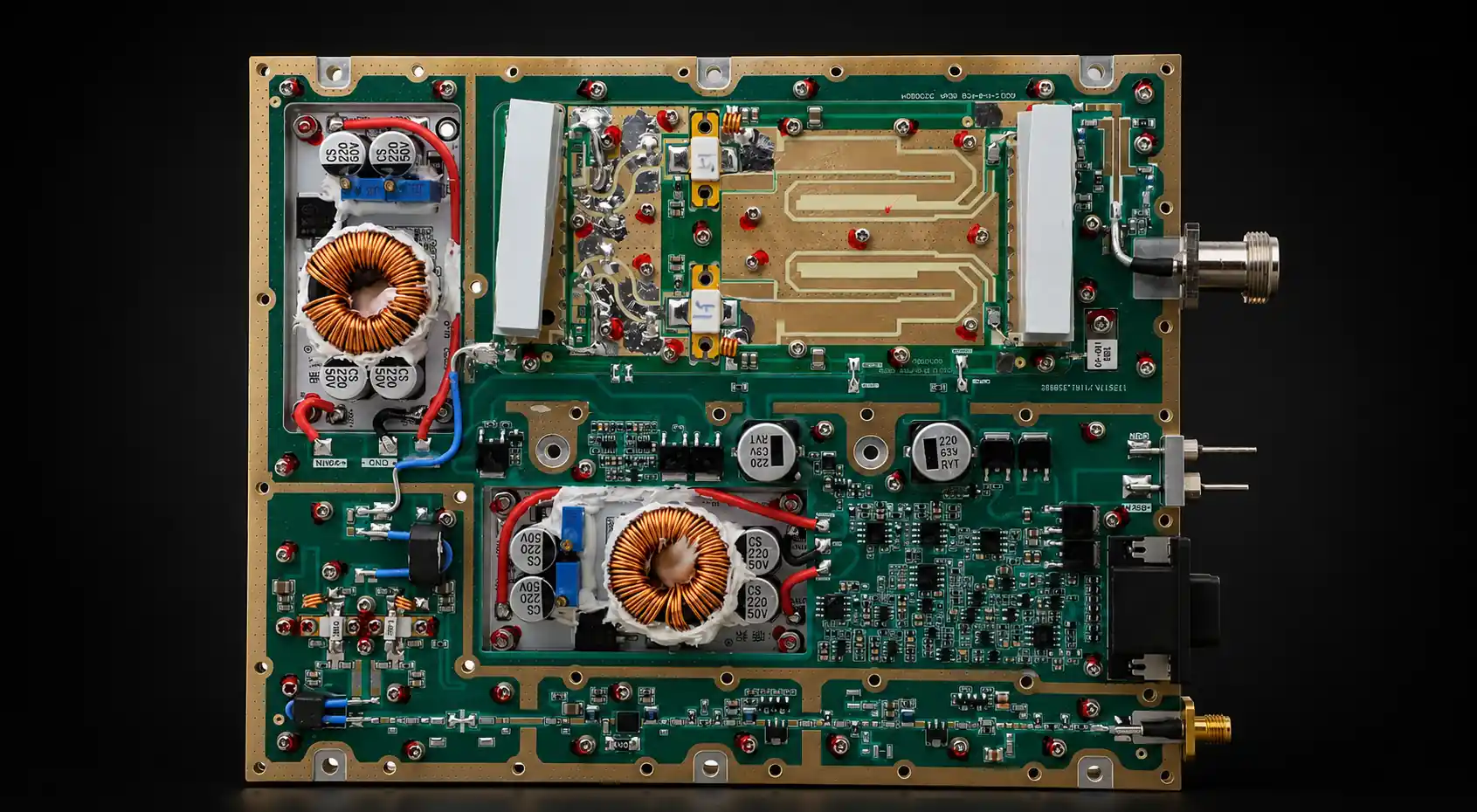
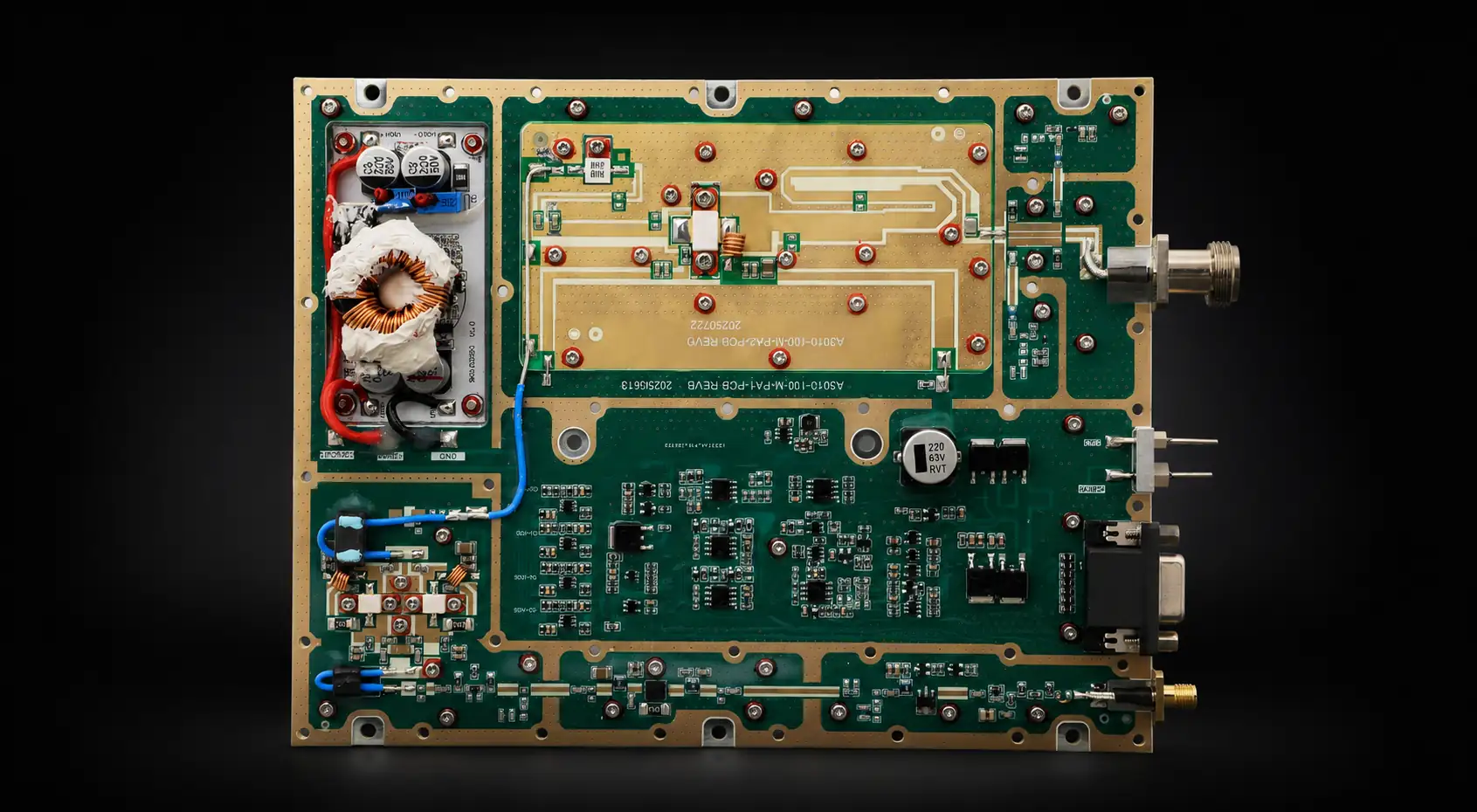
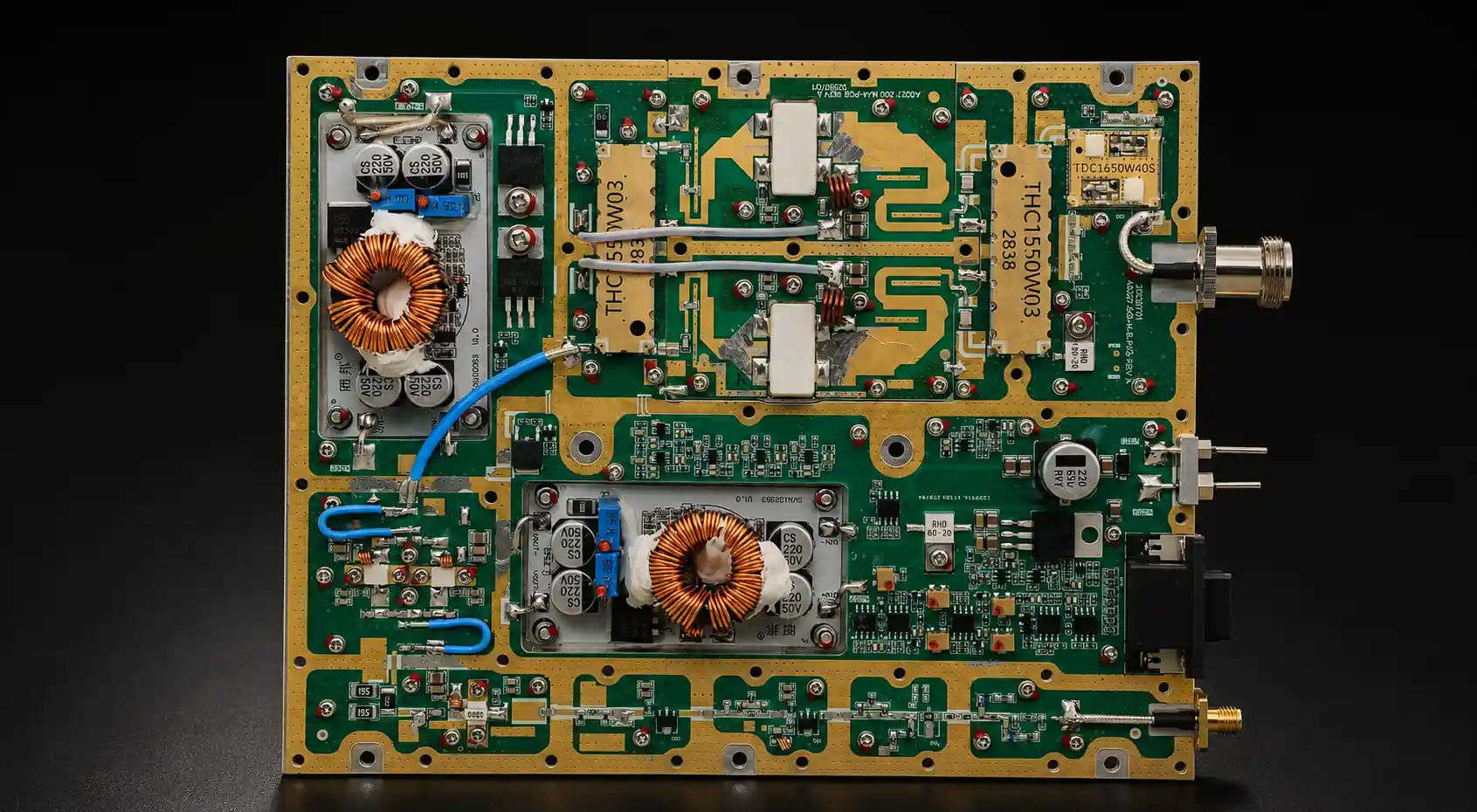
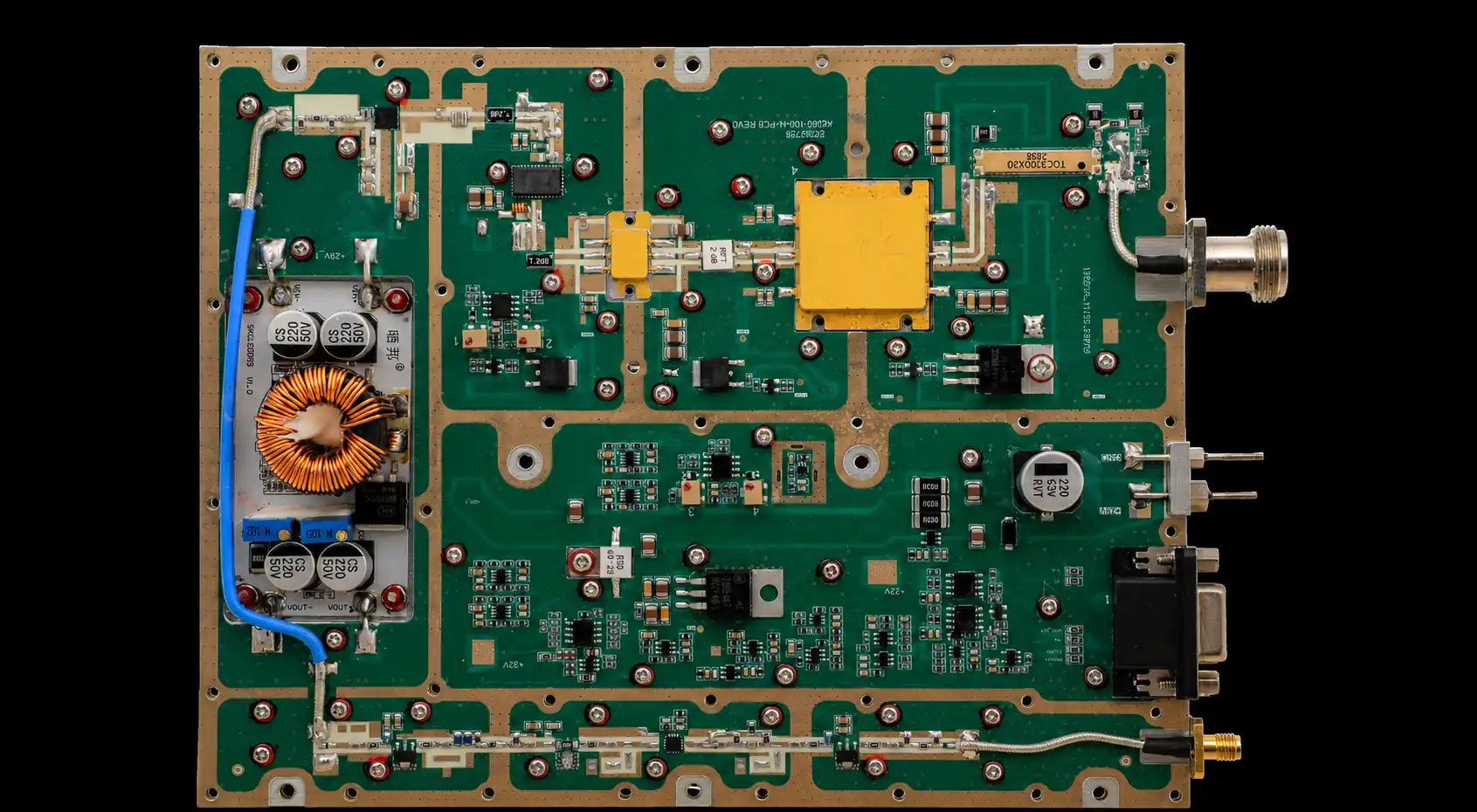
Retail identifies the sales channel; a bare printed circuit board (PCB) and an enclosed RF module identify physical forms. Packaging and price say little about the engineering evidence. A listing for a drone jammer module may describe an RF power amplifier (PA), a board with additional functions, or a larger RF assembly. List the functions actually supplied before comparing it with another offer.
Consider two hypothetical offers. A retail-listed board comes with a revision-specific interface document and test record. An OEM-labeled quotation supplies a catalog image and headline output rating. The retail offer is ready for further screening; the OEM offer needs more evidence. The labels alone predict neither supplier’s eventual qualification.
Describe each candidate as a board or packaged module. Capture its model, revision if known, selling entity, and document type: listing, controlled specification, or revision-linked test record. Request the current specification and delivery-scope statement. A photograph, platform badge, or price alone leaves the engineering result not comparable yet.
2.What Does the Supplier Actually Deliver?
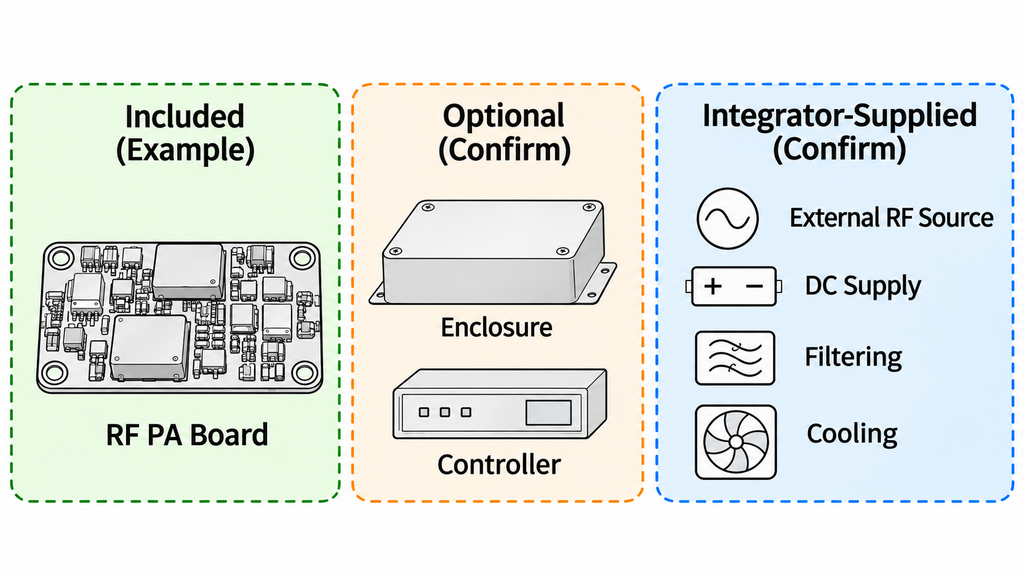
Two quotations may use the same module name and include different hardware. One supplies a bare RF PA board; another includes an enclosure, controller, or thermal assembly. Either may depend on external signal generation, filtering, DC power, or cooling. Compare prices after aligning the supplied items and dependencies.
A controlled product version identifies the hardware revision and relevant control configuration under an applicable specification. Request the quoted model, version, delivery list, mechanical drawing, connector information, and a breakdown of included, optional, and integrator-supplied functions. For a distributor, identify the organization that controls the technical specification and confirms the offered revision. This scope check does not require proprietary circuit details.
An RF PA board may be only one stage within a counter-UAS RF module. Put the deliverable, options, exclusions, and responsible parties into a short supply-scope statement for the quotation.
When the delivery level matches but one supplier lacks controlled documents, compare confirmed terms and request the outstanding records. An unclear assembly level or critical external dependency puts the whole-offer price and capability ranking on hold.
3.Which Frequency and RF Output Claims Can Be Compared?
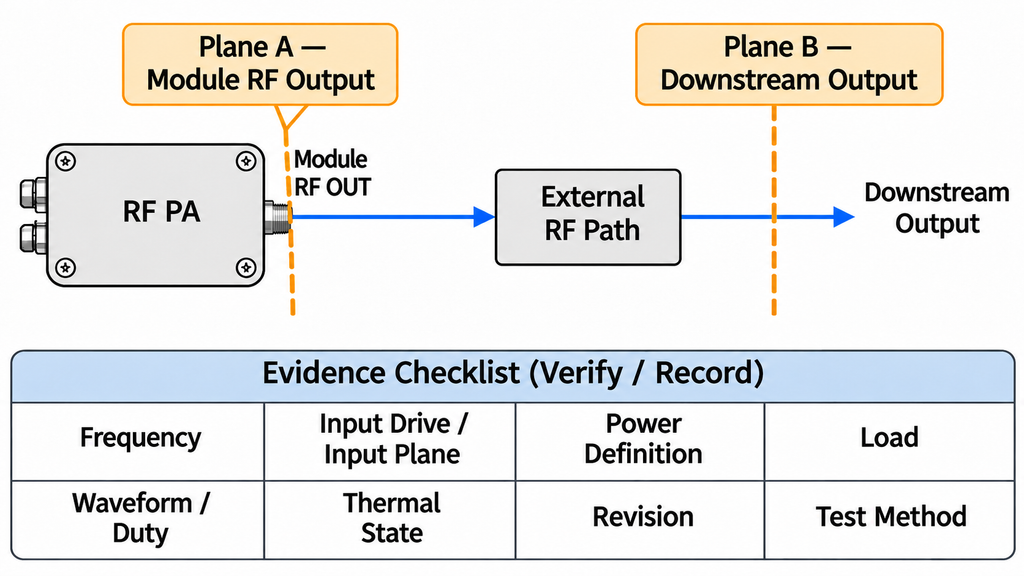
Identical frequency and power figures can describe different test conditions. For each claim, identify the quoted model and revision, whether the number is typical or a committed rating, and which document and issuing party support it.
An RF reference plane is the point where a reported level applies. Align frequency points, power definition, actual input drive and its reference plane, output plane, load, waveform or duty condition, thermal state, test method, and applicable version. A module-connector value differs from a downstream system-level value. So does a brief cold test from a thermally stabilized run.
Mark claims comparable when relevant conditions and product scope align, partially comparable for the supported subset, or not comparable yet when a critical condition is missing. For the last category, name the missing output definition, test condition, report identity, or revision mapping, and suspend numerical ranking. A promotional screenshot provides less usable evidence than a condition-linked record for the offered configuration.
To establish whether a claim meets its specification, proceed to signal-quality verification under defined conditions. Protocol coverage and field effectiveness require separate evidence.
4.Who Owns the DC, Control, Thermal, and Protection Boundaries?
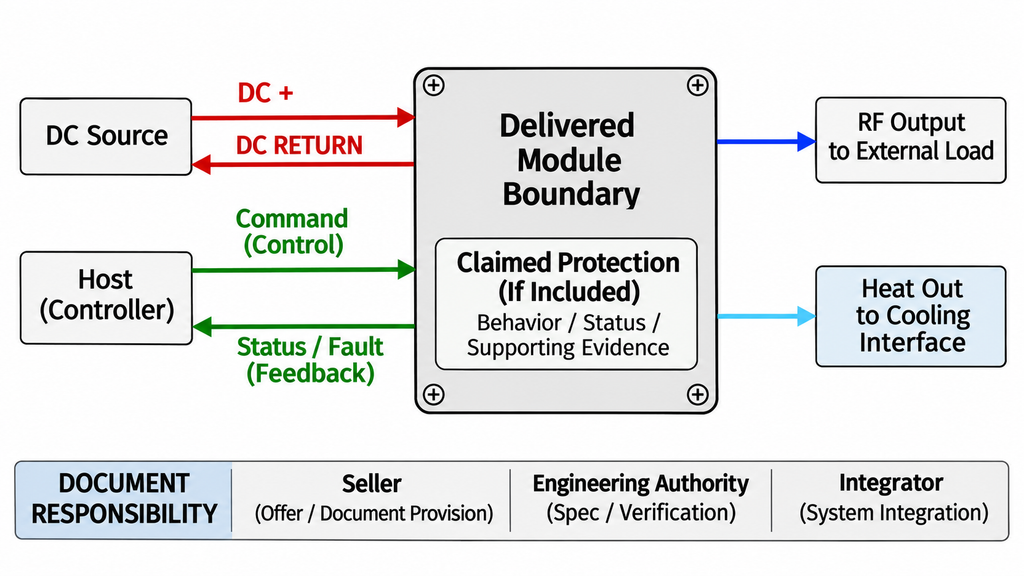
The seller taking the order may differ from the module designer and test-report issuer. Identify the commercial seller, the engineering authority responsible for module specifications, and the system integrator before assigning integration tasks. A distributor may coordinate the documents, but the claimed interface still needs an accountable technical owner and a current revision.
For DC, obtain the electrical interface and name the party providing the external power path. For control, identify documented commands, operating states, fault feedback, and responsibility for their system interpretation. For thermal integration, identify the module’s operating boundary and cooling or mechanical assumptions. For protection, request the feature description, evidence of its stated behavior, and recovery responsibility where relevant. “Protection included” is too vague to assign those interfaces.
The engineering authority should substantiate claims within the delivered module boundary. The seller identifies the applicable files and technical contact. The integrator checks the external DC, control, cooling, and load interfaces assigned to it, or records a different contractual split.
For each boundary, record the responsible entity, current document, and outstanding system check. If a decision-critical operating state, thermal assumption, or document owner remains unknown, hold integration comparability. The separate question of whether the named authority controls design and production belongs to RF amplifier source-factory accountability.
5.Can the Approved Sample Be Reproduced in Production?
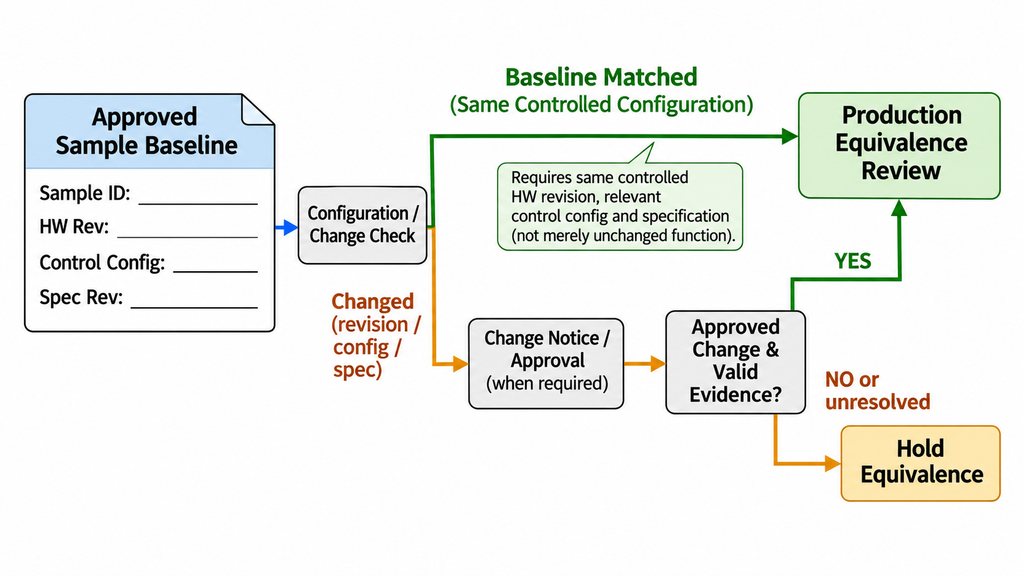
Sample approval covers a documented configuration and set of test conditions. A marketplace listing or model name may stay unchanged while a hardware source, control configuration, or supplied assembly changes. For production supply, establish who can approve a revision and how the seller responsible for delivery learns about it.
Put the accepted sample’s model, hardware revision, relevant firmware or control configuration, and specification revision into the purchase terms. Specify which changes need advance notice, buyer review, or approval. If the seller is an intermediary, assign responsibility for communicating them. An approved change can proceed with supporting evidence; an untracked change calls the earlier sample evidence into question.
Engineering change notices (ECNs), where used, can document the notification and approval route. This screen requires revision identity and accountable change control; access to a proprietary bill of materials is a separate commercial issue. If a change affects a claim relied on during sample approval, check whether that claim still applies to the revised configuration.
Keep the approved baseline, change authority, and notification obligation in one record. If the offered production configuration cannot be mapped to the sample or an approved equivalent, hold the production-equivalence decision. For repeat orders, examine supplier changes and batch stability after approval against that baseline.
6.What Evidence Must Connect the Sample, Revision, and Delivered Unit?
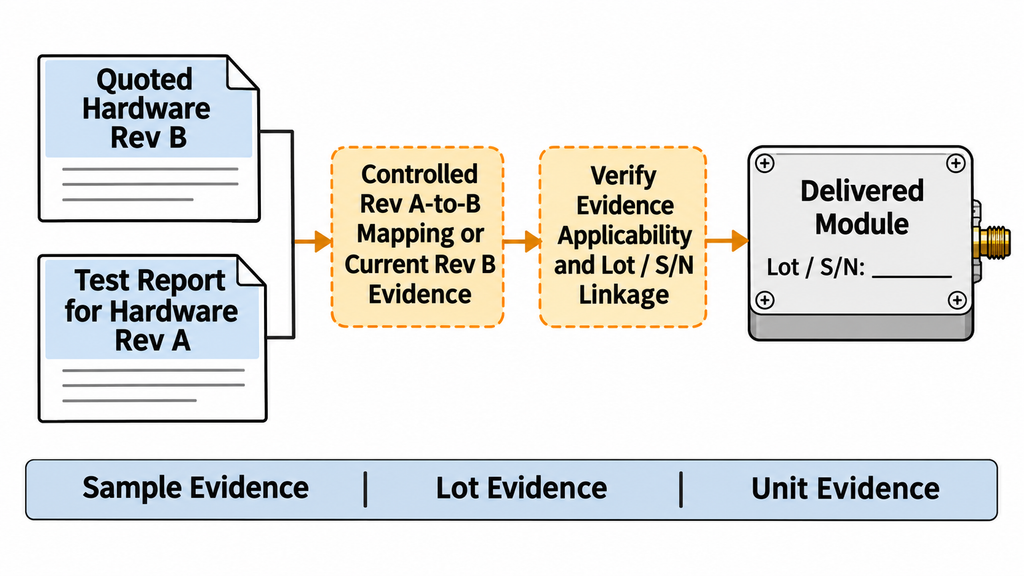
The evidence applicability scope defines the product configuration, operating conditions, and samples or deliveries covered by a record. Identify the report issuer and how the seller connects that report to the quoted revision.
Design or sample-validation results apply to the identified sample and conditions. Representative production records may cover a process or lot under stated sampling rules; batch evidence applies to the named batch. A unit-specific result covers an identified unit, often by serial number (S/N). Specify the level required for the project’s acceptance decision.
Suppose a retail seller forwards a test report for an earlier board revision while quoting a later one. The report may accurately describe the earlier test. Before applying it to the new offer, request controlled revision mapping from the responsible engineering authority or current evidence that covers the offered revision. Check the report identifier and date, model, revision, conditions, issuer, and named sample, lot, or unit. A video can show an observed process; a test report records measurements under stated conditions. A formal acceptance record should also identify the agreed criteria, acceptance decision, and shipment scope. Where unit-level evidence is required, connect the delivered S/N to its contractual records.
Some contracts call for a report on each delivered unit; others accept agreed sample or lot-level evidence. State the required level in the procurement documents. When records omit the relevant configuration or shipment scope, request the missing link and keep that delivery-evidence decision open.
7.How Should a B2B Buyer Screen the Supplier Before RFQ?
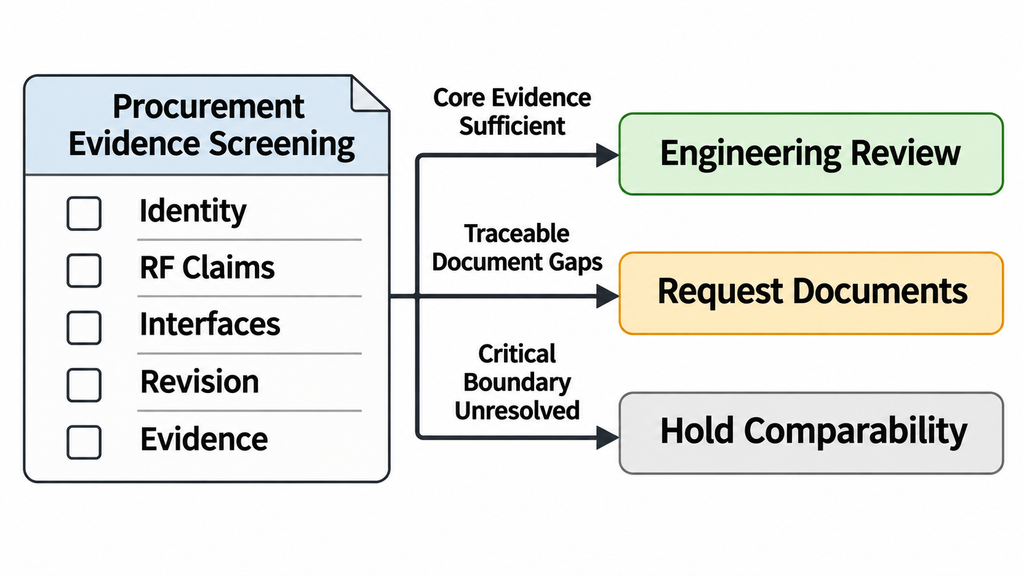
Before issuing a request for quotation (RFQ), screen each anti drone module candidate against the same evidence requirements. Capture the document issuer, file identifier and revision, applicable product or delivery scope, and responsible contact. A seller may forward a manufacturer’s records; those records still need a traceable connection to the actual offer.
OEM vs. Retail Supplier Evidence Screening Matrix
| Check item | Required evidence | Responsible party | Applicability | Action if missing |
|---|---|---|---|---|
| Product identity and delivery scope | Current specification, quoted revision, supply-scope list | Seller identifies; engineering owner confirms | Exact offered configuration | Request source and scope; hold offer ranking |
| Frequency and RF output claims | Rated claim and condition-linked test record | Test issuer documents results; claim owner defines rating; buyer checks applicability | Quoted revision, output plane, test state | Request missing conditions; pause numerical comparison |
| DC and control interfaces | Controlled interface drawing and command, status, fault definitions | Engineering owner defines; seller supplies; integrator verifies | Module revision and external boundary | Confirm document owner; hold interface review |
| Thermal and protection boundaries | Operating assumptions, claimed behavior, supporting record | Engineering owner documents; integrator verifies external conditions | Specified thermal, load, and duty conditions | Clarify claimed behavior and responsibility |
| Approved configuration baseline | Sample identity, hardware and relevant control revisions, specification | Engineering owner records; buyer approves baseline | Sample and proposed production version | Request mapping; hold equivalence judgment |
| Change responsibility | Agreed change notice and approval process | Engineering owner identifies changes; approval and notification follow the contract | Affected configurations or lots | Define notification and approval route |
| Sample-to-delivery evidence | Applicable sample, lot, or unit records with traceable identity | Issuer identifies coverage; seller supplies and links record; buyer sets level | Named sample, lot, or S/N as required | Request record linkage; hold related evidence decision |
Fill the matrix from the current quotations. A missing record calls for a specific request, not an automatic product rejection. Choose one of three outcomes:
- Proceed to engineering review when delivery identity, key interfaces, version baseline, and evidence scope support a defined comparison. This opens further evaluation, not supplier approval.
- Request documents and reassess when gaps have identifiable owners and the remaining evidence supports a partial comparison. Name the missing file, issuer or owner, revision, and next review point.
- Hold comparability when product identity, RF output plane, a critical interface, controlled revision, or evidence responsibility is unresolved. The project team must also verify applicable purchasing, import, test, or operating authorization where required.
The matrix decides whether the offer is ready for an engineering RFQ. Technical acceptance, manufacturing audits, system suitability, and operating authorization remain separate decisions. Combining them into one supplier score hides which evidence is missing.
For projects seeking an RF power amplifier, RF SKYPOWER’s standard and custom RF power amplifier module range is a product-discovery starting point. Model suitability, interfaces, and supporting records still require project review.
Conclusion
A B2B buyer can compare OEM-labeled and retail-listed RF modules once the offered configuration, delivery scope, interface responsibilities, RF test boundaries, and evidence applicability are documented. The sales label alone cannot establish engineering readiness. Project-specific performance limits, final acceptance, system suitability, and authorization remain separate decisions.
Before requesting a revised quotation, complete the matrix for the offered revision. For each gap, name the document, its issuer or responsible party, and whether it must cover a sample, production lot, or individual unit. Then record a clear decision: engineering review, document request, or hold.
For an RF PA module project ready for engineering review, submit the documented requirements to RF SKYPOWER. Include the deliverable and target-market authorization context; frequency range and output definition at a stated RF plane; input, load, and operating conditions; DC, control, thermal, and protection interfaces; controlled version and change-notification requirements; and the necessary sample, lot, or unit evidence. State the approximate quantity and purchasing stage so model suitability and acceptance requirements can be reviewed against the project.