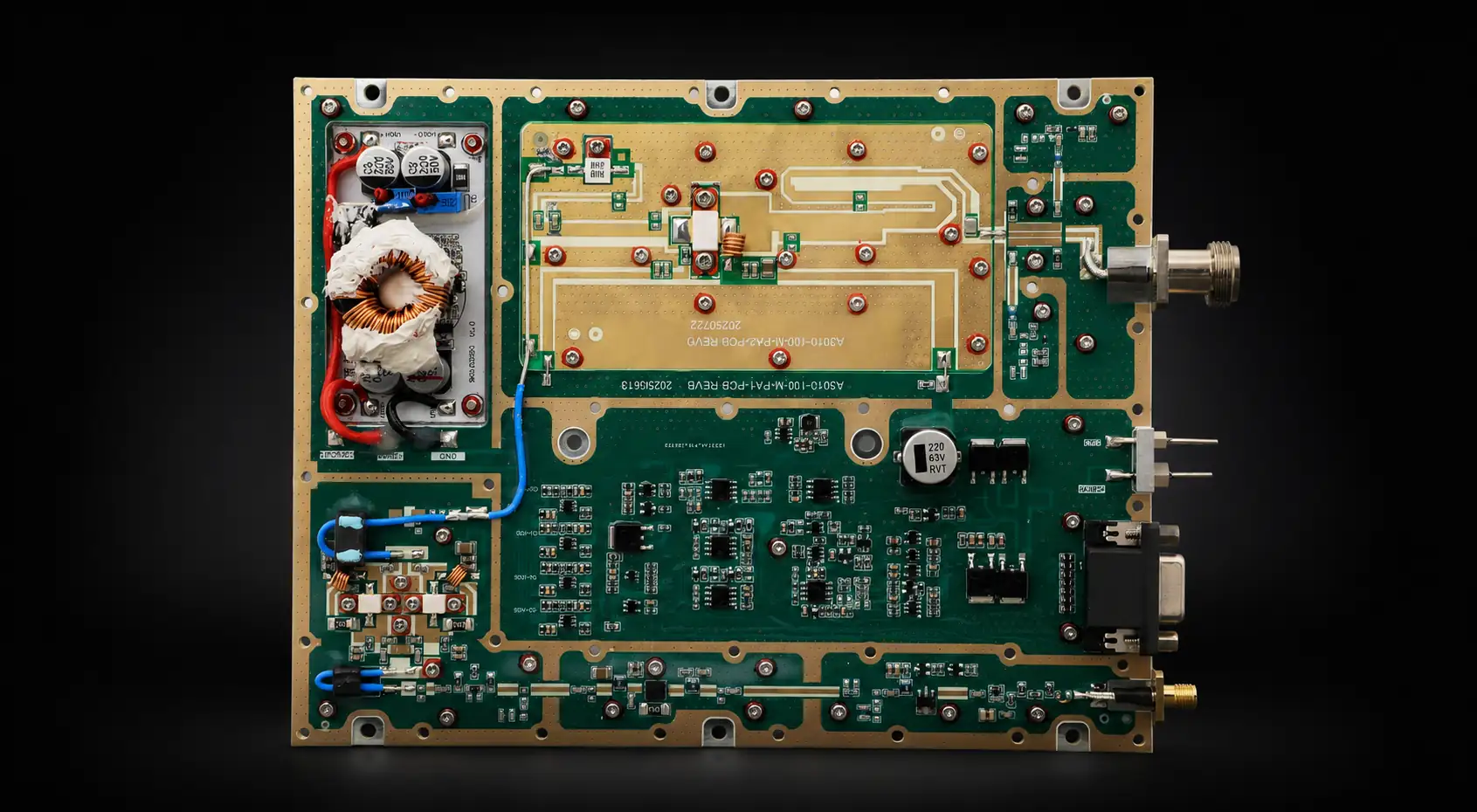
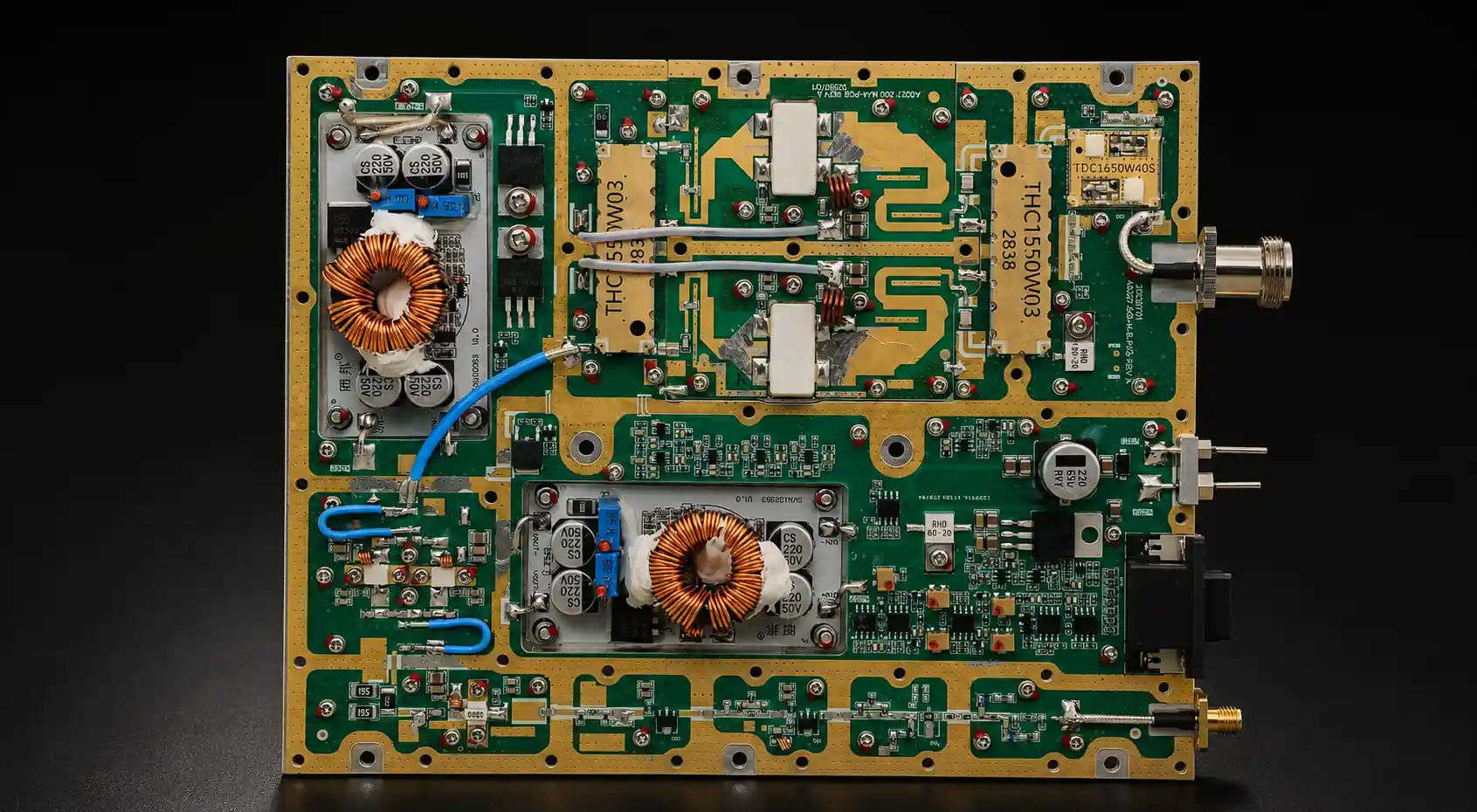
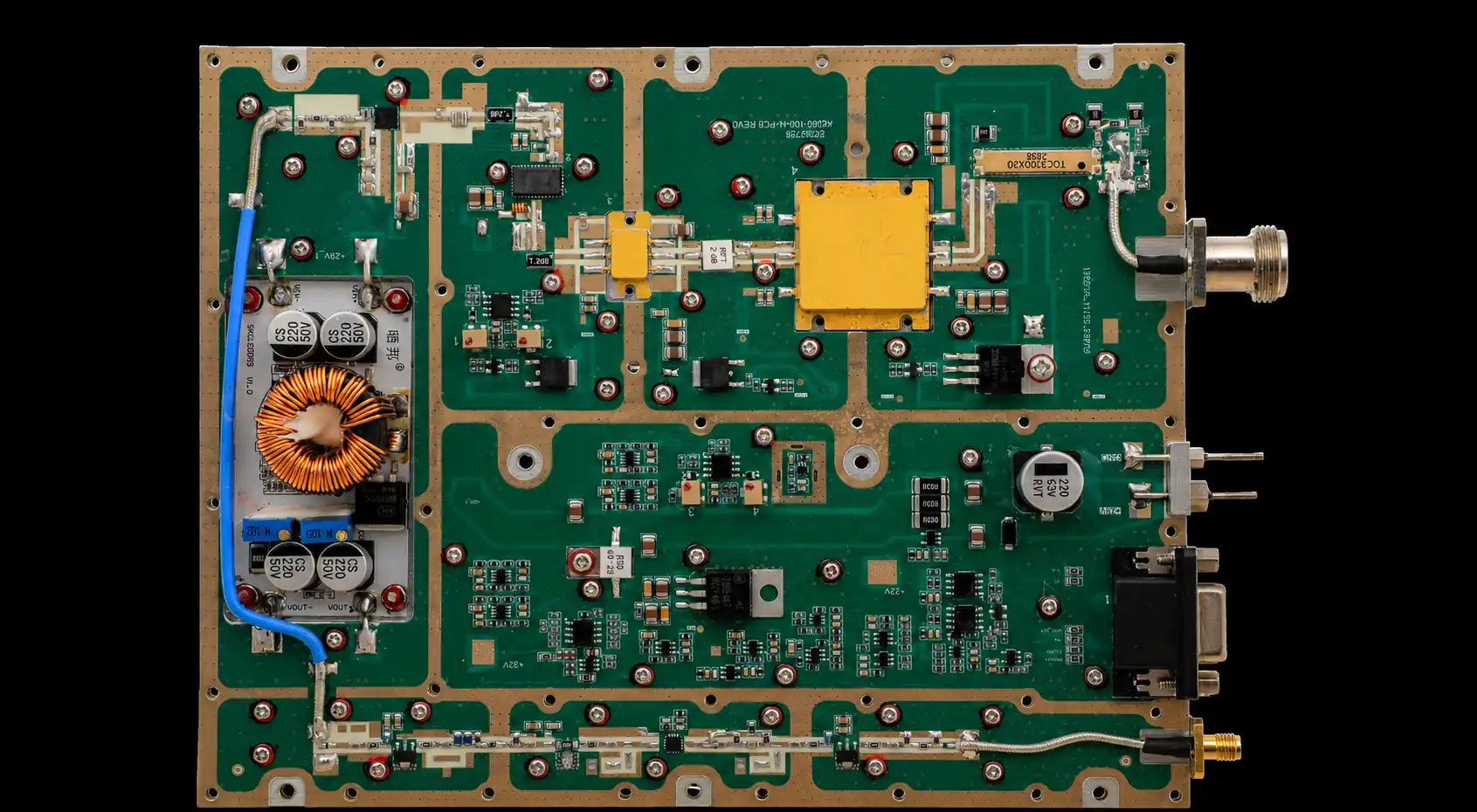
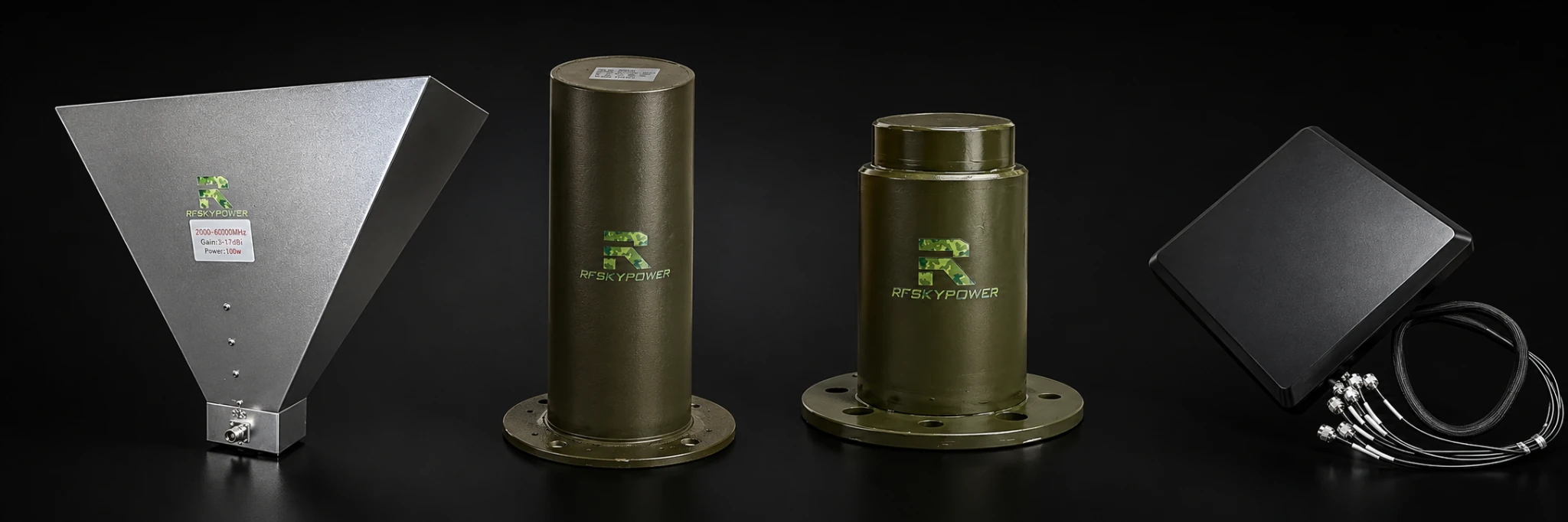
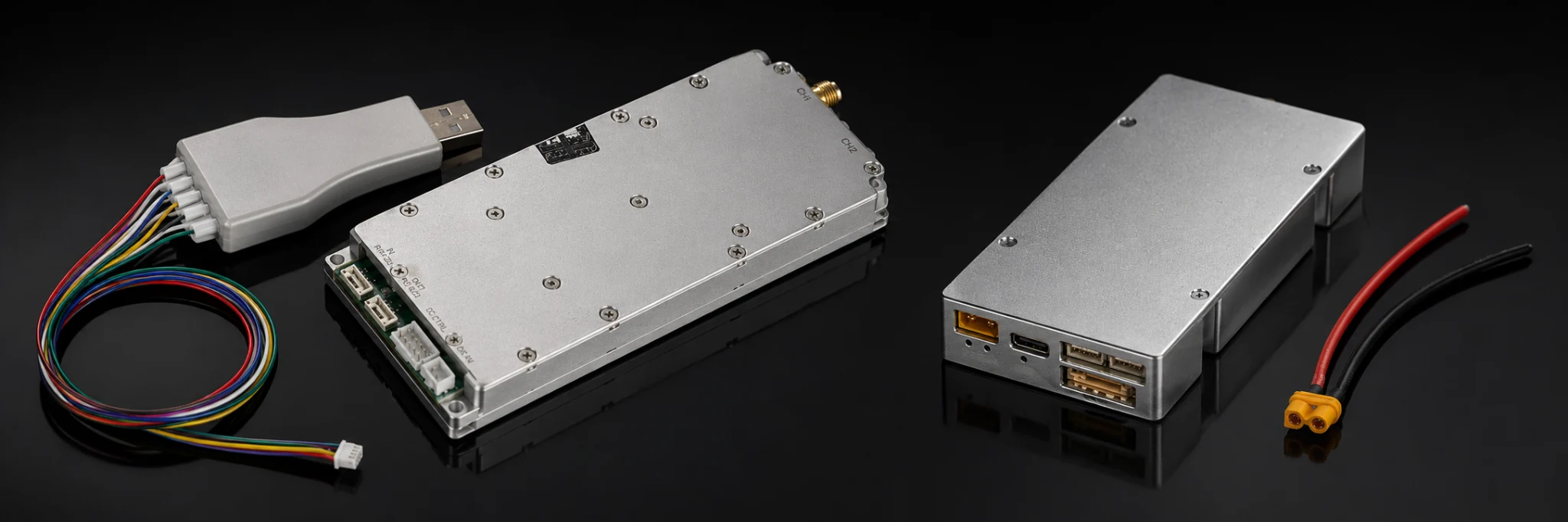


When a supplier says, “We are the factory,” do not start with the building. Start with the product—and with the evidence behind the RF PA source factory claim.
Ask who can approve an RF design change, who controls the critical production steps, who signs off the final RF test, and whether a delivered S/N can be traced back to the configuration and records that produced it.
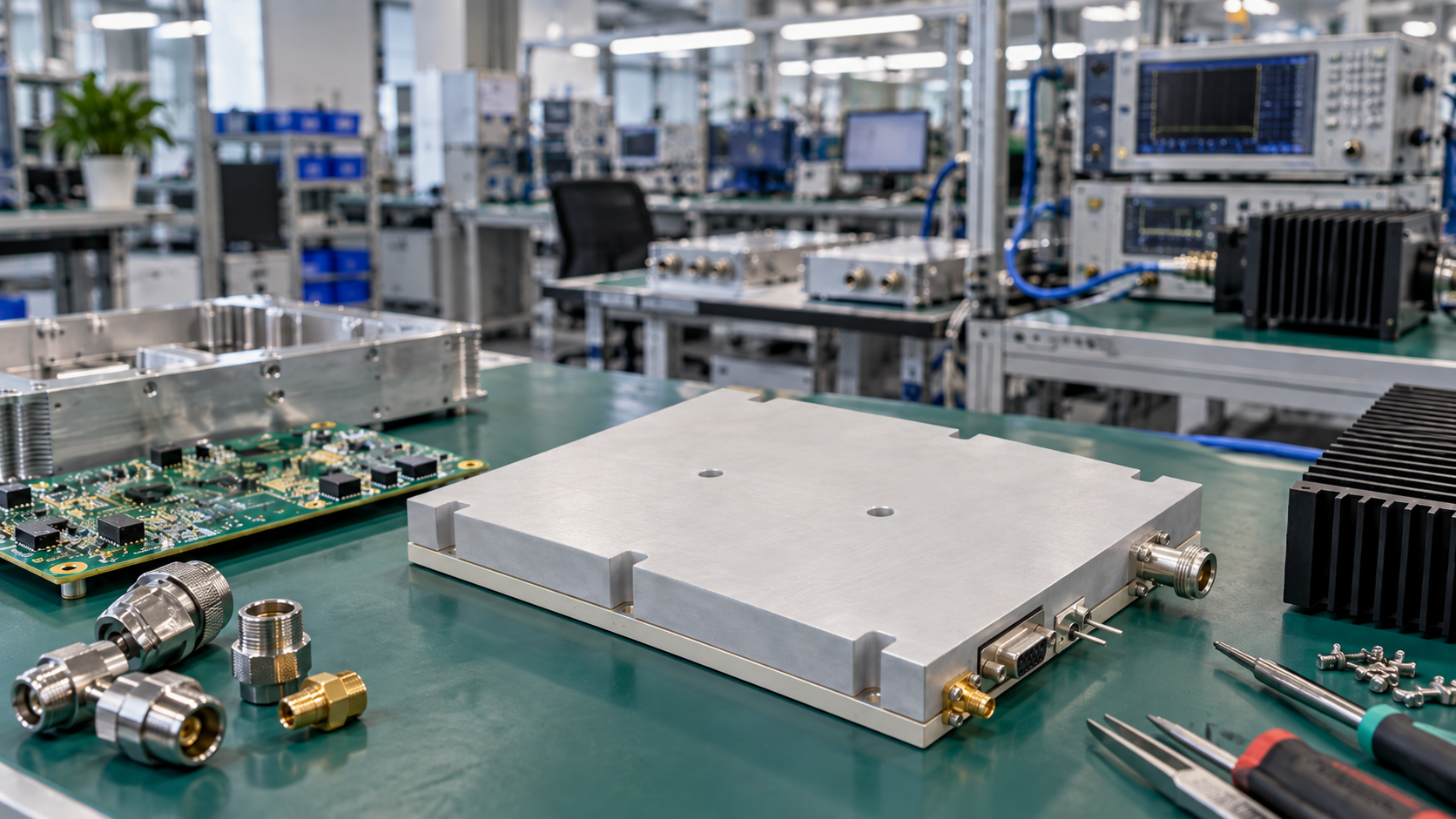
A factory photo, an SMT line, a VNA, or a product catalogue can support the story. None of them proves the whole manufacturing chain.
RF design, PCB assembly, machining, RF tuning, firmware loading, testing, and final delivery may be split across several sites or partners. That is not automatically a problem. What matters is whether the supplier can show who controls each step and who remains responsible when something changes or goes wrong.
That is the standard to use when checking an RF power amplifier source factory claim.
1. What Does “Source Factory” Need to Mean for an RF PA Buyer?
Forget the idea that a “real factory” has to make every part inside one building.
An RF PA supplier may design and tune the amplifier itself, use an approved partner for PCB assembly, outsource enclosure machining, and still control the finished configuration and release. What you need to establish is where the responsibility actually sits.
Ask:
- Who is responsible for the RF PA being quoted?
- Who makes the RF engineering decisions?
- Which production steps are handled internally?
- Which are handled by outside partners?
- Who approves component, PCB, firmware, or interface changes?
- Who controls the final RF test?
- Who has authority to release the finished unit?
The outside work matters less than the control around it.
If a PCB is assembled by another company, can the supplier identify the approved PCB revision? Can it show how the assembly is accepted? Can it control a later substitution or process change? Can it connect that PCB back to the finished module?
If yes, the outsourced step can still sit inside a controlled manufacturing chain.
If nobody can explain who performed a critical step, what was accepted, or who owns the final decision, that part of the source-factory claim still needs evidence.
By the end of this check, you should be able to draw a simple responsibility boundary around the product: who owns the engineering, who owns each critical process, and who releases the final RF PA.
A supplier can have a well-controlled manufacturing chain and still offer an RF PA that does not suit a particular project. Manufacturing responsibility and product suitability are two different questions.
2. Who Owns the RF Engineering and Change Authority?
A technical salesperson can answer a lot of questions without owning a single engineering decision.
A better test is to change something.
Ask for a different frequency band, connector, power target, control behavior, mechanical constraint, or protection setting. Then watch what happens.
Who decides whether the request is feasible?
Who approves the new configuration?
Who decides whether the change needs a new RF test, thermal check, firmware review, or other verification before release?
For an RF PA, that decision path may involve:
- RF design and matching;
- output-stage configuration;
- thermal design;
- protection logic;
- control interfaces;
- PCB and hardware revisions;
- firmware or threshold revisions;
- component substitutions;
- custom-frequency or power changes.
You do not need the supplier to hand over proprietary schematics or source code. You do need enough evidence to understand who has authority over the product you are buying.
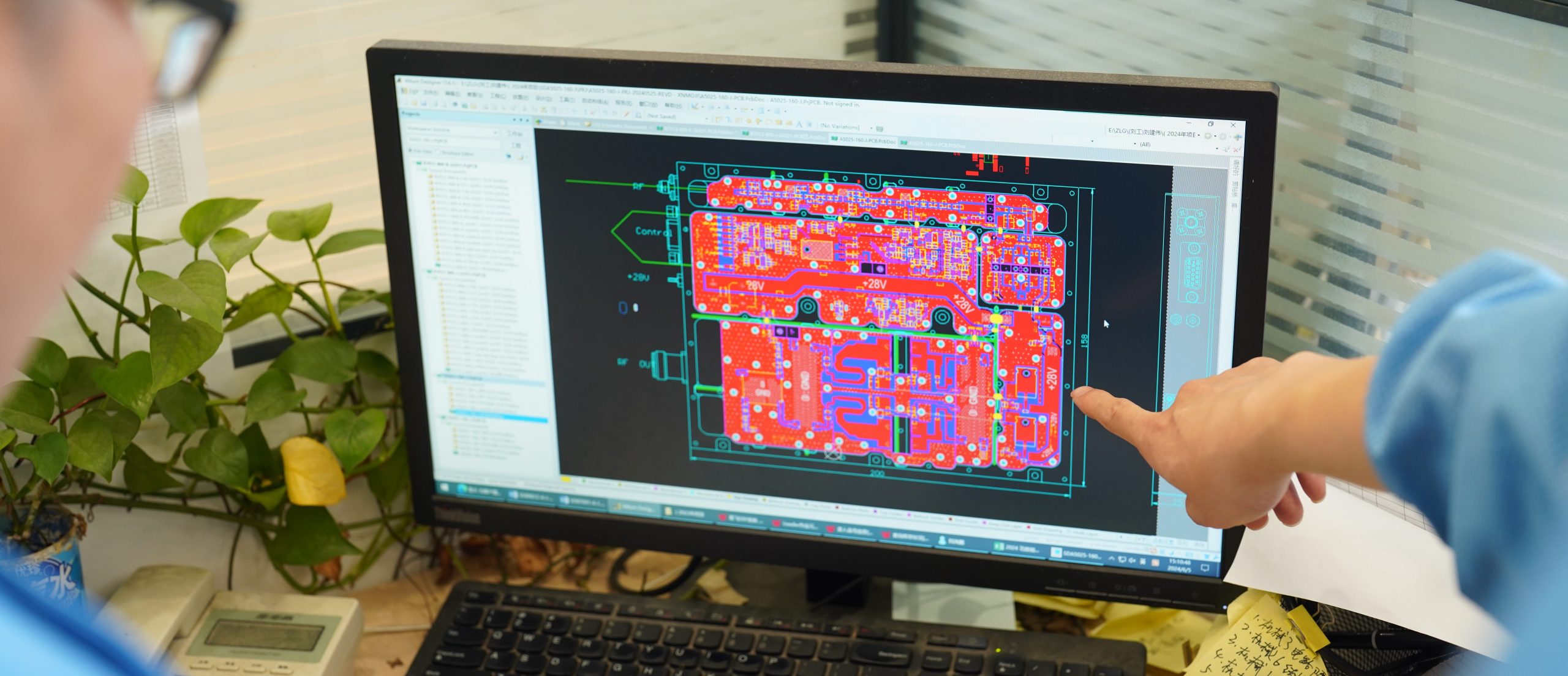
Evidence for RF amplifier change control might include a controlled specification, revision history, interface document, engineering drawing, approved configuration record, ECO/ECN trail, or technical review record.
The point is not paperwork for its own sake. It is knowing who can make the call when the configuration changes.
If every meaningful technical question has to disappear into an unidentified upstream party, the supplier may still be a useful commercial channel, but its direct engineering responsibility has not yet been established.
After approval, later source, material, firmware, or configuration changes should be checked against the build that was originally accepted. The key question then is whether the approved configuration has changed and whether that change was disclosed and reviewed.
3. Which Manufacturing Processes Must the Supplier Be Able to Explain?
Pick one real RF PA configuration and follow it from the approved build to shipment.
Depending on the design, that path may include incoming material control, PCB or SMT assembly, RF device installation, matching or tuning, mechanical work, connector or harness assembly, firmware loading, final RF testing, screening, rework, and release.
For each important step, ask five questions:
- Who does the work?
- Is it internal, outsourced, partner-operated, or not applicable?
- What record comes out of the step?
- Who accepts the result?
- How does that record connect to the product, revision, batch, or S/N?
That tells you more than asking whether the supplier owns every machine in the process.
Take PCB assembly as an example. An externally populated PCB is not automatically a concern. The real concern is whether anyone can show which revision was approved, where the board came from, how it was accepted, and whether the delivered RF PA contains the same controlled configuration as the sample you evaluated.
For outsourced or externally supplied parts, the supplier should also be able to show that the material entering production matches the approved source, revision, and acceptance requirements.
RF PA Factory Capability Evidence Matrix
Use this matrix while reviewing a supplier. Keep the final column blank until you have actually reviewed the evidence.
When you complete a row, use one of four states: Verified, Partially Verified, Not Yet Verified, or Not Applicable.
RF PA Factory Capability Evidence Matrix
Review the evidence before assigning a status · Swipe horizontally →
| Capability Dimension | Buyer Needs to Confirm | Acceptable Evidence | What the Evidence Can Prove | What It Cannot Prove | Current Status |
|---|---|---|---|---|---|
| Manufacturing entity | Who is contractually and operationally responsible for the supplied RF PA | Legal entity information, manufacturing address, contract documents, controlled supplier records | Identifies the responsible manufacturing or contracting entity | Does not prove product quality or technical suitability | VerifiedPartially VerifiedNot Yet VerifiedNot Applicable |
| RF engineering responsibility | Who owns RF, thermal, protection, and interface decisions | Controlled specifications, engineering records, technical review path, revision history | Shows where product engineering responsibility sits | Does not prove every design decision is technically correct | VerifiedPartially VerifiedNot Yet VerifiedNot Applicable |
| Engineering change authority | Who can approve component, PCB, hardware, firmware, or interface changes | ECO/ECN records, revision approval records, change workflow | Shows who controls configuration changes | Does not prove every future change will be acceptable | VerifiedPartially VerifiedNot Yet VerifiedNot Applicable |
| Manufacturing process responsibility | Who performs and controls each critical manufacturing step | Process flow, work instructions, production records, responsibility map | Shows how the product moves through manufacturing | Does not by itself prove long-term process capability | VerifiedPartially VerifiedNot Yet VerifiedNot Applicable |
| Controlled outsourcing | Which processes are external and how they are controlled | Approved supplier records, outsourced-process specifications, incoming or acceptance evidence | Shows that external work is disclosed and subject to control | Does not prove the external process is defect-free | VerifiedPartially VerifiedNot Yet VerifiedNot Applicable |
| RF test capability | Who performs final RF testing and what is actually measured | Test station records, equipment list linked to methods, sample test records | Shows that RF measurements are part of the controlled process | Equipment ownership alone does not prove correct measurement | VerifiedPartially VerifiedNot Yet VerifiedNot Applicable |
| Test method / calibration / reference plane | Whether reported results can be interpreted and reproduced | Test procedure, station or calibration status, loss corrections, reference-plane definition | Supports the engineering meaning of reported RF results | Does not prove every production unit passed | VerifiedPartially VerifiedNot Yet VerifiedNot Applicable |
| BOM / revision control | Whether samples and production units are tied to controlled configurations | BOM revision, hardware / firmware revision records, build configuration | Shows which configuration was built | Does not prove all future units remain unchanged | VerifiedPartially VerifiedNot Yet VerifiedNot Applicable |
| Source substitution control | Who approves component or source changes | Approved-source records, substitution policy, change approval evidence | Shows that substitutions are subject to controlled review | Does not guarantee substitutions will never occur | VerifiedPartially VerifiedNot Yet VerifiedNot Applicable |
| Incoming / batch traceability | Whether material and production lots can be connected to finished builds | Lot records, batch records, incoming release records | Supports investigation of material and batch differences | Does not prove final RF performance | VerifiedPartially VerifiedNot Yet VerifiedNot Applicable |
| S/N-linked final evidence | Whether a delivered unit can be linked to its configuration and final result | S/N record, test report, configuration record, shipment evidence | Supports unit-level delivery traceability where required | Does not prove the entire manufacturing system is controlled | VerifiedPartially VerifiedNot Yet VerifiedNot Applicable |
| Nonconformance / rework control | How failed or reworked units are identified and dispositioned | NCR records, rework records, retest evidence, disposition workflow | Shows how exceptions are controlled | Does not prove defects never occur | VerifiedPartially VerifiedNot Yet VerifiedNot Applicable |
| Technical escalation channel | Whether engineering issues can reach the responsible technical authority | Named escalation route, engineering review records, corrective-action communication | Shows that technical issues have an accountable resolution path | Does not prove a specific future issue will be resolved successfully | VerifiedPartially VerifiedNot Yet VerifiedNot Applicable |
Do not turn the matrix into a supplier score.
A polished factory tour cannot make up for an unclear engineering-change path. A strong RF test report cannot make up for missing configuration control. Review each capability on its own evidence.
4. Can the Supplier Reproduce and Explain Its RF Test Evidence?
Do not ask only what test equipment the supplier owns.
Ask them to open one real RF PA test record and explain it.
You should be able to get clear answers to questions such as:
- What was measured?
- Which unit or S/N was tested?
- At what frequency?
- With what waveform or signal condition?
- At what module-side Vdc?
- What was the Actual Pin, where relevant?
- Where was the RF reference plane?
- Which cable, attenuator, coupler, or fixture corrections were applied?
- What load condition was used?
- Was the result cold or thermally stabilized?
- What value was finally reported?
That conversation tells you much more than an equipment list.
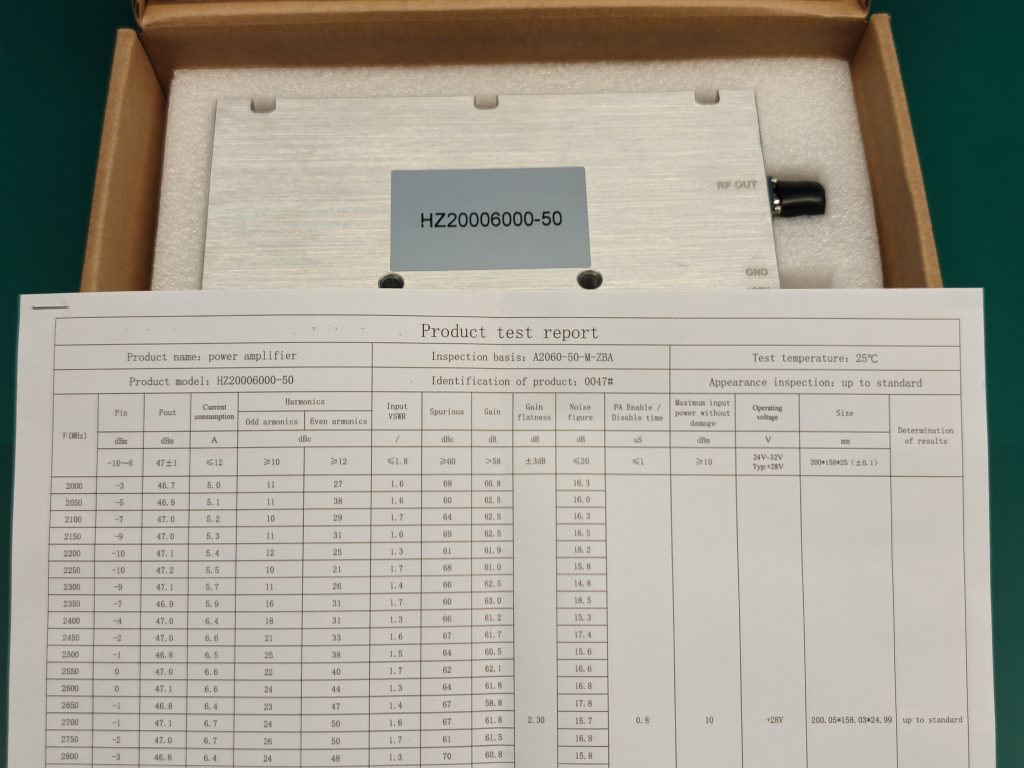
Suppose a report shows output power. Ask whether the displayed value is the raw instrument reading or a value corrected back to a defined reference plane. Ask what losses were included. Ask how that result connects to the S/N on the report.
If nobody can explain those points, the number may still be a real reading, but its engineering meaning is unclear.
Calibration works the same way. A calibration sticker is useful. It does not tell you by itself whether the complete measurement path, fixture, correction data, and station state were appropriate for the result being shown.
The supplier does not need to expose proprietary automation code. It does need to explain enough of the measurement for the result to be understood and reasonably reproduced.
If all you have is a photograph of test equipment or an unexplained screenshot, leave the RF test capability open and ask for the missing test context.
A delivery report is only useful when its result can be tied to the correct S/N, configuration, version, and test conditions. That linkage should be checked during RF PA test report verification.
5. Can the Supplier Connect Samples, Production Batches, and Delivered S/Ns?
A good sample proves something useful: that one sample, in one configuration, produced the recorded result.
It does not tell you what will happen six months later unless the supplier can show how that approved configuration moves into production.
Take the sample you accepted and ask:
Which BOM or revision is released for production?
Which critical sources or material states are controlled?
How does a production batch inherit that configuration?
Can one delivered S/N be traced back to the batch?
Can that same S/N be connected forward to its final test record and shipment evidence?
A useful chain looks like this:
Approved configuration → source / material state → incoming lot → production batch → module S/N → final test record → shipment evidence
The software system, document names, and S/N format can differ from one supplier to another. The linkage is what matters.
S/N traceability means that a delivered unit can be connected to the configuration and records required by your project. It does not require the supplier to expose every commercially sensitive detail in its BOM.
If the approved sample has no clear configuration link to later production, do not stretch that sample result into proof of repeatable volume delivery.
Also keep the evidence types separate.
Incoming records can show where material came from without proving final RF performance. A final RF report can show what one unit did without proving that the material source never changed. A source-change procedure can exist without proving that every delivered unit received the same final test.
The manufacturing chain becomes much easier to trust when those records connect instead of existing as isolated documents.
6. How Should Buyers Distinguish a Manufacturer From an Intermediary Without Guessing?
“Are you a factory?” is usually one of the least useful questions in supplier due diligence.
Almost anyone can answer yes.
Instead, put a real product on the table and ask the supplier to walk through the responsibility chain.
Who owns the design decision?
Which manufacturing steps are internal?
Which are outsourced?
Who controls the outside work?
Who can approve a revision?
Who performs final RF testing?
Can a delivered S/N be traced back to the approved configuration?
Then introduce a change.
Ask what happens if the transistor source changes, the PCB is revised, a firmware threshold moves, or the project requires a different connector.
Who decides whether that change is acceptable?
Who decides what needs to be tested again?
Who tells the customer?
Those answers are much harder to fake than the word “manufacturer” on a website.
An intermediary is not automatically a problem either. If it clearly identifies the manufacturing source, has defined contractual and technical responsibility, controls the configuration and evidence flow, and can provide the traceability required by your project, the arrangement may still work.
Likewise, calling yourself a direct factory does not settle the question. The manufacturing claim still needs to match the evidence.
Factory status is not a supplier quality ranking. The purpose of this review is simply to determine whether the claimed responsibility is real and traceable.
Manufacturing control and product suitability should remain separate decisions. Evidence that a supplier controls the product does not prove that a particular RF PA meets the project’s frequency, power, thermal, control, or RF-path requirements.
7. What Should Be Checked During a Factory Audit or Remote Review?
Do not spend the audit walking from machine to machine just because the equipment looks impressive.
Start with the open items in your capability matrix.
For every unresolved capability, ask:
What RF PA process am I looking at? What record does it create? How does that record connect to the product, configuration, batch, or S/N?
If the supplier says it controls RF tuning, follow one real unit through that step. What tells the operator which configuration is being tuned? What result is recorded? Where does that result go next?
At final RF test, ask the operator or engineer to explain the reference plane, test condition, fixtures, correction data, product identity, and resulting record.
At an assembly step, look for the controlled instruction or configuration behind the work. Watching somebody assemble a module tells you less than understanding what tells that person which revision to build.
For an outsourced process, follow the control in both directions. What requirement goes to the partner? What comes back? Who accepts it? What happens when the partner changes something?
A remote review can answer many of the same questions if the supplier can provide live walkthroughs, real product records, controlled documents, and access to the people responsible for the process.
A prerecorded factory video is weaker evidence because it shows only what the camera captured at one point in time.
The same limit applies to an on-site visit. One successful audit does not freeze future production. It tells you what was demonstrated during that review.
A factory audit or virtual factory review is most useful when it is aimed at a specific unanswered question—for example, who performs a process, what record it creates, or how that record connects to the product. Seeing the factory is not the same as verifying the capability.
What Should the RFQ Require Before Supplier Approval?
Put the important questions into the RFQ or supplier questionnaire before they turn into arguments later.
Do not stop at:
Are you a manufacturer?
Ask the supplier to identify:
- the manufacturing or contracting entity;
- the manufacturing location;
- engineering and change authority;
- internal and outsourced process boundaries;
- critical production steps;
- RF test capability and sample evidence;
- BOM and revision control;
- approved-source or substitution rules;
- lot, batch, and S/N traceability;
- nonconformance and rework handling;
- change-notification requirements;
- factory-audit access;
- the technical escalation route.
The required depth should match the project.
A standard module purchased for a short program may not need the same supplier evidence as a long-life C-UAS platform that expects customization, repeat orders, controlled revisions, and S/N-linked test records.
Also separate supplier approval evidence from delivery evidence.
During due diligence, you may only need to establish that a traceability system exists and is usable. The purchase or quality agreement can then define which configuration, batch, S/N, and test records must accompany actual shipments.
Do not close a critical item with a verbal promise. If engineering authority, manufacturing responsibility, RF test evidence, change control, or required traceability still has no agreed evidence route, keep that item open.
Keep unresolved factory-capability questions visible in the RFQ. Moving into product, sample, or commercial discussions should not turn missing manufacturing evidence into an assumed capability.
Supplier Review Decision Routes
Choose the next step without overstating the evidence
| Your Current Situation | Next Step | Route | Important Boundary |
|---|---|---|---|
| Key manufacturing or test evidence is still missing | Review the unresolved capability with documents, traceability records, or a live factory review | Factory Audit / Virtual Factory Review → | A factory visit does not automatically mean the supplier is approved |
| Supplier responsibility and capability are sufficiently clear | Move into frequency, power, interface, thermal, protection, and customization requirements | RF PA Modules → | Supplier capability does not prove that a specific RF PA fits the project |
| The project is ready for technical sourcing | Freeze engineering responsibility, change control, test evidence, configuration, and traceability requirements in the RFQ | Engineering / RFQ Review → | An engineering review does not turn missing evidence into verified capability |
| Samples or production deliveries are starting | Define the required batch, configuration, S/N, and final test evidence | S/N / Delivery Evidence Review → | A single test report does not prove the complete manufacturing system |
Conclusion
A source-factory claim becomes meaningful when you can follow responsibility from an engineering decision, through the manufacturing records, into the final RF evidence and the delivered S/N.
If that chain breaks at a critical step, keep the item open. Do not fill the gap with factory photos, instrument lists, or sales answers.
Use the RF PA Factory Capability Evidence Matrix to decide what evidence to request next. One gap may need an engineering record; another may need S/N traceability; another may be better checked during a live factory review. Missing evidence means you still have a question to close—it does not prove that the supplier or product has failed.
For an RF SKYPOWER factory or engineering review, provide the manufacturing and contracting requirements, expected engineering and change responsibility, required internal or outsourced process visibility, RF test evidence needs, BOM / revision expectations, source-substitution rules, lot / batch / S/N traceability requirements, nonconformance or rework requirements, change-notification rules, preferred audit method, and technical escalation requirements. These inputs define what needs to be checked before supplier approval.