
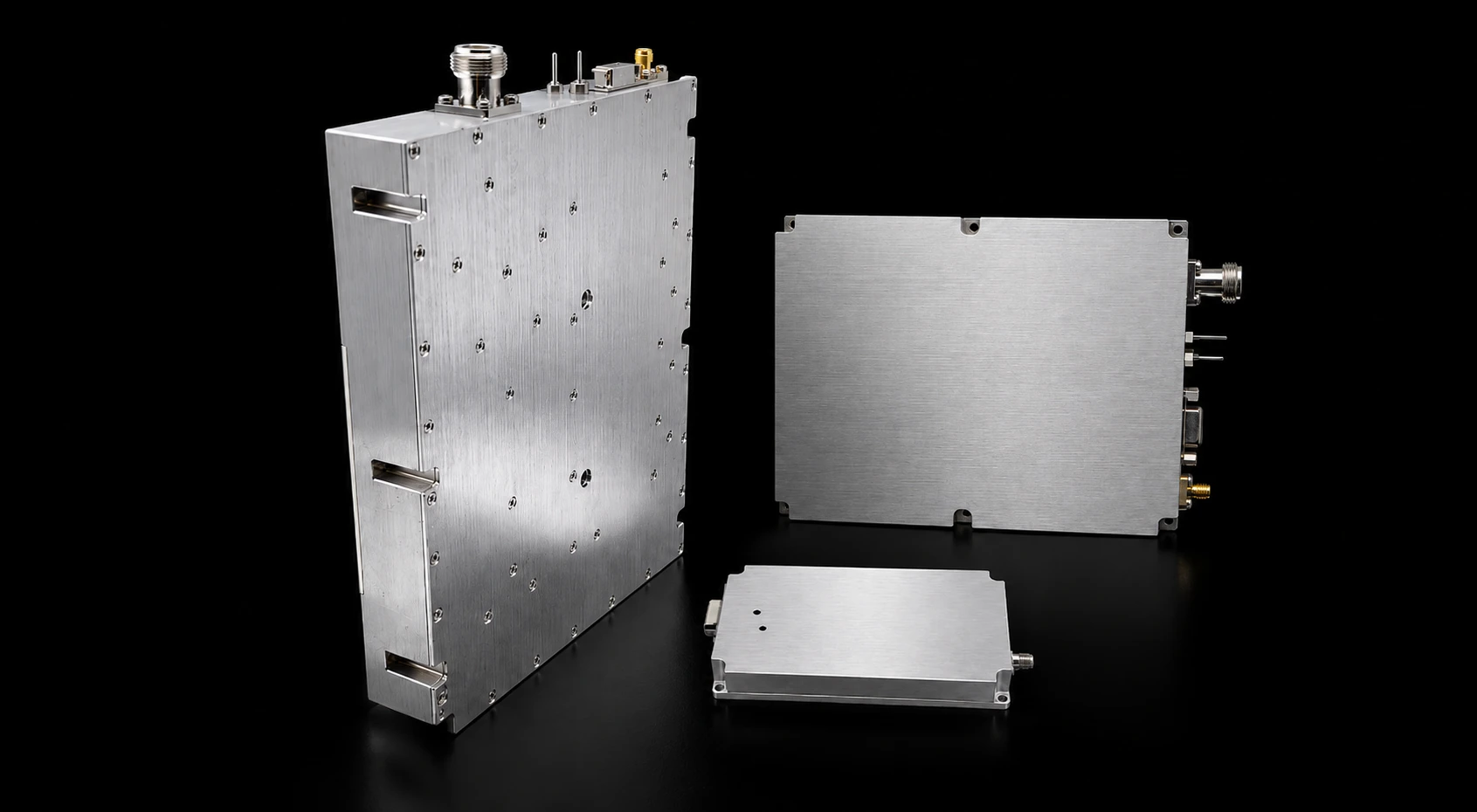
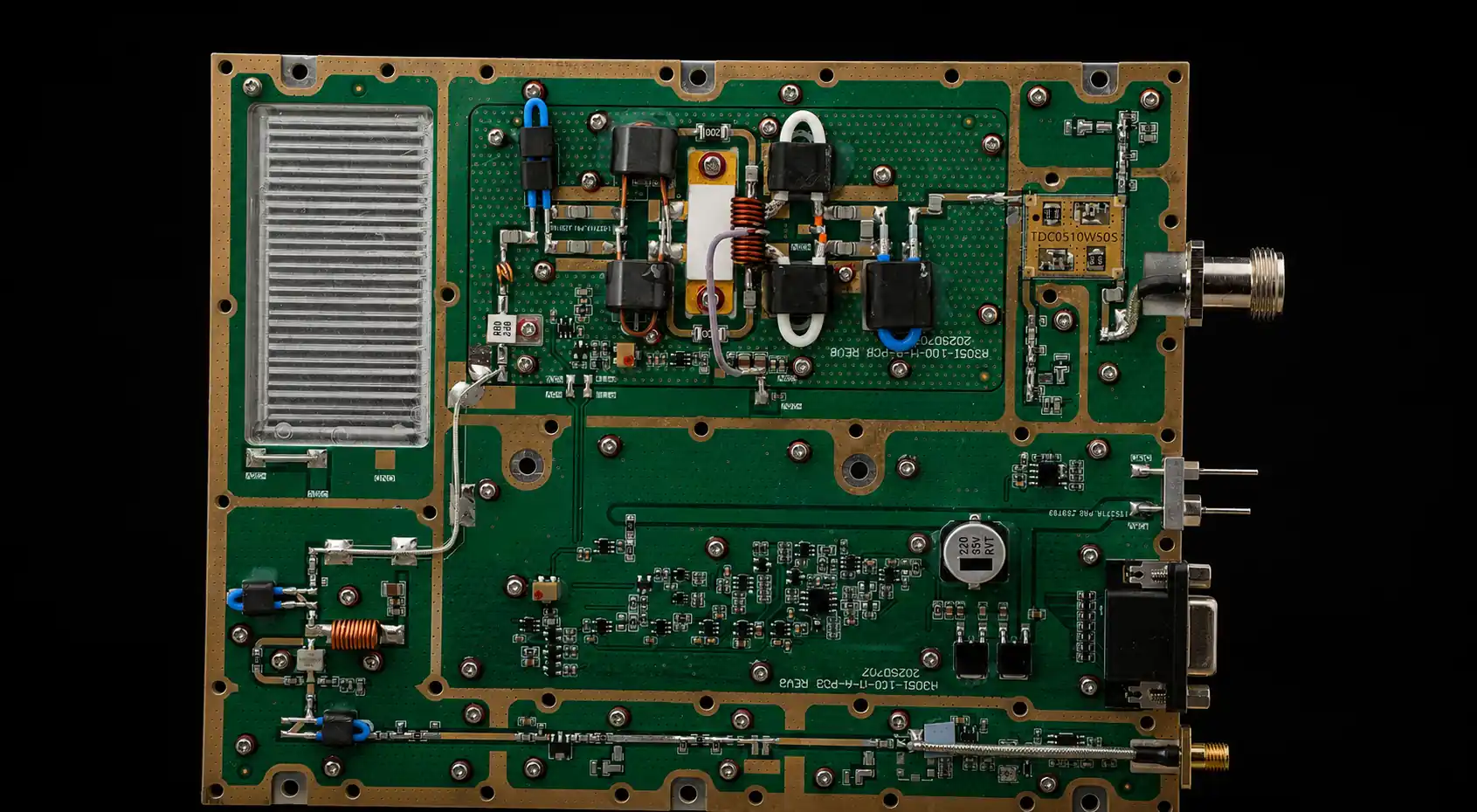
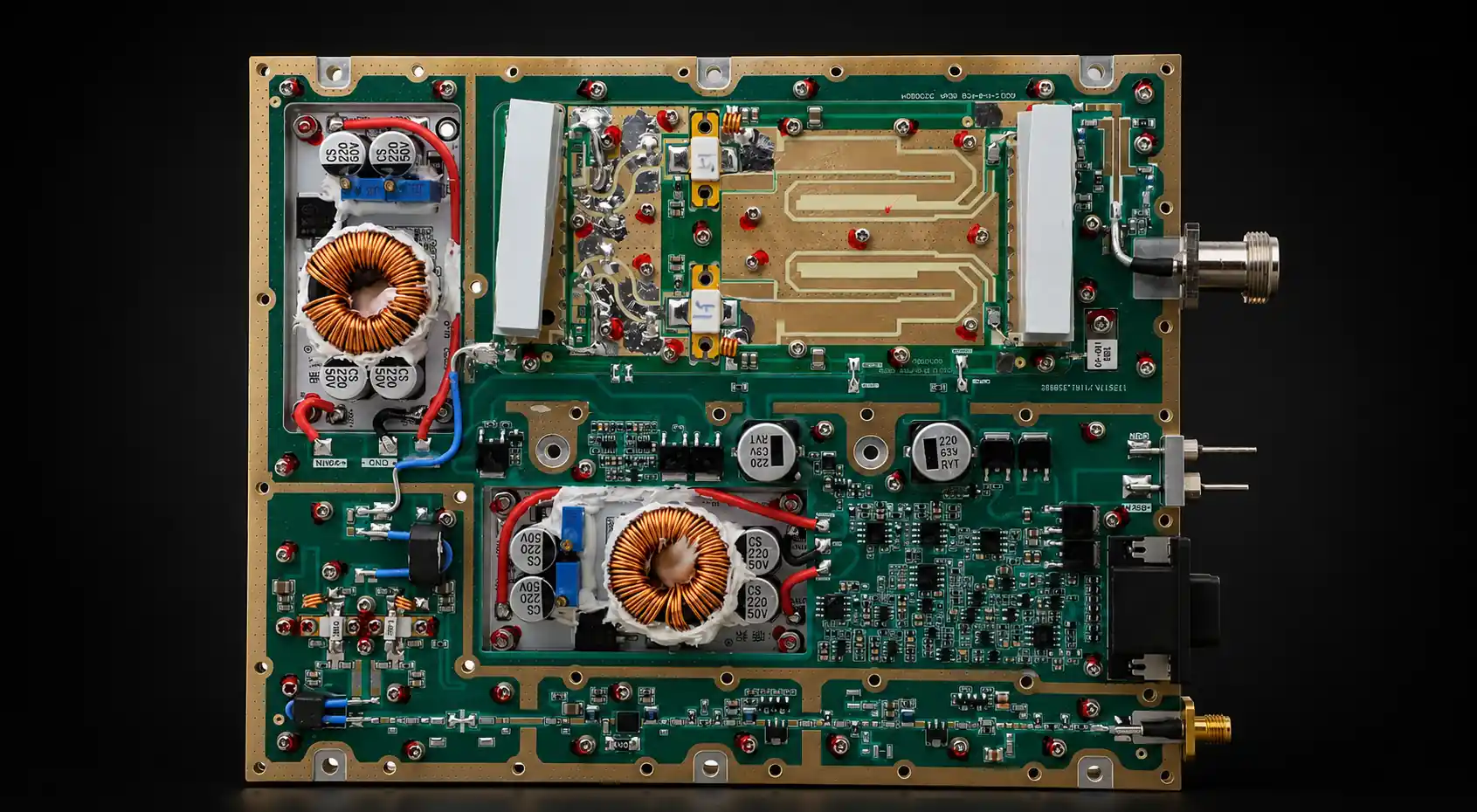
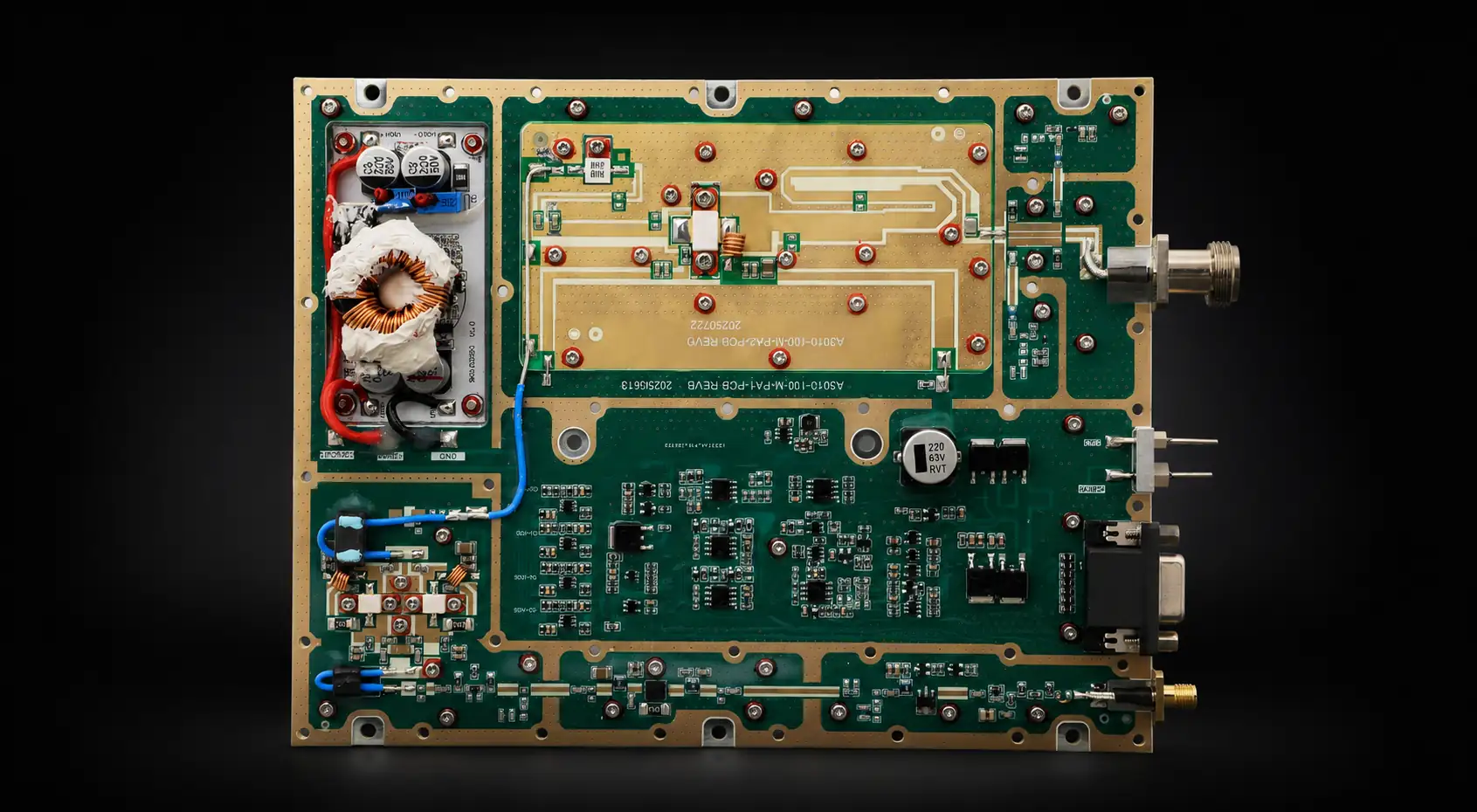

Passive drone detection uses RF signals already present in the environment without sending an active probing signal. That does not establish that the detector, its communications hardware, or its service interfaces never transmit.
An airport or security project may require a receive-only installation, not just a receive-only sensing method. Those are different requirements, and they call for different evidence.
Before approving a passive claim, the procurement team needs to know which equipment the claim covers, how that equipment behaves in different operating states, and what RF measurements support the statement. A supplier’s description of the sensing method cannot answer those questions on its own.
1. What Does “Passive” Actually Mean in Drone Detection?
Passive describes how a detector gathers information. It does not necessarily describe every electrical function within the equipment.
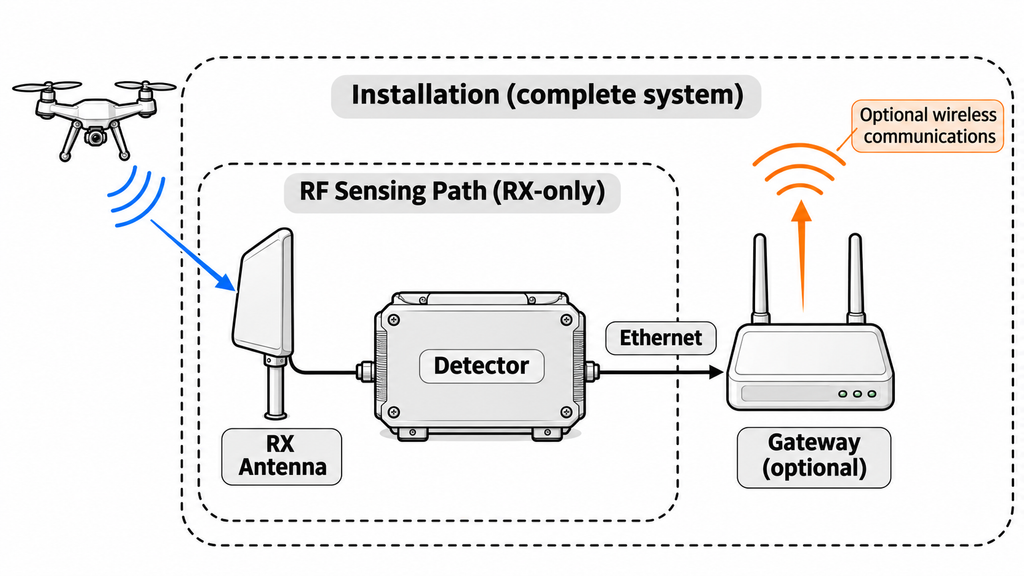
In passive RF sensing, the receiver listens for signals already present in the environment. These may include drone control, telemetry, video, or Remote ID transmissions. The receiver does not need to send an active interrogation signal to obtain that information.
A claim of no intentional RF transmission goes further. It concerns the equipment’s transmit-capable hardware and its behavior during operation. To evaluate that claim, the buyer needs to identify the devices, interfaces, and operating states it covers.
An assertion of zero electromagnetic emissions is broader still. Processors, clocks, power electronics, and cables can produce unintentional emissions even when a detector has no active RF transmitter. A passive sensing method does not establish their absence.
For example, a sensing receiver may operate passively while a separate wireless gateway sends alerts to a control room. Both functions can belong to the same installation. Calling the sensing receiver passive may be accurate; describing the entire installation as non-transmitting may not be.
A useful procurement requirement identifies the equipment included in the claim, the installed configuration, and the states in which intentional RF transmission must remain disabled or absent.
The phrase completely emission-free provides no comparable boundary. Without defined measurement conditions and sensitivity, the supplier cannot demonstrate what it means.
2. Which Hardware Components Can Still Transmit RF?
Start with the hardware actually supplied.
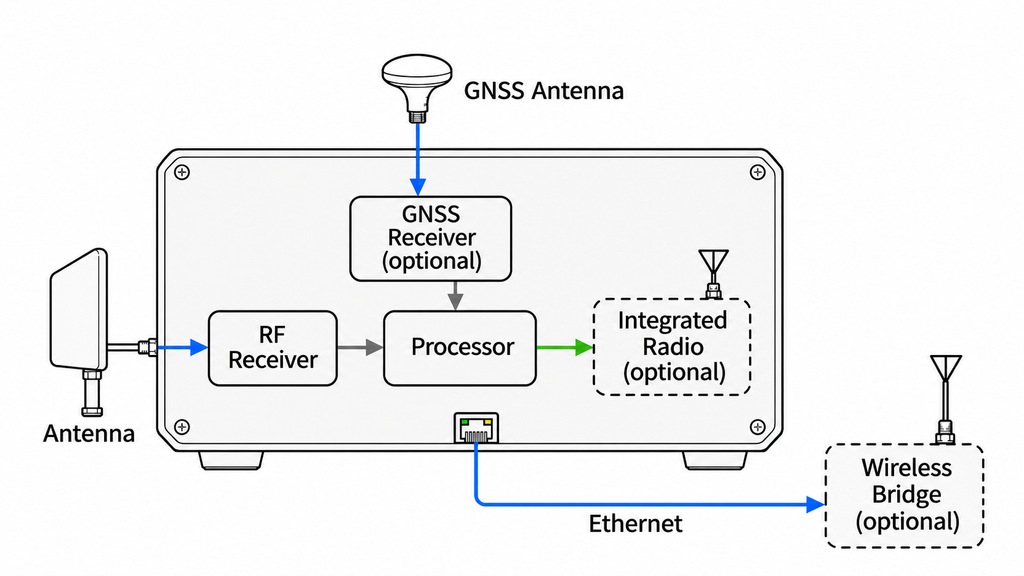
A receive-only sensing front end may sit alongside Wi-Fi, Bluetooth, cellular, or other communications hardware. A fixed installation may also use a separate wireless backhaul unit or maintenance interface.
These are possible transmit paths, not features that should be assumed present in every detector.
The buyer should request the RF block diagram, installed-module inventory, interface list, and option configuration for the equipment being offered. A general product-family brochure may describe hardware that is not included in the actual order.
A GNSS receiver receives satellite navigation signals. Its presence does not mean the detector transmits GPS signals.
An over-the-air update feature also needs closer examination. The update may use an integrated radio, an external gateway, or another network arrangement. The supplier should identify the update transport, the device handling any wireless link, and whether the detector itself sends uplink traffic during the process.
A transmit-capable component does not necessarily transmit in every mode. Software may keep it disabled during routine monitoring.
Conversely, the absence of a visible transmitting antenna does not establish that no radio exists. An internal antenna or separate network enclosure may not appear in the product photograph.
If a receiver connects to a wireless bridge, the bridge must be included when the project requirement applies to the complete installation.
If the supplier cannot account for the installed RF interfaces and connected equipment, the buyer cannot yet approve an equipment-wide no-transmit claim.
3. Can Software Modes and Firmware Updates Change Passive Operation?
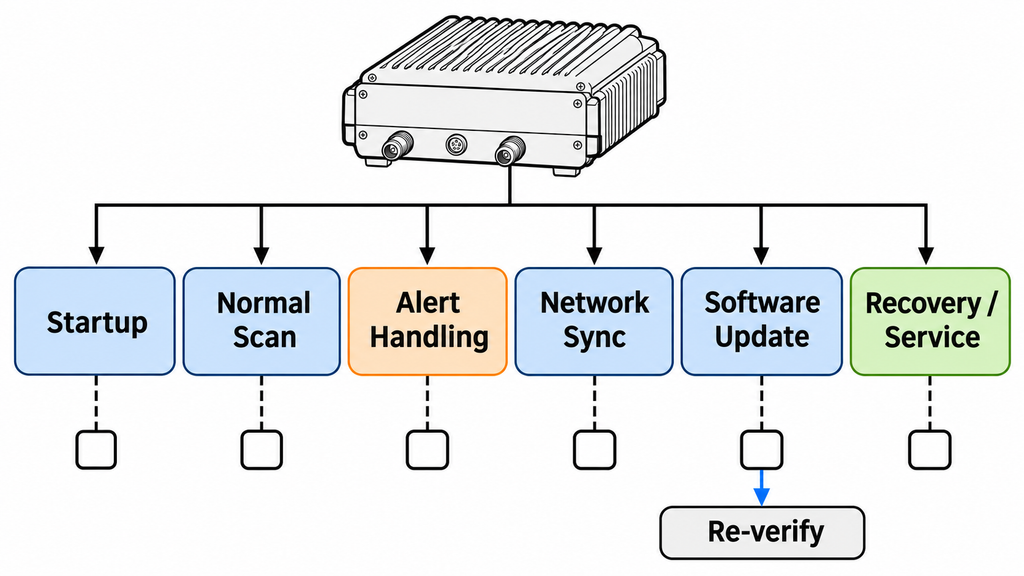
Yes. A detector can behave differently during normal scanning, startup, alarms, maintenance, and software updates. Commissioning, scheduled self-tests, and calibration modes also need review when those functions exist.
A radio that remains inactive during routine monitoring may serve a different purpose during network synchronization or service access. Whether this occurs depends on the hardware and software design.
For example, a detector may keep its wireless interface disabled during scanning. A test covering only that state may support a receive-only monitoring claim. It does not automatically cover startup, fault recovery, or maintenance.
If a transmitter is not installed, software cannot activate that missing hardware. If one is installed but disabled, the supplier needs to document how the restriction is enforced.
Firmware updates may change drivers, network services, permissions, or recovery behavior. A report associated with an earlier software build may no longer describe the delivered system unless the supplier can establish that the relevant RF behavior remains unchanged.
For each applicable state, the supplier should identify the enabled interfaces, relevant controls, firmware version, and method used to confirm operation.
Logs can show which services ran and which interfaces were enabled. They do not independently prove the absence of RF transmission.
The buyer can accept a version-specific claim only when the documented states match the supplied configuration and intended operating workflow. Untested service or recovery modes need an explicit exception or further verification.
4. How Should RF Emissions Be Tested?
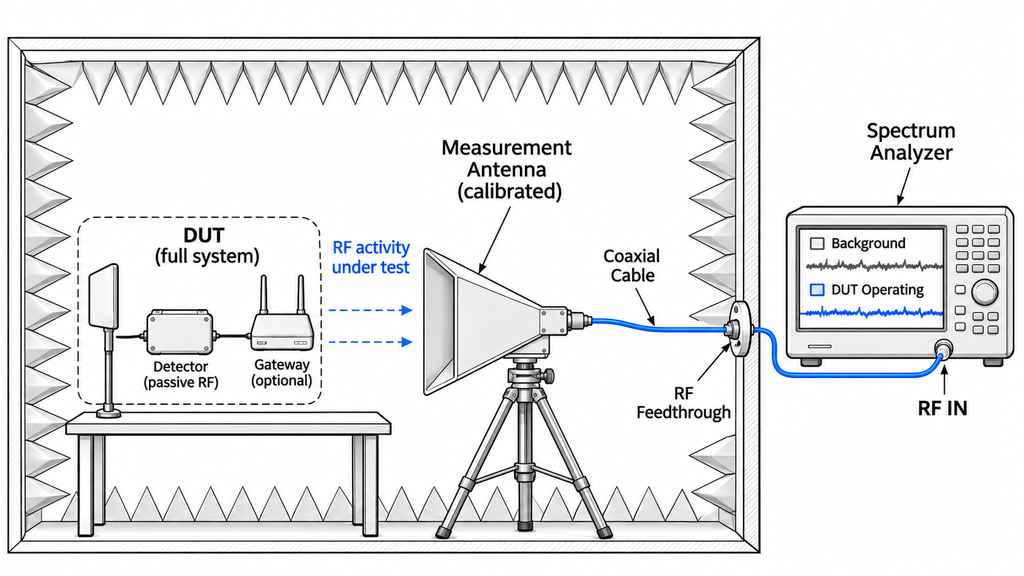
RF emissions testing should examine the actual equipment configuration in defined operating states.
The test boundary starts with the installed hardware. It should account for the receiver, communications modules, connected gateways, antennas, and any optional equipment included in the no-transmit requirement.
The measurement range must follow the possible transmit paths.
Testing only the drone-detection receiver’s monitored frequencies is insufficient if another installed interface could transmit elsewhere. The engineer should consider the plausible transmit frequencies of each installed radio interface, along with the relevant unwanted-emission measurement scope.
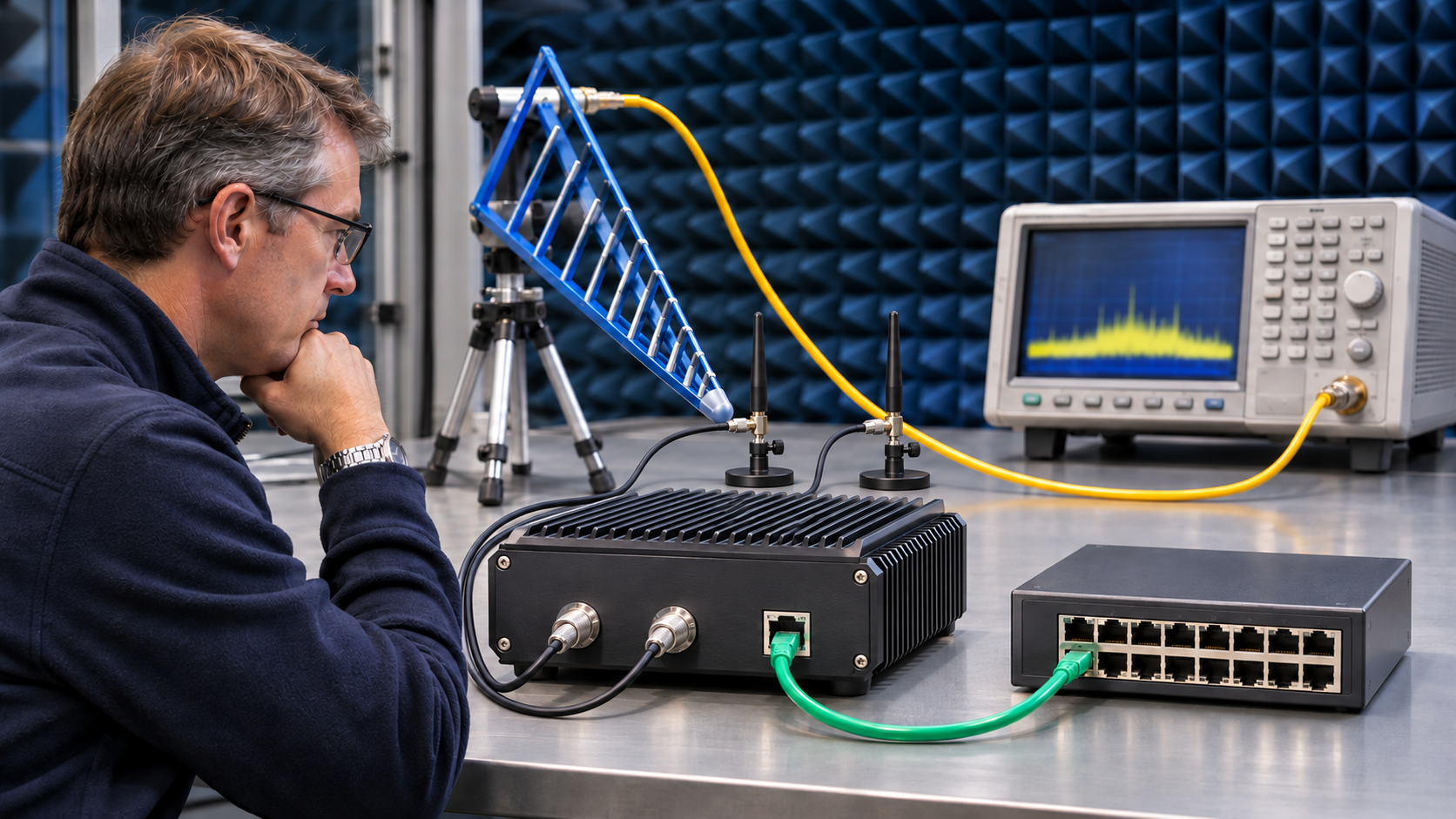
Radiated measurements can reveal RF activity associated with the operating equipment. Conducted measurements may add evidence when an accessible RF port and suitable test arrangement make them appropriate.
The test engineer should record the measurement setup, antenna arrangement, instrument settings, calibration status, observation period, and relevant operating conditions. The record also needs the background RF environment and measurement sensitivity.
Signal attribution requires care. An RF signal appearing on a spectrum analyzer may come from a nearby network, another device, or the measurement system rather than the detector.
Background measurements should therefore be compared with the equipment’s defined operating states. Newly observed activity should be correlated with configuration records and state logs before the engineer attributes it to the device.
A brief transmission or frequency-hopping signal may escape a short sweep. The measurement settings and capture period must be suitable for the behaviors under investigation.
Before testing, the buyer and supplier should agree on the measurement frequency range, minimum detectable signal level, observation duration, and decision rule. A result described as “no signal detected” cannot support a reproducible acceptance decision without those conditions.
The following matrix covers six common operating states. Commissioning, self-test, and calibration functions should also be checked where applicable. The possible transmit paths are conditional examples, not statements about any particular model.
| Operating State | Possible RF Transmit Path | Supplier Claim | Evidence Required | Measurement or Configuration Boundary | Buyer Decision |
|---|---|---|---|---|---|
| Startup | Integrated wireless or service interface, if fitted | No intentional RF transmission during startup | Boot configuration and time-aligned RF observation | Cold boot and restart of the tested hardware and firmware | Request startup evidence if only steady-state data exists |
| Normal scan | Communications module separate from the sensing receiver | Monitoring remains receive-only | RF block diagram, interface configuration, and radiated measurement | Defined scan mode with installed interfaces and enabled services | Support only the tested operating-mode claim |
| Alert handling | Wireless notification interface, if configured | Alert handling does not activate RF transmission | Alert-path documentation and RF observation during an event | Local alarm versus remote notification configuration | Confirm the actual alert path or document an exception |
| Network synchronization | Wi-Fi, cellular, or wireless backhaul, if installed | No intentional wireless transmission during synchronization | Interface inventory, network settings, and RF observation | Actual network topology and synchronization state | Narrow the claim if the configured path transmits |
| Software update | Wireless update interface or external gateway, if used | No intentional transmission during defined update operations | Update procedure, configuration record, and relevant RF capture | Update transport, installation, reboot, and firmware version | Exclude untested update states or request additional evidence |
| Recovery or service | Service access point or maintenance radio, if fitted | No intentional transmission in specified recovery and service states | Service permissions, state logs, and RF observation | Defined fault recovery, reset, and authorized service conditions | Request evidence for untested states or document their exclusion |
A result showing no detected RF activity must retain its measurement limits. A test may establish that no emissions were observed above a documented detection threshold within its measured frequency range, operating states, and observation period. It cannot establish absolute electromagnetic silence.
Likewise, an observed signal cannot be classified as an intentional transmission solely because it appeared during a test. Its source and operating function still need investigation.
Assess the measurements alongside the hardware inventory and configuration records. Each establishes a different part of the no-transmit claim.
5. What Evidence Is Enough to Support a No-Transmit Claim?
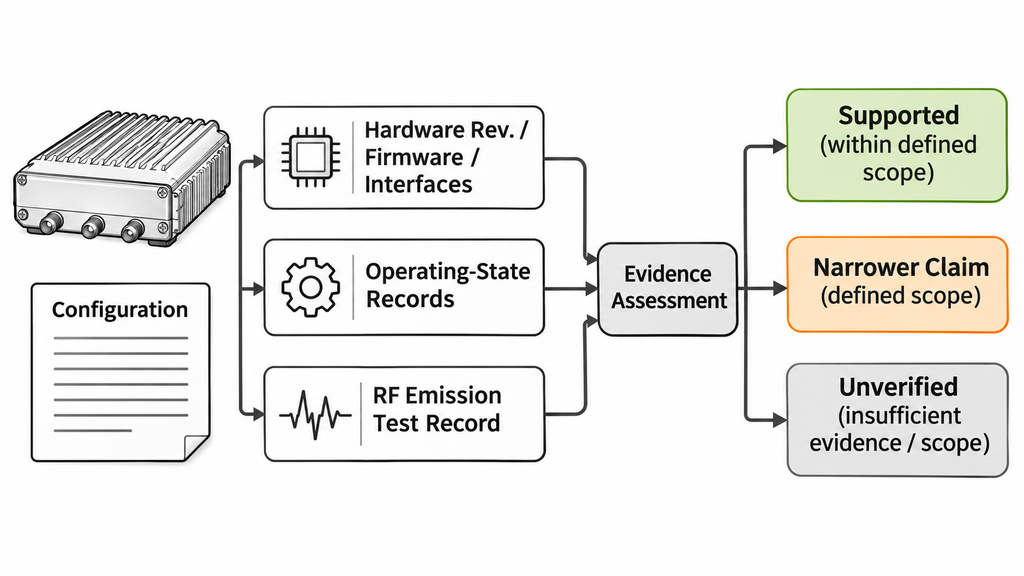
A credible no-transmit claim needs evidence tied to the actual equipment and the conditions covered.
A brochure describes the supplier’s intended operating concept. The hardware diagram identifies possible transmit paths, while configuration records show how installed interfaces are controlled. RF measurements document the activity observed during defined tests.
These records cannot substitute for one another. A diagram does not replace a measurement, and a spectrum screenshot does not explain which software state produced the result.
The formal test record should identify the tested unit or sample, hardware revision, firmware version, installed options, and operating modes. Its measurement method and limits must also be clear.
Results from one configuration cannot automatically establish the same behavior for later firmware builds, additional radio modules, or differently configured units.
Where a supplier proposes using an earlier report, the buyer should ask how the tested configuration corresponds to the equipment being delivered.
A claim may be supported within a defined scope when the hardware, software, and measurements consistently cover the stated operating conditions.
The wording may need to be narrowed when evidence supports routine passive monitoring but excludes updates, maintenance, or optional communications equipment.
The claim remains unverified when the available records do not establish the relevant configuration or operating behavior.
An unverified claim does not mean the detector necessarily transmits or that the product has failed. It means the purchasing requirement lacks sufficient evidence for approval.
An equipment authorization or emissions compliance report may address applicable regulatory limits. It does not necessarily establish the absence of intentional RF transmissions in every claimed operating state.
The purchase specification should state only what the evidence supports for the equipment being supplied.
6. What Can Passive RF Detection Miss?
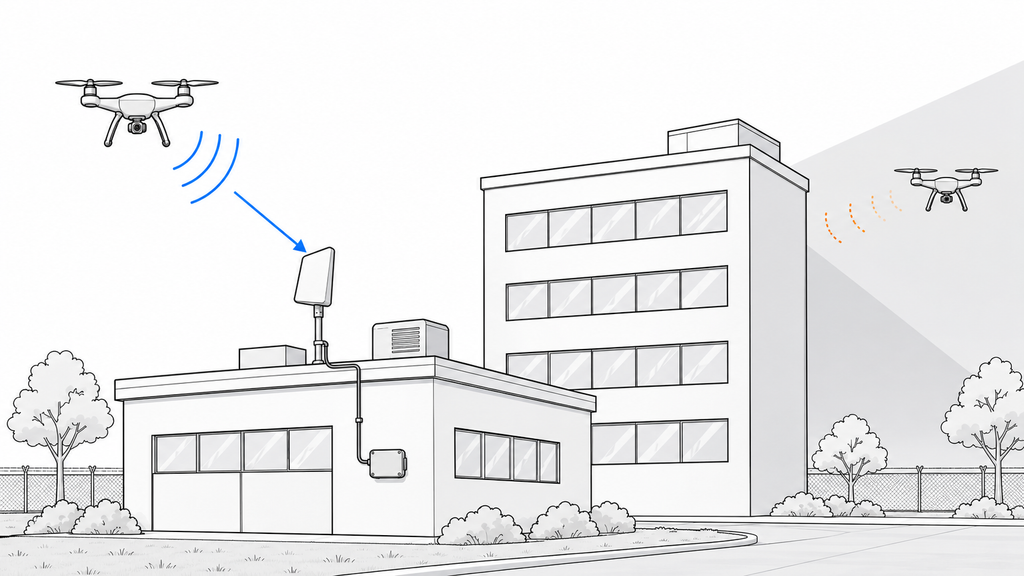
A passive RF receiver depends on signals reaching its sensing system.
If neither the drone nor its associated control equipment provides a receivable signal within the monitored band, a passive RF detector may miss the target.
Weak signals, obstructions, local interference, and receiver sensitivity can also affect detection.
Protocol support adds another limitation. A receiver might observe RF energy without being able to identify the transmitting aircraft. Whether it generates an alert from that activity depends on its detection method.
The relevant drone frequencies and signal characteristics therefore need to match the expected aircraft activity, not just a broad advertised frequency range.
Autonomous flight does not necessarily mean RF silence. A drone may fly autonomously while broadcasting Remote ID or other signals.
Remote ID comes from the aircraft or its broadcast module and can be received by a compatible detector. The detector does not need to transmit an interrogation signal to receive that broadcast.
However, Remote ID availability and detector support should not be assumed for every target.
If radio-silent targets matter at the site, the detector architecture must account for that gap. Passive RF reception alone cannot close it.
These are detection-coverage limitations. They do not determine whether the detector itself makes intentional RF transmissions.
7. Does Passive Operation Eliminate Site Approval Requirements?
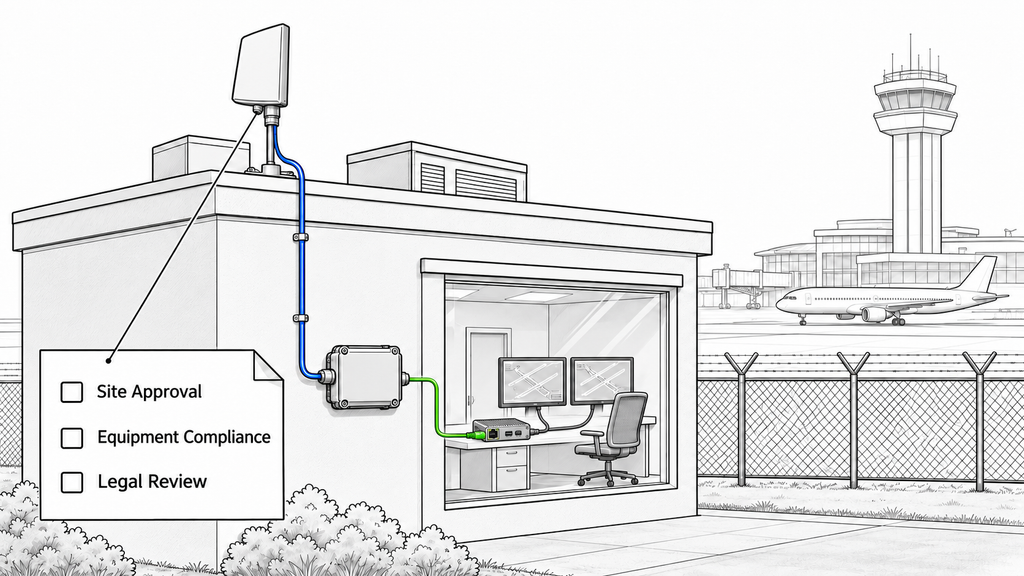
No. Passive sensing describes the detection method. It does not settle every equipment, installation, or legal requirement.
In a US project, the review may need to consider device compliance, installed communications equipment, site-owner approval, and the handling of received information.
The project team should coordinate proposed detection equipment with the airport operator and relevant FAA contacts where applicable.
Even equipment without an active detection transmitter may raise installation or operational questions. Its physical placement, connected equipment, or associated response procedures can affect the airport environment.
The legal treatment of captured RF information is a separate issue. Receiving a signal, identifying its characteristics, decoding communications, and storing their contents may have different implications depending on the system and jurisdiction.
A passive label does not establish permission to perform every one of those activities.
Before issuing the purchase order, the project team should assign responsibility for equipment compliance, site coordination, and any required legal review.
The approval path depends on the proposed configuration and location. No universal exemption follows from passive operation alone.
8. What Should Buyers Require Before Approving a Passive Detection System?
The supplier’s hardware description, operating-state records, and RF evidence should all refer to the same configuration.
Before approving a passive or no-transmit claim, request the following:
- A precise claim and system boundary. Specify whether the requirement concerns passive sensing or the absence of intentional RF transmission. Identify the detectors, gateways, interfaces, and other equipment included.
- The as-supplied configuration. Obtain the model, hardware revision, installed options, firmware build, and relevant software version. Confirm how these correspond to the tested configuration.
- An RF interface inventory. Request a block diagram identifying receiving paths, installed transmit-capable hardware, antennas, network links, and any excluded external equipment.
- Operating-state evidence. Require records for startup, scanning, alert handling, synchronization, updates, maintenance, and recovery, plus commissioning, self-test, and calibration modes where applicable. Identify which interfaces can transmit and how their operation is controlled.
- RF measurement records. Obtain the relevant radiated and, where appropriate, conducted results. They should identify frequency coverage, test conditions, background levels, measurement sensitivity, observation time, uncertainty, and the tested equipment. The records should also identify the agreed decision rule used to interpret the measured results.
- Firmware and configuration change control. Define which software updates, service actions, hardware substitutions, or optional modules require renewed review or measurement.
- Documented exceptions. Identify untested operating states, uncovered frequency ranges, optional transmitting equipment, and unresolved evidence gaps. Record whether each requires testing or narrower claim wording.
- Site approval responsibilities. Establish who handles equipment compliance, installation permission, airport coordination where applicable, and legal review of received or stored communications.
The resulting procurement record should make the supplier’s claim testable without treating missing evidence as either a pass or a product failure.
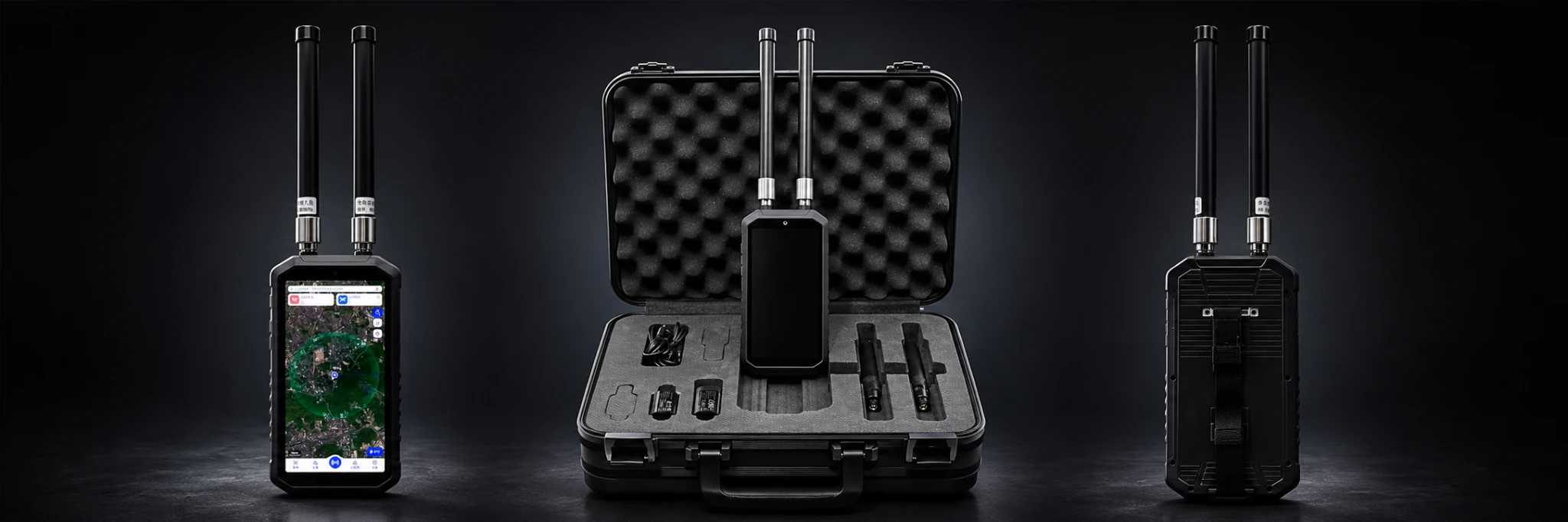
For mobile patrols and temporary observation posts, the HZ-HD03 Handheld Drone Detector offers a portable passive-RF detection option to evaluate. The project RFQ can define the required hardware configuration, operating modes, and any site-specific no-transmit evidence.
Conclusion
A passive drone detection system may use receive-only RF sensing without transmitting an active detection signal. A separate claim of no intentional RF transmission is supportable only within a defined equipment configuration, operating-state scope, and evidence boundary. Neither claim establishes that the complete installation produces zero electromagnetic emissions.
With these records, buyers can determine whether a supplier’s statement is supported, needs narrower wording, or remains unverified. A result from one configuration cannot establish the RF behavior of an untested configuration or replace site-specific detection and approval assessments.
Before procurement approval, compare the installed interface inventory with the tested hardware and firmware. Confirm that the measurement records cover the operating states required by the project, then document any remaining exceptions.
For an RF SKYPOWER engineering review, provide the proposed installation configuration, hardware and firmware versions, required operating modes, communications interfaces, and available RF emission evidence. These details can help identify the detector configuration to evaluate and the verification requirements to include in the RFQ.