
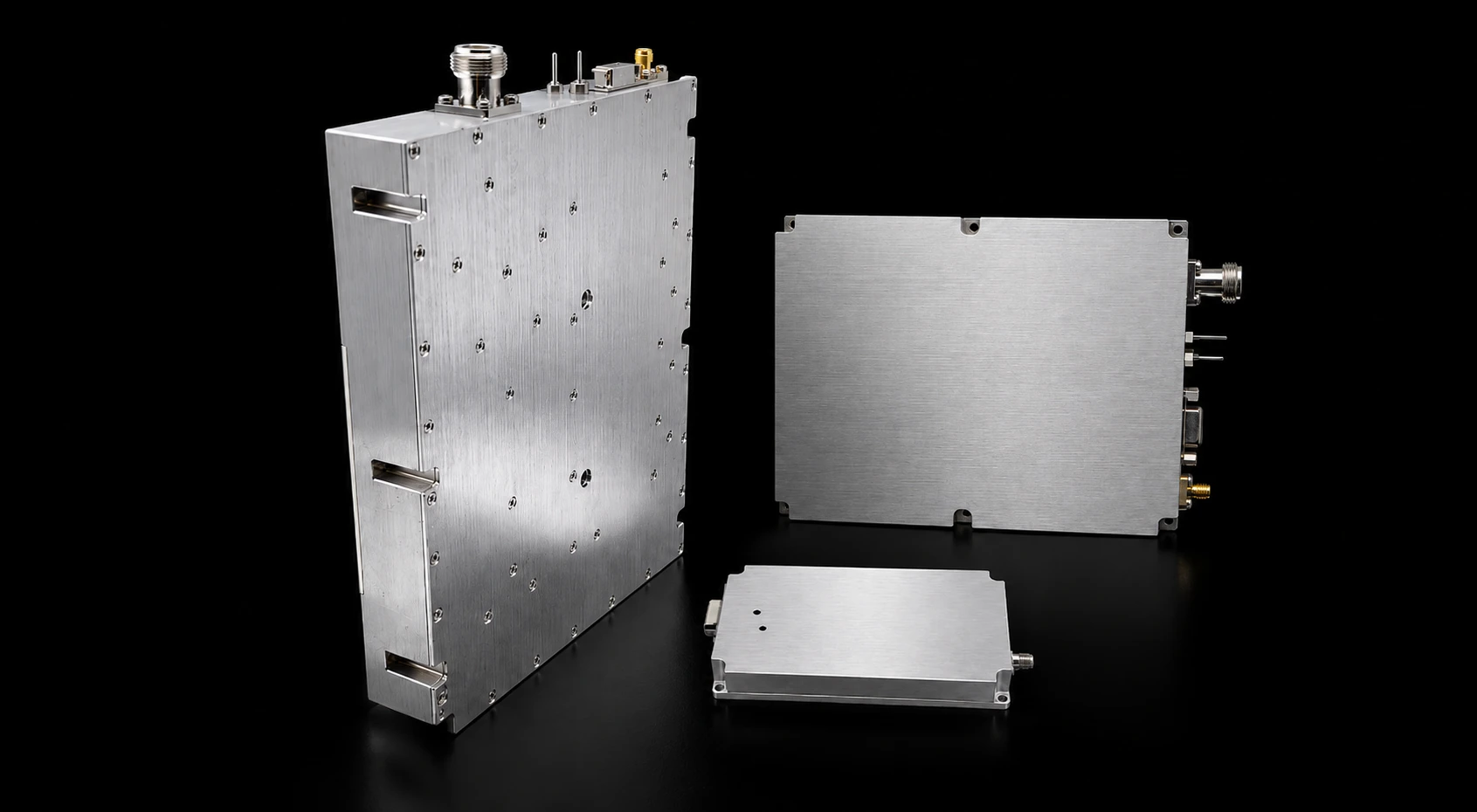
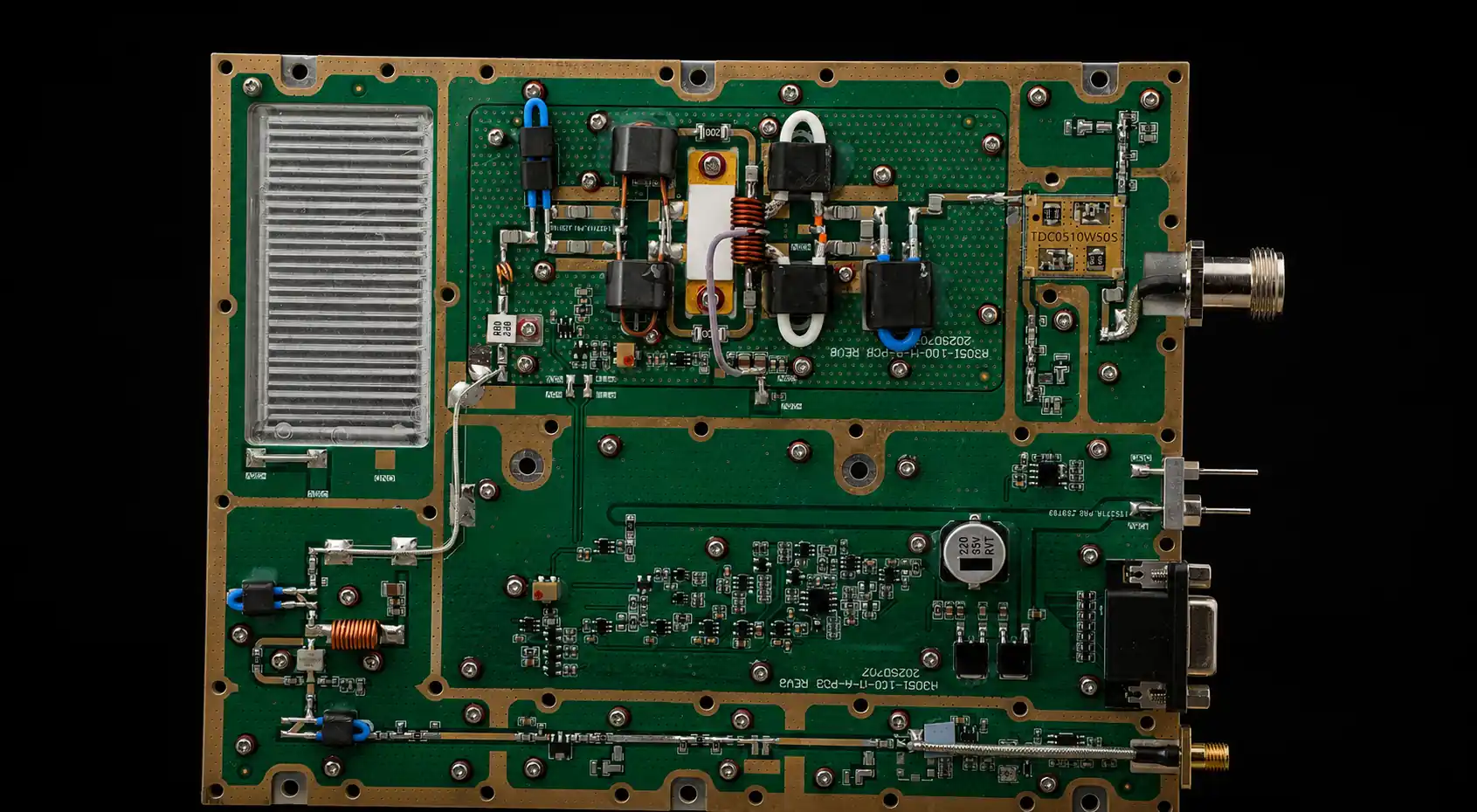
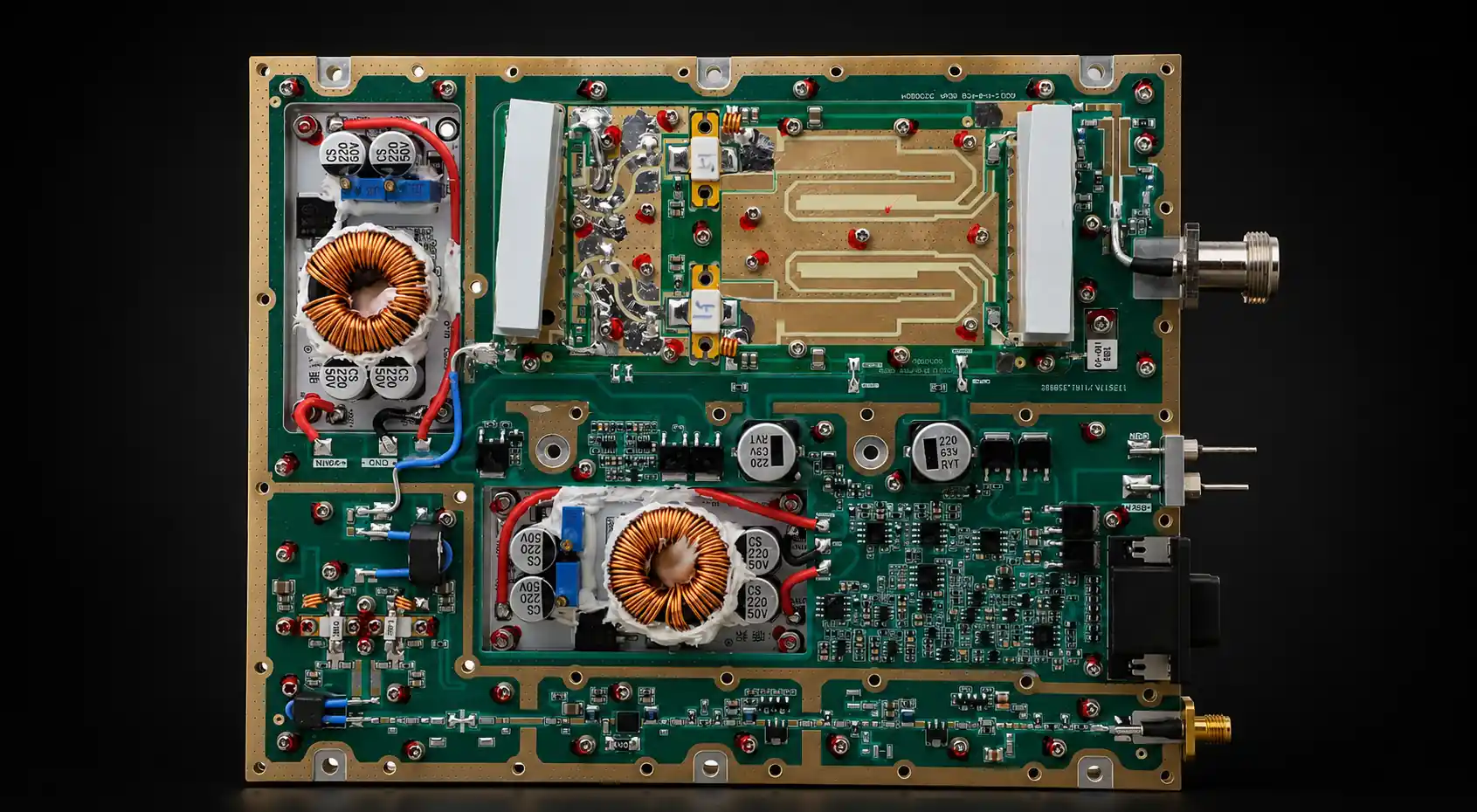
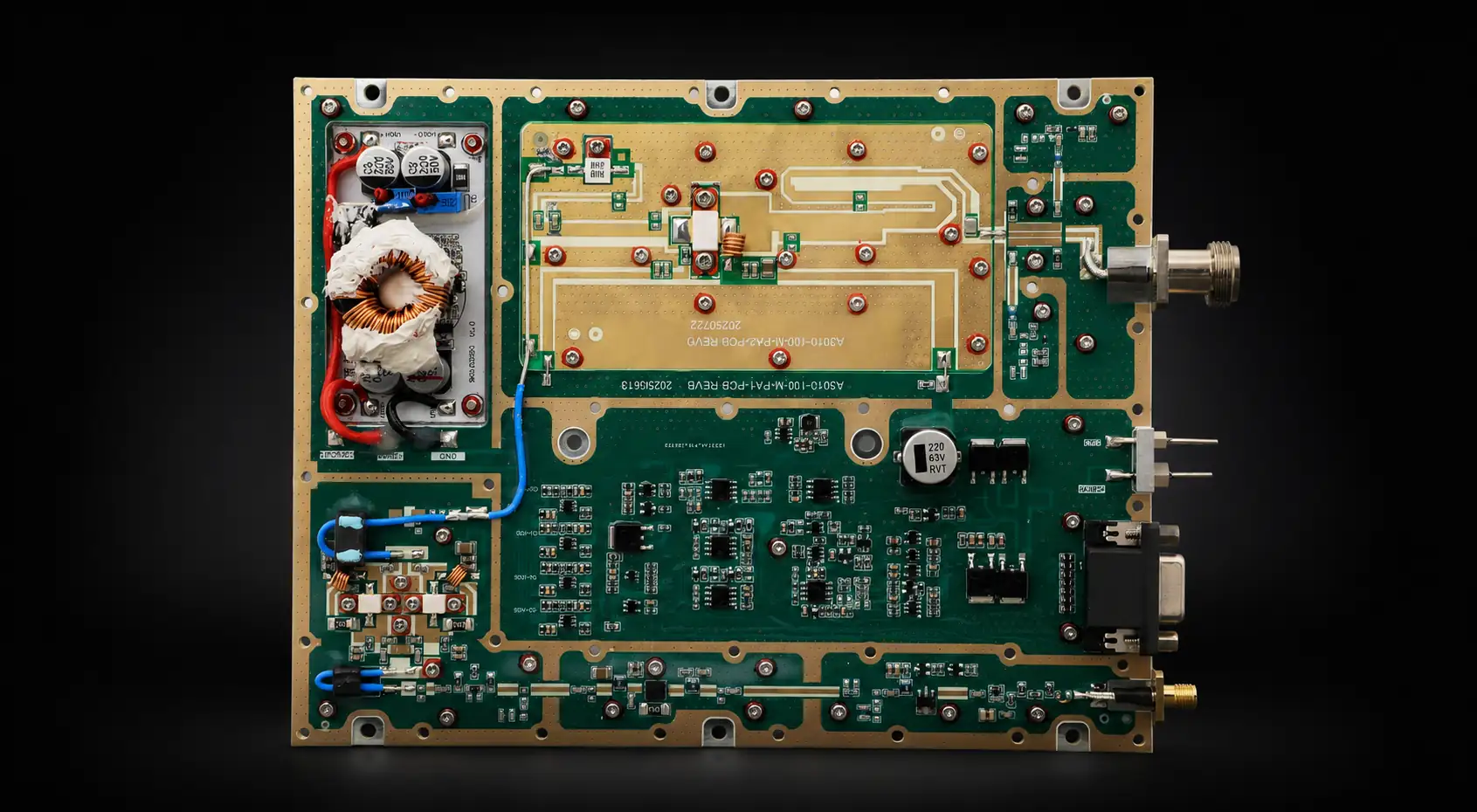
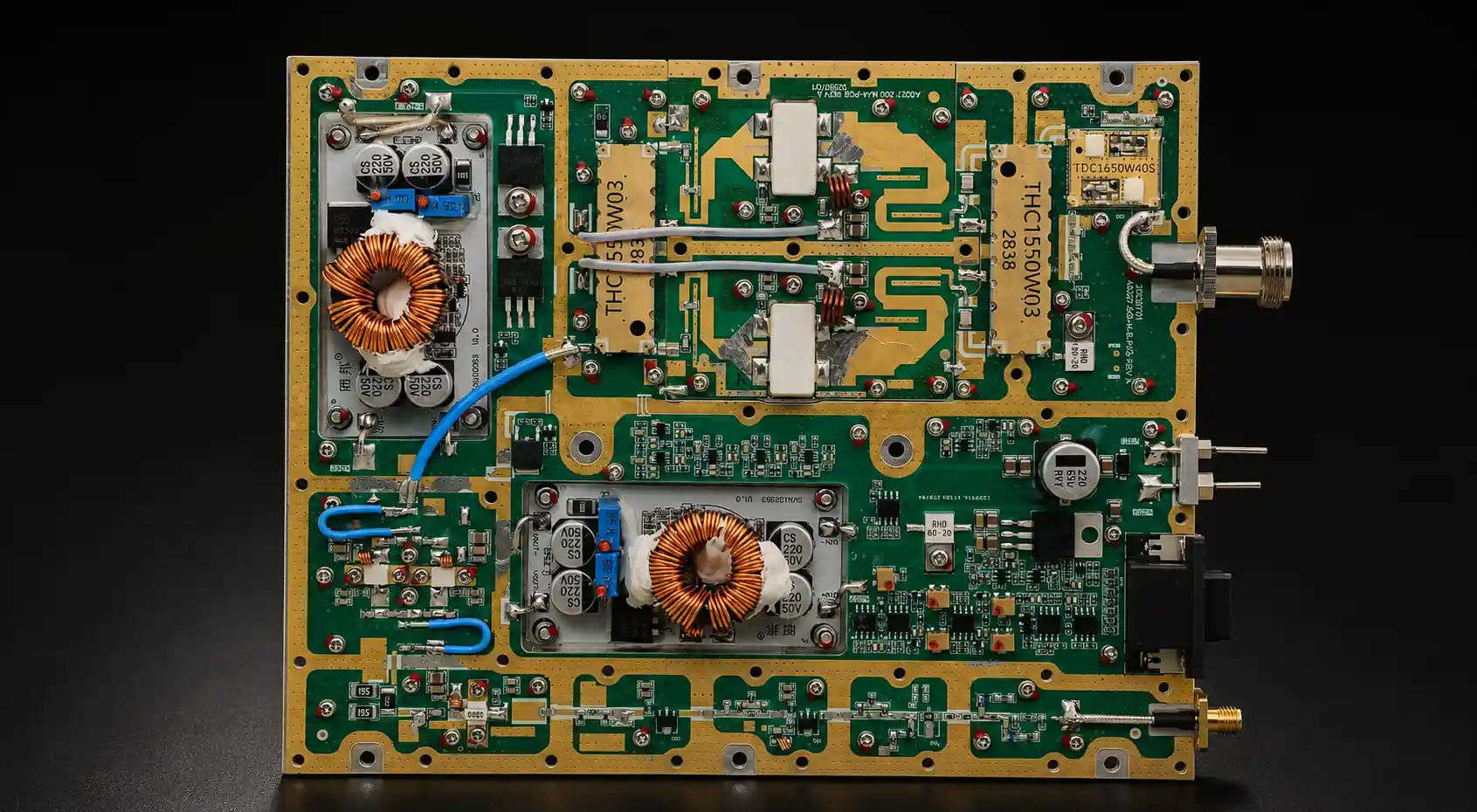
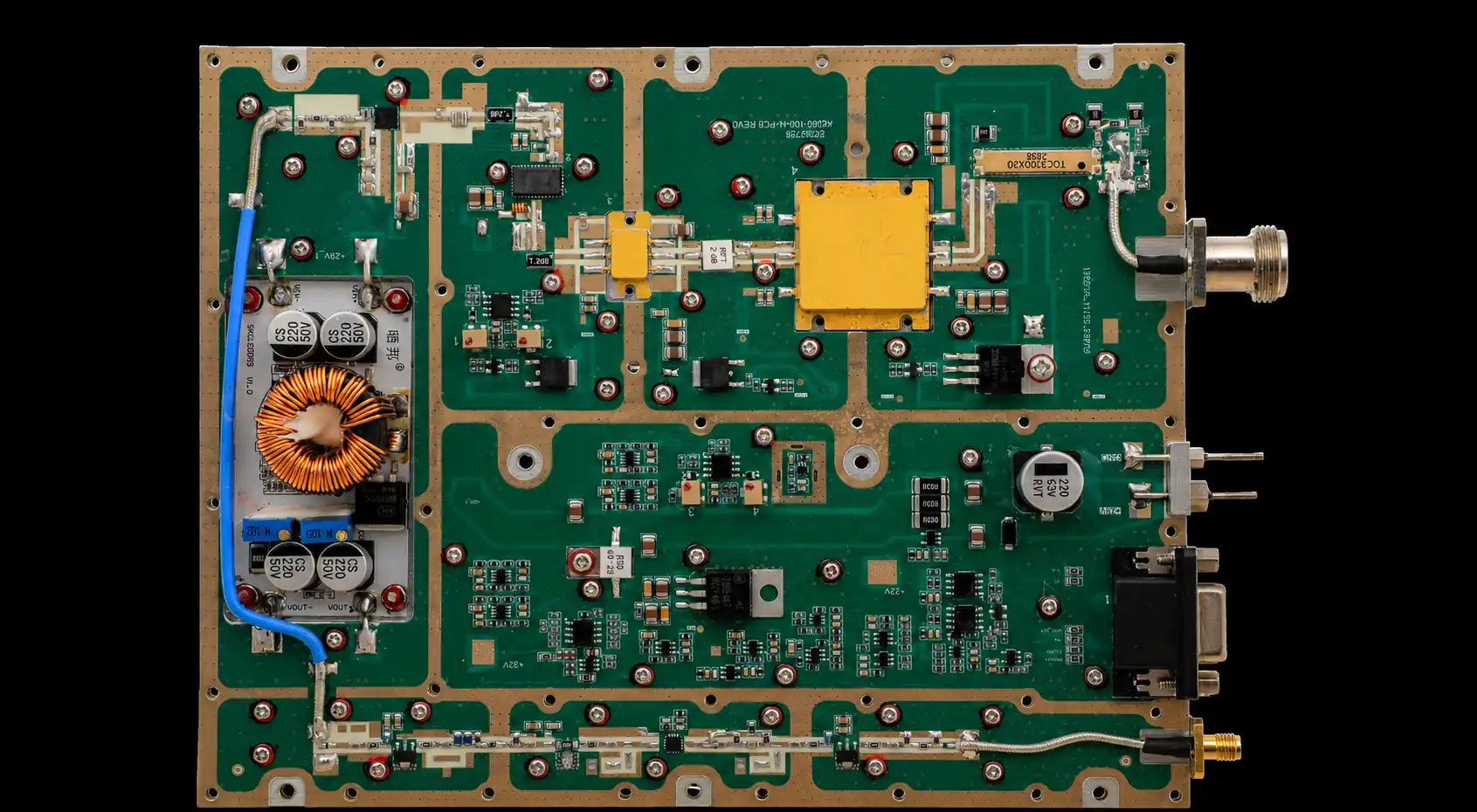
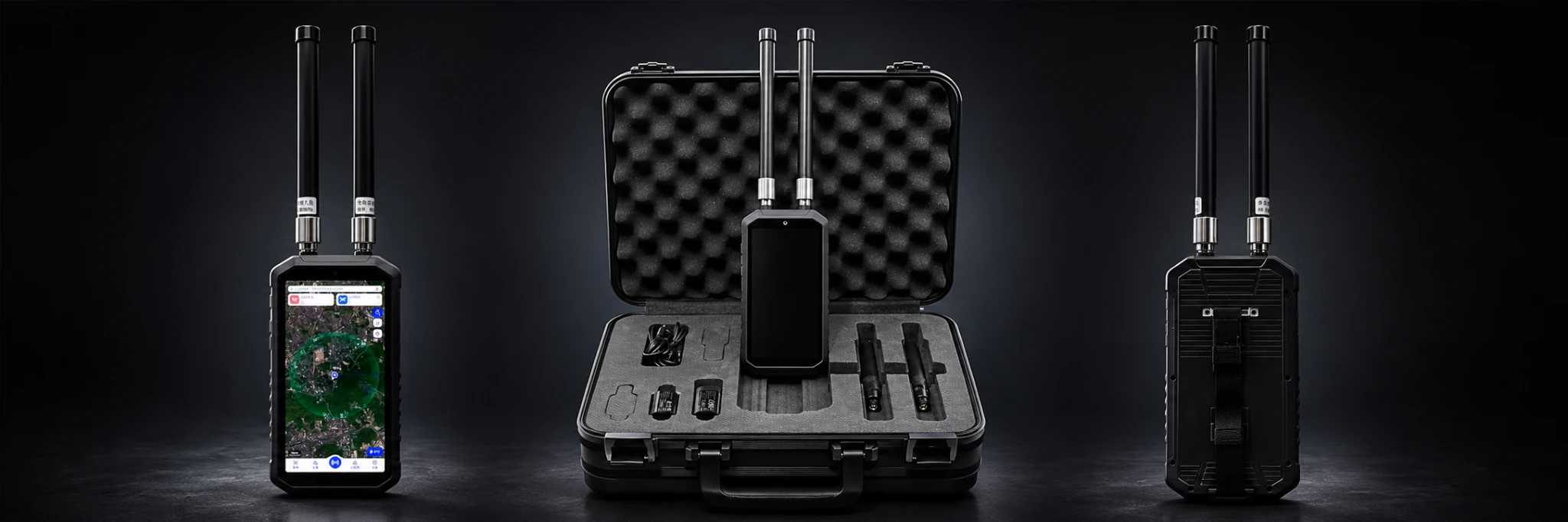

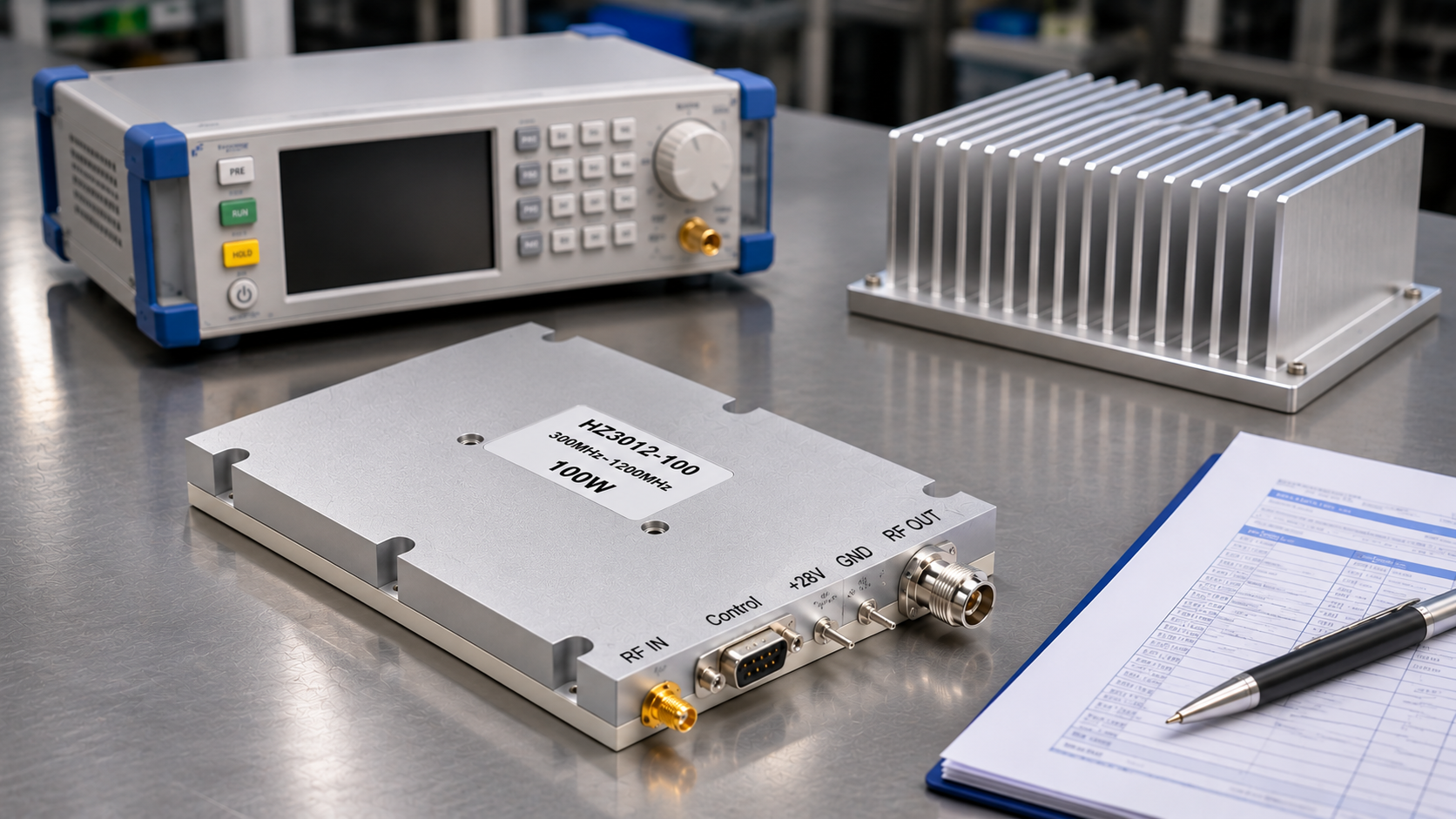
A drone jammer module price can be compared with another quote only after the buyer aligns the deliverables, price units, quantities, commercial terms, and documented extra costs. An RF power-amplifier (PA) board, a source-integrated module, and a supplier-defined complete RF channel may appear under similar product labels. Here, complete RF channel means the RF supply and input/output boundary the supplier commits to in writing. Antennas, detection equipment, installation, and the wider counter-UAS platform are included only when the contract says so.
In an appropriately authorized project, an offer may state a product category and total without listing every included item. A board-only price may then sit beside a quote that includes cooling or documentation, although the amounts cover different obligations. Before shortlisting, match each figure to its quotation revision and supply schedule.
1. What Does a Drone Jammer Module Price Actually Buy?
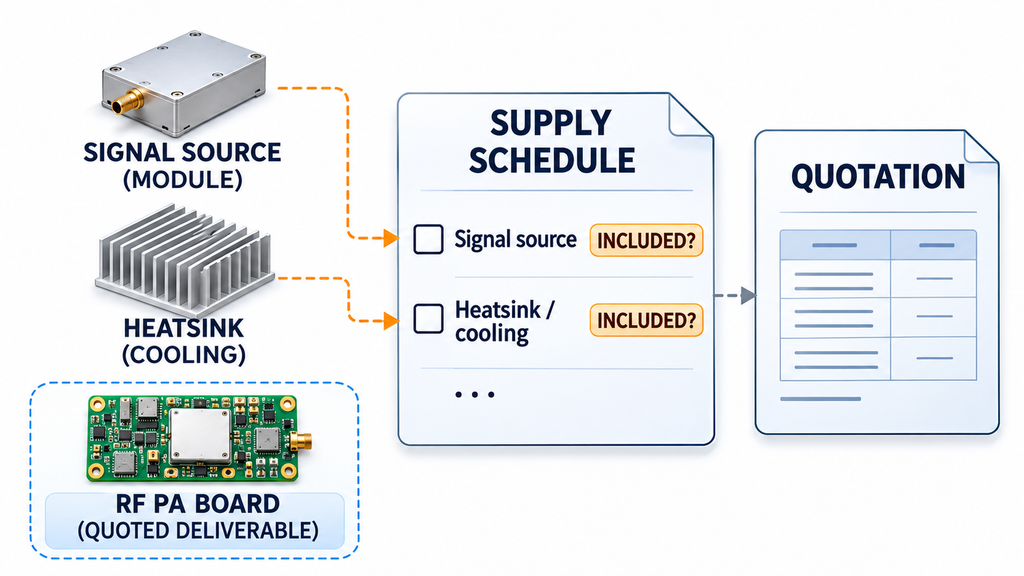
A product name and quoted RF output do not tell the buyer whether the signal source, controls, cooling, test records, or documents are included. Check the quotation, delivery schedule, or contract annex for each obligation and any separate price. Use the catalog to identify the product category; the agreed supply list determines what the purchase covers.
Two offers labeled drone jammer module may cover different parts of the wider C-UAS system. The remaining work may belong to the integrator.
For each offer, retain the supplier’s original item name, quotation revision, line-item or bill-of-materials reference, pricing unit, and stated exclusions. If the deliverable or unit remains unclear, mark the offer Not Comparable Yet and request a corrected supply description before ranking its price.
2. Which Procurement and Compliance Conditions Must Be Cleared First?
Before acting on a quote for radio-interference equipment, the buyer’s legal or compliance team must check the permissions and restrictions governing purchase, import, export, transfer, possession, and operation. The applicable rules depend on jurisdiction, purchasing entity, end user, intended use, and destination. A commercial offer establishes no permission for those activities.
Record the jurisdictions, responsible reviewer, and status of applicable authorization and trade-control checks. Supplier marketing and the buyer’s organizational description cannot replace that review. Hold formal procurement recommendations while a material permission or transfer restriction is unresolved; a provisional cost calculation can remain in the worksheet. Price comparability and legal procurement eligibility are separate decisions.
3. Classify RF Board, Source-Integrated Module, and Complete-Channel Quotes
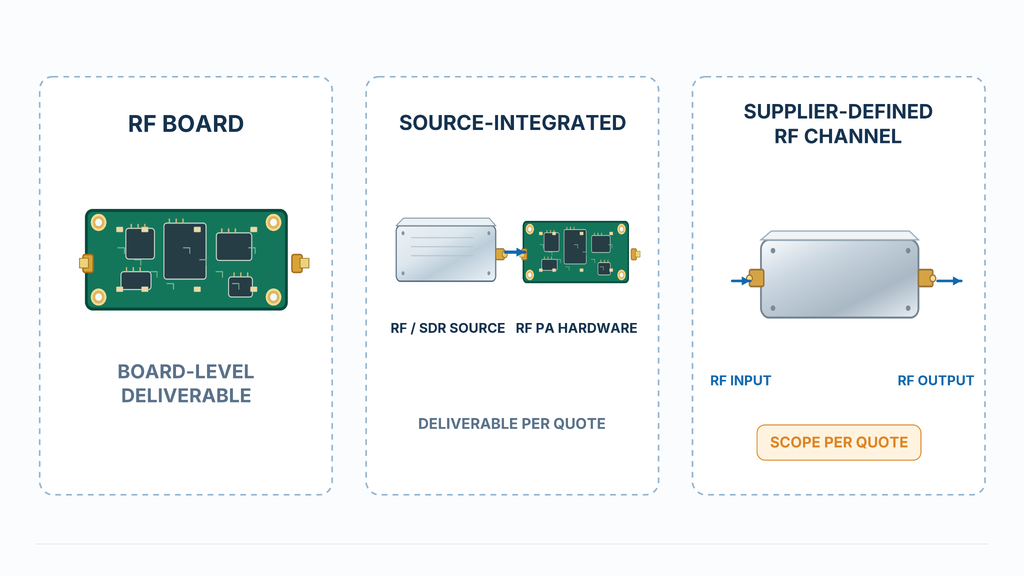
Classify offers by what the supplier agrees to deliver, using three categories:
- RF board-level quote: the documented deliverable is an RF PA board or module. The supplier must specify which surrounding items or integration services, if any, are included.
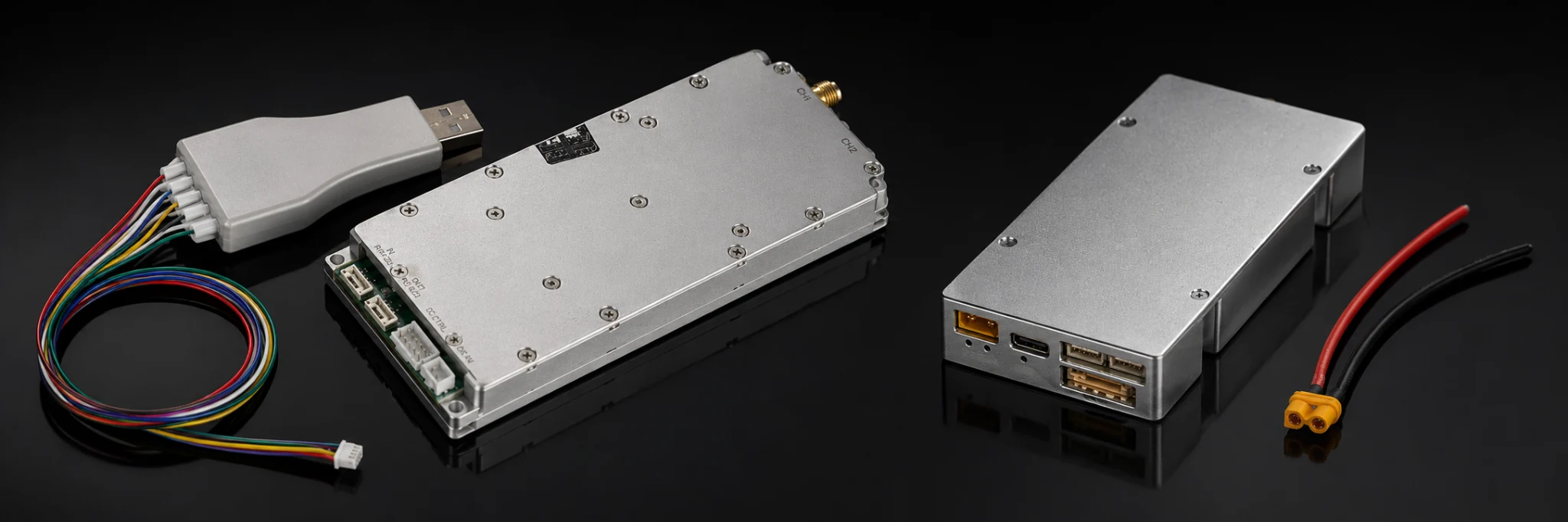
- Source-integrated module quote: the written scope includes a specified signal-source function with RF hardware; the contract controls the remaining items.
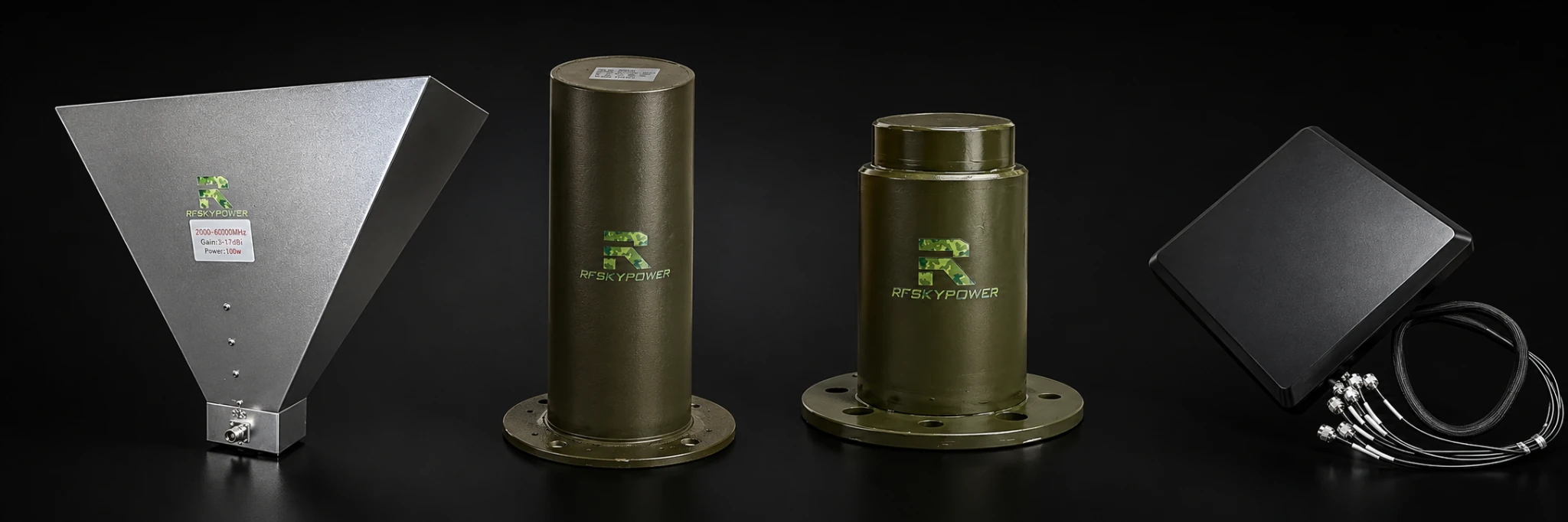
- Complete RF channel quote: the supplier defines an RF-channel deliverable and its input/output boundaries in writing. Antennas, detection equipment, installation, and the wider counter-UAS platform remain outside this label unless separately included in the contract.
Check each offer against its supply schedule and interface responsibility statement. If the input/output boundary or delivery list is missing, request clarification before assigning a tier. That tier identifies which exclusions and extra charges need review; classification alone establishes neither price nor technical equivalence.
4. Normalize Price Units, Channel Count, and Quoted Output Boundaries
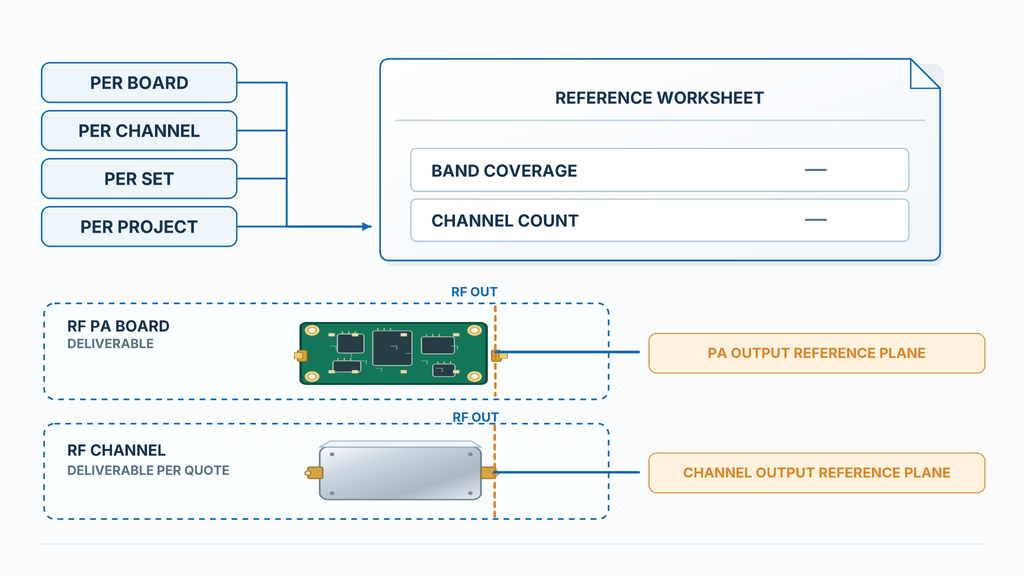
Define one reference purchase case: the required number of independently supplied RF channels, the delivery boundary for each channel, and the project quantity. Prices per RF board, per RF channel, per set, and per project use different denominators. Ask the supplier to map priced items to delivered channels before converting quoted amounts to a common pricing basis.
Keep frequency-band coverage and independently priced channel count in separate fields. A multi-band label describes claimed coverage; the actual channel count and items included per priced unit require written confirmation. Record both against the procurement requirement. The band label alone cannot establish channel architecture or operating configuration.
Name the RF output reference plane in each offer. A rating at the PA connector and a rating after downstream components or at an antenna connection refer to different boundaries. Use that reference plane to establish the quoted deliverable and documentation obligation; radiated-performance assessment remains a separate technical review.
Align ordered quantity, currency, unit and extended prices, taxes, freight, Incoterms, destination, payment assumptions, and quotation validity. Record differences that remain, plus the exchange-rate basis and date for conversions or the allocation basis for project-wide fees. Hold the overall ranking if an unknown price unit, channel count, or delivery boundary could materially change the total.
5. Build an Included-and-Excluded Supply Scope Matrix
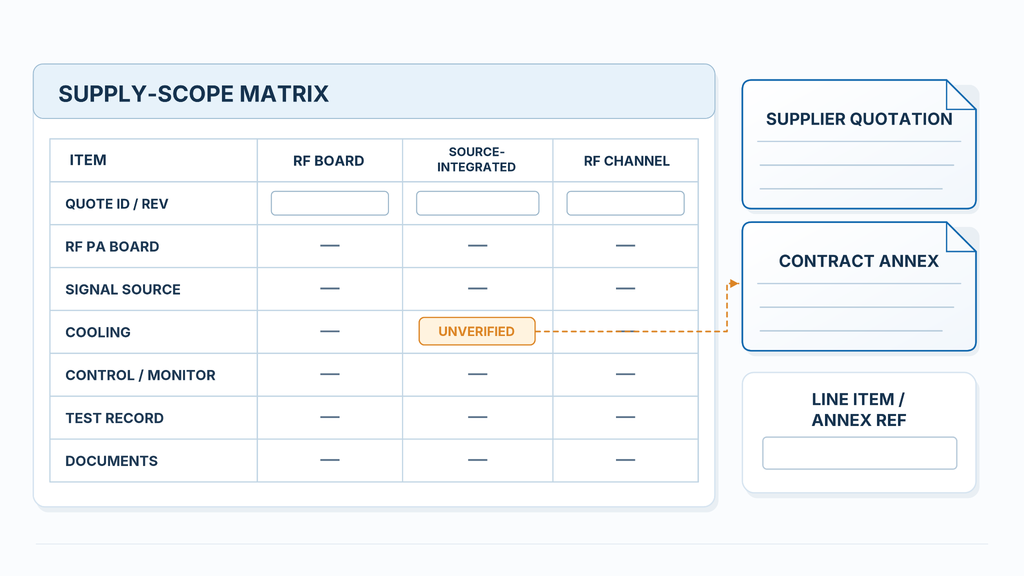
The supply-scope matrix compares one identified offer per delivery tier. Enter its Quote ID and revision in the corresponding tier column. If several suppliers quote the same tier, keep separate buyer working copies rather than combining their statuses in one cell.
For each item, record Included, Optional, Separately charged, Buyer-supplied, Excluded, or Unverified. Add the Quote ID to the charge, delivery-owner, and evidence columns. A dash (—) marks an unverified field; it never means included or free.
| Procurement scope item | RF board quote (ID / status) | Source-integrated quote (ID / status) | Complete RF-channel quote (ID / status) | Contract inclusion / extra-charge basis by Quote ID | Delivery responsibility by Quote ID | Written quote / contract / document evidence by Quote ID | Clarification required |
|---|---|---|---|---|---|---|---|
| Band coverage and stated band count | — | — | — | — | — | — | Confirm the stated coverage and quote line. |
| Independently supplied RF-channel count | — | — | — | — | — | — | Confirm the channel quantity included per priced unit. |
| RF PA board or module | — | — | — | — | — | — | Identify the PA item covered by each offer. |
| Signal-source integration | — | — | — | — | — | — | Confirm the source function and its charge status. |
| Filtering, RF connectors, and supplied interconnects | — | — | — | — | — | — | Identify delivered items and priced exclusions. |
| Control and monitoring provisions | — | — | — | — | — | — | Identify supplied functions and the remaining owner. |
| Cooling and thermal hardware | — | — | — | — | — | — | Confirm the supplied hardware and any separate price. |
| Enclosure and mounting hardware | — | — | — | — | — | — | Confirm open-module or enclosed-delivery scope. |
| Power interface and any supplied power equipment | — | — | — | — | — | — | Identify buyer-supplied and supplier-supplied items. |
| Defined RF output delivery / evidence boundary | — | — | — | — | — | — | Name the documented connector or reference plane. |
| Test records and agreed evidence | — | — | — | — | — | — | State the record type, delivery timing, and fee. |
| Datasheets, drawings, and revision-controlled documents | — | — | — | — | — | — | Confirm document versions and delivery terms. |
| Warranty, repair, and technical support | — | — | — | — | — | — | Confirm service period, responsibilities, and charges. |
Replace each dash only after checking the contract status, responsible party, and quotation revision with its line or annex reference. Writing “delivery schedule” without identifying the actual document and location does not substantiate an inclusion claim. For required items marked Optional, Separately charged, Buyer-supplied, or Excluded, confirm the delivery owner and any additional price in writing before treating the quote as complete-scope cost.
6. Reconcile Base Price, Missing Scope, and One-Time Charges
Assign a reference-scope ID to the intended deliverable, band coverage, RF output boundary, independent channel count, target quantity, required evidence, service period, and commercial delivery basis. Attach that ID to every quote and reconcile supplier responsibilities and written charges against it.
The worksheet’s Reference purchase quantity is the buyer’s target quantity. Under Written evidence source, record the supplier’s quoted quantity, any minimum order quantity, and the conditions governing its unit price. If the quoted rate does not apply to the target quantity, request a revised price before extending the amount.
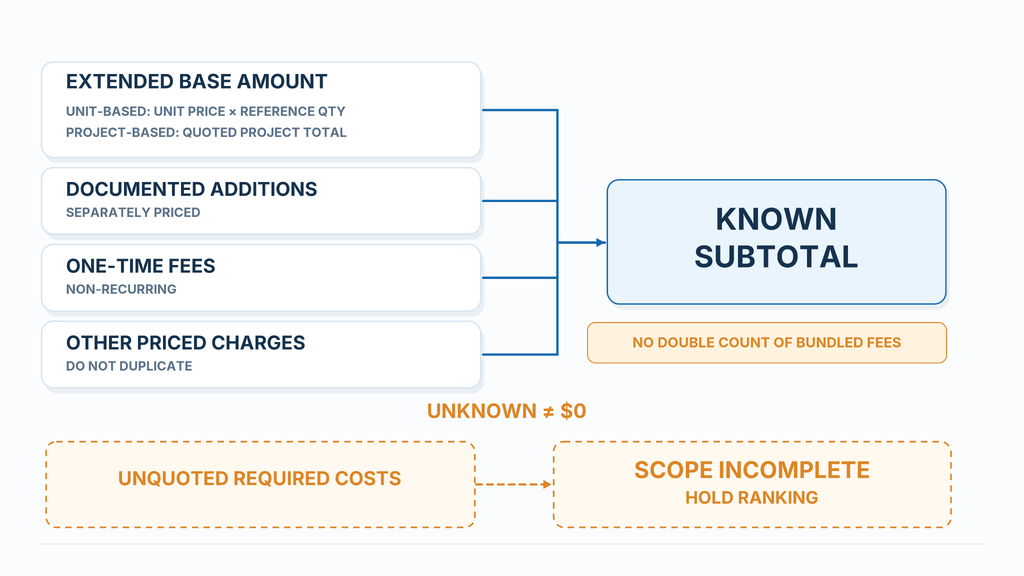
Start with the documented base amount. Extend per-unit charges to the reference quantity, then add written prices for required scope gaps. Keep project-wide engineering and other one-time charges separate from recurring unit charges. If allocating a one-time fee per unit, state the quantity and method used.
The blank quote-normalization worksheet separates documented charges, unquoted required costs, and the evidence behind each offer.
| Quote ID | Quoted deliverable / price unit | Reference purchase quantity | Currency | Base quoted amount | Documented scope additions | One-time charges | Test / documents / support charges | Freight, tax, and Incoterm basis | Unquoted required costs | Known documented subtotal toward reference scope | Comparability status | Written clarification needed | Written evidence source |
|---|---|---|---|---|---|---|---|---|---|---|---|---|---|
| Quote 01 (blank template) | — | — | — | — | — | — | — | — | To be quoted | — | Not Comparable Yet | Confirm unit, exclusions, and separate charges | Scope ID / quote revision / lines: — |
| Quote 02 (blank template) | — | — | — | — | — | — | — | — | To be quoted | — | Not Comparable Yet | Confirm unit, exclusions, and separate charges | Scope ID / quote revision / lines: — |
For the reference quantity, add the extended base amount, priced scope additions, one-time charges, separately priced test records, documentation and support for the agreed period, and applicable logistics, duties, and taxes under the recorded trade terms. Exclude amounts already covered by a bundled line or another fee. Record quotation revisions and, for currency conversions, the agreed exchange-rate basis and date in the evidence field.
Unknown ≠ $0. Keep required items without written prices under Unquoted required costs. A dash means the amount remains unverified; use Not applicable only when the agreed scope supports it. The subtotal becomes a complete normalized same-scope cost only when every material required item has a documented price or justified Not applicable status and the commercial conditions align. Until then, hold the overall ranking. Compare longer-term support costs only across matching service periods.
7. Account for Test Records, Documentation, Warranty, and Support
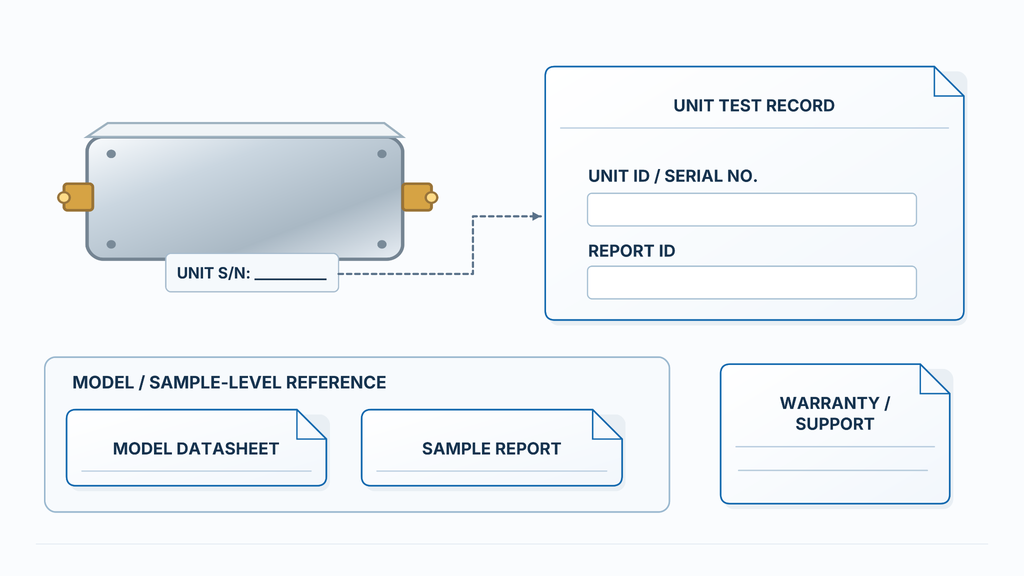
Two quotes for the same hardware may carry different document and service obligations. Check whether each price includes the agreed datasheet or drawings, revision details, test records, acceptance documents, warranty coverage, repair or replacement arrangements, and technical support. Request written prices and service periods for items charged separately.
A model datasheet describes product-level claims; a representative sample report records that sample and its test conditions. Neither proves the result for a particular delivered unit without applicable supporting evidence. If the contract requires unit-specific records, identify the delivered unit, linked report or dataset, documentation scope, delivery timing, and separate charge. A report listed in a quote is a proposed document deliverable, not a project acceptance result.
Check warranty start dates, exclusions, repair logistics, revision support, service periods, and response obligations in the written commercial terms. Transfer confirmed inclusions to the supply-scope matrix and charges to the normalization worksheet. If material document or support responsibilities remain open, hardware prices support only a partial cost comparison.
8. Decide When Quotes Are Comparable—and What to Clarify Before RFQ
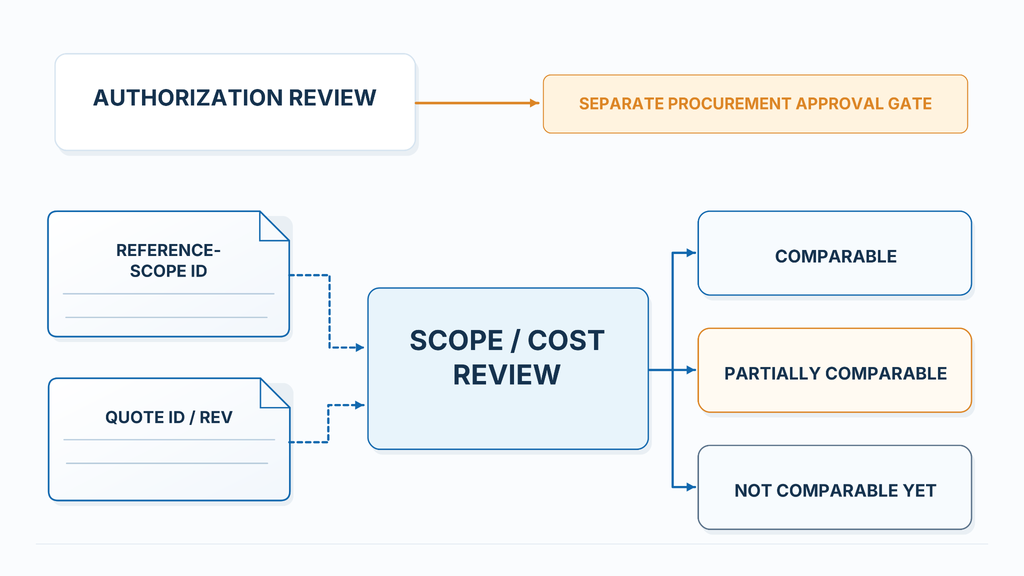
Judge each quote against the reference-scope ID and named quotation revisions. The three price-comparison statuses apply within that set; an offer can receive a different status against another delivery requirement.
- Comparable: The quoted deliverables, required scope, unit mapping, quantity, commercial basis, and material costs align with the named reference case and are documented. The procurement team may compare those same-scope costs, subject to separate authorization and technical approval.
- Partially Comparable: A defined component or cost category aligns, while another material part of the delivery or service scope remains different or unpriced. Identify the comparable portion and keep any overall supplier ranking on hold.
- Not Comparable Yet: A necessary responsibility, price unit, channel count, charge, or evidence boundary remains unresolved. Hold the price ranking and request a quotation revision. This records an evidence gap, not a product failure.
Use the worksheet’s Comparability status and Written clarification needed fields to record the decision and its open questions. Assign a buyer or supplier contact to each question. For cooling, ask whether it is included; if not, identify the delivery owner, exclusion, and any additional price at the reference quantity. Request equally specific answers on channel count, one-time engineering fees, test records, warranty period, and trade terms. File written replies under Written evidence source and update the scope matrix. Pending purchasing or transfer authorization remains an independent hold on procurement approval.
Normalized costs support commercial shortlisting. For RF PA candidates, evaluate technical evidence under matched test conditions before technical approval. Hold that approval if the evidence does not establish fit for the project requirement, regardless of price.
For a standalone PA purchase, the published RF power amplifier module range provides the relevant product-family reference. Model suitability, quotation terms, and availability still require confirmation.
Conclusion
Compare drone jammer module prices only after the quotes cover the same documented delivery scope, price units, quantities, and commercial terms. Add written prices for required scope gaps and one-time charges; keep unquoted required costs open. Rank the resulting same-scope totals only when those gaps are resolved and the applicable procurement review has been completed.
The result is a price comparison within a defined supply scope. RF performance, project-specific output and acceptance limits, supplier qualification, and legal authorization still require their own evidence and approvals. A PA-only board quote needs documented scope adjustments before it can be ranked alongside an RF-channel quote that includes source, control, cooling, or documentation.
Before requesting a revised offer, complete the supply-scope matrix, identify missing obligations, obtain itemized written clarifications, and update the cost worksheet. For an RF-component project that has passed the buyer’s authorization review, submit the internal review status (without sensitive records), project scope, delivery tier, quantity and price unit, RF component/interface boundary, test and document requirements, support terms, and unresolved charges through the RF SKYPOWER engineering RFQ channel. Use the supplier’s written response to confirm the actual component supply, documentation, and evidence commitments. The inquiry itself establishes no full-channel supply commitment, legal permission, or acceptance result.