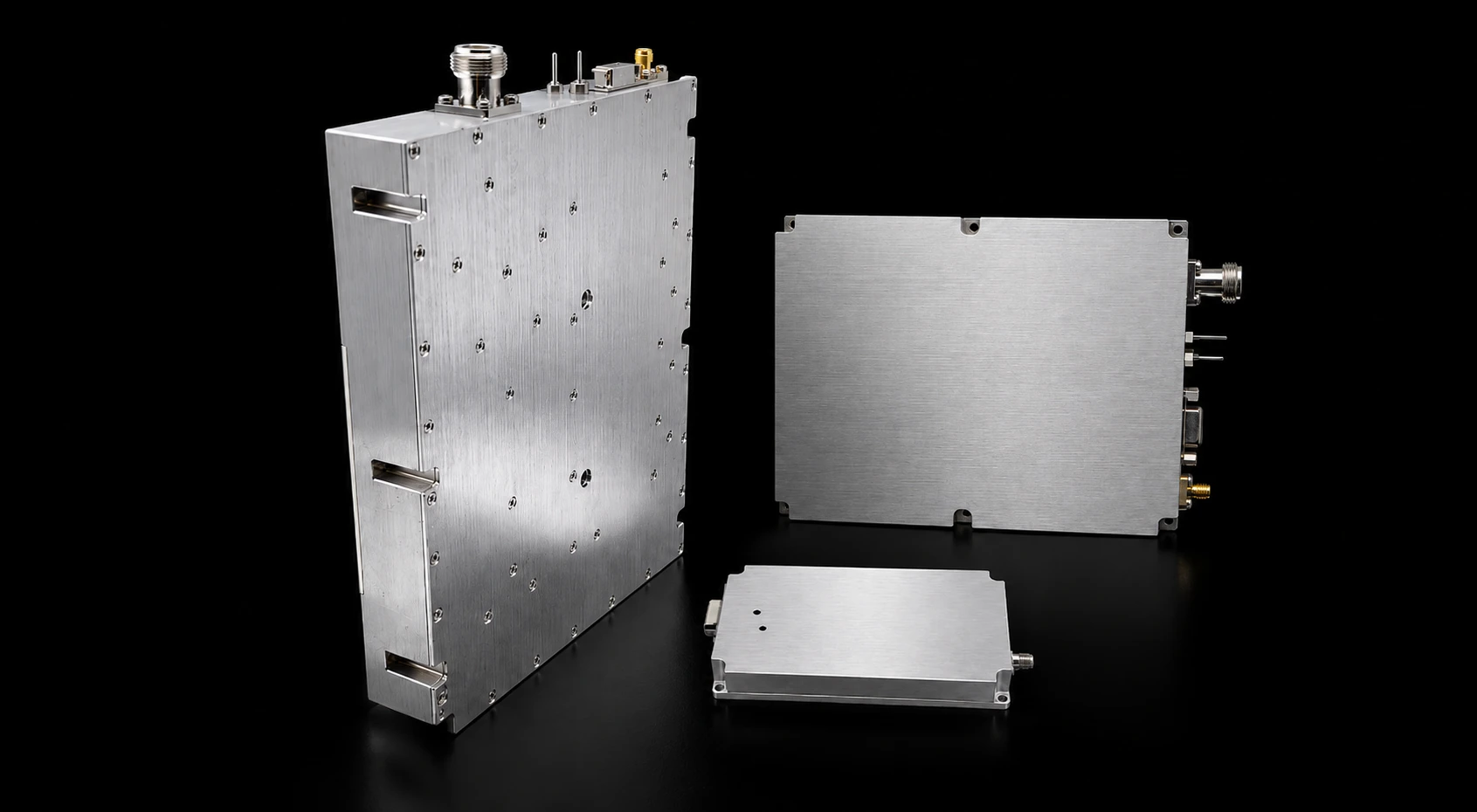
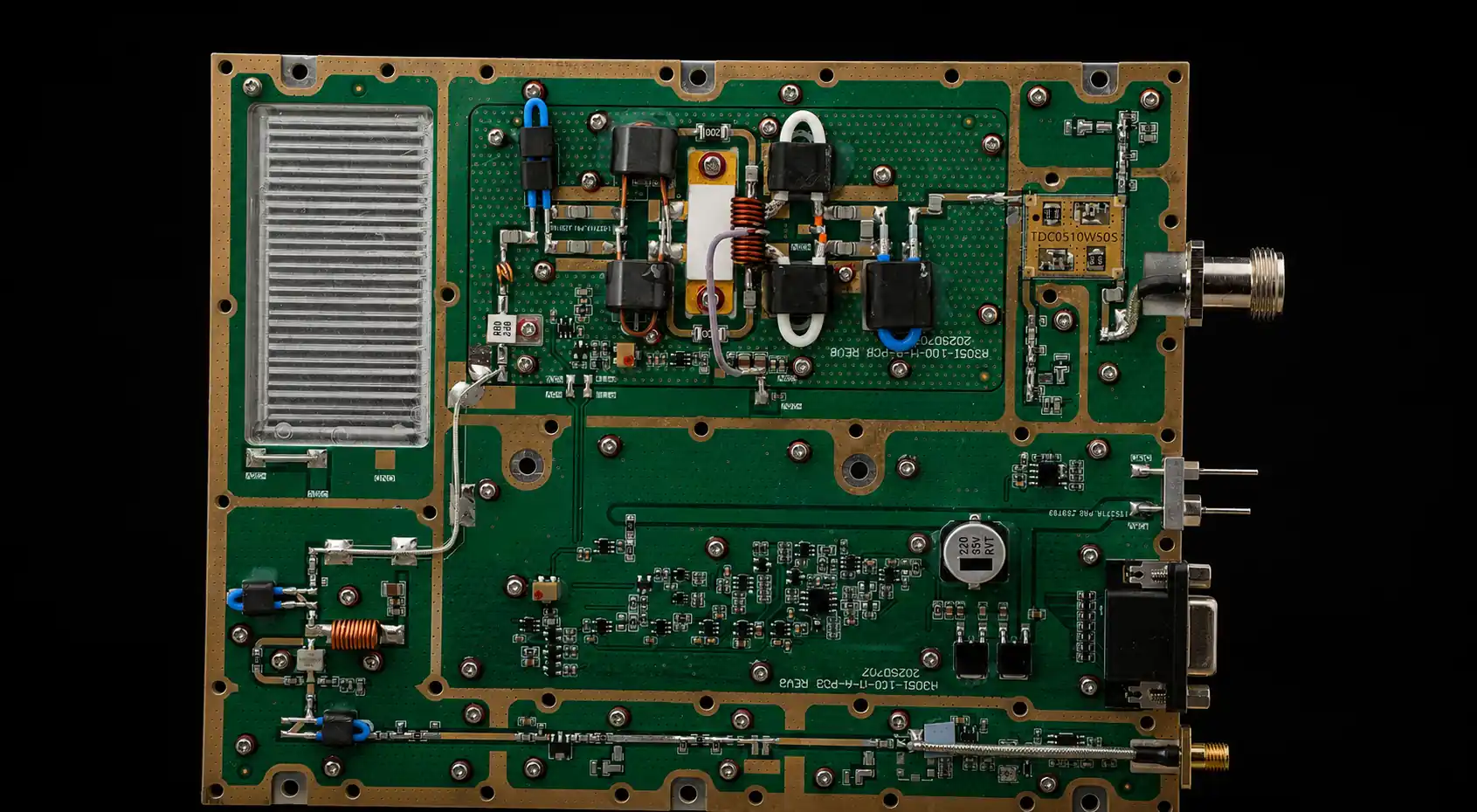
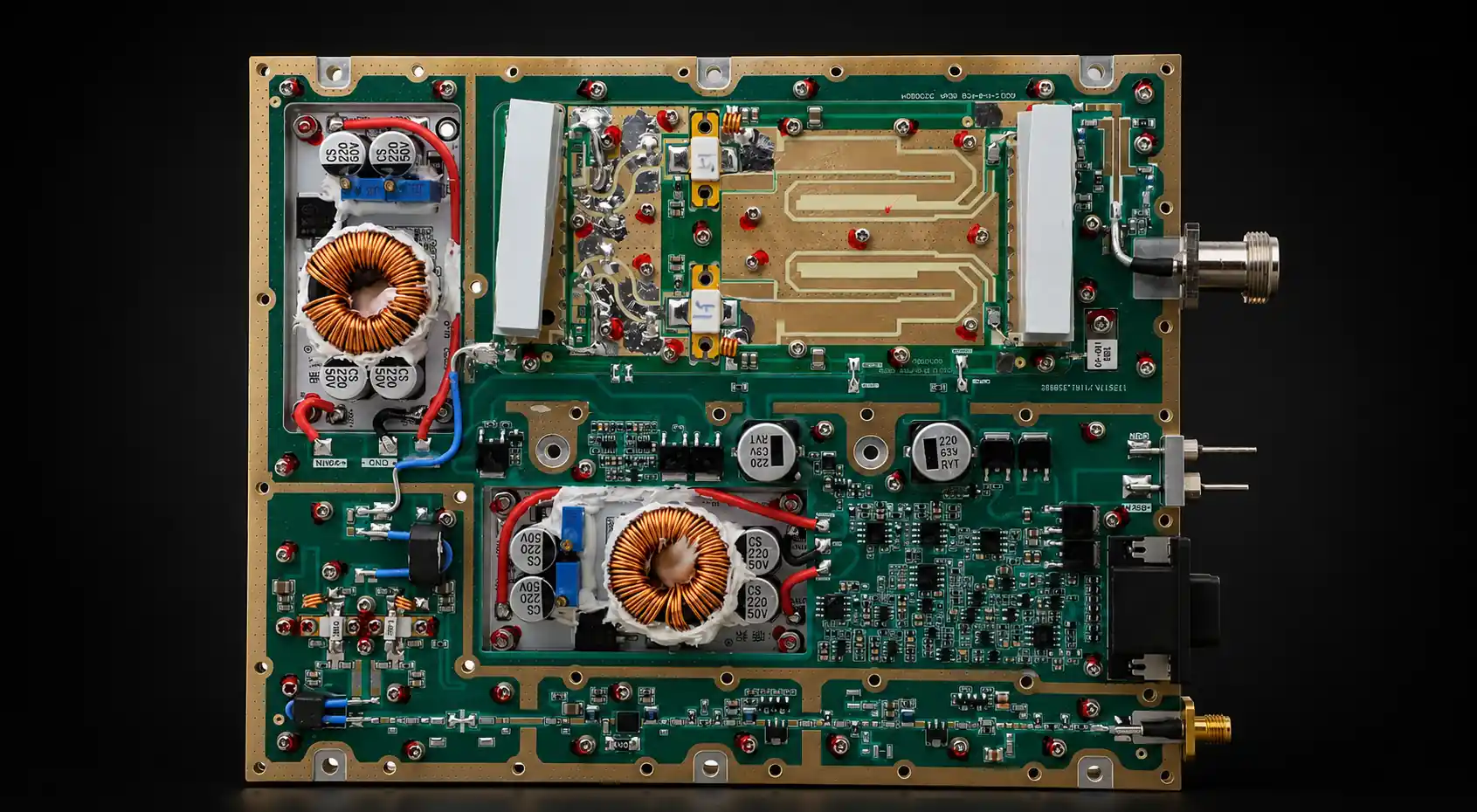
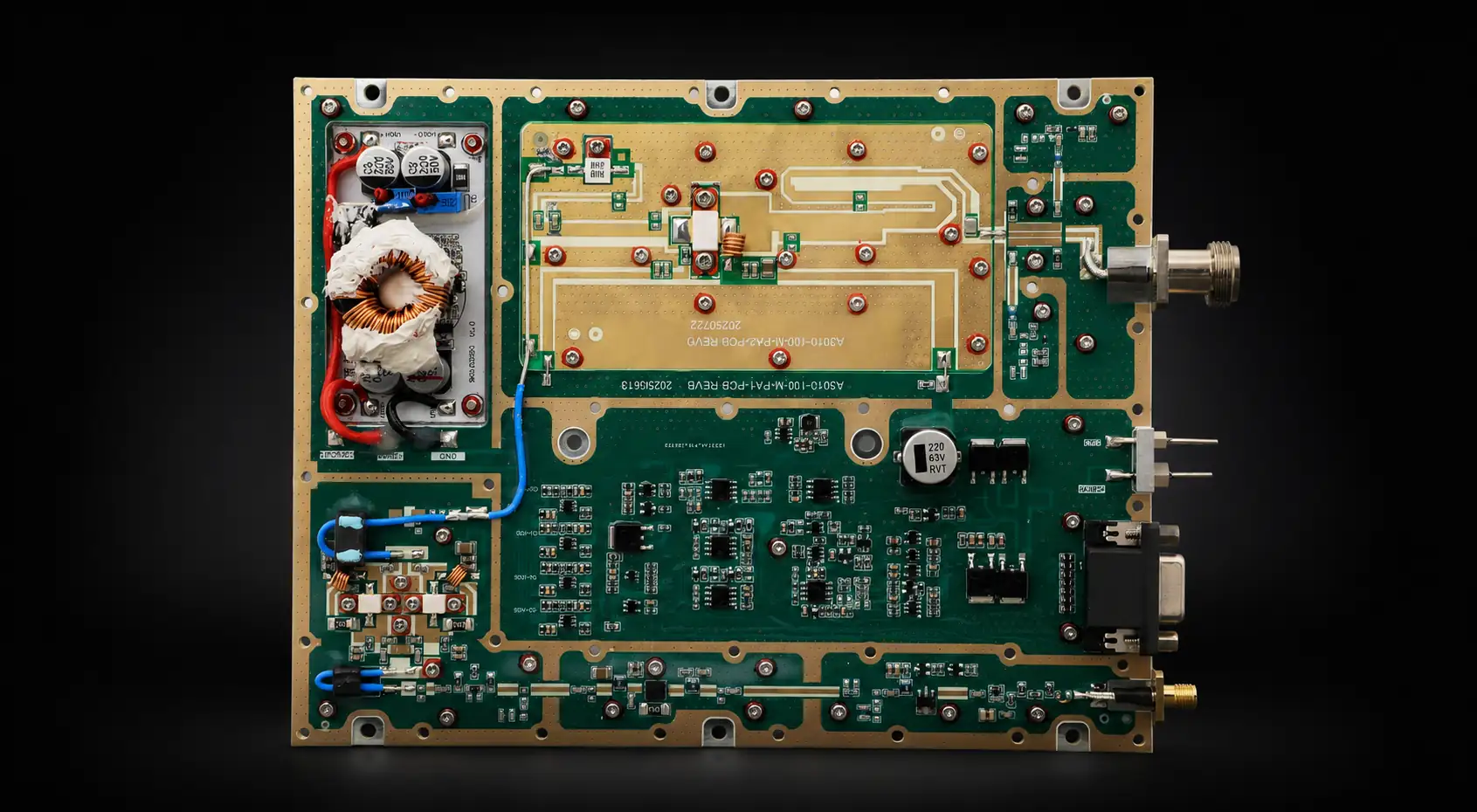
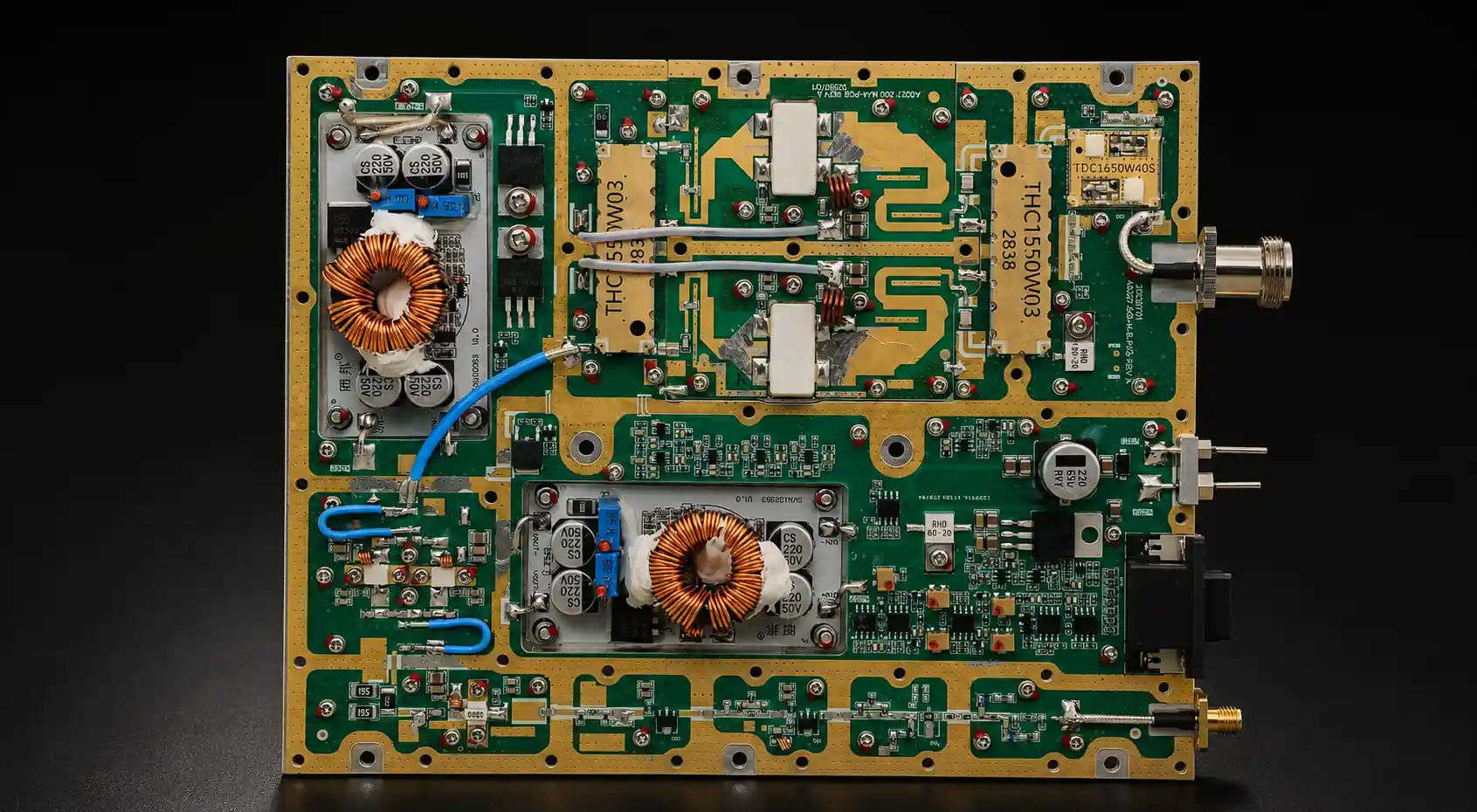
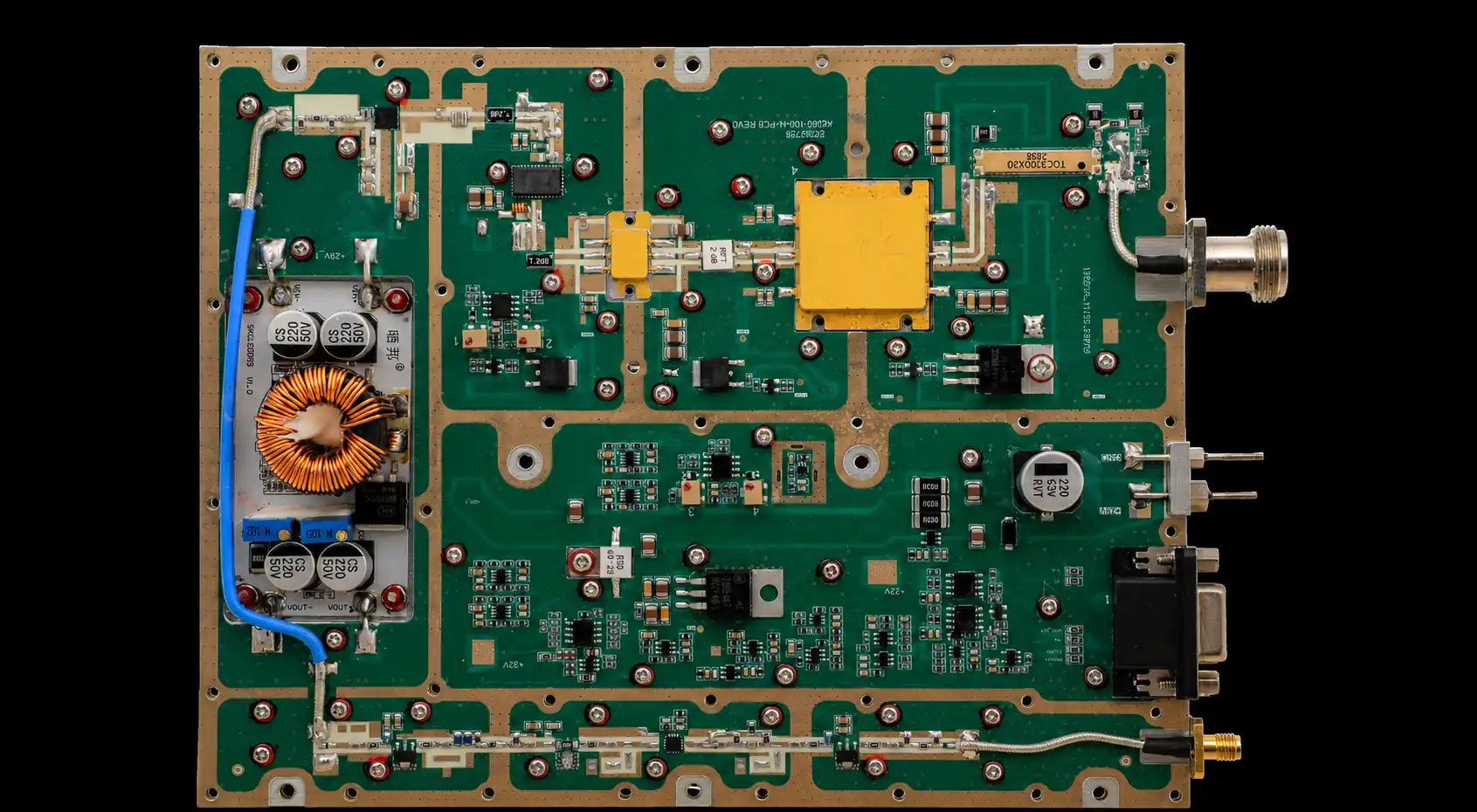
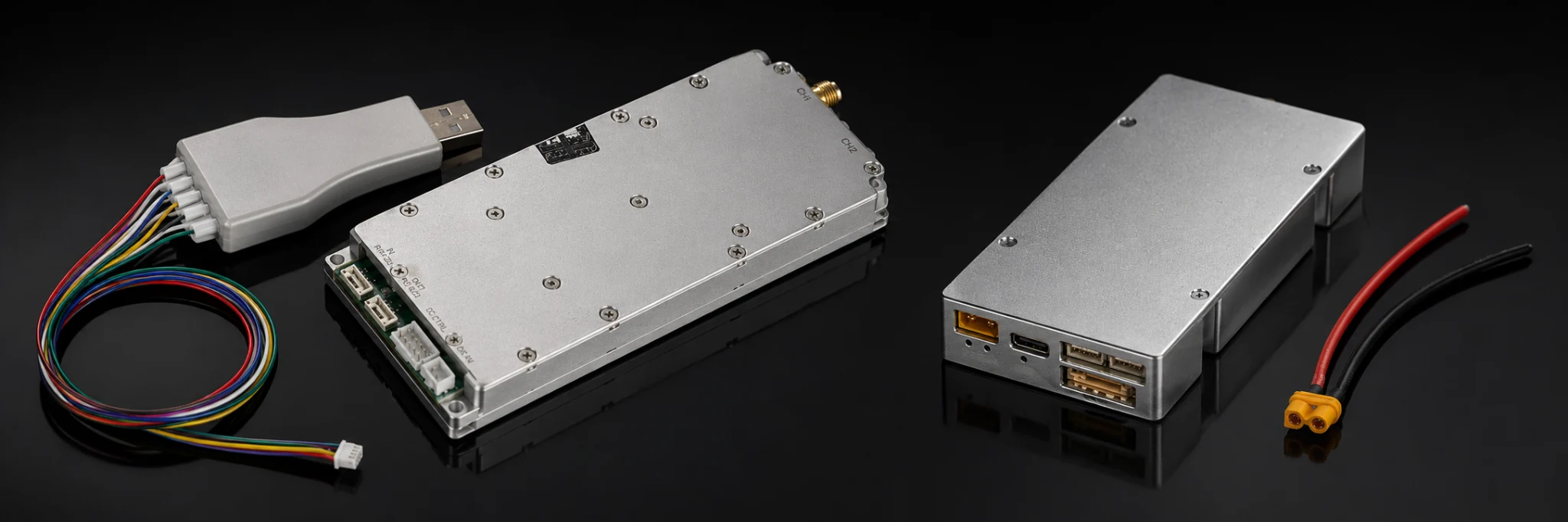

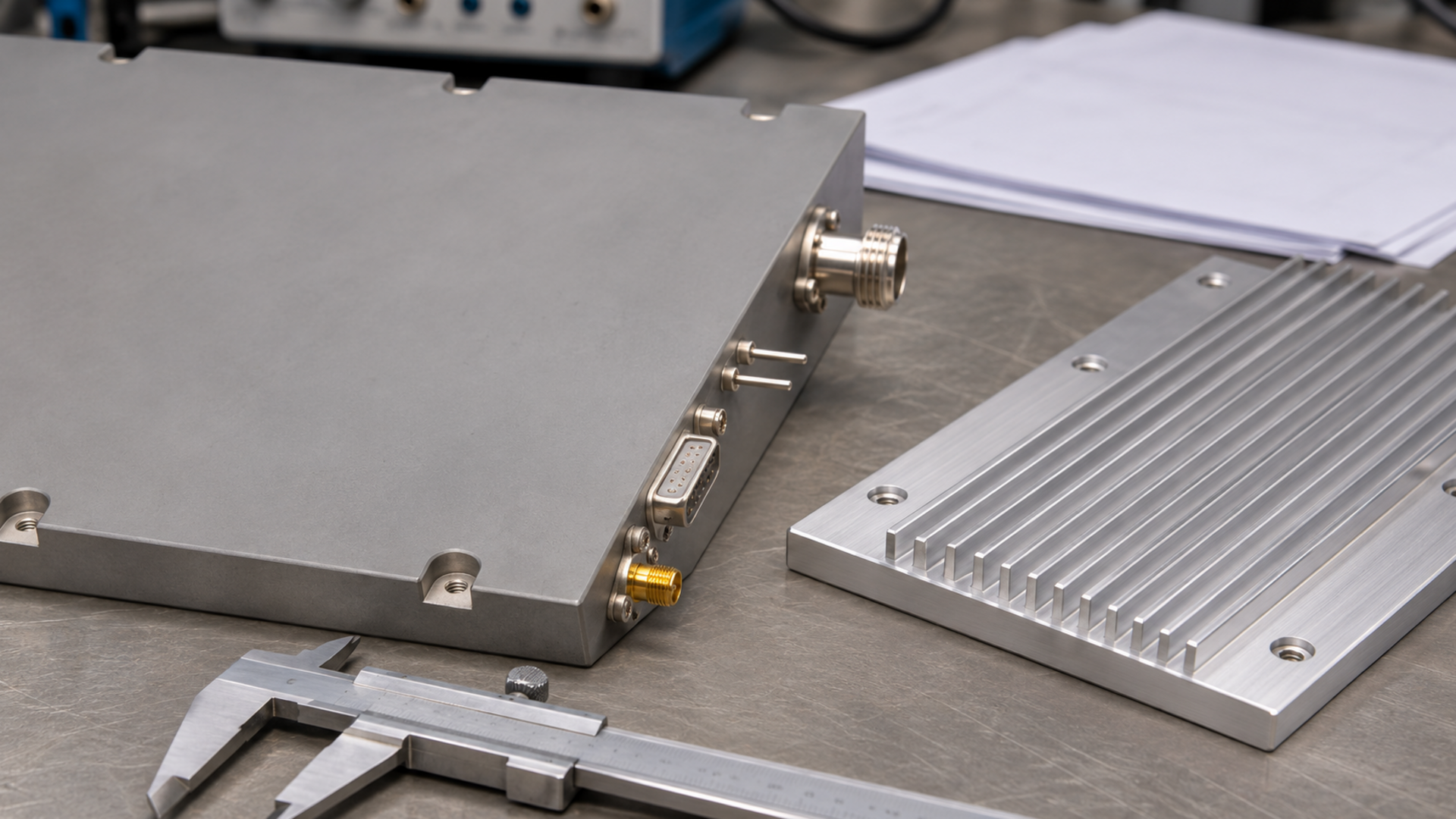
A COTS RF power amplifier (commercial off-the-shelf) can reduce qualification work when its exact configuration and existing evidence fit the project requirements. A configurable or custom RF power amplifier may be preferable when it can close a necessary gap and the project accepts the development, verification, and delivery plan.
The choice depends on what remains to be demonstrated and how uncertain that work is. The supplier and original equipment manufacturer (OEM) also need a credible plan to meet the qualification and delivery milestones. An existing amplifier may require external interface or cooling adaptations. A new design may bring those functions into the supplier’s scope while introducing development and verification dependencies.
Qualification establishes whether a defined design or configuration meets the applicable project requirements. Delivery acceptance establishes whether the supplied units or lot meet the agreed acceptance criteria. A sourcing decision can authorize development before either is complete. Start by identifying exactly what each quotation proposes to deliver.
1. What Do COTS, Configurable, and Custom Mean in the Quotation?
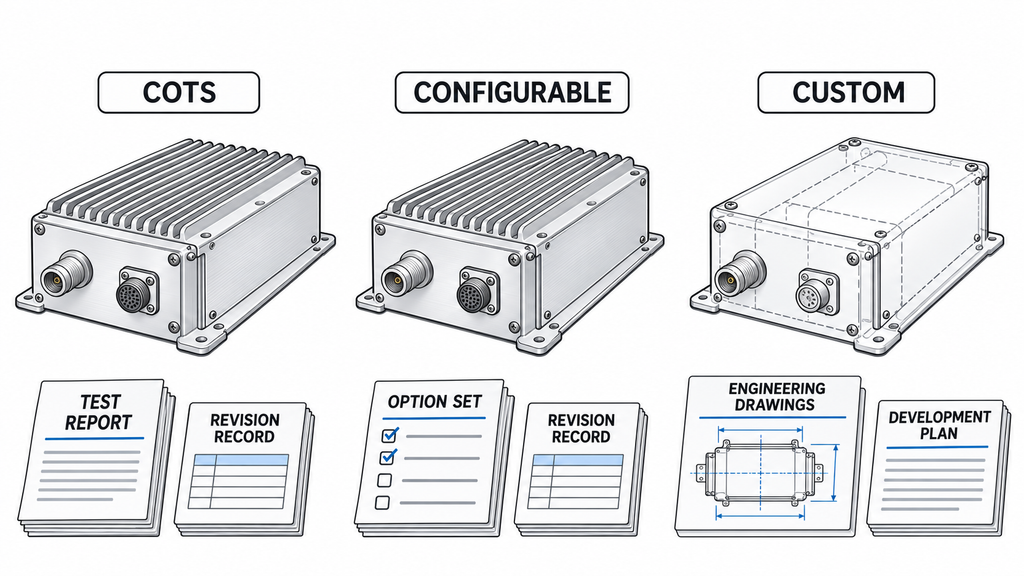
Treat these terms as working procurement categories. The useful distinction is the product’s controlled configuration and the work required to supply it.
A COTS RF power amplifier is an existing product offered under an established model, revision, and configuration. Confirm availability for the required revision, quantity, and delivery date; a catalog listing alone does not establish stock or production allocation.
A controlled configurable product uses predefined options within an existing product platform. Identify the selected options and the limits of their permitted combination. Evidence for the platform or for each option separately may leave a gap for the combination being ordered. Assess whether that evidence applies to the proposed combination, then define any verification still needed. If the proposed hardware, firmware, or approved operating boundary changes, review the effects on requirements and evidence.
A fully custom product includes design work to meet the project’s requirements. The supplier may reuse mature circuits, mechanical elements, or control functions. Review whether their evidence applies to the proposed configuration.
“Semi-custom” needs a more specific explanation. For a limited modification to an existing platform, identify the starting revision and the actual changes. Base the development and verification scope on those changes. If the product and approved operating boundary remain unchanged, additional measurements or reporting requirements change the verification scope without necessarily changing the design.
For each candidate, capture the model, hardware and firmware revisions where applicable, option combination, supply scope, and proposed modifications. Until those details are clear, keep reuse of existing evidence unconfirmed. Compare quotations at the same delivery level and mark their different stages of design maturity.
2. Which Requirements Must Every Route Commit to Meeting?
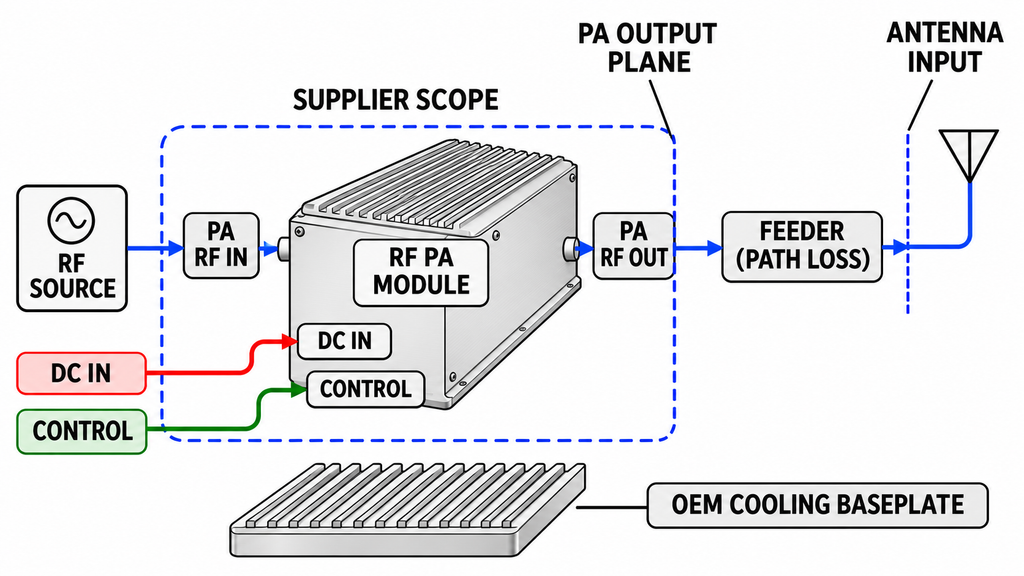
Every route needs a credible path to the same nonnegotiable requirements. Separate those requirements from preferences the project can negotiate, and define what the supplier delivers versus what the OEM must add.
An RF output claim needs its operating conditions. Specify the required frequency coverage, waveform and duty cycle, actual drive available at the PA input reference plane, output-power definition and reference plane, load condition, and thermal state. Review those alongside DC supply, cooling, environment, mechanical fit, and control interfaces. If the power target is specified at the antenna input, account for losses between the module output and that input when evaluating the module’s output-port rating.
Distinguish a capability gap from an evidence gap. A demonstrated inability to meet a hard requirement calls for adaptation, design work, or an authorized requirement change. Missing information calls first for evidence review. Missing test data alone does not establish that a product cannot perform the required function.
The basis for approval depends on the stage. Applicable existing evidence may support a purchase decision for a mature candidate. A project may conditionally authorize development after assessing feasibility and approving the scope, responsibilities, cost, verification plan, milestones, and exit conditions. The target performance still needs verification. This authorization can precede the final qualification report; delivery acceptance still requires closure of the agreed verification and evidence requirements for the delivered configuration.
Include the OEM adaptations required to integrate candidate RF power amplifier modules in the comparison. External RF, power, cooling, or control work needs an owner and a verification plan even when the amplifier itself is unchanged. Record each material gap, the party responsible for closing it, and the evidence needed at the next approval stage. If a critical condition or reference plane is unclear, hold the affected performance comparison. If a hard requirement has no credible implementation path, hold the final sourcing commitment.
A gap confined to the required operating windows calls for a frequency-range review before committing to a new design.
3. Which Qualification Evidence Can Be Reused?
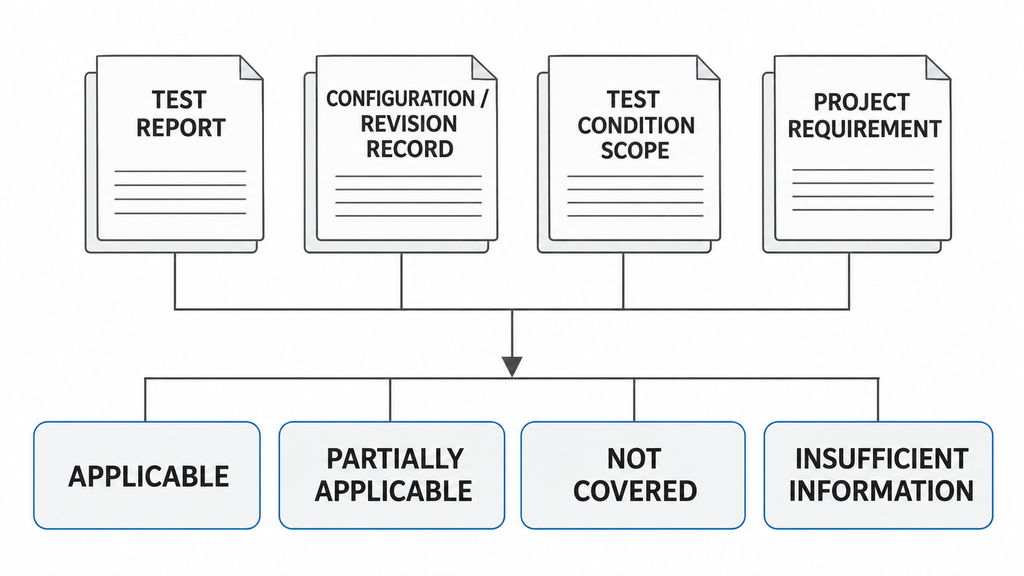
Assess reuse for one project requirement and one proposed delivered configuration at a time. Identify the requirement revision, model, hardware and firmware revisions, option combination, and applicable operating conditions. Reuse decisions can differ between requirements for the same amplifier.
The supporting report must link those identifiers to its test conditions, method, scope of results, and any anomalies. Review whether those conditions support the current requirement and identify who has authority to accept the evidence. After confirming applicability, check whether the results meet the requirement and whether relevant anomalies have an approved disposition.
| Reuse decision | Basis for applicability | Remaining work and closure requirements | Effect on sourcing decision |
|---|---|---|---|
| Existing evidence applicable | Applicability to the requirement, proposed configuration, and test conditions has been established. | Obtain acceptance by the authorized project party and record the evidence reference. Retain separately agreed delivery acceptance work. | May reduce repeated qualification work for this requirement. |
| Partly applicable; supplemental verification required | The supported portion and the differences still outside the evidence are known. | Define the supplemental work, responsible party, person confirming closure, and closure milestone. | Include that work in the route’s cost and schedule. |
| Existing evidence confirmed not to cover the current requirement | The current requirement, configuration, or conditions fall outside the established applicability of the existing evidence. | Propose a new verification or qualification basis and agree the conditions for stage approval. | Assess the feasibility of the added work before continuing with the route. |
| Insufficient information to judge | Report scope, revision, conditions, or other essential information is missing. | Obtain the missing information before deciding whether tests are needed and defining their scope. | Hold the affected conclusion; missing information alone does not establish product failure. |
Record the accepted evidence. For each unresolved item, identify the remaining work, its owner, the person authorized to confirm closure, and the required closure milestone. If the report’s scope or the authority to accept it remains unclear, the corresponding reuse decision stays open.
Qualification evidence can support the design or configuration within its stated scope. The purchase still needs the agreed evidence for the delivered units or lot. Where individual results are required, associate them with the actual serial number, configuration, and conditions. Use sample, batch, and configuration evidence within their stated scope, and agree which acceptance results require individual traceability. Reusing qualification evidence does not require repeating every qualification test on every unit.
4. How Do Design and Requirement Changes Affect Qualification Scope?
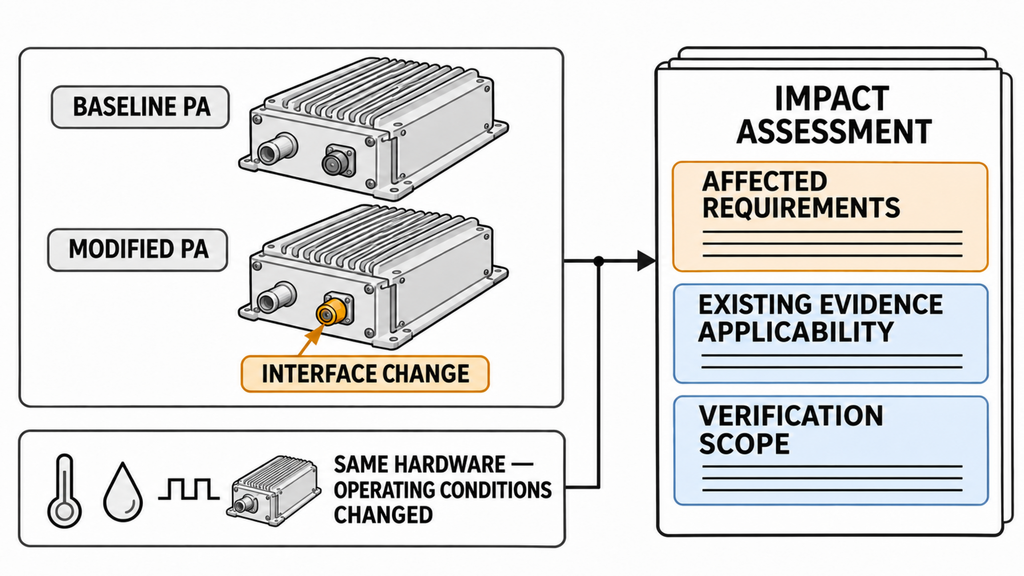
A change affects procurement when it alters what must be demonstrated, who must do the work, or when the configuration can be accepted. Request a concise impact assessment linking the actual change to affected requirements, evidence that remains applicable, additional work, and project approval.
A new design needs an initial qualification basis. An existing configuration may need supplemental verification to close an identified gap. A change affecting previously established qualification may require requalification of the affected scope. The project authority should approve that scope based on the impact assessment. Neither the number of changed parts nor the label “semi-custom” determines the necessary testing.
Changes in environment, duty, interfaces, or intended use can also change evidence applicability while the hardware remains unchanged. Bring the resulting work into the quotation and schedule. The party proposing the change should identify the affected requirements before the project agrees on the verification scope. The responsible engineers should define the detailed test methods and assess version compatibility.
5. Which Schedule Ends with an Acceptable Production Delivery?
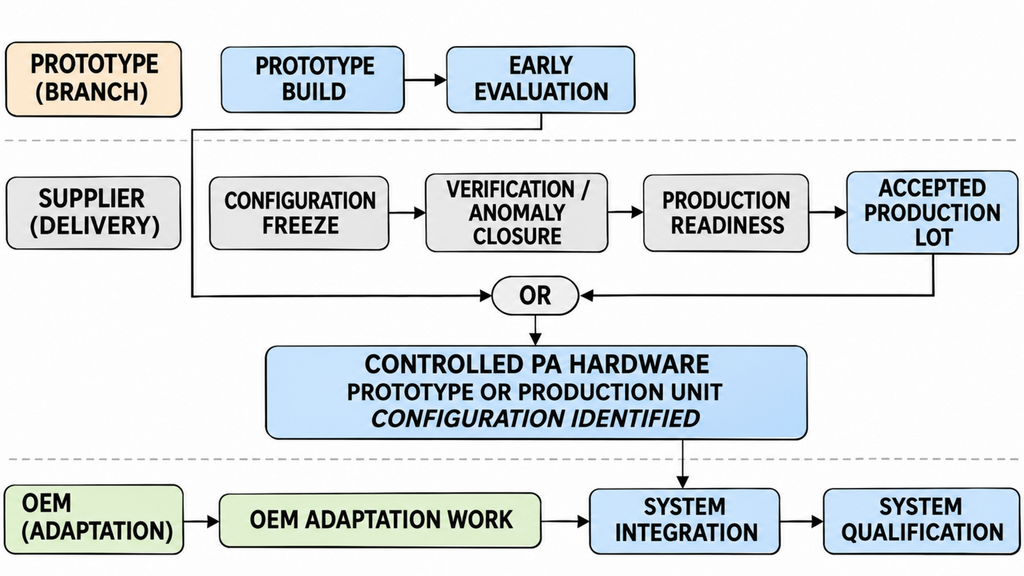
Compare each route to the same endpoint: acceptance of the required production quantity in the agreed configuration, against the specified acceptance criteria and with the required evidence package. A prototype shipment date marks an earlier milestone.
For each route, identify the status of configuration or design freeze, prototype availability, verification and anomaly closure, production readiness, and acceptance of the production lot and its required documentation. Record which inputs the supplier needs from the OEM and which OEM activities must finish before the delivery can be used. Keep subsequent system integration and system qualification visible as separate milestones.
Build the comparison around dependencies and the critical path, and assign an owner and closure milestone to each unresolved prerequisite. Some activities can proceed in parallel; others depend on a released design, a customer interface decision, or an accepted result. Adding every task duration can misrepresent the schedule. Include work transferred from the supplier to the OEM as well. A cooling adaptation performed by the OEM still needs design, hardware, and verification time in the overall plan.
Early material purchases and parallel development can change the planned date, but the team should record the assumptions, exposure to rework, and responsible decision owner. Starting production preparation is not evidence that qualification has finished.
Use dates from the current quotation and project plan, tied to the exact configuration, quantity, evidence package, and customer inputs. If those conditions or the delivery milestone are unclear, defer the claim that one route is faster. For C-UAS projects, the shipment acceptance checklist helps identify the delivery records to agree for the project; system qualification remains a separate activity.
6. What Do NRE and Lifecycle Support Actually Cover?
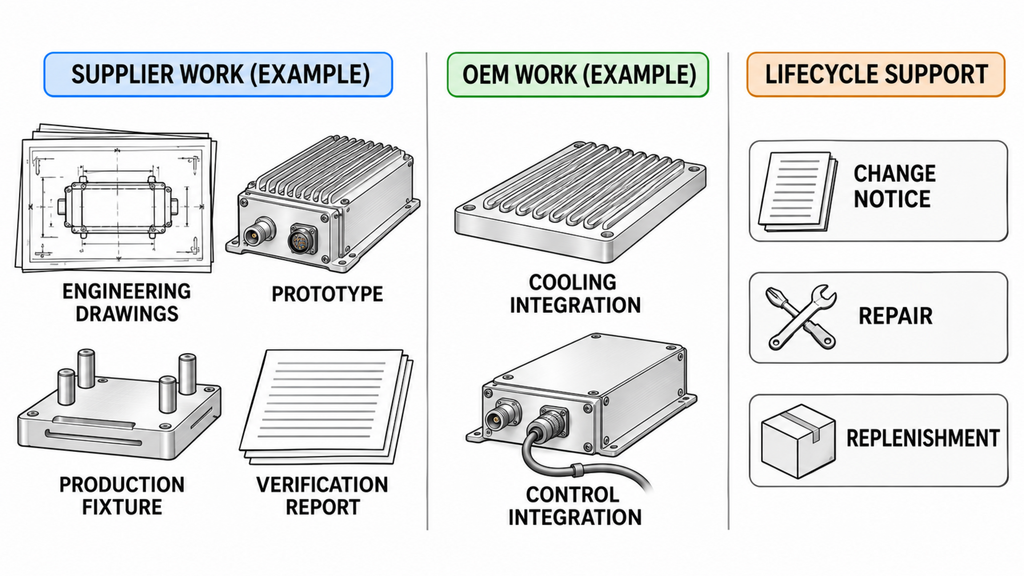
Compare non-recurring engineering (NRE) charges by the work and deliverables they cover. Ask what the quotation includes for design, prototypes, tooling, tests, reports, iterations, and preparation for production. Confirm the milestones for those deliverables and how changes in requirements or scope will be handled.
An existing product may still need additional verification, fixtures, or documentation. A configurable route may include option selection and combination verification, with actual modifications identified separately. A custom quotation needs enough detail to show which development activities and iterations are included.
Account for the OEM’s remaining engineering and verification effort alongside supplier charges. Confirm access to and permitted use of relevant design and test information, ownership of project tooling, and the maintenance responsibilities the project requires. The purchase agreement needs to state these terms; payment of NRE alone does not establish them.
Agree how the chosen configuration will be supported, including change notifications, approval of component substitutions, obsolescence notices and last-buy arrangements, repair support, replenishment, and compatibility of later production lots. For configurable products, confirm continued availability of the selected options. For custom products, clarify how design information and production support will be maintained.
The procurement team should leave this review with costs mapped to deliverables, supplier and OEM responsibilities assigned, and the required support scope confirmed in writing. Until major omissions are resolved, a lower unit price or smaller NRE charge provides an incomplete basis for comparing project cost and continuity of supply.
7. How Do You Make and Document the Sourcing Decision?
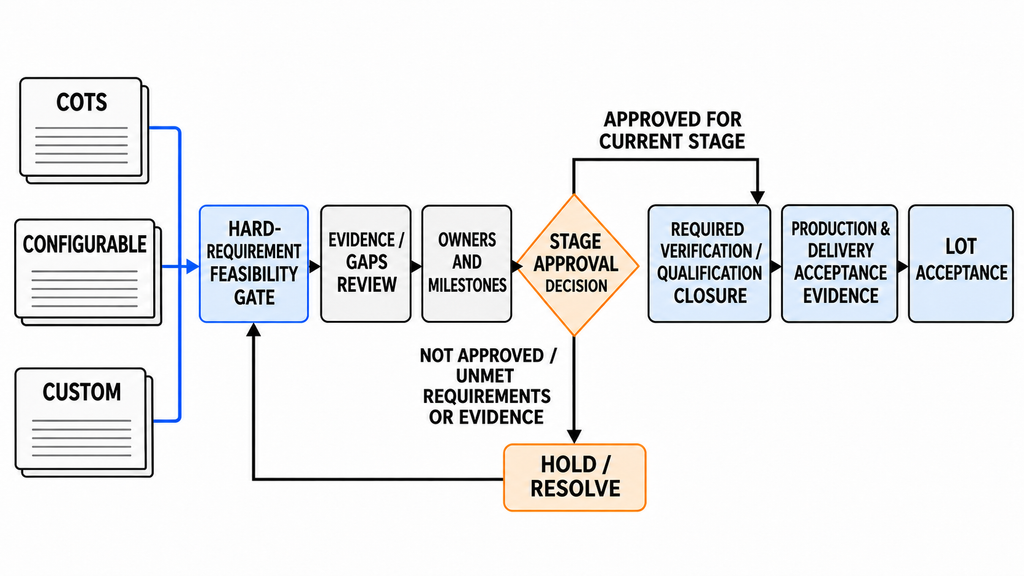
Compare the routes against the same project target, supply boundary, and acceptance milestone, while stating their different levels of maturity. For each candidate, distinguish applicable existing evidence from feasibility assumptions and the work still requiring verification. The approval sought must match that maturity.
Use the matrix to evaluate actual candidates; its final column identifies evidence or findings that can change the choice. Where a proposal modifies an existing platform, record the actual changes alongside any predefined options.
| Decision factor | COTS | Controlled configurable product | Fully custom | Evidence that changes the choice |
|---|---|---|---|---|
| Requirements fit | Check the existing configuration against requirements and identify external adaptations. | Check the selected option combination and its operating limits. | Establish requirements allocation, feasibility, and development targets. | Demonstrated capability gaps, viable adaptations, and the agreed supply boundary. |
| Remaining OEM work | Include external RF, DC, cooling, and control adaptations. | Include configuration work and system adaptations. | Establish which adaptations the supplier delivers and which remain with the OEM. | Assigned responsibilities and the associated design and verification work. |
| NRE and other one-time costs | Confirm extra verification, tooling, and documentation costs. | Confirm configuration, verification, and actual modification costs. | Confirm costs for design, prototypes, iterations, and preparation for production. | Required verification, tooling, or documents are excluded from a lower quote, changing the comparison once their cost is included. |
| Evidence reuse | Review the exact revision and intended operating conditions. | Review the proposed combination as well as the platform evidence. | Assess applicable evidence from mature design elements. | Accepted evidence showing that the requirement is met may reduce repeated verification; confirmed gaps add work to the plan. |
| Design-change risk | Track supplier revisions and the effects of external adaptations. | Distinguish configuration work from actual design changes. | Track design unknowns and the plan to resolve them through iterations. | Identified changes, affected requirements, and unresolved issues. |
| Initial qualification, supplemental verification, and requalification | Establish project-specific gaps and agreed delivery acceptance work. | Establish option differences and gaps in combination evidence. | Establish the new configuration’s qualification basis and applicable evidence reuse. | Approved verification scope, responsible parties, and closure conditions. |
| Delivery schedule | Confirm availability of the required configuration, quantity, and evidence package. | Include dependencies involving materials for the selected options, assembly, and verification. | Include dependencies involving development, qualification, and production readiness. | The plan shows a critical-path dependency preventing acceptance by the required date, despite an earlier prototype shipment. |
| Lifecycle support | Confirm revision, substitution, replenishment, and obsolescence arrangements. | Confirm continued option availability and replacement compatibility. | Confirm support for design information, maintenance, repair, and repeat production. | The written support scope does not cover the required configuration, replacement compatibility, or replenishment needs over the project’s intended life. |
A hard requirement without a feasible implementation path needs resolution or an authorized requirement change before final commitment. Advantages elsewhere cannot settle that conflict. Where evidence, cost, responsibility, or schedule remains too uncertain to review, define a bounded next step, such as obtaining the missing report or authorizing a feasibility stage with clear exit conditions.
Once hard requirements have credible implementation paths, compare which unresolved issues could still force redesign, when those answers will be available, and what corrective work or repeat verification would follow an unfavorable result. A route with more testing may carry less qualification risk than a shorter plan built on an unresolved design assumption, provided the testing has a defined scope and assigned resources.
Write a short sourcing recommendation naming the preferred route and exact proposed configuration, accepted evidence, and remaining development, verification, and OEM integration work. State what is being approved now, its scope and exit conditions, and the evidence required for the next stage. Record production delivery acceptance separately. Assign owners and milestones, confirm the cost and support scope, and record the conditions under which the choice holds. Include triggers for reconsideration, such as a revision that invalidates accepted evidence, an unresolved hard requirement, or a dependency that makes the required delivery milestone unachievable.
Conclusion
Choose COTS when the exact existing configuration meets the requirements, its evidence is applicable, and the remaining integration and verification work has an agreed scope, owner, and schedule. The project must also accept any unresolved technical risks for the current sourcing decision. Choose a configurable product when predefined options meet the need and the evidence coverage or verification plan for their combination is clear. Choose custom development when a necessary gap requires design work and the project accepts its feasibility, responsibilities, cost, and staged verification and delivery plan.
Specific model suitability, test limits, final acceptance, and system qualification depend on formal project documents and the authorized decision makers. A COTS label does not establish qualification for the current project, and approval to develop a custom design does not release it for delivery.
Prepare the current recommendation for the next sourcing review, with the proposed configuration, accepted evidence, remaining work, owners, dates, cost and support assumptions, and triggers for reconsideration. Mark missing supplier information and unresolved decisions, then identify the evidence request or stage review needed to move forward.
Submit the current requirements and recommendation, with unresolved items clearly marked, to RF SKYPOWER for review of the sourcing options and remaining engineering work. Include the application and nonnegotiable requirements; frequency, waveform and duty cycle, available input drive, output definition and reference plane; and DC, cooling, environmental, mechanical, and control conditions. Provide existing model and revision details, options, and available evidence, together with prototype and production quantities, stage dates, and responsibility for qualification, acceptance, and approvals. State the required NRE scope, documentation, and lifecycle support.