When to Choose a Custom RF PA Frequency Range for C-UAS
June 18, 2026
A request for a custom RF power amplifier often begins with a frequency range that looks almost standard.
Perhaps one critical point sits near the band edge. Perhaps two required windows do not fit one catalog range. The output may also change under the project’s real input drive, temperature, load, or RF-path conditions.
On paper, the gap can look small.
But a small frequency gap does not always lead to a small engineering change. The same request could affect matching, filtering, output margin, control behavior, thermal design, test scope, production evidence, or several of them at once.
That is where the real risk begins.
The word “custom” may describe a simple adjustment, a different system architecture, or a much deeper PA redesign. These routes can look similar in an RFQ while creating very different lead times, costs, qualification requirements, and production consequences.
Before the project accepts a custom route, it must answer a harder question:
What exactly needs to change—and what evidence proves that the change is necessary?
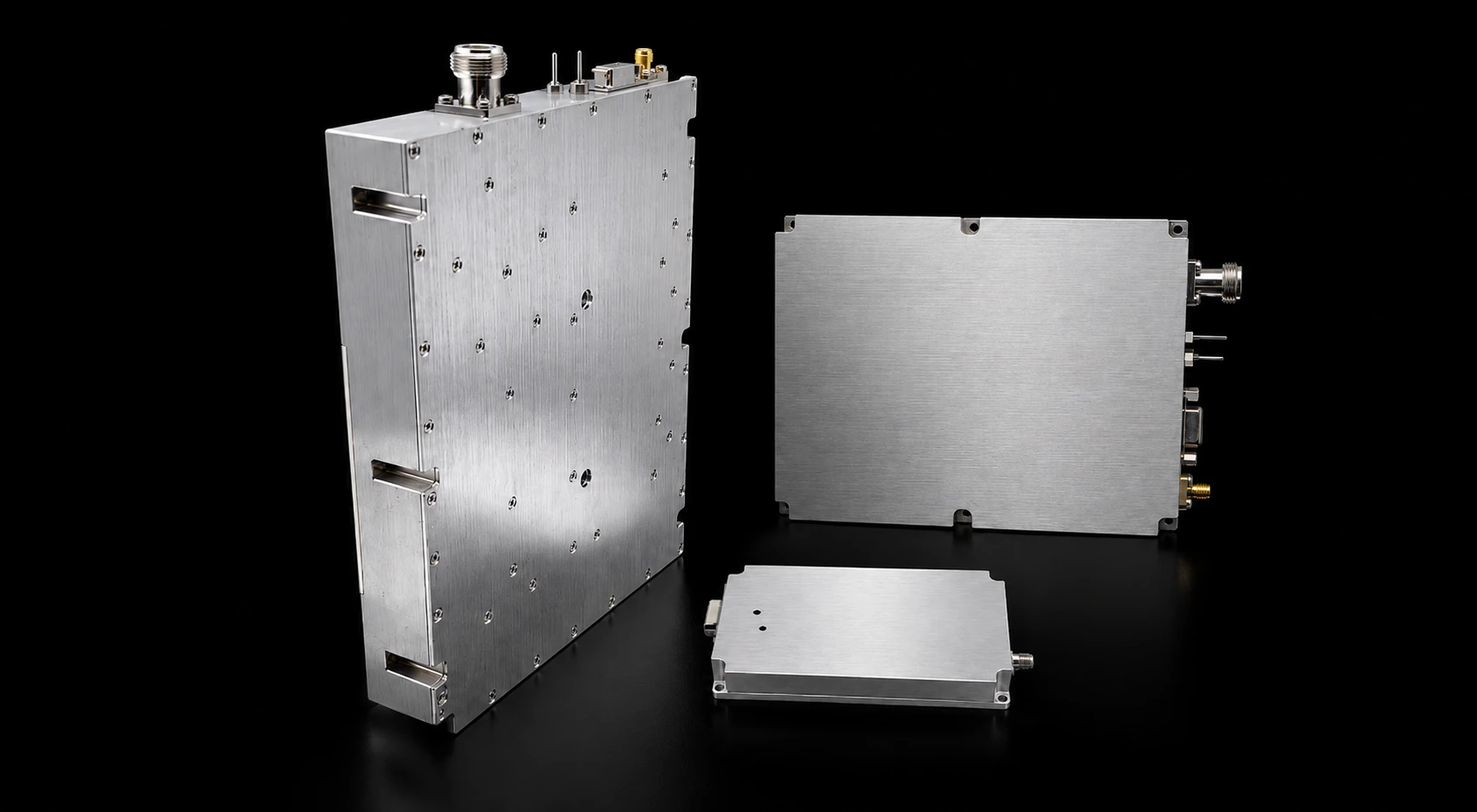
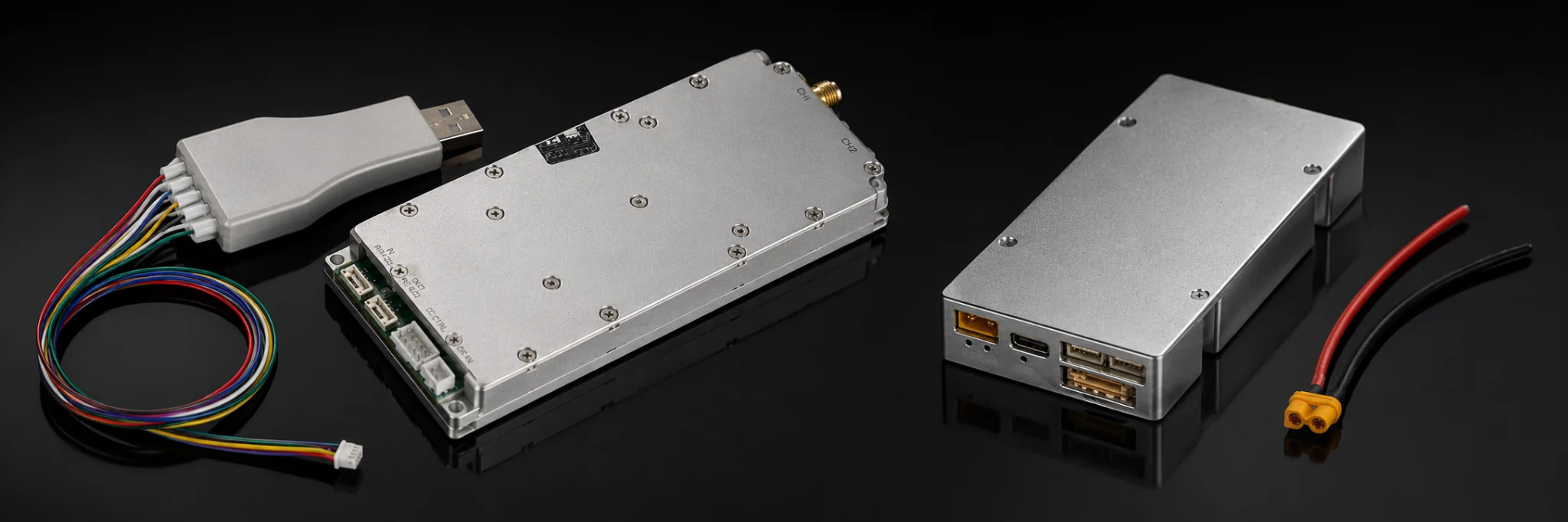
RF Power Amplifier Modules should therefore be reviewed against the complete project boundary before a non-standard frequency request is converted into a custom PA program.
Authorized frequencies, operating permissions, and deployment conditions must come from the customer’s lawful operating authority, applicable spectrum rules, and approved deployment plan.
1. Why a Standard RF PA Range Can Still Leave an Open Question
A standard frequency label is useful for initial selection. It does not answer every integration question.
A module may include the required frequency point while still leaving uncertainty about:
minimum output at that point;
required RF input drive;
gain or output variation;
hot-state behavior;
filter and antenna compatibility;
load and VSWR conditions;
the measurement reference plane;
sequential or simultaneous operating states.
This does not automatically make the standard module unsuitable.
The project must first determine where the gap exists. It may belong to the PA, the installed RF path, the signal condition, or the acceptance boundary.
Separate the Frequency and Operating Concepts
Before discussing customization, separate four concepts.
Total operating range is the complete frequency span over which the amplifier is specified or verified to operate.
A frequency-agile or configurable system should separately define its tuning or switching range.
Instantaneous bandwidth is the signal bandwidth that the active RF chain must handle at one time.
Occupied bandwidth is the bandwidth used by the actual waveform.
Frequency operating mode defines whether the required frequencies are:
used sequentially;
combined through one multi-carrier path;
transmitted through independent simultaneous channels.
These concepts are not interchangeable.
A system may use a PA across a wide total operating range while enabling only one frequency state at a time.
The same PA may cover several required frequencies without being suitable for simultaneous multi-carrier operation. That decision also depends on composite output, output backoff, linearity, thermal load, filtering, and signal-source behavior.
This defines the required frequencies, signals, and operating states. The team can then determine whether the standard route leaves a genuine engineering gap.
2. When a Standard Frequency Range Is Already Enough
A custom program should not begin only because a project is unusual, high-value, or intended for a demanding site.
A standard RF PA route is normally sufficient when the required operating points sit inside a verified window. The existing platform must also meet the complete project conditions.
The project should be able to confirm:
required frequencies and critical edge points;
acceptable input drive and gain;
minimum usable output at the agreed reference plane;
required waveform and duty cycle;
DC voltage and current conditions;
hot-state stability;
filter, feeder, antenna, and load boundaries;
protection and recovery behavior;
delivery evidence and traceability.
A standard module may still need project-specific testing.
Extra frequency points do not necessarily change the amplifier design. Neither do a longer operating duration, a different load condition, or a revised report format.
Additional Verification Is Not Customization
The supplier may only need to:
test additional frequency points;
use a different corrected reference plane;
verify a longer operating duration;
repeat measurements with the customer’s input drive;
document another load or cooling condition;
provide serial-number-linked evidence.
These actions change the verification plan. They do not automatically change the RF hardware.
This distinction matters because additional testing normally creates less risk than changing the matching network, active device, PCB, bias, mechanics, control, or thermal structure.
The RF PA frequency-range verification process should establish whether the standard platform already provides a usable operating window.
The comparison must use the required:
signal;
input drive;
load;
voltage;
temperature;
cooling;
RF-path condition;
measurement reference plane.
If the standard module passes these checks, customization may add cost, schedule, and qualification work without removing a meaningful project risk.
3. What Measurable Gap Justifies Custom Review
A custom engineering review becomes reasonable when the project can identify a measurable difference between the verified standard result and the required result.
The trigger should not be:
“We prefer a special band.”
It should be closer to:
“The verified standard path cannot meet this defined frequency, output, signal, RF-path, or operating-state requirement.”
Frequency and Performance Gaps
A custom review may be justified when:
a required frequency lies outside the verified standard range;
a critical point falls inside a proven weak or transition region;
the PA cannot meet minimum output at the agreed reference plane;
input drive or gain conflicts with the available signal chain;
the required hot-state result cannot be maintained;
the existing PA match or load boundary does not support the installation, and a practical external RF-path change cannot remove the gap;
the required validated operating windows differ materially from the standard ones.
The project should demonstrate the gap with comparable test conditions.
A catalog frequency line alone is not enough to prove that customization is required.
Non-Continuous Operating Windows
Some projects require two or more separated operating windows rather than one continuous range.
The project may require:
one lower-frequency group;
one higher-frequency group;
an unused or restricted frequency region;
different filters or antennas for different windows;
different output limits by operating state.
Several engineering routes may be possible:
one broadband PA with external filtering and switching;
separate narrowband PA paths;
an adjusted platform with defined operating windows;
a true custom PA design.
Changing the PA operating range does not by itself guarantee frequency exclusion, lawful use, or protection of adjacent services.
Those results may also depend on:
SDR or signal-source control;
waveform design;
filter-bank performance;
switching logic;
antenna response;
output spectrum;
operating authority.
The PA range is one part of the frequency-control strategy. It is not the complete solution.
Define the Output Reference Plane
A requirement such as “100 W across the custom band” is incomplete until the project defines where that power must be available.
Possible reference planes include:
PA output connector;
cabinet RF output;
feeder end;
antenna input.
A module that meets the target at its own connector may not deliver the same result after filters, switches, connectors, and feeder loss.
The custom review must state whether the supplier is responsible for the PA-port result or an agreed downstream reference plane.
The test setup must then apply the correct cable, connector, filter, switch, coupler, attenuator, and fixture corrections.
4. Is the Requirement Standard, Adjusted, Split-Band, or True Custom?
Not every non-standard request belongs in the same category.
The following routes are practical project-review categories. They are not universal supplier classifications.
Standard Module
The existing PA hardware, operating limits, mechanical design, and control behavior remain unchanged.
The project may request additional evidence, but no PA modification is required.
Adjusted Standard Platform
The supplier starts from an existing platform and changes a limited part of its design or operating boundary.
Possible adjustments include:
shifted start or stop frequencies;
matching optimization;
revised gain or output targets;
PA-to-filter interface changes;
limited control changes;
limited mechanical changes.
The requested operating window may sit outside the verified standard range but remain within a feasible extension of the existing platform.
That extension still requires new validation.
A request for additional test frequencies remains a verification-plan change unless the PA hardware, operating limits, or control behavior also changes.
Split-Band or Mixed Architecture
The project uses separate RF paths for frequency groups that should not share one amplifier, filter, antenna, or operating state.
This may be more practical when:
signals operate simultaneously;
required windows are far apart;
different output levels apply;
filters or antennas cannot be shared;
critical bands need focused optimization;
one continuous custom range would create excessive compromise.
A true custom program may change one or more core PA design elements, including:
active device route;
input or output matching network;
PCB layout or materials;
bias architecture;
driver stage;
protection logic;
thermal structure;
mechanics and connectors;
control interface.
The validation scope should follow the affected RF, electrical, thermal, mechanical, and control paths.
These changes may also require a new:
production-control plan;
qualification plan;
release-evidence package;
change-control boundary.
A true custom program should be reserved for requirements that cannot be met through a standard platform, controlled adjustment, or split-path architecture.
Architecture Decision Matrix
Engineering Route
Use This Route When
Main Project Implication
Standard Module
The verified standard window meets the required signal, output, thermal, load, and RF-path conditions
No PA change; only project-specific evidence may be added
Adjusted Standard Platform
The requirement is outside the verified standard window but remains within a feasible extension of an existing platform
Limited PA change; new sample and focused validation normally required
Split-Band or Mixed Architecture
Required windows, simultaneous states, filters, antennas, or output levels should remain separate
Multiple PA or RF paths; each path requires its own integration and acceptance evidence
True Custom RF PA
Lower-risk routes cannot meet the requirement without material PA or control redesign
Wider engineering, qualification, production-control, and change-management scope
This matrix provides a starting direction. The final route must follow engineering review and comparable evidence.
5. What Must Be Proven Before a Custom RFQ
A custom RFQ should not contain only a start frequency, stop frequency, and output wattage.
The supplier needs enough information to determine:
whether the requirement fits an existing platform;
which part of the design must change;
what risks the change creates;
which evidence is required before release.
Custom Frequency Range RFQ and Evidence Boundary
Item
Project Input
Supplier Evidence and Boundary
Frequency
Required, critical, and excluded frequency points
Proposed verified operating windows; authorized spectrum plan remains customer-defined
Signal
Waveform, occupied bandwidth, and instantaneous bandwidth
Supported signal and input-drive conditions; external source remains integrator-owned unless included
Operating mode
Sequential, multi-carrier, or independent simultaneous use
Supported states, tuning or switching range, and operating limits; system sequencing responsibility must be assigned
Input
Available drive, source impedance, and required gain
Input range, gain, and input match; driver-stage responsibility must be clear
Output
Minimum power and measurement reference plane
Verified output under agreed conditions; downstream path loss must be assigned
Electrical
28 V or agreed module-input voltage, current limit, duty cycle, and efficiency definition
Current, defined efficiency metric, and protection behavior; cabinet supply remains integrator-owned unless included
Thermal
Ambient, mounting, airflow or cooling boundary
Hot-state data and cooling requirement; module and cabinet thermal responsibilities must be assigned
RF path
Filter, switch, feeder, connector, antenna, load, and VSWR boundary
Harmonic, spurious, compression, linearity, or modulation limits
Relevant test evidence; final system spectrum may also depend on the source and filter path
Delivery
Samples, reports, S/N, revision, quantity, and production plan
Traceable release package; production acceptance and change control must be agreed
Evidence Must Follow the Actual Change
If the hardware remains unchanged and only the required test frequencies change, treat the request as a verification-plan change rather than a custom PA design.
A focused test plan may be sufficient.
If the supplier changes the matching network, PCB, active device, bias, thermal structure, mechanics, or control logic, broader requalification may be required.
Evidence may include:
low, center, high, and critical results within each approved operating window;
transition-point and band-edge results where required;
RF input drive, gain, and output;
DC voltage and current;
the agreed efficiency metric;
hot-state duration and temperature;
forward and reflected power;
load and VSWR conditions;
harmonics, spurious, compression, or linearity where required;
protection and recovery behavior;
model, hardware revision, control revision, serial number, and report traceability.
Approving a custom frequency range changes more than one line in a datasheet.
It may also affect:
engineering lead time;
non-recurring engineering cost, where applicable;
prototype or sample stages;
test fixtures and calibration;
qualification scope;
minimum production quantity or production commitment, where applicable;
spare-unit planning;
repair and replacement compatibility;
future change control.
Define What Actually Changed
The supplier should provide a clear change record.
A practical format is:
What changed → Affected RF or system path → New risk → Required validation → Affected samples or serial numbers → Release evidence
Examples include:
matching-network change → gain and output across the approved windows → band-edge or stability risk → swept and hot-state validation → prototype and production S/N → revised report;
control change → frequency-state sequence → transient or timing risk → mute, switching, ready, and recovery test → firmware or hardware revision → control report.
Lock the Approved Design Boundary
After approval, the release package should define:
approved operating windows;
signal and RF input conditions;
output definition and reference plane;
28 V or agreed module-input voltage;
current, duty cycle, and thermal conditions;
mechanical and connector version;
hardware and control revision;
test limits;
approved BOM or controlled change path.
A custom module should not enter production under a vague statement such as:
“Same design, wider band.”
Delivered units should match the approved engineering state and evidence package.
Compare the Risk Removed with the Risk Added
Customization is justified when it removes a larger verified integration risk than it creates.
A custom route may solve:
missing critical frequencies;
weak output at required points;
incompatible RF input drive;
unsuitable mechanical or filter interface;
operating windows that existing platforms cannot validate.
It may also add:
longer schedule;
new qualification work;
batch-consistency risk;
spare and replacement complexity;
stricter change control.
The project should compare both sides before locking the RFQ.
RFQ Checklist: What to Send Before Quotation
Provide:
Authorized required, critical, and excluded frequency points
Continuous, shifted, narrowed, or separated operating windows
Total operating range, tuning or switching range where applicable, and instantaneous bandwidth
Signal type and occupied bandwidth
Sequential, multi-carrier, or independent simultaneous states
Available RF input drive, source impedance, and required gain
Minimum RF output and measurement reference plane
28 V or agreed module-input voltage, current limit, duty cycle, cooling condition, and efficiency definition
Filter, switch, feeder, connector, antenna, load, and VSWR boundary
Harmonic, spurious, compression, or linearity evidence where required
Required hardware changes and supplier–integrator responsibility split
Prototype, qualification, production, S/N, revision, and report requirements
Conclusion
A custom RF PA frequency range should not be selected only because a project frequency list looks unusual. A poor match with one catalog label is also not enough.
The first question is whether a verified standard module already meets the required signal, output, electrical, thermal, RF-path, and evidence conditions.
When it does not, the project should identify the measurable gap.
The gap may be solved through:
additional verification;
an adjusted standard platform;
split-band or mixed architecture;
a true custom RF power amplifier.
A true custom program becomes appropriate only when the lower-risk routes cannot support the required operating windows.
The project must then define the design changes, qualification scope, production controls, evidence package, and responsibility boundaries.
Send the required operating windows, signal states, input-drive condition, output target, reference plane, 28 V or agreed module-input voltage, duty cycle, cooling condition, RF path, load assumptions, and acceptance requirements.
RF SKYPOWER can review whether the request fits an existing platform, needs an adjusted standard design, is better divided into separate RF paths, or requires a true custom RF PA engineering program before the RFQ is locked.
Contents
About Our Company
RF SKYPOWER is a Source Factory engineering precision RF modules, antennas, SDR signal sources, and detection systems built exclusively for defense, security, and critical infrastructure applications.
When R&D, manufacturing, and testing happen under one roof, you get unmatched quality control and supply chain stability.