
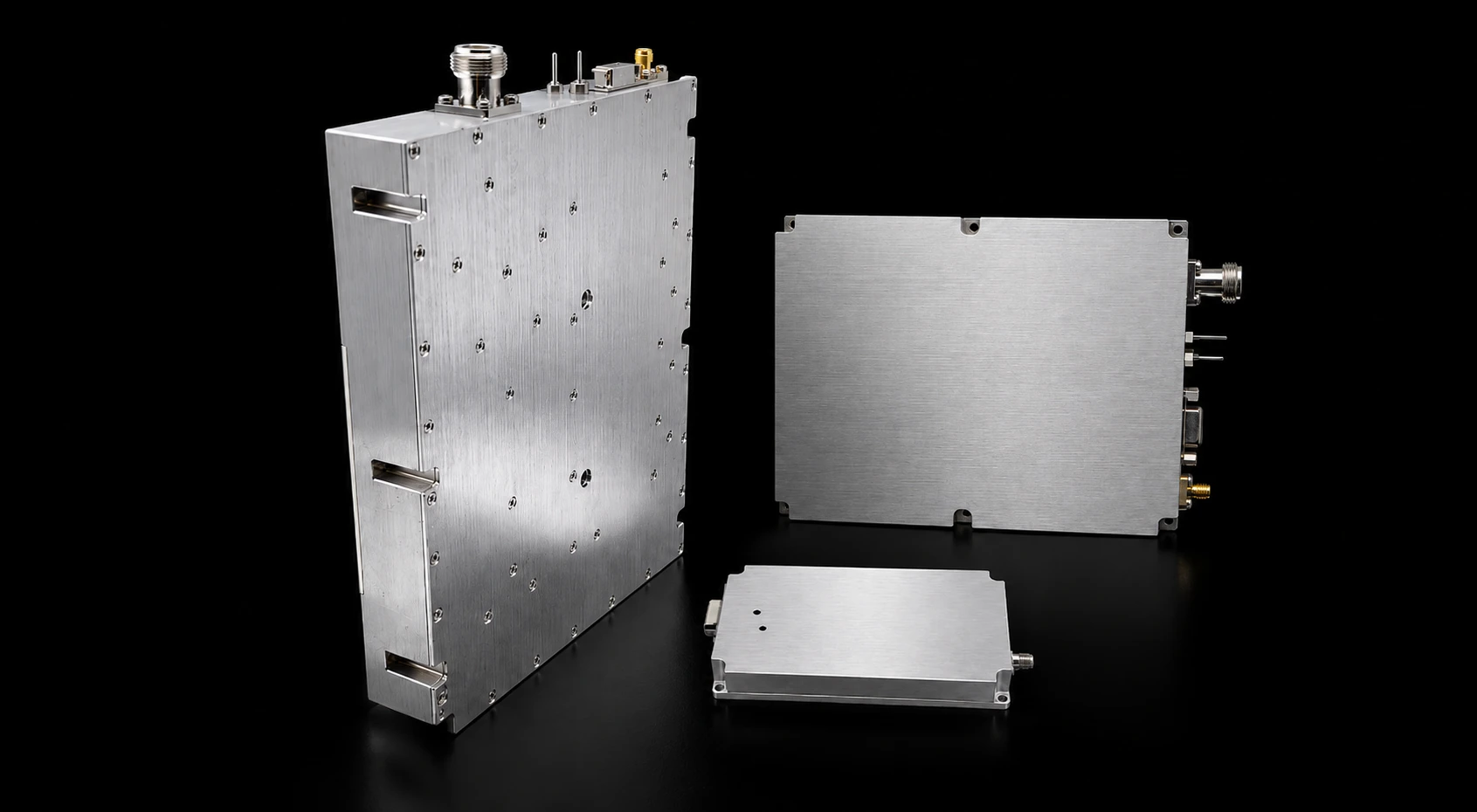
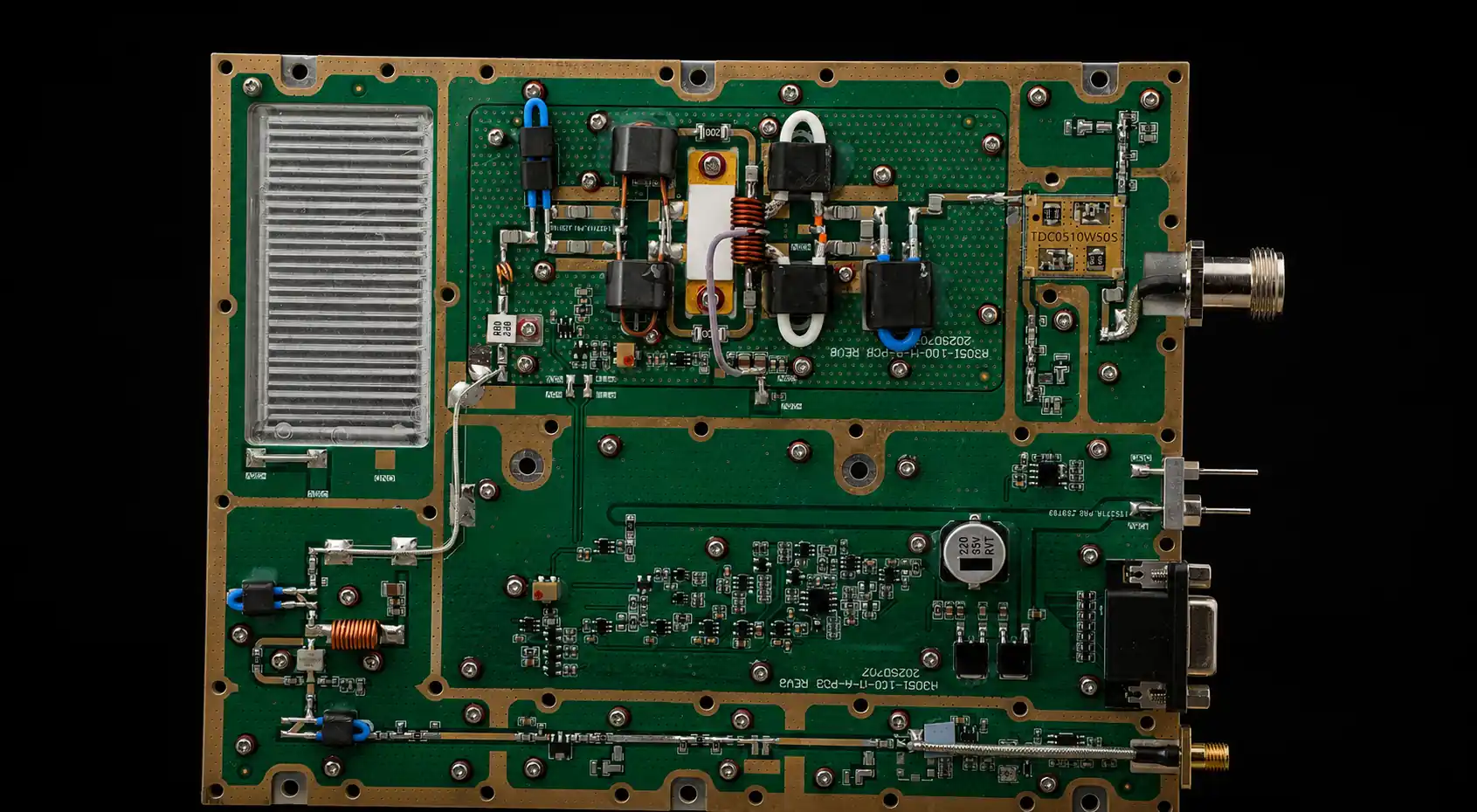
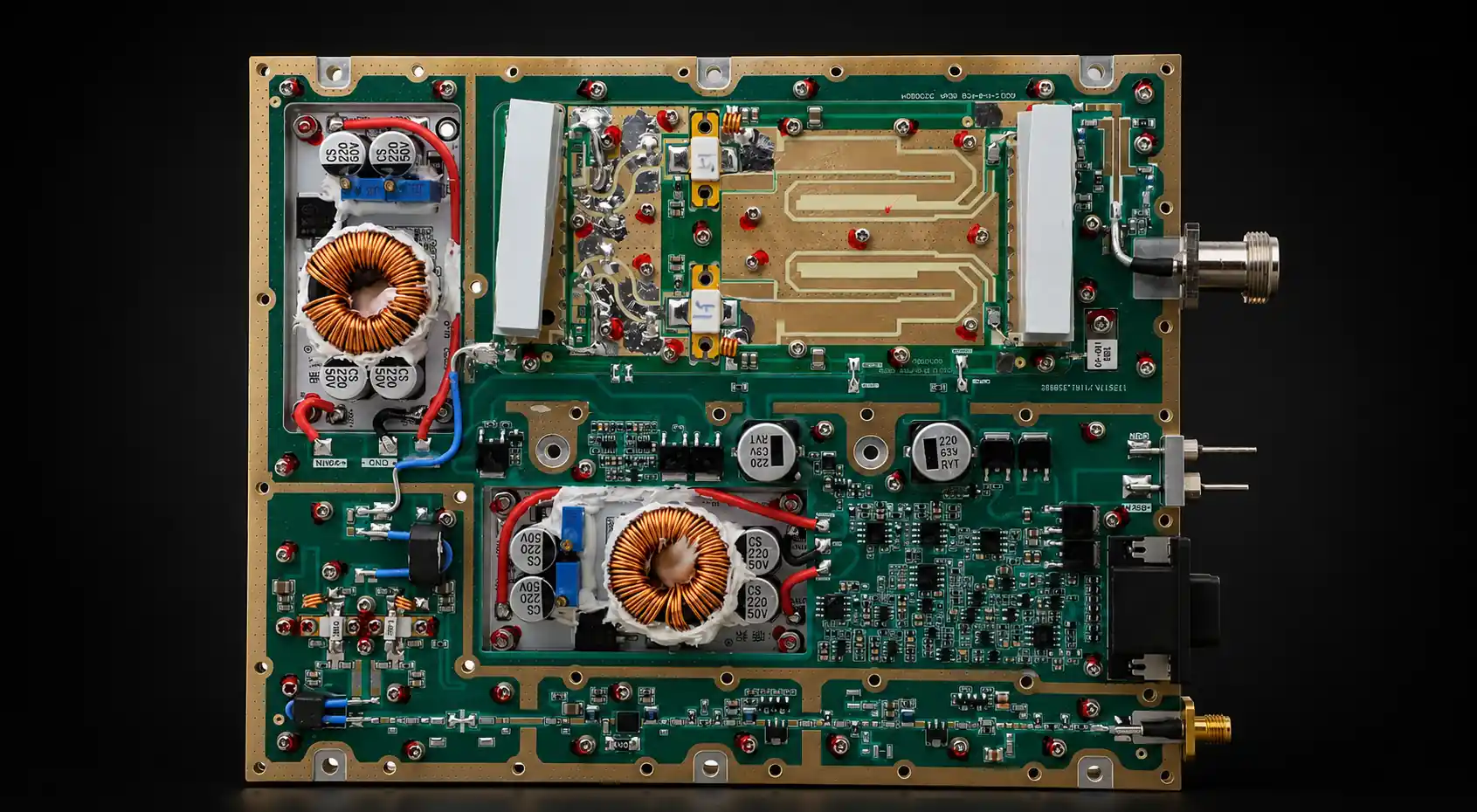
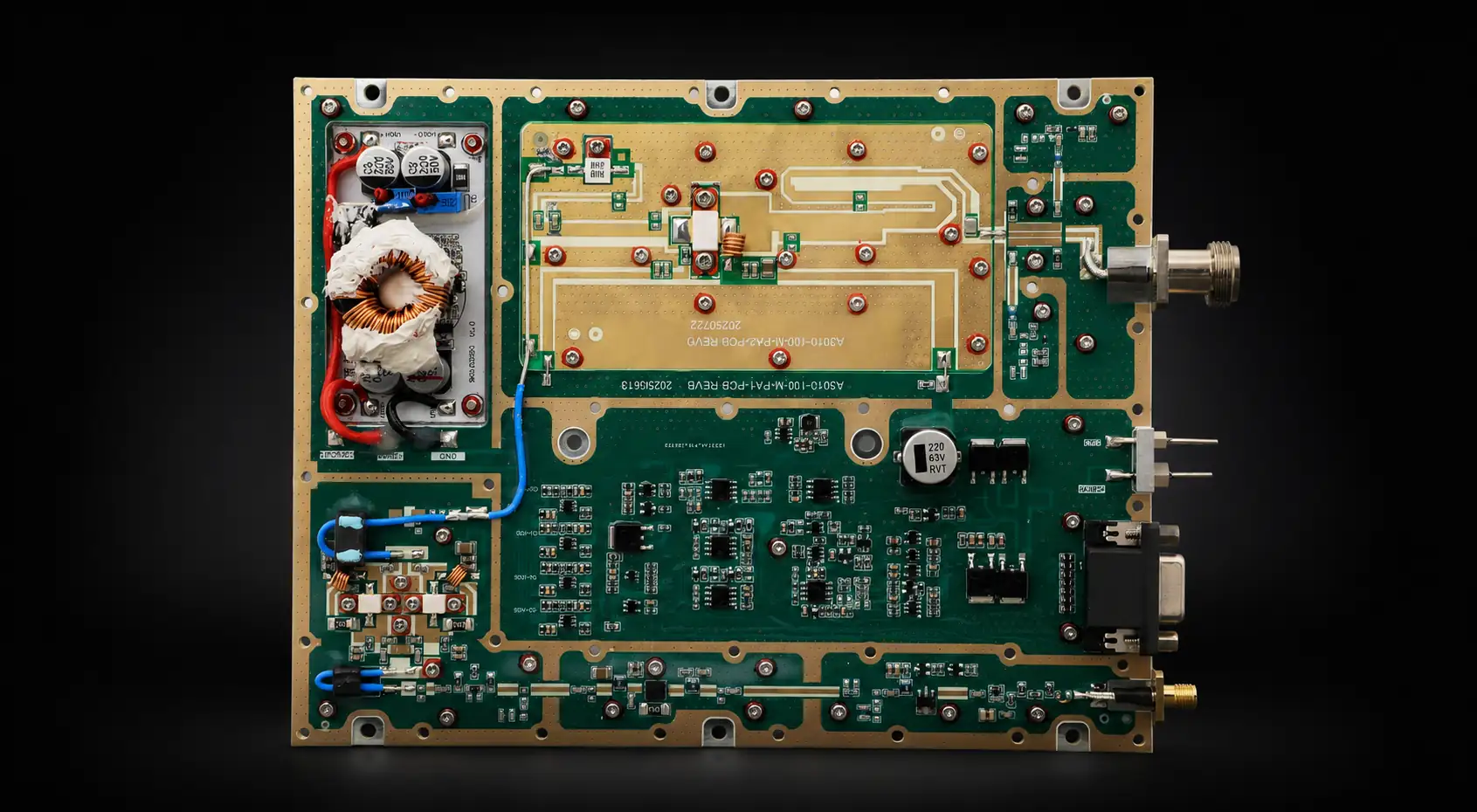
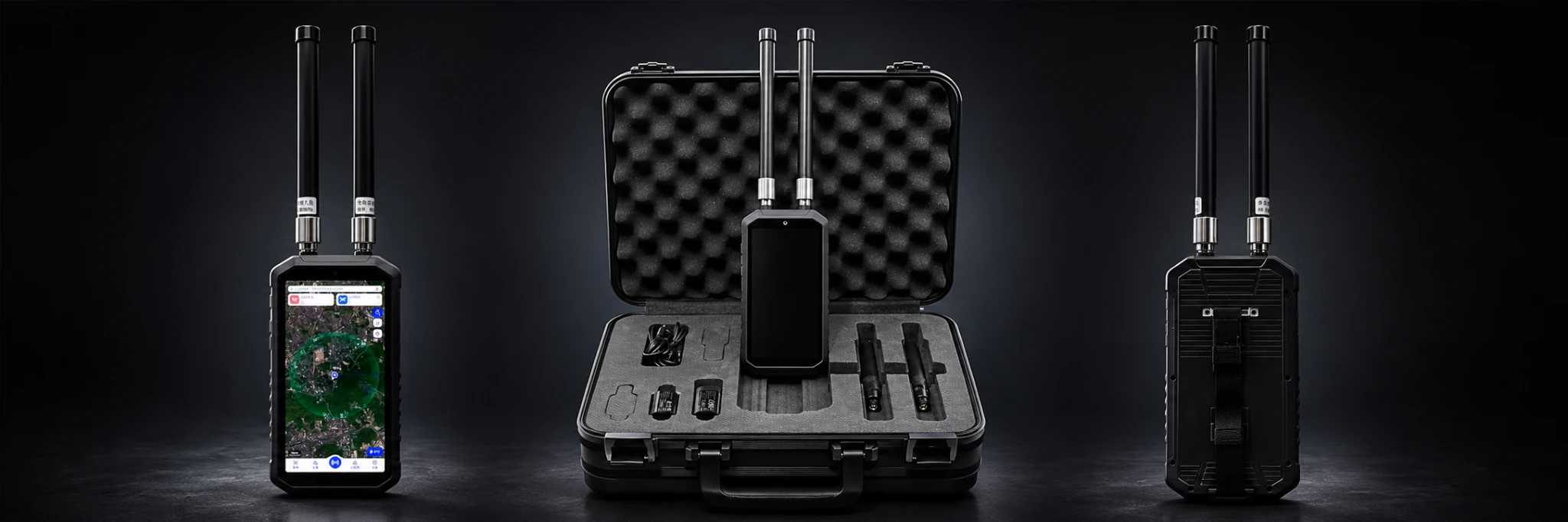

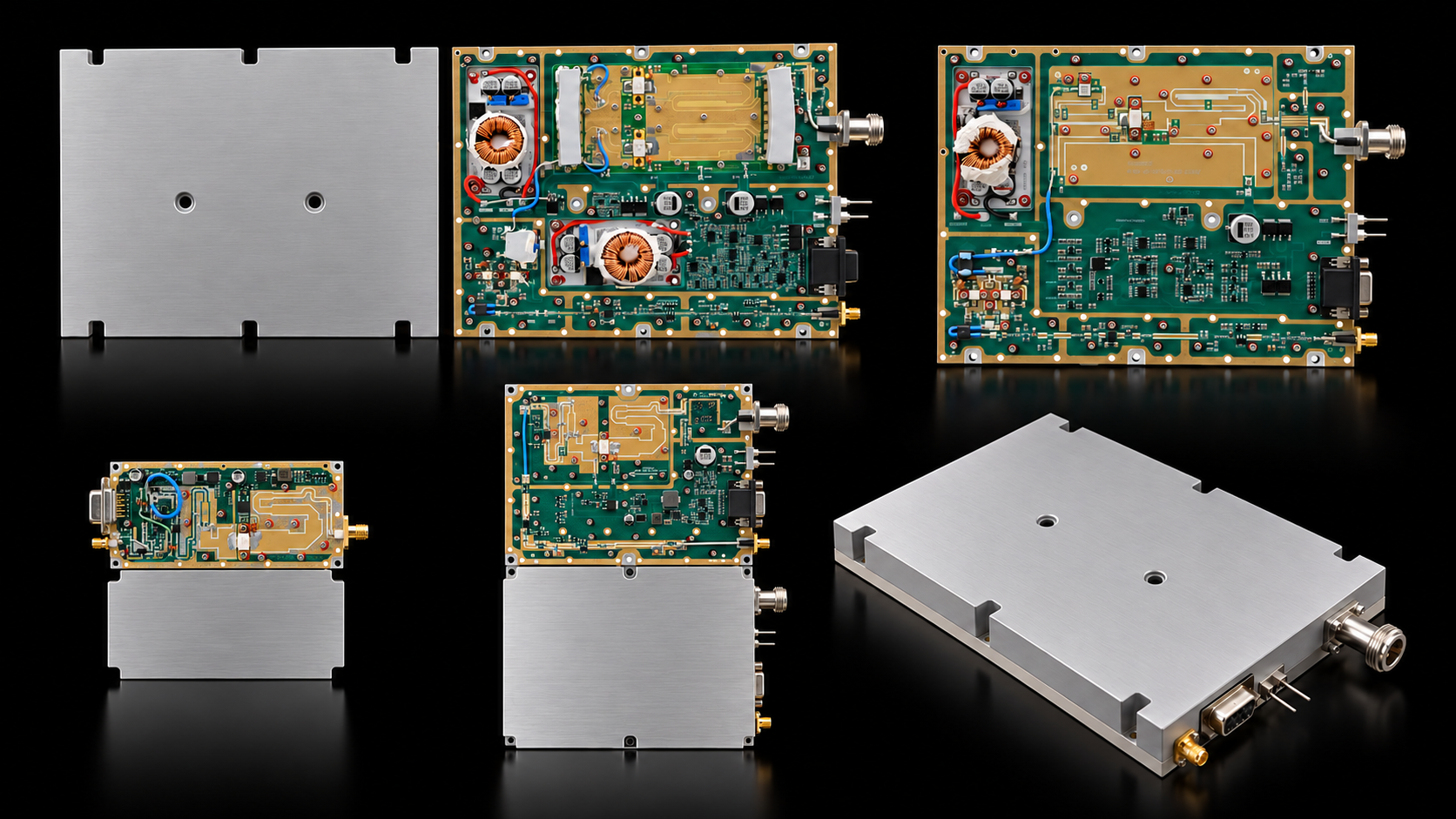
For engineers comparing the HZ3001700 series, output power is only one part of the selection. The 30W, 50W, and 100–200W models form three RF amplifier hardware tiers, with differences in chassis size, RF interfaces, control architecture, and DC demand. The family operates from 300 to 1700 MHz with a maximum instantaneous bandwidth of 200 MHz.
This range can serve multi-band SDR platforms, RF test systems, telemetry and communication equipment, and authorized C-UAS RF subsystems that need several operating points across the sub-GHz and 1–1.7 GHz range. The practical decision is therefore not simply “30W or 200W,” but which frequency range, hardware tier, control capability, and integration boundary match the project.
1. Where Does a 300–1700 MHz RF Amplifier Fit?
300–1700 MHz Project-Fit Matrix
Operating region → project context → reason this family may fit
| Frequency Region | Typical Project Context | Why 300–1700 MHz May Fit |
|---|---|---|
| 300–500 MHz Lower UHF | UHF communication, telemetry, RF test | Lower-UHF operating points must remain available |
| 500–1000 MHz Sub-GHz | Sub-GHz links, SDR platforms, multi-band RF systems | Several sub-GHz operating points share one PA platform |
| 1.0–1.7 GHz Lower L-band | Lower L-band RF systems, telemetry, multi-band platforms | Important operating points extend beyond 1.2 GHz |
| Multiple points across 300–1700 MHz Cross-band requirement | Wide-range SDR, RF test, authorized C-UAS RF subsystems | One amplifier family must cover widely separated priority frequencies |
A 300–1700 MHz amplifier becomes relevant when the project needs lower-frequency UHF operating points while also extending into frequencies above 1 GHz.
The most useful starting point is the project’s priority frequencies: the actual frequencies or frequency regions that matter to operation and verification.
A wider range is useful when the system genuinely needs those frequencies; otherwise it can add unnecessary matching and validation scope. This is the same basic principle behind wideband RF power amplifier selection: frequency span should follow the project’s required operating points rather than being selected simply because it is wider.
The HZ3001700 family provides standard 30W, 50W, 100W, 150W, and 200W power classes within this range.
2. Three Hardware Tiers: 30W, 50W, and 100–200W
The five power classes are not five wattage versions of one common mechanical platform.
300–1700 MHz Hardware-Tier Comparison
Select a model to open its PDF datasheet · Swipe horizontally to compare all three hardware tiers →
| Model / Power Class | Psat Min / Typ | Current Typ / Max | Dimensions / Weight | RF Input / Output | Control Interface | Control Configuration |
|---|---|---|---|---|---|---|
| HZ3001700-30 30 W class Compact tier View PDF ↗ | 25 / 30 W | 2.4 / 3 A | 125 × 59 × 21.5 mm | SMA-KFD46 / SMA-KFD46 | D-Sub 9-Pin | Base control |
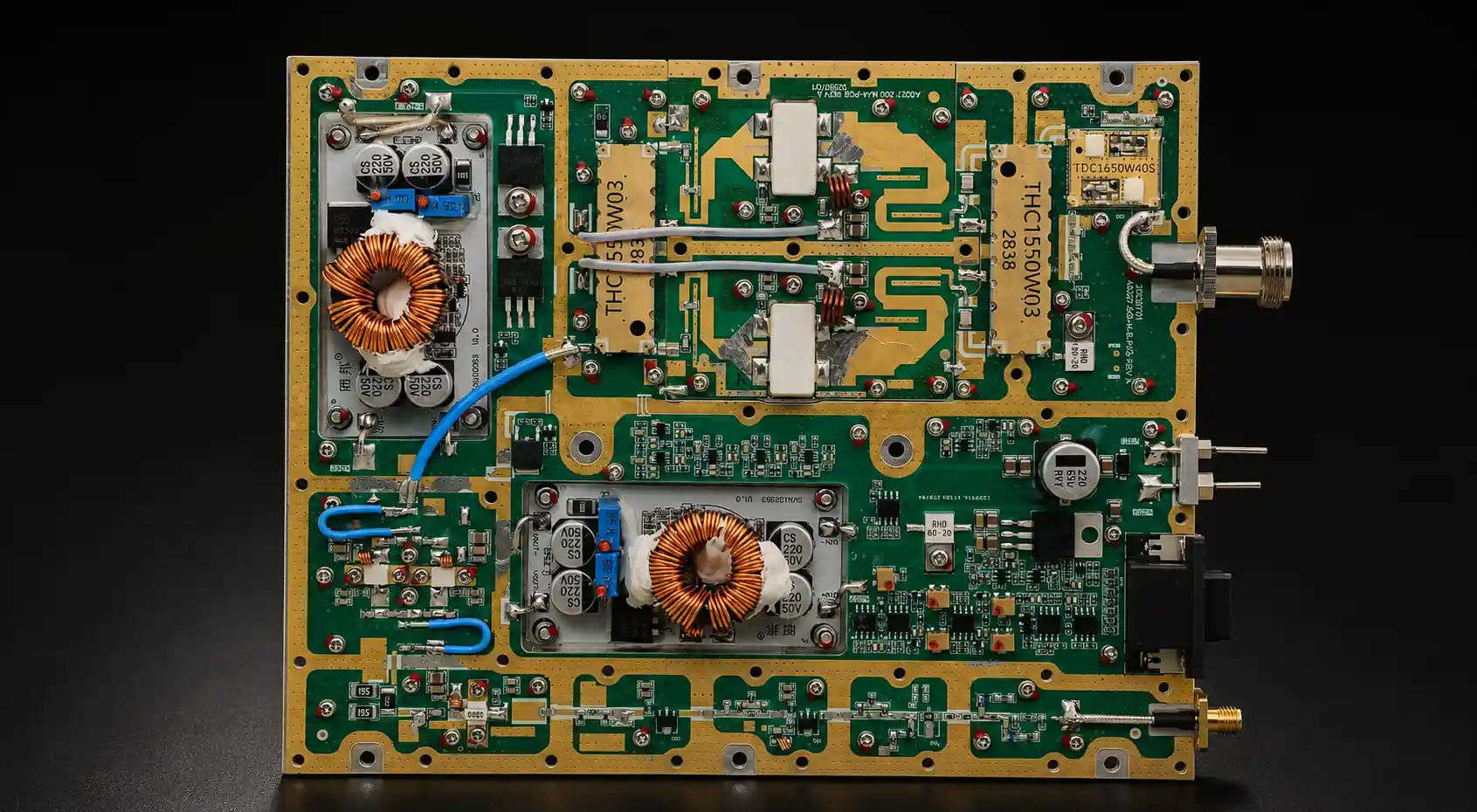
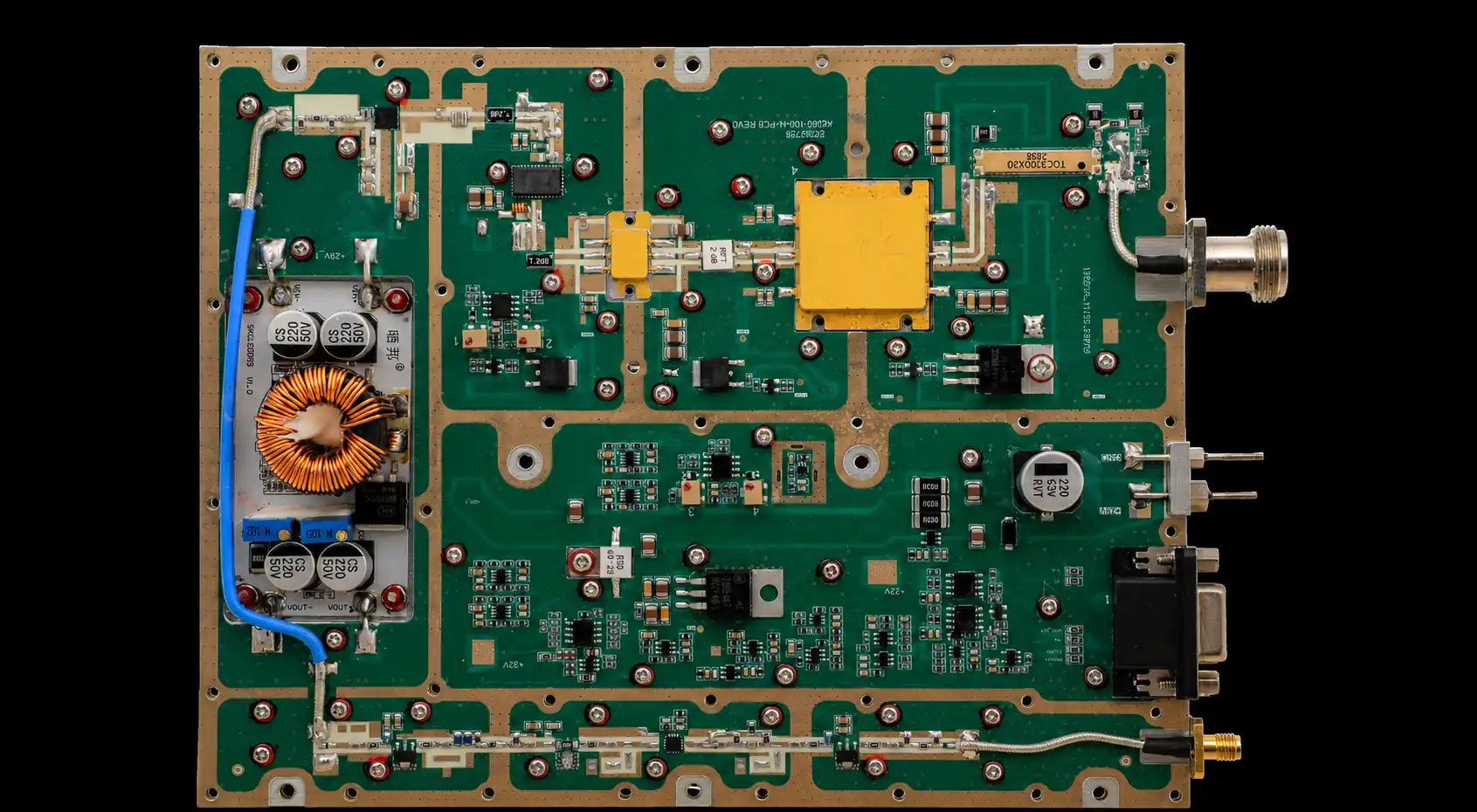
| HZ3001700-50 50 W class First transition View PDF ↗ | 40 / 50 W | 5.6 / 7 A | 160 × 120 × 25 mm | SMA-F / N-F | D-Sub 15-Pin | Base + optional control |
| HZ3001700-100 100 W class Shared high-power tier View PDF ↗ | 80 / 100 W | 11.5 / 14 A | 200 × 158 × 25 mm | SMA-F / N-F | D-Sub 15-Pin | Base + optional control |
| HZ3001700-150 150 W class Shared high-power tier View PDF ↗ | 120 / 150 W | 18 / 22 A | 200 × 158 × 25 mm | SMA-F / N-F | D-Sub 15-Pin | Base + optional control |
| HZ3001700-200 200 W class Shared high-power tier View PDF ↗ | 158 / 200 W | 24 / 29 A | 200 × 158 × 25 mm | SMA-F / N-F | D-Sub 15-Pin | Base + optional control |
The Psat figures are minimum / typical values under CW test conditions.
30W: Compact Platform
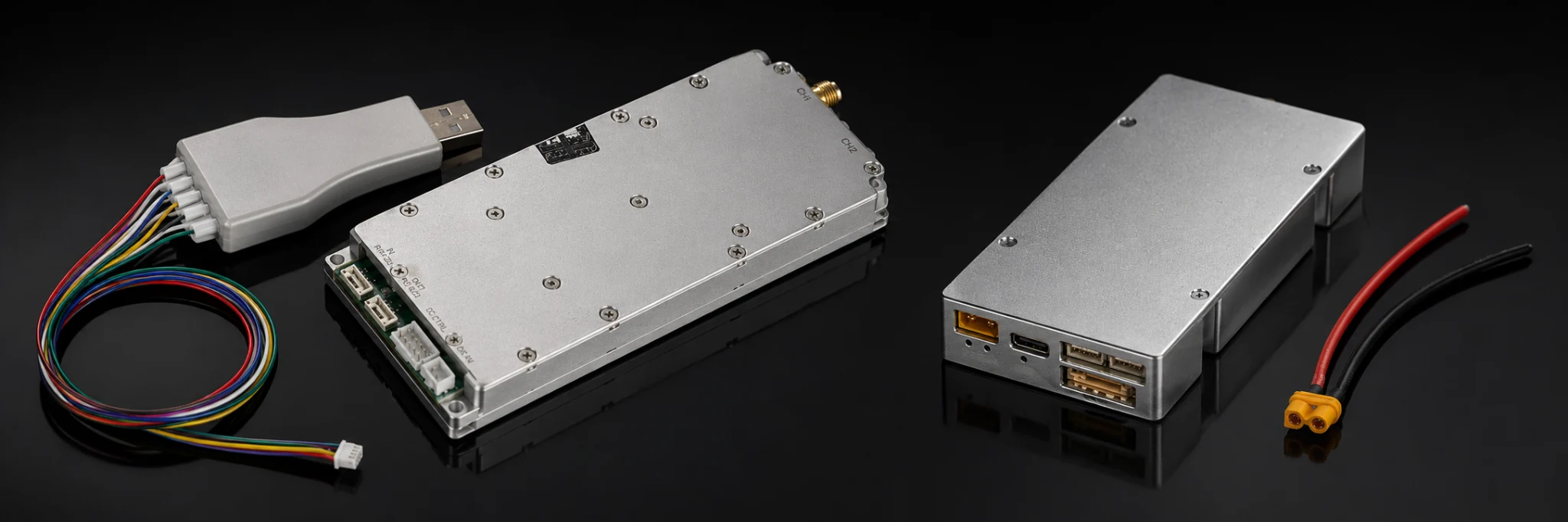
HZ3001700-30 is the compact tier. It uses a 125 × 59 × 21.5 mm chassis, SMA-KFD46 input and output, D-Sub 9-Pin control, and 2.4 A typical operating current.
50W: First Platform Transition
HZ3001700-50 is the first major architecture change. The chassis increases to 160 × 120 × 25 mm, RF interfaces change to SMA-F input and N-F output, control moves to D-Sub 15-Pin, and typical current rises to 5.6 A.
So moving from 30W to 50W changes mechanics, RF connections, control, and DC requirements—not just output power.
100W–200W: Shared High-Power Chassis
HZ3001700-100, HZ3001700-150, and HZ3001700-200 share the 200 × 158 × 25 mm high-power chassis, SMA-F input, N-F output, and D-Sub 15-Pin interface.
They are mechanically similar, but their DC requirements increase substantially with power.
3. 1.4 GHz Operating Span vs 200 MHz Instantaneous Bandwidth
The difference between operating range and instantaneous bandwidth is important in SDR and multi-band systems.
The 300–1700 MHz operating range spans 1400 MHz, or 1.4 GHz. That describes the frequency region in which the amplifier is intended to operate.
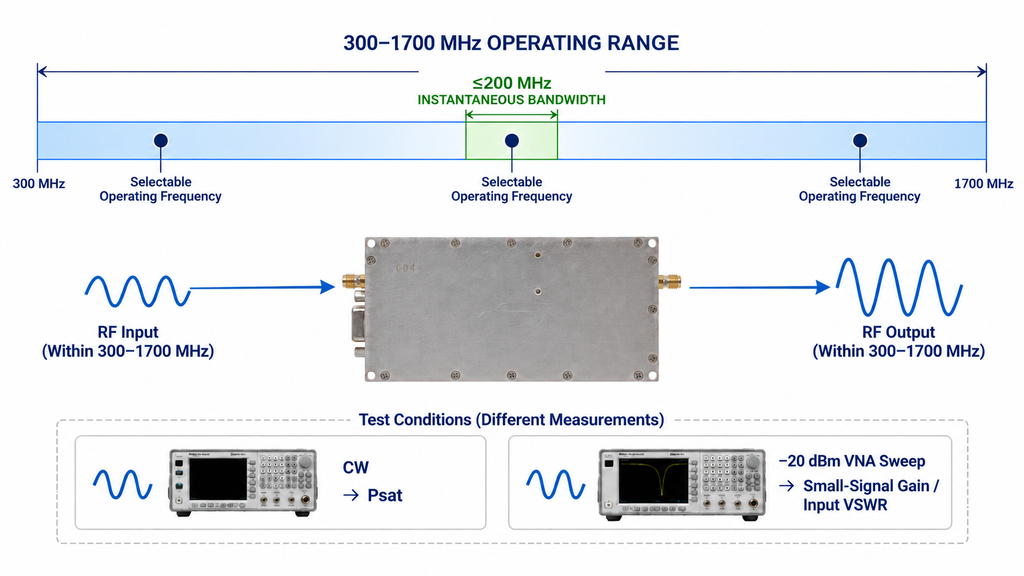
For this family, RF power amplifier instantaneous bandwidth is specified at up to 200 MHz.
1.4 GHz operating span ≠ 1.4 GHz instantaneous bandwidth.
A system can therefore use different operating points across 300–1700 MHz without requiring a 1.4 GHz-wide signal at one time.
The datasheets also use different test conditions for different parameters:
- Psat: CW signal
- Small-signal gain: −20 dBm VNA swept-frequency measurement
- Input VSWR: −20 dBm VNA swept-frequency measurement
- Instantaneous bandwidth: broadband-signal condition such as OFDM
For project-level Pout comparison, frequency, Pin, waveform, output reference plane, load, and thermal state should be defined together. These same boundaries determine how broadband RF PA performance across the band should be evaluated, because one datasheet value cannot represent every operating frequency and thermal condition.
4. Control Architecture and Optional Functions from 50W
Control capability changes noticeably at 50W. The 30W model uses a simpler control architecture, while 50W and above add monitoring signals and optional communication or adjustment functions.
Control Architecture by Hardware Platform
30 W basic control → 50 W first expansion → 100–200 W extended options · Swipe horizontally →
| Platform | Base Control and Monitoring | Optional Functions | Key Boundary |
|---|---|---|---|
| 30 W Compact control platform. Basic control | PA_EN and automatic overtemperature shutdown / recovery. | — | Compact D-Sub 9-Pin control architecture. |
| 50 W First control architecture transition. Options begin | Alarm Reset, Pr, Pf, PA_EN, TA, VA, Tc, plus output open / short shutdown. | RS485, Voltage Alarm, Current Alarm, Attenuator setting. | First D-Sub 15-Pin platform and first optional control path. |
| 100–200 W High-power control platform. Expanded options | Alarm Reset, Pr, Pf, PA_EN, TA, VA, Tc, overtemperature protection, and output open / short protection. | RS485, Voltage Alarm, Current Alarm, Attenuator setting, 20 dB gain adjustment, 0.5 dB step. | Expanded optional control set on the high-power platform. |
30W: Basic Control
HZ3001700-30 uses D-Sub 9-Pin control with PA_EN and automatic overtemperature shutdown / recovery.
50W: First Control Architecture Transition
HZ3001700-50 moves to D-Sub 15-Pin control with Alarm Reset, Pr, Pf, PA_EN, TA, VA, and Tc. Its VA signal is associated with output open / short shutdown behavior.
Optional functions include RF amplifier RS485 control, Voltage Alarm, Current Alarm, and Attenuator setting.
100W–200W: Expanded Optional Control
HZ3001700-100, HZ3001700-150, and HZ3001700-200 retain the 15-pin monitoring architecture and output open / short protection.
Their optional control set adds RS485, voltage and current alarms, attenuator setting, a 20 dB gain-adjustment range, and a 0.5 dB adjustment step.
For integration, control requirements should be defined alongside power level. Two modules can use the same 15-pin connector while still requiring different control configurations.
5. 100–200W Share a Chassis, Not a DC or Cooling Budget
The three high-power models share one mechanical envelope, but RF amplifier current consumption rises sharply with output class.
| Power Class | Typical Current | Maximum Current |
|---|---|---|
| 100W | 11.5 A | 14 A |
| 150W | 18 A | 22 A |
| 200W | 24 A | 29 A |
All three operate from 24–32 V, with 28 V typical. Their datasheets also state that output-power capability and gain vary with voltage.
The important progression is therefore:
11.5 A → 18 A → 24 A typical current
A 100W, 150W, and 200W module may fit the same mechanical opening, but that does not make the same DC supply, wiring, grounding, or cooling arrangement suitable for all three.
The published cooling requirement is an external heat sink. Actual heat-sink capacity, airflow, and stabilized-hot performance depend on the final system thermal boundary.
6. Use the Model Datasheet as the Model-Level Baseline
The 300–1700 MHz RF power amplifier family page provides the product overview and access to the available models. For exact model-level values, the current RF amplifier module datasheet should remain the baseline for Psat, current, RF interfaces, control functions, and test conditions.
Current CW Psat minimum / typical values are:
- HZ3001700-30: 25 / 30 W
- HZ3001700-50: 40 / 50 W
- HZ3001700-100: 80 / 100 W
- HZ3001700-150: 120 / 150 W
- HZ3001700-200: 158 / 200 W
These are minimum / typical specifications under the stated test conditions, not unconditional full-band hot-state output guarantees.
The same rule applies to control functions: verify which functions are standard and which are optional for the selected power class before freezing the system interface.
7. Standard Model, Optional Control, or Custom RFQ?
Once the required frequencies and hardware tier are clear, the project usually falls into one of three routes.
Standard Model
A standard model fits when 300–1700 MHz, one of the standard 30W / 50W / 100W / 150W / 200W power classes, and the corresponding mechanical and base-control configuration meet the project requirements.
Optional Control
Optional control becomes relevant when the system requires functions such as RS485, voltage/current alarms, attenuator control, or the applicable gain-adjustment capability.
Custom RFQ
Engineering customization becomes relevant when the required frequency, output power, RF interface, control architecture, mechanical format, or thermal condition falls outside the standard model boundary.
| Route | Typical Requirement | Next Step |
|---|---|---|
| Standard Model | Standard frequency, power, mechanics, and base control fit the project | Compare the 300–1700 MHz models and datasheets |
| Optional Control | Additional monitoring, communication, or adjustment functions are required | Confirm the required functions for the selected model |
| Custom RFQ | Frequency, power, interface, control, mechanical, or thermal requirements differ from the standard platform | Submit the project requirements through the RF power amplifier RFQ |
Custom projects can include output-power requirements from 10–1000 W for engineering review. This is an RFQ input range rather than a statement that every frequency, power, and mechanical combination already exists as a standard product.
Conclusion
The HZ3001700 family is not one RF amplifier platform offered at five different wattages. It consists of three hardware tiers: a compact 30W platform, a separate 50W platform, and a shared 100–200W high-power chassis.
For projects operating across sub-GHz and 1–1.7 GHz frequencies, the first question is whether the required operating points fit the 300–1700 MHz range. The next step is to match the required power class with the available mechanical space, RF interfaces, control functions, DC capacity, and cooling conditions.
RF SKYPOWER provides standard 30W, 50W, 100W, 150W, and 200W models in this family. Projects requiring additional control functions can be configured around the available options, while non-standard frequency, power, interface, mechanical, or thermal requirements can be submitted for engineering review through the RFQ page.