
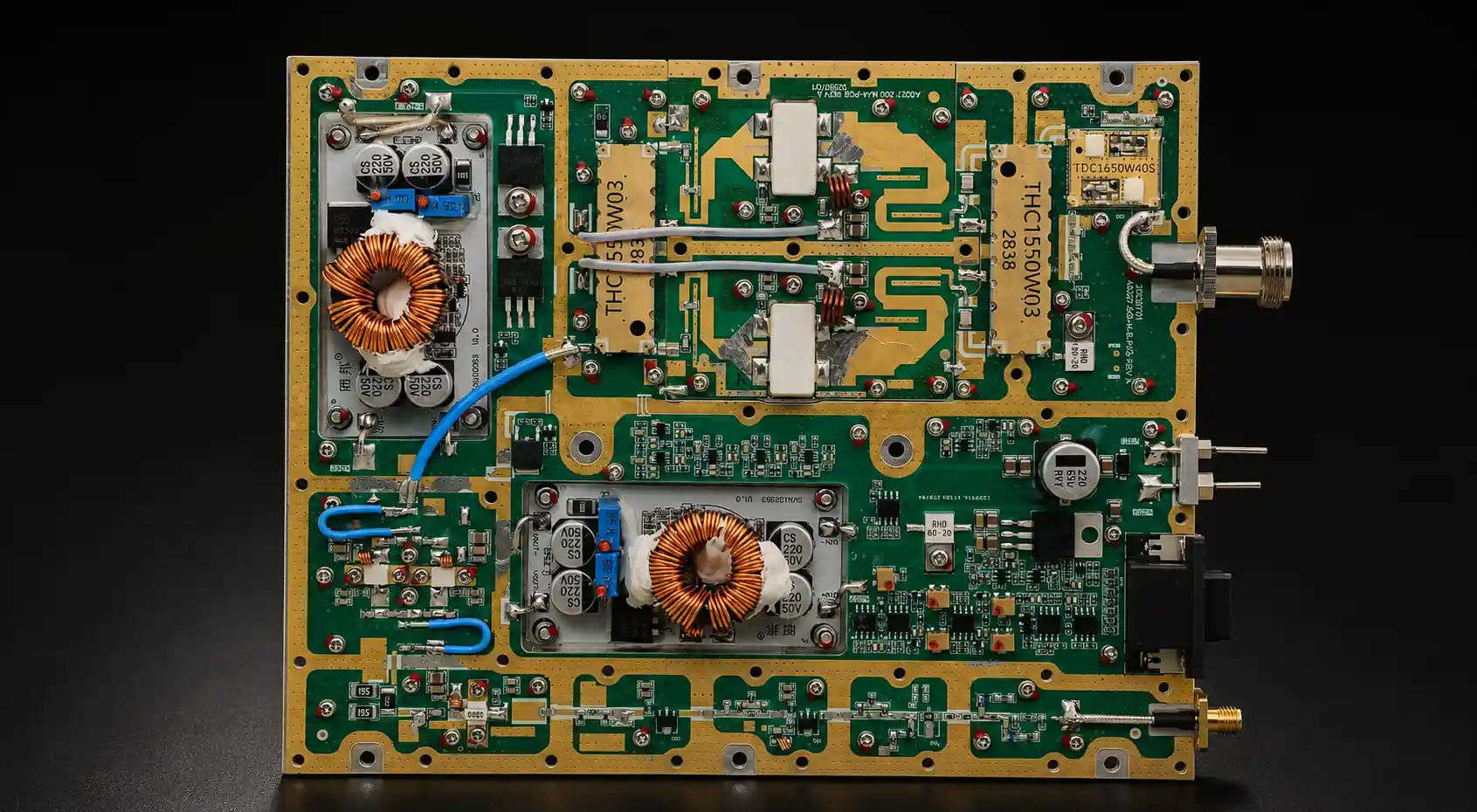
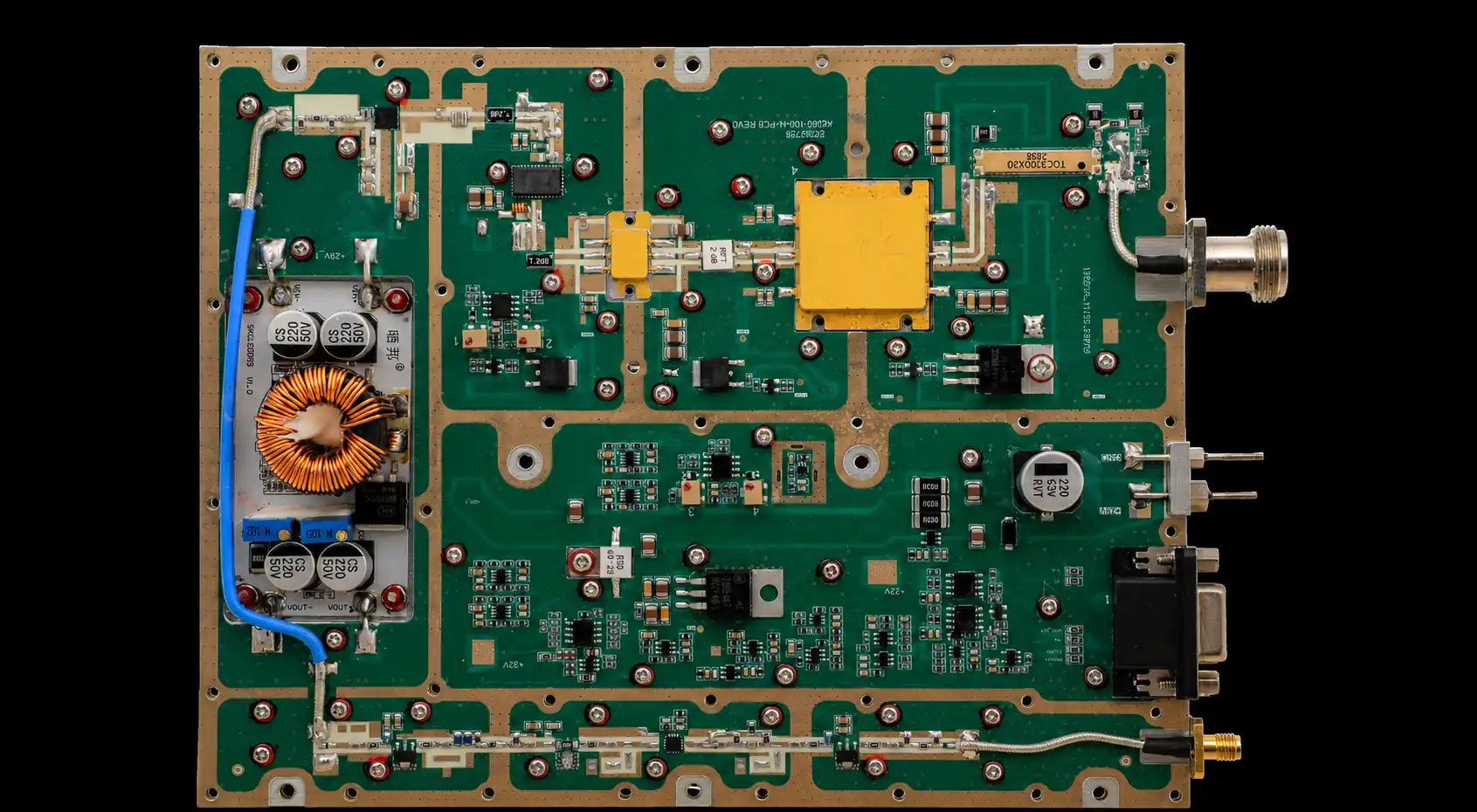
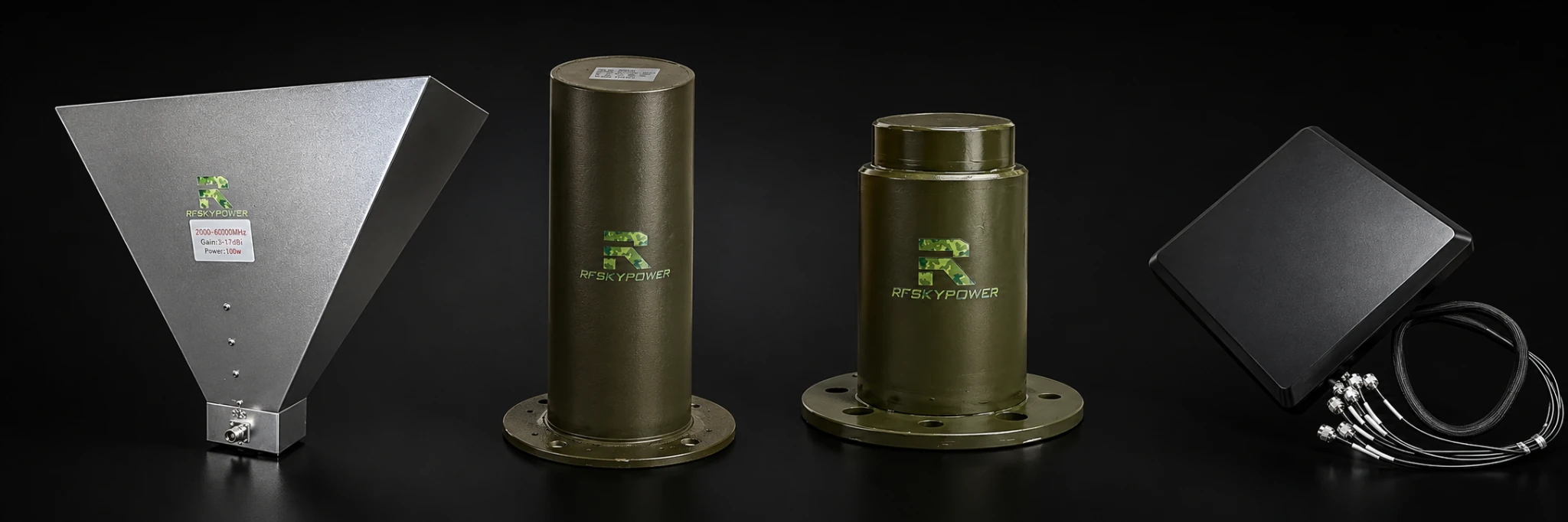
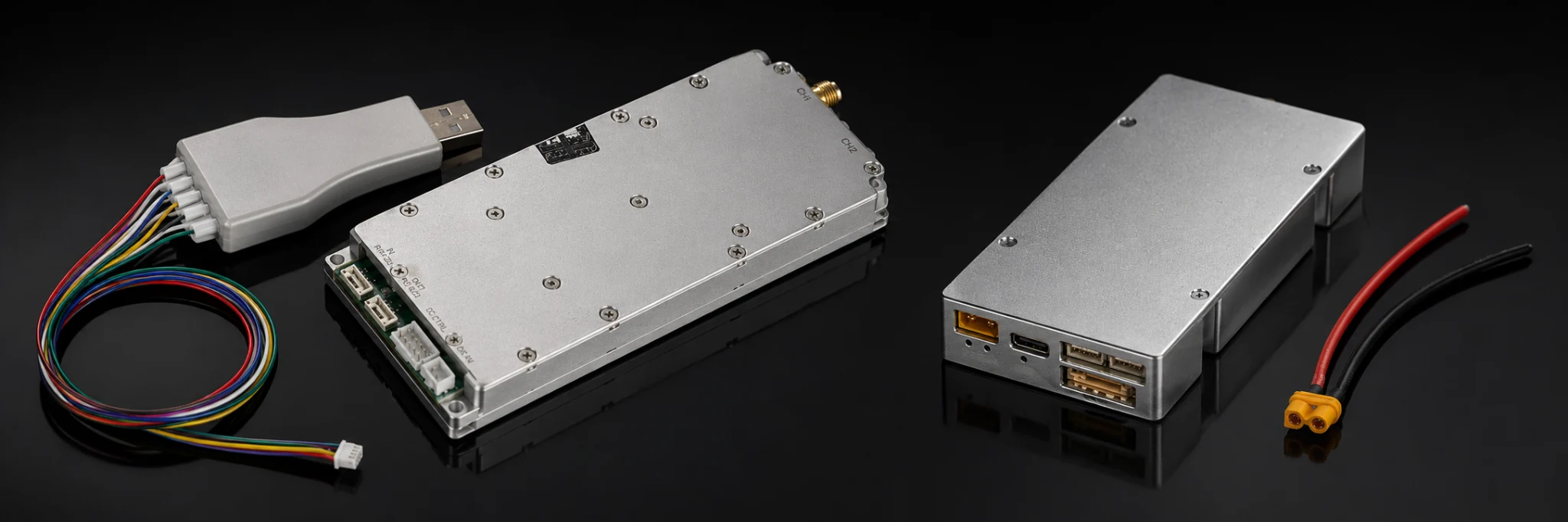
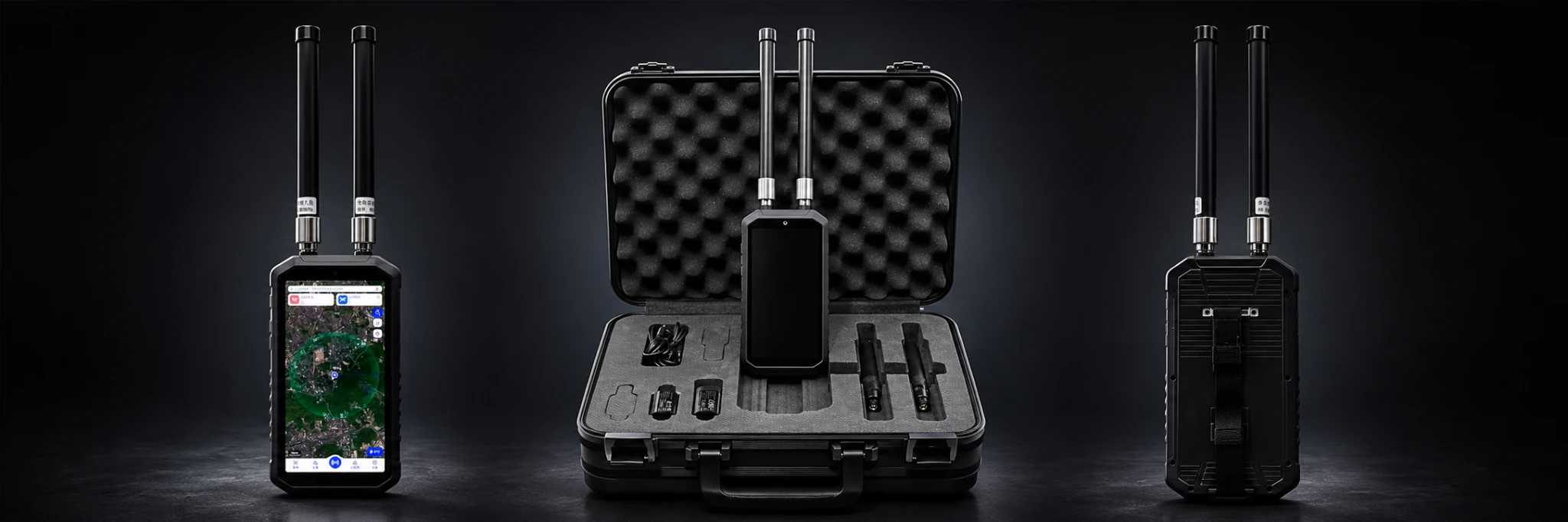

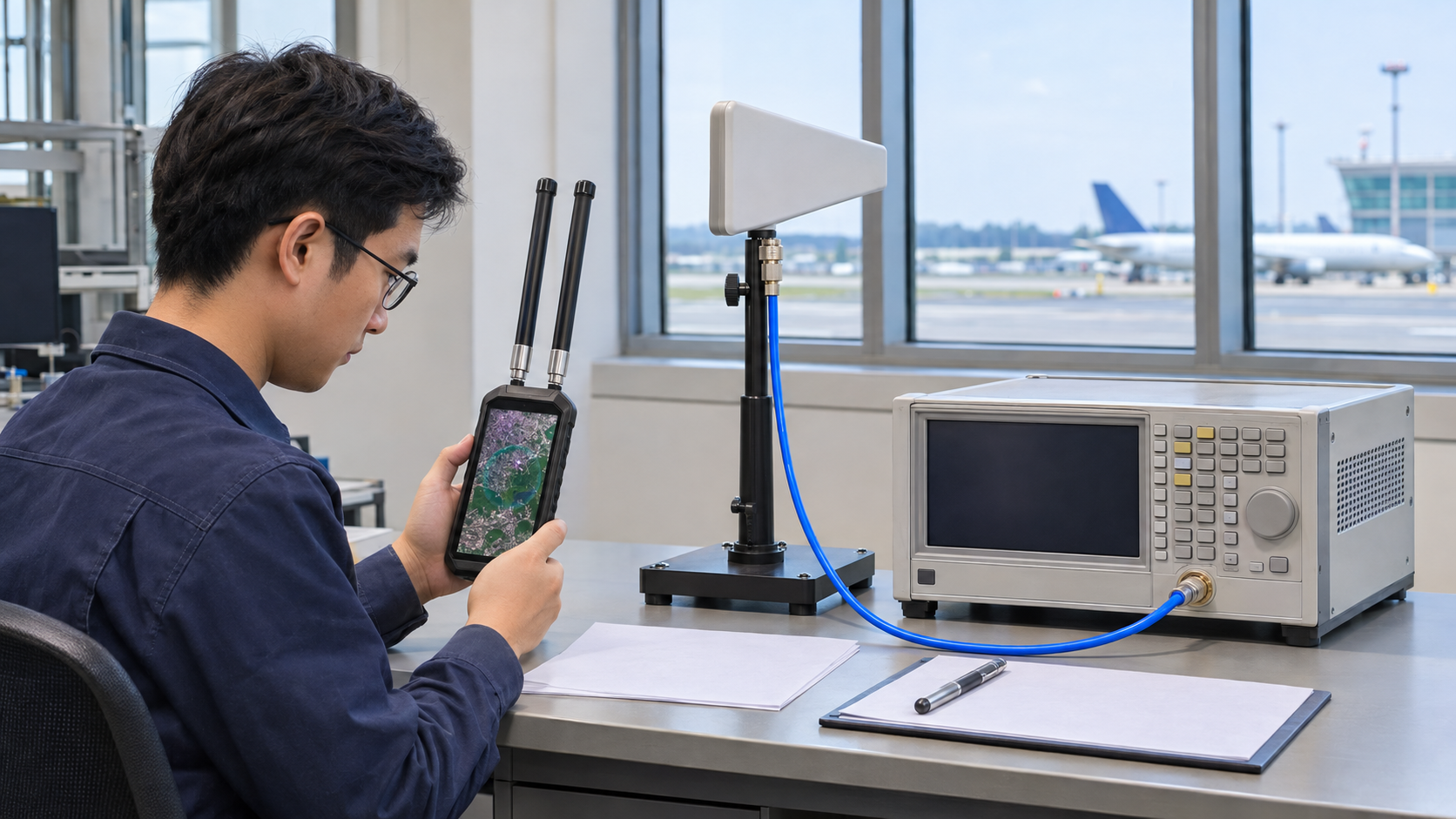
Passive drone detection based on RF reception analyzes signals already present in the environment. The sensing function does not need to transmit an RF signal to find a target. That definition, however, says little about the emission behavior of other components, communication interfaces, or operating states.
Before accepting a supplier’s passive claim, buyers need to know which hardware it covers, what functions are enabled, which software version is installed, and when the claimed behavior applies.
A detector may use passive RF sensing during normal operation while a connected device handles wireless communication. Installation, software updates, and maintenance may also involve functions that are inactive during routine detection.
At airports and other RF-sensitive facilities, these details can affect equipment selection and site approval. Buyers need a clearly defined claim supported by evidence from the proposed configuration.
RF SKYPOWER offers multiple passive RF drone detection configurations for different operational needs. The following video introduces selected products from our detection range.
1. What Does “Passive” Actually Mean in Drone Detection?
In RF drone detection, passive means receiving radio signals without intentionally transmitting energy to illuminate or interrogate a target.
A typical receiving chain includes an antenna, an RF front end, a receiver or software-defined radio (SDR), and signal-processing software. The system analyzes available RF activity to support detection or identification.
Active radar uses a different method. It transmits energy and processes the returned signal. Passive radar uses existing external transmissions as illumination sources, without generating its own radar transmission.
These sensing methods have different capabilities and limitations.
Passive RF detection depends on signals the target makes available. A drone producing no receivable RF signal under the deployed sensor’s conditions, or using an unsupported protocol, may not be detectable by that receiver.
That limitation concerns target detection. It does not describe the detector’s own emissions.
When reviewing a supplier’s passive claim, separate three types of RF behavior:
- Passive sensing: The detection function does not intentionally transmit an RF sensing signal.
- Other system functions: Communication interfaces, configuration functions, and connected equipment may use RF transmission.
- Unintentional emissions: Powered electronics can produce electromagnetic energy without intentionally transmitting a sensing signal.
A supplier’s declaration should identify the sensing subsystem, hardware configuration, and operating state.
For example:
“The RF sensing path does not intentionally transmit a detection signal during normal detection operation.”
A buyer can review this statement against the hardware architecture and operating-state evidence. It makes a specific claim about the sensing path rather than every source of electromagnetic energy in the installation.
If a supplier describes the entire product as passive, ask which components and functions that description covers.
A drone detector selection process should first establish what information the target makes available and which sensing method can collect it. Once the detection method is selected, the buyer can examine how the proposed equipment behaves.
The result should be a written definition of the passive claim that both parties can use during technical review and acceptance.
2. Which Components Can Transmit in a Passive RF Detection System?
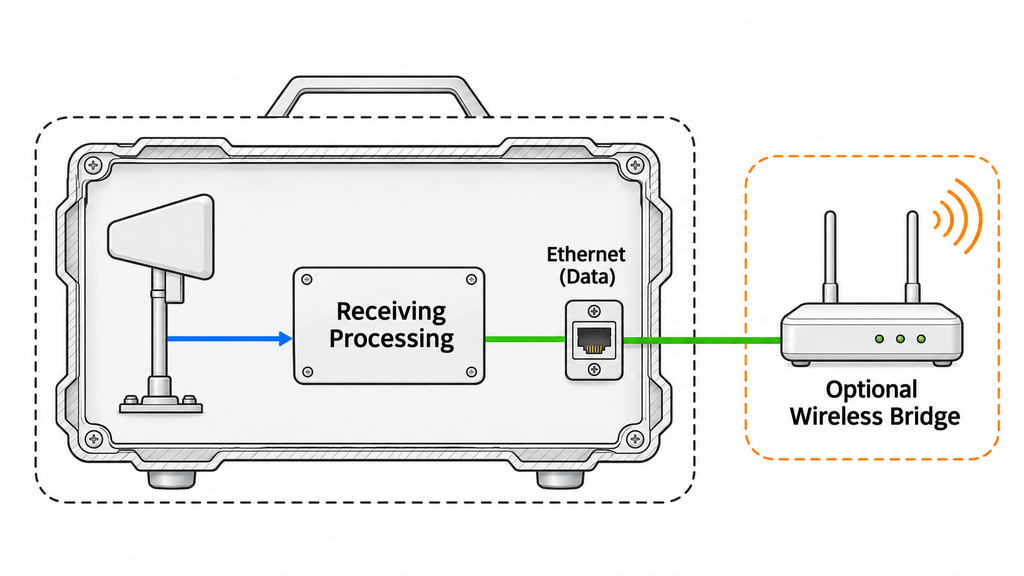
A passive RF receiver does not need a transmitter to perform its sensing function. But the receiver may be only one part of the equipment supplied.
Start with the sensing chain. Ask the supplier to identify the receiving antennas, RF input ports, front-end circuitry, receiver hardware, and signal-processing components.
Pay particular attention to SDR-based designs. SDR describes an architecture for processing signals, not whether a particular device can transmit. Some SDR hardware supports reception only. Other designs include transmit-capable circuits. The supplied hardware determines which functions are possible.
Then examine how the detector communicates.
Depending on the design, the equipment may transfer alerts, records, or configuration data through Ethernet, USB, Wi-Fi, Bluetooth, cellular communications, or external network devices.
These are possible interface types. They should not be assumed to exist in a particular detector without checking its configuration.
Wired Ethernet does not require a wireless radio transmitter. Wi-Fi and cellular links, by contrast, intentionally transmit RF signals when operating.
A detector can therefore perform passive RF sensing while another component transmits data.
That component might be integrated into the detector or connected externally. Routers, wireless bridges, hotspots, and service terminals belong in the review when the passive claim covers the complete installation.
The equipment inventory should distinguish transmissions originating from:
- The detector’s sensing hardware.
- Other functions built into the detector.
- External accessories and communication devices.
This attribution matters during testing. A transmission from a connected router should not be mistaken for a sensing signal generated by the receiver. Equally, the absence of a sensing transmitter does not establish that the complete installation has no transmit-capable equipment.
GNSS reception is another example. A GNSS receiver normally receives satellite signals; that receiving function does not by itself indicate an RF transmitter.
Ask for a configuration-specific block diagram and component inventory. Together, they should identify RF-capable hardware, connected antennas, ports, optional modules, and their functions.
A generic diagram covering several product variants may not describe the version being purchased. The supplier should identify which components and options are present in the proposed unit.
Only compare two suppliers’ passive claims directly when they cover equivalent equipment boundaries and operating configurations. Otherwise, record the differences before drawing a procurement conclusion.
3. Which Operating States Must Be Checked Before Accepting a Passive Claim?
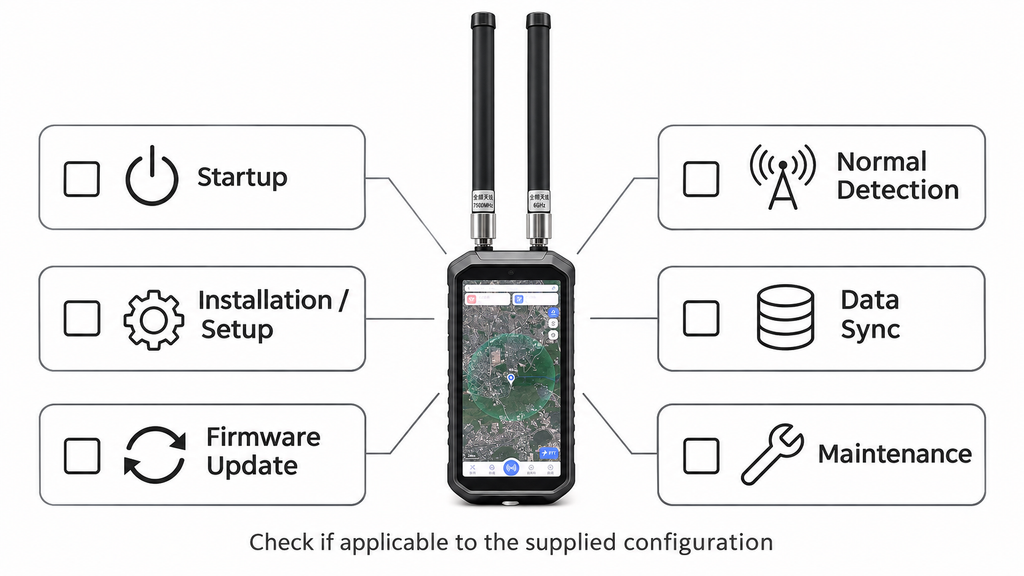
A successful demonstration during normal detection tells the buyer little about RF behavior during startup, installation, data synchronization, software updates, or maintenance.
These states do not necessarily involve RF transmission. They need separate review when the supplier’s claim is intended to cover them.
The following table is a procurement evaluation template, not a record of completed HZ-HD03 testing.
Mark a state Verified only when the evidence supports the specific claim under the conditions reviewed. Use Pending when evidence is incomplete. Select N/A only when the supplier documents why the state does not apply.
| Operating state | Function to check | Evidence to request | Record status |
|---|---|---|---|
| Startup and initialization | Whether RF-capable communication functions become active during startup | Boot sequence, enabled-interface record, and relevant startup observations | □ Verified / □ Pending / □ N/A |
| Normal detection | Whether the sensing path intentionally transmits an RF detection signal | Sensing architecture, active-detection record, and applicable RF assessment | □ Verified / □ Pending / □ N/A |
| Installation and configuration | Whether setup procedures activate wireless communication or optional functions | Installation procedure, connected-accessory list, and interface-state evidence | □ Verified / □ Pending / □ N/A |
| Data synchronization | Whether alerts, logs, or configuration data are transferred through a wireless interface | Data-transfer architecture and relevant operating-state record | □ Verified / □ Pending / □ N/A |
| Firmware or software updates | Whether update procedures use a separate RF-capable interface | Update method, software version, and applicable interface assessment | □ Verified / □ Pending / □ N/A |
| Maintenance and calibration | Whether service modes or connected equipment change RF behavior | Maintenance instructions, service-accessory inventory, and state-specific evidence | □ Verified / □ Pending / □ N/A |
Not every detector supports every function listed.
A device may, for example, use a wired update method without providing a wireless update interface. The supplier’s hardware and software documentation should establish that fact.
The type of evidence also matters. A supplier declaration, a functional demonstration, and an RF measurement answer different questions.
For each verified state, retain the relevant hardware revision, firmware version, connected accessories, and test configuration.
If only normal detection has been examined, acceptance should remain limited to that state until the supplier addresses any other conditions covered by the claim.
4. How Can Buyers Verify an RF Emission Claim?
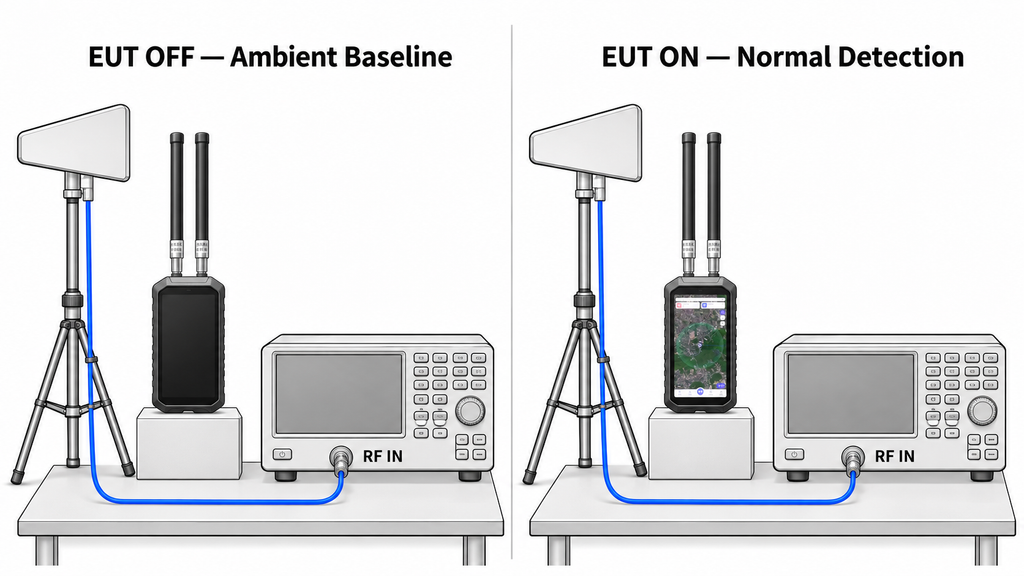
An RF emission review needs to answer two questions:
- Does the sensing function intentionally transmit an RF signal?
- What electromagnetic emissions arise from the equipment under the operating conditions being assessed?
The first question requires evidence about hardware, enabled functions, and operating behavior. The second may require an EMC assessment under the project’s applicable requirements.
Define the claim before deciding which evidence is necessary.
Identify the exact equipment under evaluation
A useful test record identifies the model, sample or unit identity, hardware revision, firmware version, power arrangement, antennas, interfaces, and connected accessories.
It should also state whether the assessment covers the detector alone or the complete installation.
A report prepared for one hardware and software combination cannot automatically establish the behavior of another variant.
If the proposed unit differs from the tested configuration, request evidence for that variant or a technical justification explaining why the existing results apply.
Establish operating conditions and signal attribution
The equipment must be in the operating state addressed by the claim.
During normal passive detection, the receiver and processing functions should be active. Measurements made while a device is powered but idle may not represent normal detection.
The test engineer should record:
- Frequency coverage and observation period.
- Measurement bandwidth, instrument sensitivity, and applicable uncertainty.
- Measurement arrangement, antennas, and relevant connections.
- Enabled communication interfaces and attached equipment.
- The operating state confirmed during the observation.
The assessment also needs to distinguish signals originating from the detector from ambient transmissions, drone signals, and connected accessories.
Background measurements and a controlled equipment configuration help establish signal attribution. A nearby radio can appear in a measurement trace and be mistaken for an emission from the detector.
Short-lived emissions present another problem. A swept instrument may miss a transmission that occurs between observations of the relevant frequency.
For startup, update, and service states, document the capture method, observation window, instrument settings, and known limitations in time-frequency coverage, including the potential for missed intermittent emissions.
The result is only as broad as the states, frequencies, and time periods the method adequately covers.
Match the reported result to the claim
A defensible report identifies what the evidence establishes and where its limitations begin.
For a defined passive sensing claim, an appropriately qualified statement might read:
“The reviewed hardware and configuration records identified no enabled intentional RF sensing-transmit function in the tested configuration. During the documented detection state, no corresponding RF transmission was identified above the measurement setup’s stated detection threshold within the examined frequency and time coverage.”
This is example report wording. It is not a test result for HZ-HD03 or another specific product.
The hardware review addresses transmitter capability and enabled functions. The RF observation documents measured behavior within stated limits. Neither automatically covers another hardware revision, firmware build, or operating state.
A single spectrum-analyzer screenshot rarely provides enough information to support the full statement. The reviewer needs the configuration record, test method, instrument settings, and operating-state evidence.
The report must also distinguish intentional sensing transmissions, other intentional wireless communications, and unintentional emissions. Each may call for a different assessment.
Manufacturer documentation can establish the proposed architecture. RF measurements can document behavior under specified conditions. A formal EMC assessment may be necessary when a project requires evidence against an applicable emissions standard.
If an important interface or operating state falls outside the available evidence, keep the claim limited to what has been verified and request the missing information.
5. Can Software Updates or Disabled Features Change the Passive Status?
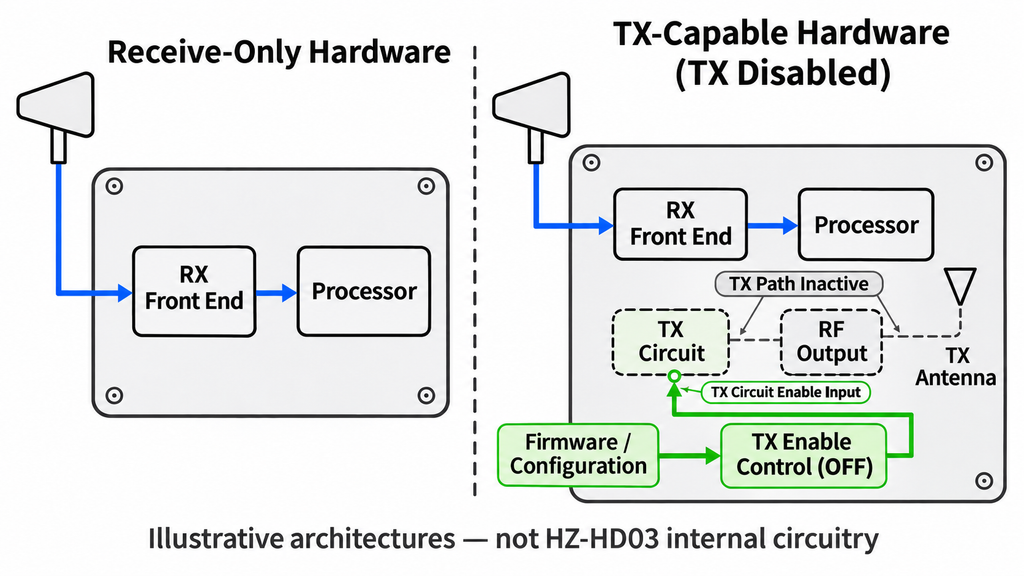
Software can enable or disable RF functions only when the hardware supports them. An update cannot create an intentional RF transmit circuit that is absent from the design.
This makes the hardware architecture central to the passive claim.
A receive-only sensing design with no relevant transmit hardware provides a different basis for acceptance than equipment whose transmit-capable functions are disabled through software.
A disabled function may remain unavailable in the delivered configuration. Whether someone can enable it later depends on the circuit design, firmware, access permissions, and configuration controls.
Do not infer that a transmitter exists merely because a detector uses SDR or supports software updates. Ask the supplier to identify the RF-capable components and available functions.
Accessories need separate attention. An installer might add a wireless network device without changing the detector’s firmware. The detector could retain its passive sensing method while the complete installation gains another RF transmitter.
When software-controlled RF functions are present, request:
- The firmware or software build associated with the claim.
- A record of enabled interfaces and functions.
- The controls governing those functions.
- The permissions required to change them.
- The changes that would require renewed RF assessment.
The procurement agreement can define re-verification triggers. Examples include enabling a disabled interface, adding a communication module, changing a relevant firmware release, or introducing a new service procedure.
A feature described as disabled by default should not be treated as hardware that lacks transmission capability.
Supplier comparisons must use the configurations proposed for delivery. If a passive claim depends on a software setting that has not been verified, limit acceptance to the documented version and state until the supplier resolves the gap.
6. What Evidence Is Sufficient to Accept a Supplier’s Passive Claim?
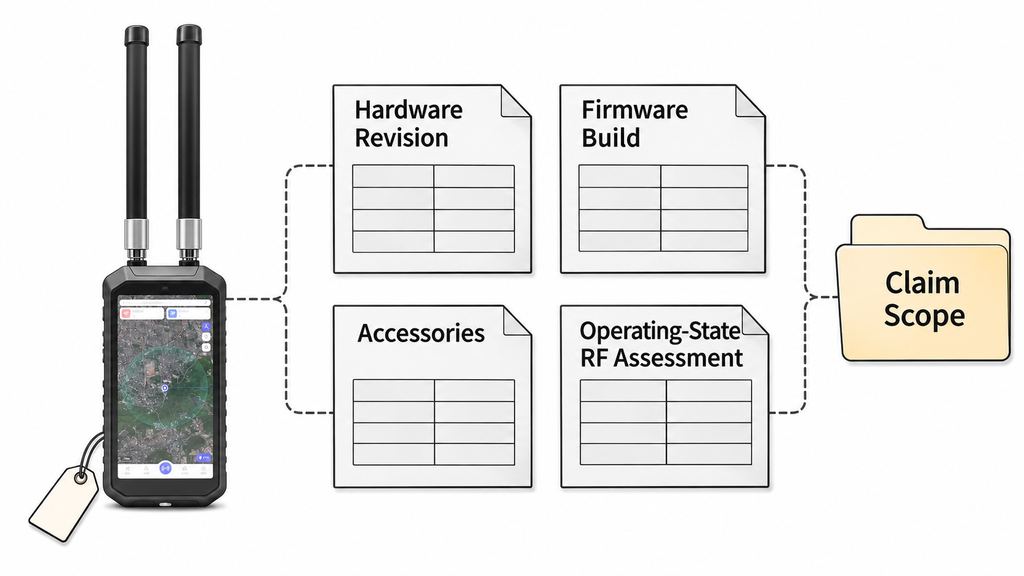
Accept a passive-system claim only for the equipment, operating conditions, and configuration covered by its evidence.
Different documents serve different purposes. A block diagram describes the hardware architecture. A state-specific RF assessment records observed behavior. A version record connects the evidence to the software configuration being supplied.
The table below identifies the minimum evidence to request for common supplier claims.
| Supplier claim | Minimum evidence | Supported scope | Action if evidence is missing |
|---|---|---|---|
| The sensing architecture uses passive RF reception | Receiving-path diagram and configuration-specific hardware inventory | Identified sensing subsystem and reviewed hardware revision | Request the missing component information before accepting the architecture claim |
| The detector does not intentionally transmit an RF sensing signal during detection | Functional description and applicable normal-operation RF assessment | Defined detection state of the tested hardware and software configuration | Condition acceptance on evidence covering the claimed detection state |
| The supplied configuration contains no transmitter that can be enabled | Configuration-specific board-level architecture or controlled component inventory mapped to the supplied hardware revision, RF-capable chipset or module capability review, installed-option inventory, and relevant software enablement controls | Specified hardware revision, installed options, and reviewed firmware or configuration controls; excludes unreviewed future changes | Treat the broader hardware claim as unverified |
| Updates and service procedures preserve the declared passive behavior | Relevant state review, version record, and change-control requirements | Evaluated software releases and service configurations | Restrict acceptance to verified versions and states |
| The proposed configuration is suitable for the named site, subject to applicable site approval | Installed-equipment inventory, applicable RF/EMI compatibility review, and documented approval or coordination outcomes from the responsible site authority where required | The named site and the reviewed installation configuration | Hold the deployment decision; do not infer site approval from passive sensing alone |
Record a decision for each claim.
An accepted claim has evidence that supports its declared scope. A conditionally accepted claim has an explicit limitation, such as verified normal detection with a relevant service state still pending.
Hold or reject a claim when essential evidence is missing or contradicts the supplier’s statement.
That decision concerns the claim under review. It does not necessarily mean the detector is unsuitable. The supplier may be able to provide more evidence, narrow the declaration, or propose a different configuration.
For portable applications, the HZ-HD03 Handheld Drone Detector uses passive RF reception for drone detection and does not intentionally transmit RF signals during detection. Buyers evaluating the device for sensitive sites should confirm the applicable hardware configuration, operating states, and supporting technical documentation against their project requirements.
7. What Must Buyers Confirm Before Deploying a Passive Detector at Sensitive Sites?

A passive RF detector still needs a site-specific deployment review, particularly near sensitive communication and navigation equipment.
Facilities may set requirements for equipment placement, network interfaces, electromagnetic compatibility, data handling, and operating procedures.
Start by listing everything included in the installation: the detector, power arrangement, antennas, network equipment, and connected accessories.
Identify any intentional wireless communication functions separately from the passive sensing path.
The facility operator must then determine which technical reviews, authorizations, and coordination procedures apply to the site.
At airports, the review may involve aviation stakeholders and applicable FAA coordination procedures. Other critical infrastructure facilities may follow different approval arrangements.
Data handling also requires attention. Receiving RF signals for drone detection does not, by itself, establish permission to collect, store, access, or transfer every type of information the system might process.
A verified passive sensing claim can support the site’s technical review. It cannot replace the required approval process.
If a necessary review or authorization remains outstanding, hold the affected deployment decision until the responsible party resolves it.
Conclusion
Passive RF drone detection does not require an intentional sensing transmission. Whether a supplier’s broader passive claim can be accepted depends on the hardware supplied, enabled interfaces, software version, operating states, and supporting evidence.
Buyers can use these distinctions to accept a defined claim, attach conditions, or hold a decision. The review cannot establish the behavior of untested states, demonstrate compliance with every applicable emissions requirement, or authorize a particular installation.
Evidence from normal detection should not be extended to connected equipment, future software versions, or service procedures without further review.
Before approaching a supplier, write down the passive behavior your project requires. Identify the equipment and operating states covered by that statement, then record which claims have evidence and which remain unresolved.
For an HZ-HD03 technical evaluation, provide RF SKYPOWER with the intended site and deployment arrangement, target drone or protocol requirements, required data and network interfaces, and relevant operating states. Include the proposed hardware and firmware revision where known, any site approval requirements, and the evidence your procurement team needs before acceptance.