
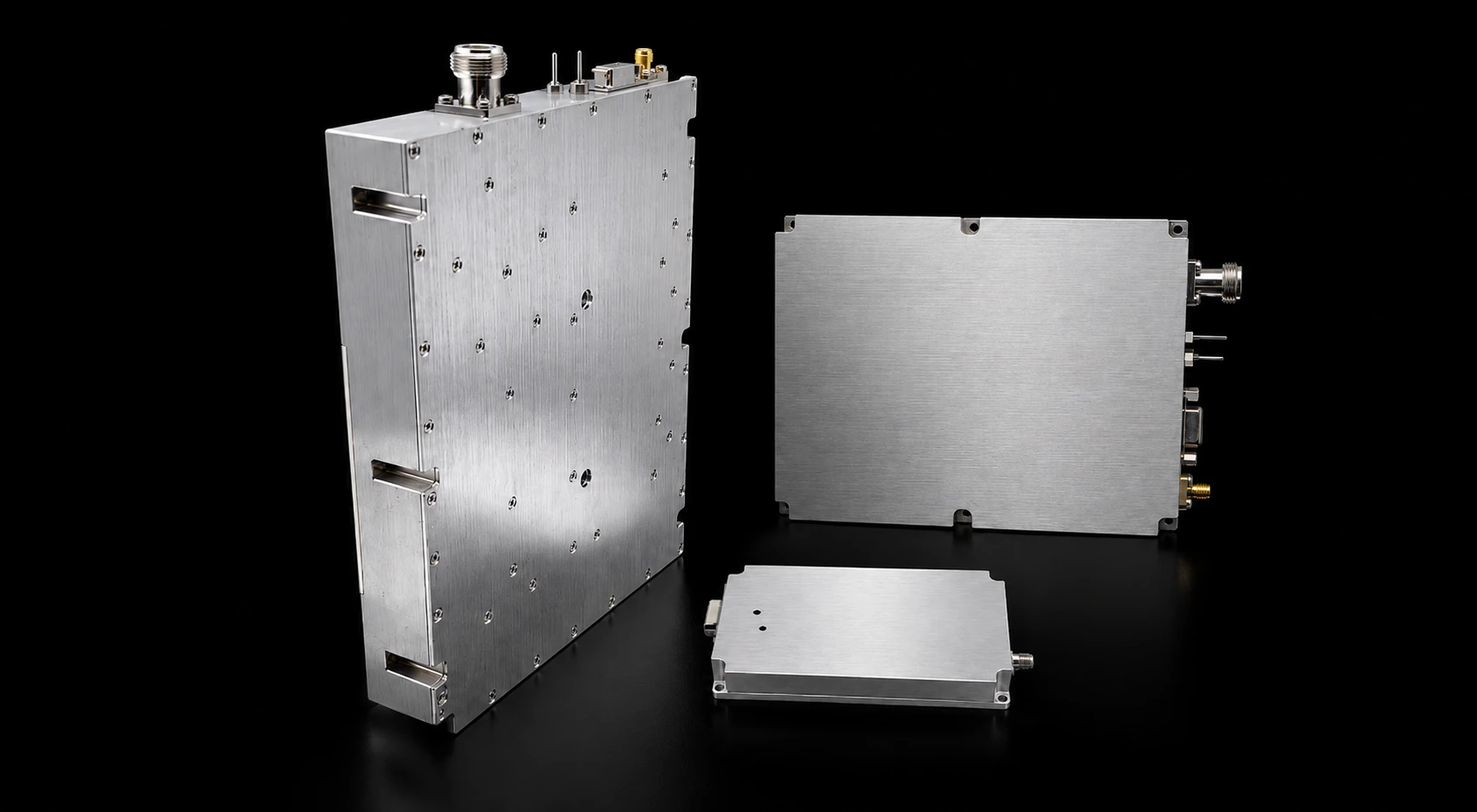
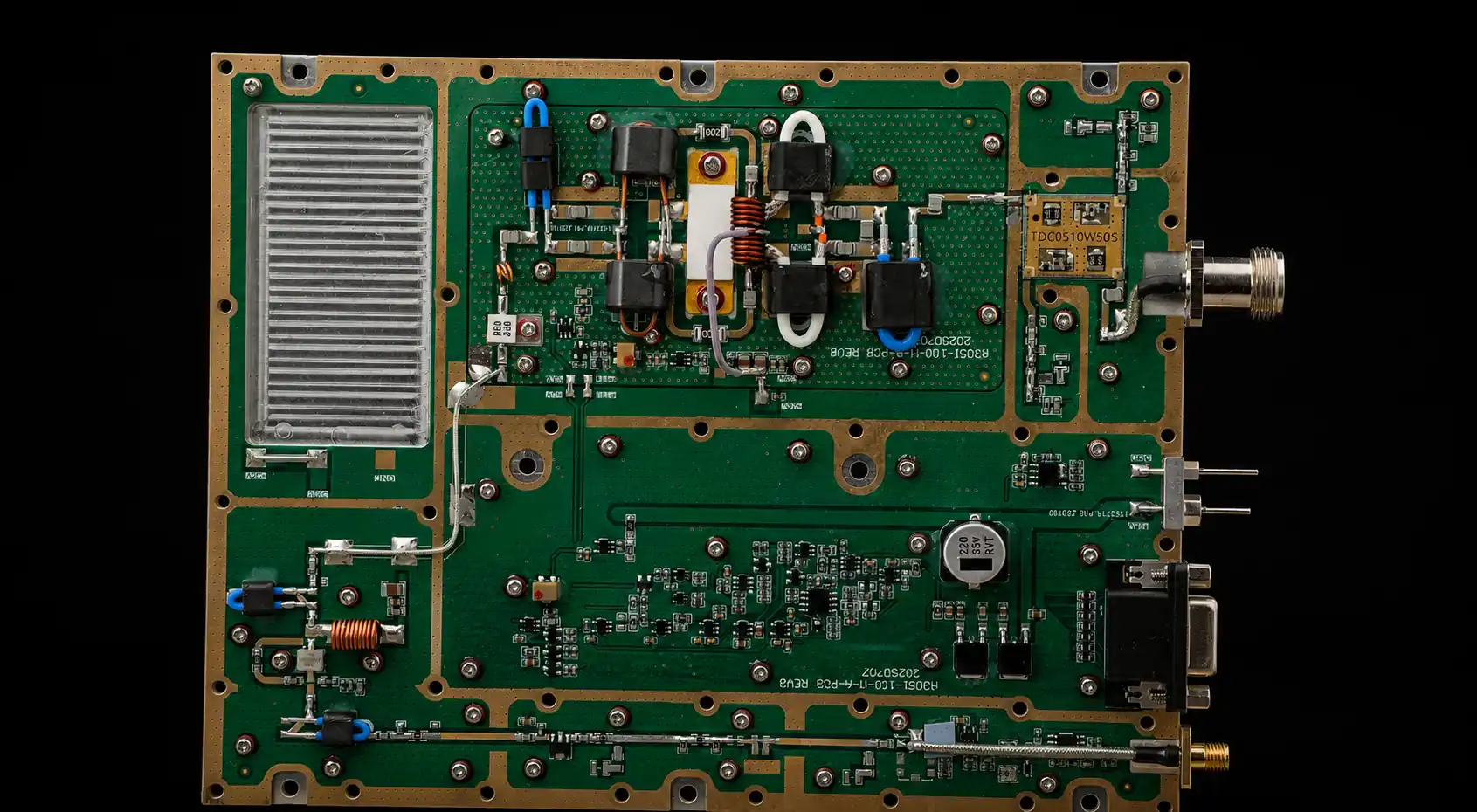
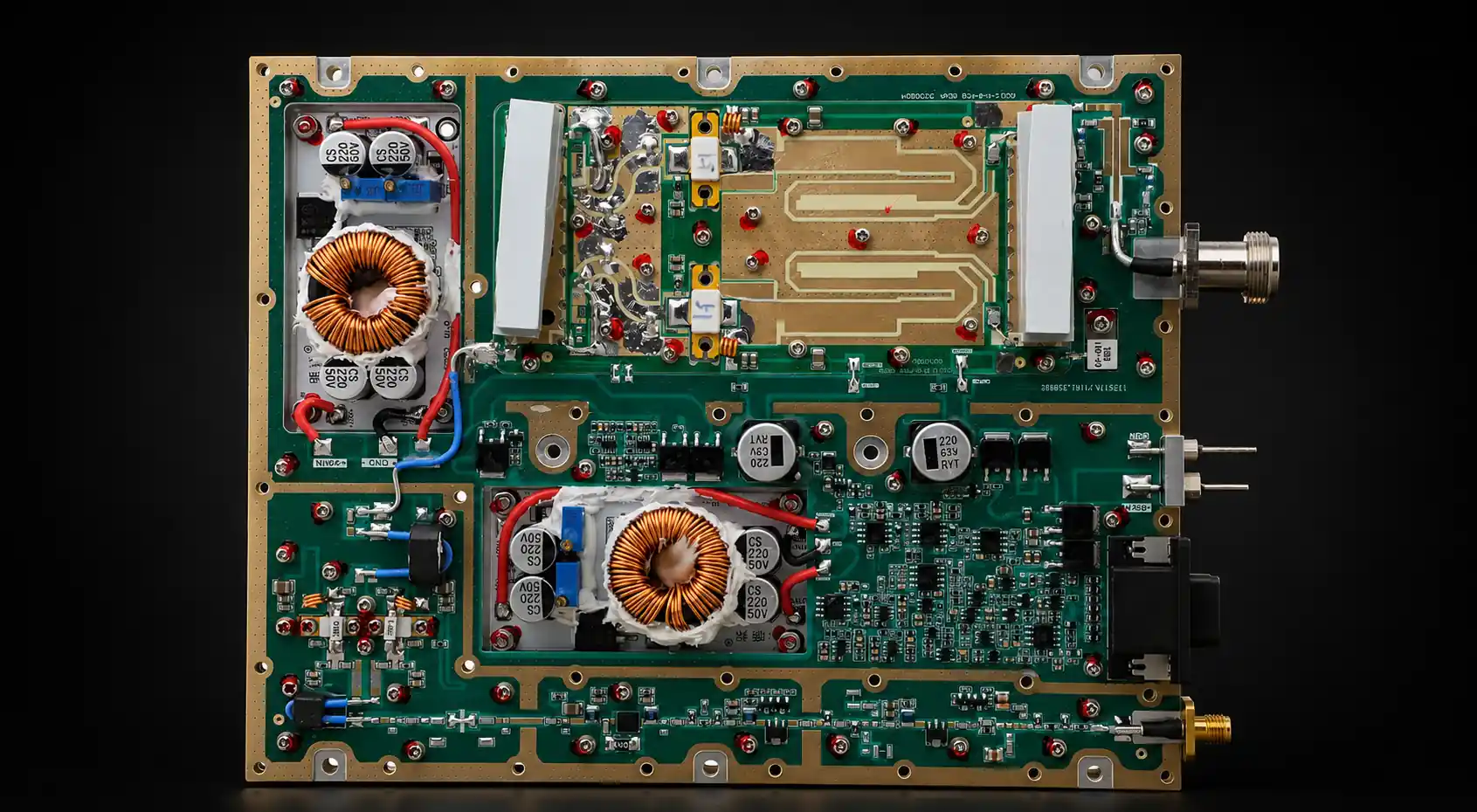
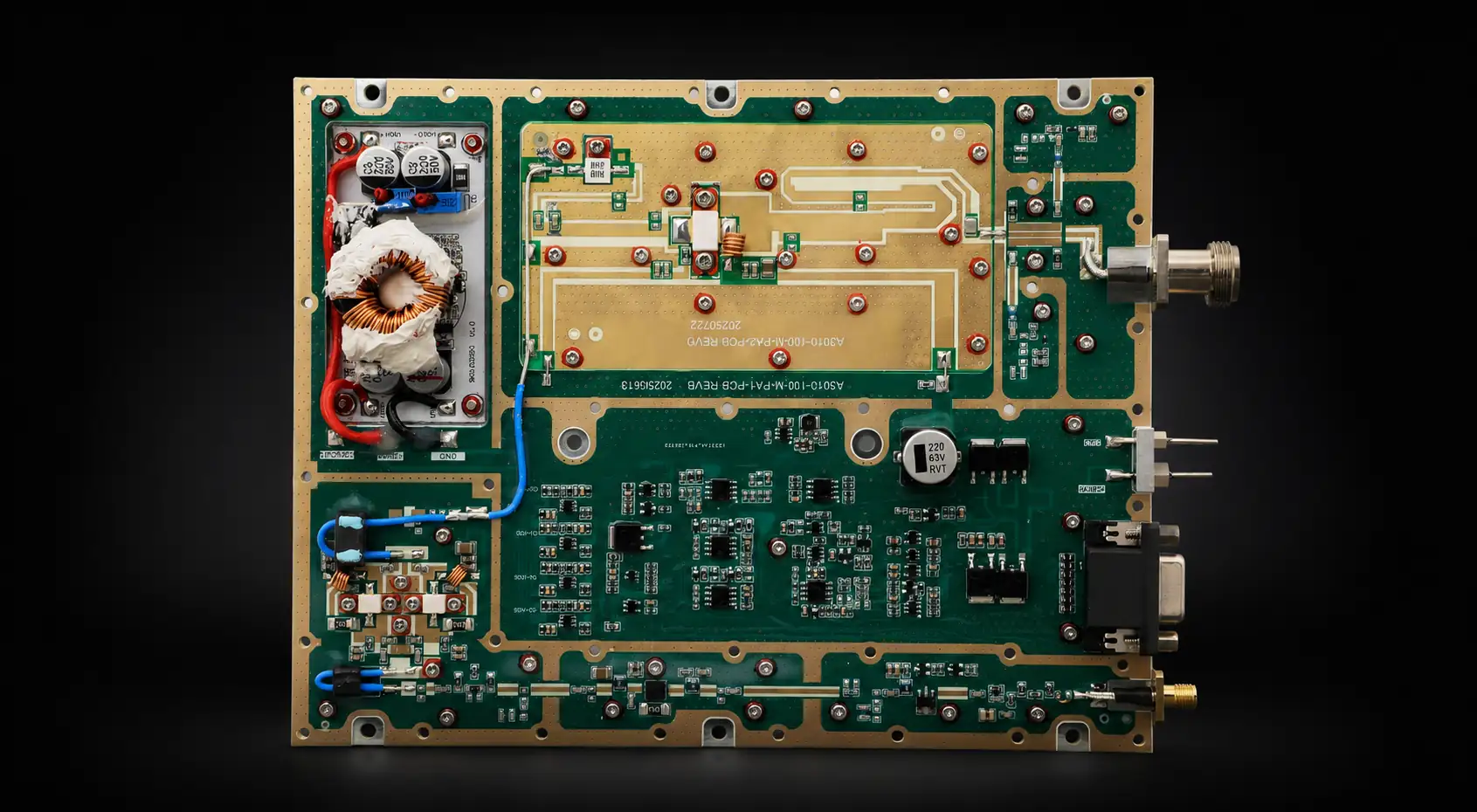

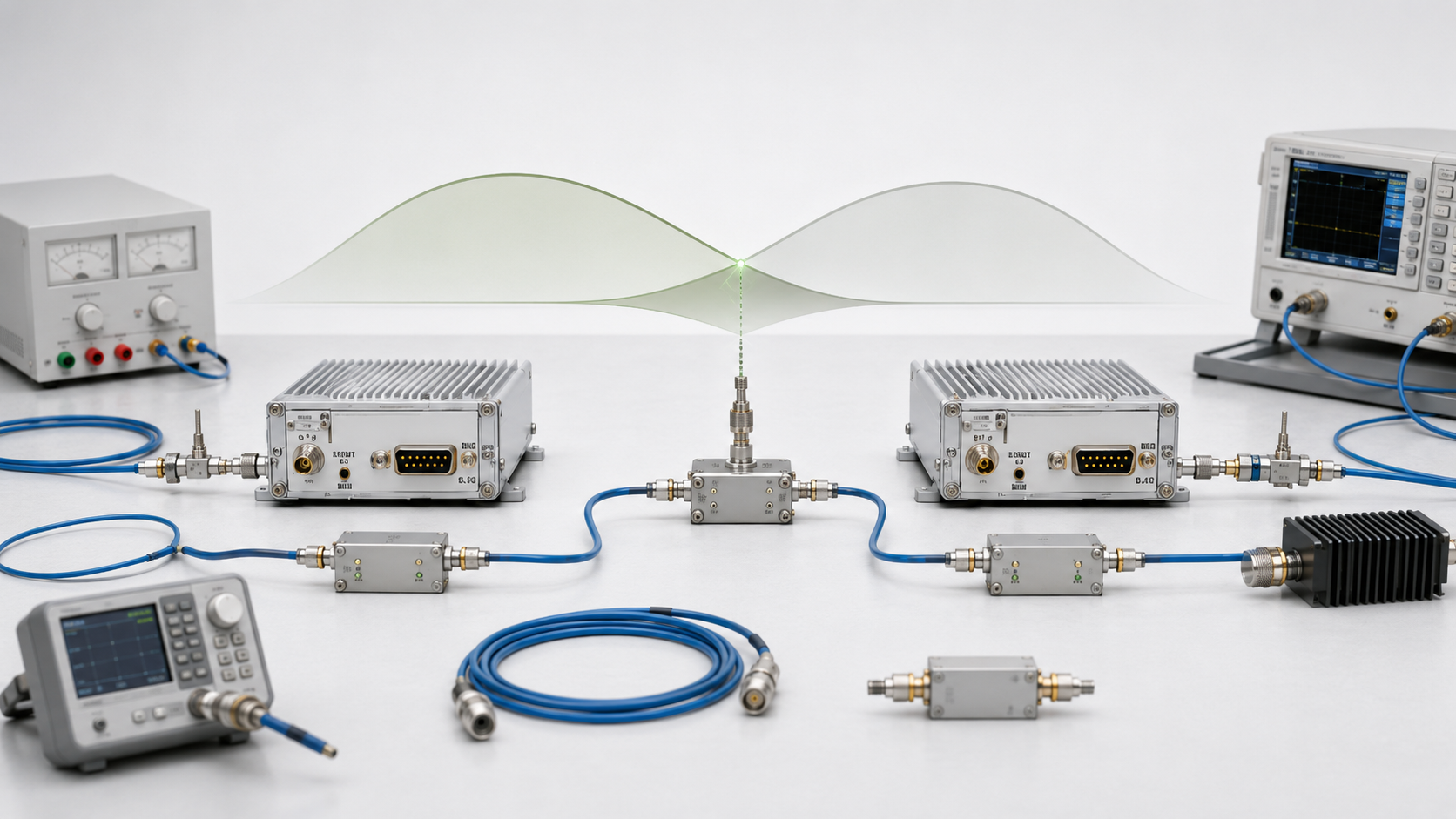
RF PA overlap can make a multi-module frequency plan look safer—and still leave a required transition point without a clearly approved path.
Two adjacent modules may both list the same frequency. But catalog overlap does not prove that either path meets the required output after filter and switch loss, voltage drop, thermal stabilization, or antenna-path effects.
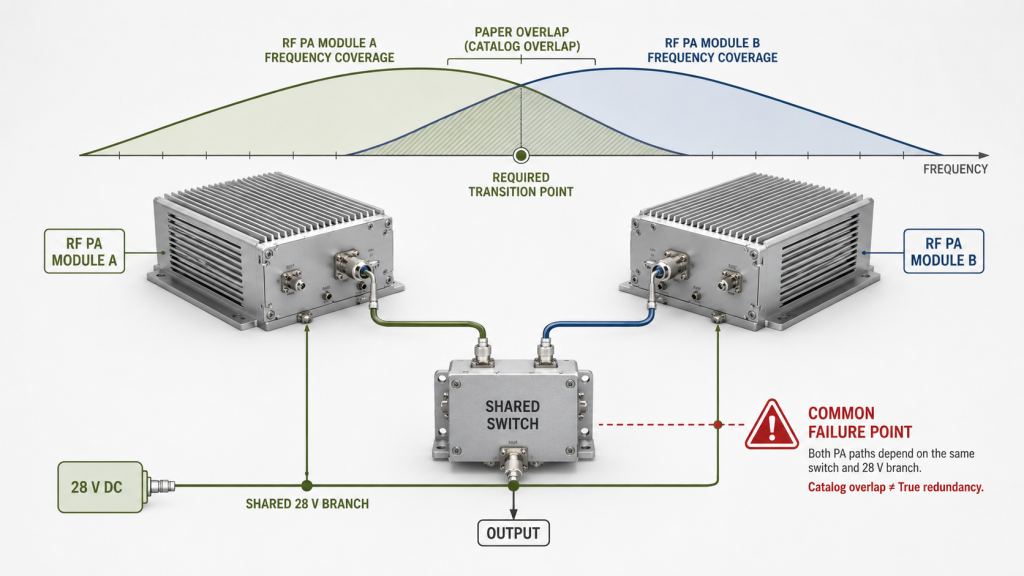
Even when both PA modules pass at the same frequency, the system may still lack real fallback capability. The paths may share the same failed switch, controller, 28 V branch, feeder, antenna, cooling route, or control logic.
Overlap also has a cost. A wider shared range can add PA hardware, DC demand, cooling load, switching states, alarm logic, and acceptance work without improving any project-critical frequency.
RF Power Amplifier Modules should therefore be compared at the required transition points—not approved because two published frequency ranges happen to cross.
Before adding overlap, the project must answer one question:
Which required transition points gain a stronger verified path from overlap—and which only gain duplicate coverage?
All frequency, operating, and deployment requirements must follow the customer’s lawful authority and approved spectrum plan.
1. What RF PA Overlap Must Solve
RF PA overlap exists when two PA modules or controlled RF branches cover part of the same frequency range.
That shared range can represent three different engineering conditions.
Paper Overlap
Paper overlap exists when two published frequency ranges cross.
For example, Module A may be rated up to a defined upper frequency while Module B begins below that point. The datasheets therefore show a shared window.
This proves only that the rated ranges overlap.
It does not prove:
- required output at the transition point;
- adequate margin after RF-path loss;
- stable hot-state operation;
- acceptable loaded voltage and current;
- compatibility with the installed filter, switch, feeder, or antenna;
- or an approved operating owner.
A shared rated range is not automatically a shared usable range.
Usable Transition Overlap
Usable transition overlap exists when at least one approved path meets the project requirement at every required transition point.
The project must define:
- the required frequencies;
- the output target;
- the agreed measurement reference;
- the permitted RF path;
- the operating state;
- and the acceptance limit.
If Module A loses usable margin before Module B becomes acceptable, the system still has a transition gap even when the catalog ranges overlap.
When overlap is claimed only for continuity, one approved path at each required point may be sufficient.
When overlap is also claimed as backup coverage, both the primary and secondary paths must meet the requirement at every frequency where fallback is permitted.
Functional Redundancy
Functional redundancy requires more than two PAs that can operate at the same frequency.
It exists only when:
- both paths meet the required performance;
- the secondary path has an approved operating role;
- the fallback trigger is defined;
- and the secondary path remains usable across the claimed failure boundary.
Two verified PA modules do not create an independent fallback when they still depend on the same failed:
- switch;
- controller;
- DC branch;
- filter;
- feeder;
- antenna;
- cooling path;
- or enable logic.
The RFQ must therefore state what failure the backup path is intended to survive.
A second PA should not be called a backup merely because it can generate RF at the same frequency.
2. When Is RF PA Overlap Worth Adding?
Overlap is useful only when the shared frequency window addresses a real transition, availability, or maintenance requirement.
It should not be added simply because wider overlap looks safer in a coverage chart.
Conditions That Can Justify Overlap
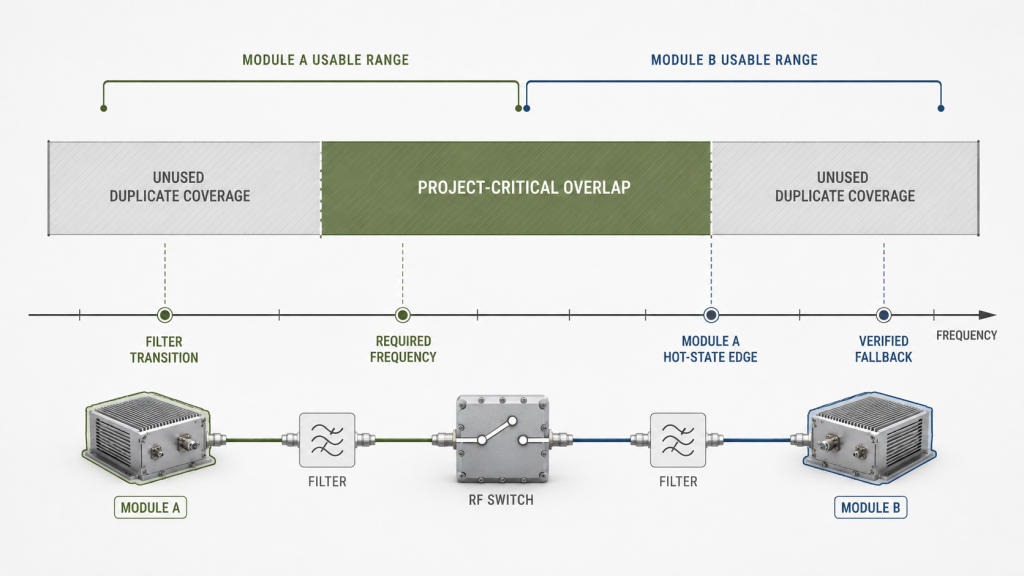
Overlap may be useful when:
- a required frequency lies near the usable edge of one module;
- a filter or switch transition reduces primary-path output;
- one PA loses hot-state margin near the handoff region;
- a verified fallback path is required;
- maintenance must occur without losing a required frequency;
- or a future replacement needs a controlled transition window.
Border, coastal, airport, vehicle-mounted, and fixed-site systems may all face these conditions. The application name alone does not justify overlap.
The decision must come from required frequency points, installed-path behavior, and the intended operating state.
Projects that have not yet identified where continuity may fail should first complete an RF PA frequency-gap review before adding duplicate coverage.
Conditions Where Overlap Adds Limited Value
Overlap may add little value when:
- no required point lies inside the shared range;
- the secondary branch has not been tested;
- both paths share the same weak antenna or feeder;
- both paths depend on the same likely failure point;
- the overlap exists only to make the band plan look continuous;
- a nearby protected boundary increases filter or control complexity;
- or the cabinet, DC, cooling, and acceptance burden exceeds the operational benefit.
Overlap cannot correct a weakness that both paths share.
If both PAs use the same unsuitable filter, lossy feeder, mismatched antenna, or unavailable switch route, the second PA does not create useful redundancy.
RF PA Overlap Decision Matrix
| Project Condition | Is Overlap Useful? | Main Risk | Evidence Needed |
|---|---|---|---|
| Required point near one PA edge | Often | Weak edge output | Same-point comparison |
| Filter transition crosses a required point | Possibly | RF-path roll-off | Complete-path result |
| Verified fallback is required | Often, if the backup survives the defined failure | Common-cause dependency | Primary, backup, and failure-boundary evidence |
| No required point lies in the shared range | Usually not | Added cost without value | Engineering justification |
| Both paths share the same weak antenna route | Limited | No end-to-end redundancy | Installed-path evidence |
| Protected boundary is nearby | Project-dependent | Filter and control complexity | Approved boundary and operating state |
The decision should be based on what overlap proves at required frequencies—not on the width of the shaded area in a frequency chart.
3. How Much RF PA Overlap Is Enough?
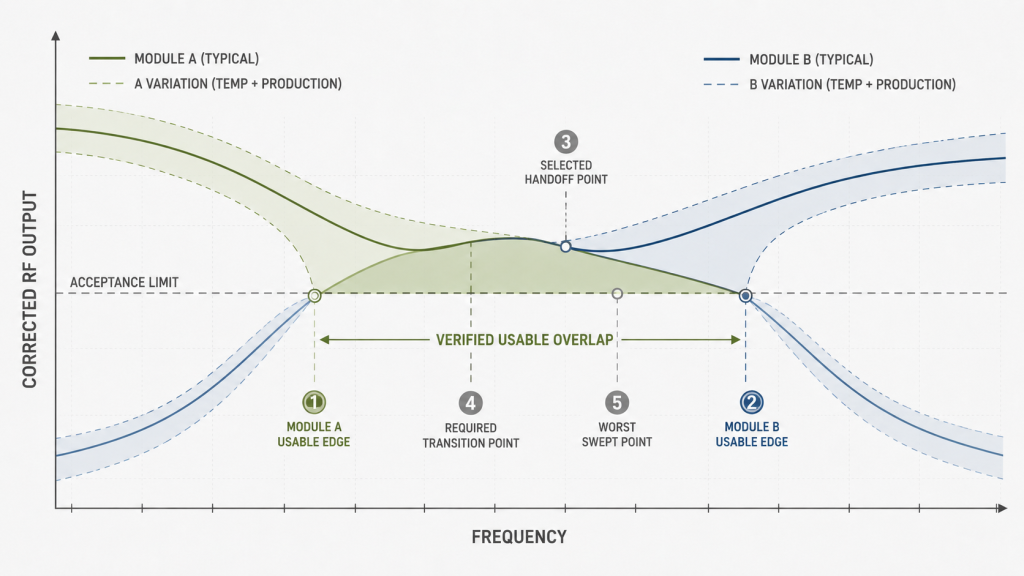
There is no universal overlap width in MHz.
A suitable overlap window depends on the actual transition problem, the required operating states, and the amount of verified margin available at the band edges.
The review should consider:
- required transition points;
- Module A usable upper edge;
- Module B usable lower edge;
- filter and switch transition behavior;
- antenna usable bandwidth;
- hot-state output;
- installed-path loss;
- protected boundaries;
- production variation;
- measurement uncertainty;
- and the test resolution needed to find the worst point.
Start With Required Frequency Points
The overlap window should be built around the frequencies the project must use.
A wide shared range has little value when no required point falls inside it. A narrow overlap can be sufficient when it covers the critical transition points with verified margin.
The review should identify:
- the last required point assigned to Module A;
- the first required point assigned to Module B;
- each project-critical point between them;
- the intended handoff point;
- and every point claimed for backup operation.
Compare Usable Edges, Not Catalog Edges
The rated edge of Module A is not necessarily its usable edge.
Output may decline because of:
- PA matching behavior;
- insufficient input drive;
- filter or switch loss;
- loaded-voltage drop;
- thermal derating;
- load mismatch;
- or protection foldback.
Module B may have similar limitations near its lower rated edge.
The usable overlap begins only where a path meets the defined project requirement. It does not begin where a datasheet range starts.
Include Production and Measurement Margin
An overlap boundary should not be approved from one unusually strong sample.
The review needs enough margin for:
- unit-to-unit PA variation;
- filter and switch tolerances;
- cable and connector variation;
- supply and thermal variation;
- path-correction uncertainty;
- and instrument uncertainty.
A handoff point that passes by only a small margin on one unit may not remain valid across production modules.
The overlap test should also use sufficient frequency resolution to locate the weakest point inside the shared window.
Entry, center, and exit measurements alone may miss a local output dip caused by matching ripple, filter transition, antenna mismatch, or the onset of protection behavior.
Do Not Use Width to Hide Undefined Ownership
A large overlap window does not remove the need for a defined owner.
Without an approved handoff rule, the project may not know:
- which PA is enabled;
- which path owns an alarm;
- when fallback is permitted;
- whether both paths may operate together;
- or which acceptance record controls release.
Enough overlap is:
The smallest verified window that gives every required transition point one approved path—and every claimed backup point a second approved path—with adequate margin for thermal state, installed-path loss, production variation, and measurement uncertainty.
Detailed wideband, narrowband, and mixed-module architecture decisions should continue through the C-UAS RF PA selection workflow.
4. Who Owns the Frequency Points Inside the Overlap Zone?
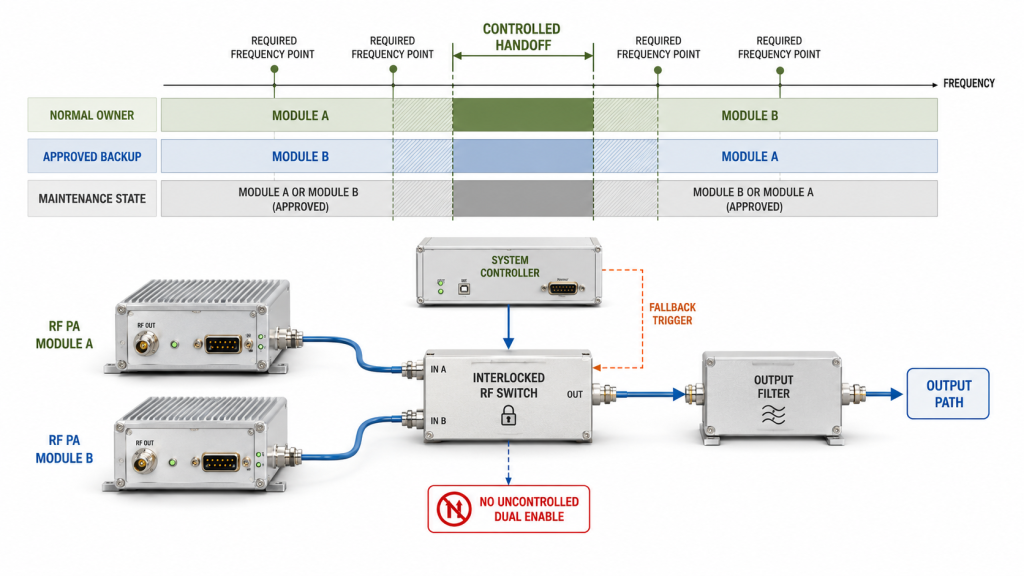
Every required frequency point inside the overlap zone needs an approved owner for each permitted operating state.
Ownership may change between:
- normal operation;
- approved fallback;
- maintenance;
- fault recovery;
- and controlled test mode.
It should not remain implicit.
Coverage Overlap
In a coverage-overlap arrangement, both modules include the same frequency in their rated ranges, but only one path is approved for normal operation.
The second path may have no released operating role.
This is a final operating configuration, not an open engineering comparison.
The configuration record should identify the approved owner by frequency or frequency range.
Backup Overlap
In a backup-overlap arrangement:
- one path is primary;
- one path is an approved backup;
- the failure or maintenance trigger is defined;
- the backup path has been verified;
- and the release record identifies both operating roles.
Fallback may be:
- manually commanded;
- automatically controlled;
- maintenance-only;
- or permitted only after a specific detected fault.
A backup path is not valid if the same fault disables both paths.
The project must therefore define both:
- the frequency range in which fallback is permitted;
- and the failure boundary the backup is expected to survive.
Selection Overlap
Selection overlap is a temporary engineering state.
Both paths are measured during design review, but only one is selected for the released configuration.
This can be useful when the preferred PA path is unclear near a module boundary.
Once the comparison is complete, the approved owner should be recorded. The released system should not retain ambiguous path ownership.
Simultaneous Operation
Frequency overlap does not automatically permit both PAs to transmit at the same time.
Simultaneous operation requires explicit approval because it may affect:
- switch state and isolation;
- filtering;
- antenna assignment;
- DC loading;
- cooling;
- coupling between paths;
- protection response;
- and control logic.
When simultaneous operation is not required, the released configuration should prevent an uncontrolled dual-enable state.
Minimum Ownership Record
The overlap-zone record should identify:
- required frequency or range;
- normal operating owner;
- approved backup path, if any;
- permitted operating state;
- fallback trigger;
- switching responsibility;
- whether simultaneous operation is allowed;
- alarm and recovery response;
- controlling configuration revision;
- and the applicable acceptance record.
RF SKYPOWER can review whether the shared window should be approved as a normal selection boundary, a verified fallback range, or unnecessary duplicate coverage before the PA and switch architecture is released.
5. What Evidence Proves the Overlap Zone Works?
Overlap approval should compare the relevant paths at the same required frequencies and under equivalent engineering boundaries.
It should not rely on two unrelated datasheet sweeps.
Use Comparable Reference Planes
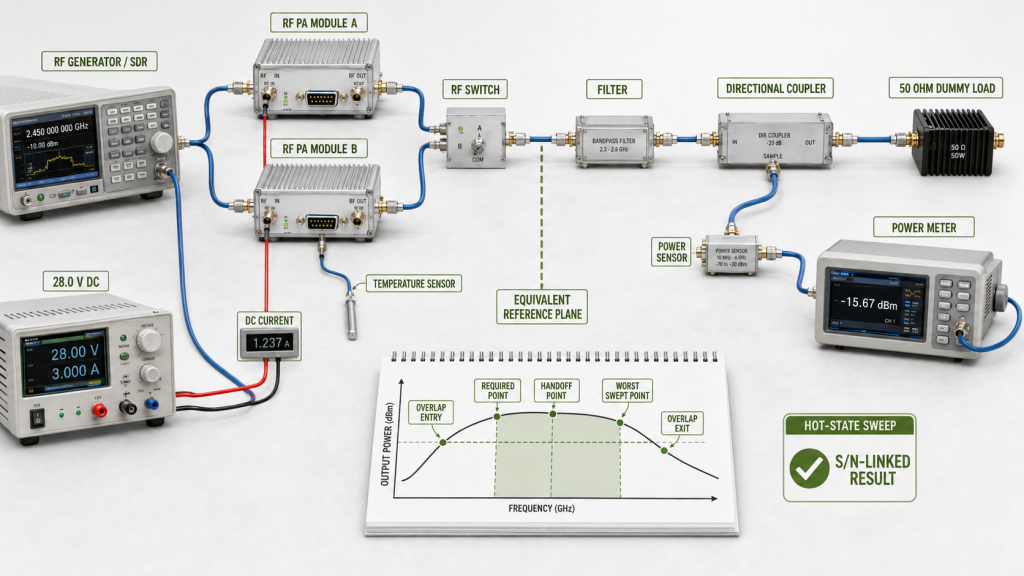
Module A and Module B should be compared at the same agreed reference plane—or at clearly corrected equivalent reference planes.
The comparison boundary should include:
- the same required frequency;
- defined input-drive conditions;
- loaded module-terminal voltage;
- stabilized thermal state;
- the complete selected RF path;
- the applicable load or antenna condition;
- and the same acceptance limit.
A result measured at one PA connector should not be compared directly with a result measured after another path’s cable, switch, or feeder unless the path corrections are defined.
Test the Points That Control the Decision
The overlap review should include:
- the overlap entry;
- all project-critical points;
- the selected handoff point;
- the worst point identified by the sweep;
- and the overlap exit.
Additional points may be needed where:
- a filter transition occurs;
- antenna match changes quickly;
- a protected boundary is nearby;
- or the backup owner changes by operating state.
The worst swept point matters because the weakest location may not be the center or either edge of the overlap zone.
Keep Each Result Traceable
Each comparison result should remain traceable to:
- the module S/N;
- the controlled configuration;
- the complete RF path;
- the applied operating condition;
- the corrected result;
- and the acceptance conclusion.
Detailed test setup, path corrections, and hot-state sweep methods should follow a controlled swept-frequency full-power RF PA test.
Where the installed feeder and antenna can change the result, approval should also include real antenna-chain checks rather than relying only on a 50 Ω dummy-load baseline.
Overlap Point Acceptance Matrix
| Test Point | Module A Margin | Module B Margin | Approved Owner | Decision Basis |
|---|---|---|---|---|
| Overlap entry | Result versus limit | Result versus limit | A / B | Boundary confirmation |
| Required target | Result versus limit | Result versus limit | A / B | Project-critical point |
| Handoff point | Result versus limit | Result versus limit | A / B | Approved transition |
| Worst swept point | Result versus limit | Result versus limit | A / B | Minimum measured margin |
| Overlap exit | Result versus limit | Result versus limit | A / B | Boundary confirmation |
Margin should be stated relative to the applicable acceptance limit at the agreed reference plane.
If a backup path is claimed, both paths must remain traceable to the actual module, operating state, RF route, and release configuration.
6. What to Put in an RF PA Overlap RFQ
An overlap RFQ should define why the shared range is needed, which path owns each required point, and what evidence controls approval.
Without these boundaries, one supplier may quote a wider PA, another may add a second module, and a third may provide only nominal catalog overlap. The quotations will not represent the same engineering scope.
Why the Overlap Is Required
The RFQ should state whether the overlap is intended for:
- stronger transition performance;
- engineering path selection;
- verified fallback;
- maintenance availability;
- replacement flexibility;
- or nominal band continuity only.
These purposes require different hardware, control, and test scopes.
Which Frequencies and Paths Are Involved
The RFQ should identify:
- Module A required range;
- Module B required range;
- required transition points;
- claimed overlap window;
- selected handoff point;
- protected boundaries;
- normal owner by frequency;
- and the permitted backup range, if any.
The request should not ask only for “sufficient overlap.”
It should identify the frequencies where continuity, margin, or fallback must be proved.
Which Operating States Are Permitted
The RFQ should define:
- normal operation;
- permitted fallback state;
- fallback trigger;
- switching responsibility;
- whether automatic switching is allowed;
- whether simultaneous operation is prohibited or permitted;
- and the alarm and recovery response.
This prevents the same frequency from having two uncontrolled owners.
What Evidence Controls Acceptance
The acceptance boundary should define:
- output target and reference plane;
- input-drive condition;
- 28 V operating boundary;
- thermal state;
- complete RF path;
- load or antenna assumption;
- required comparison points;
- production or batch evidence;
- module S/N;
- acceptance limits;
- and configuration revision.
Define What Reopens Approval
Overlap approval should not remain valid after an uncontrolled hardware or path change.
The RFQ should state which changes require requalification.
These may include changes to:
- either PA model or revision;
- rated or assigned frequency range;
- filter or switch;
- cable or feeder route;
- antenna assignment;
- input-drive condition;
- output reference plane;
- control or fallback logic;
- simultaneous-operation rule;
- DC distribution;
- or cooling configuration.
A comparable supplier response should answer:
Is the overlap included for stronger transition performance, a verified fallback that survives the defined failure, future flexibility, or only nominal band continuity?
Conclusion
RF PA overlap is useful only when it improves a required transition point or creates a verified secondary path that remains usable across the defined failure boundary.
A shared catalog range alone does not prove continuity or redundancy. The project must identify the required points, compare both paths at equivalent reference planes, include thermal and production margin, find the weakest point inside the overlap window, define ownership for each permitted operating state, and control the changes that reopen approval.
RF SKYPOWER can support an early review of your RF PA overlap requirement. Send the adjacent PA ranges, required transition points, output target and reference plane, input-drive condition, 28 V boundary, thermal state, filter and switch path, antenna-path assumption, normal and backup ownership rules, defined failure boundary, protected bands, quantity, and required evidence.
Submit your overlap RFQ before approving the module boundary so the overlap window, path ownership, failure conditions, test points, and requalification responsibility can be reviewed together.