
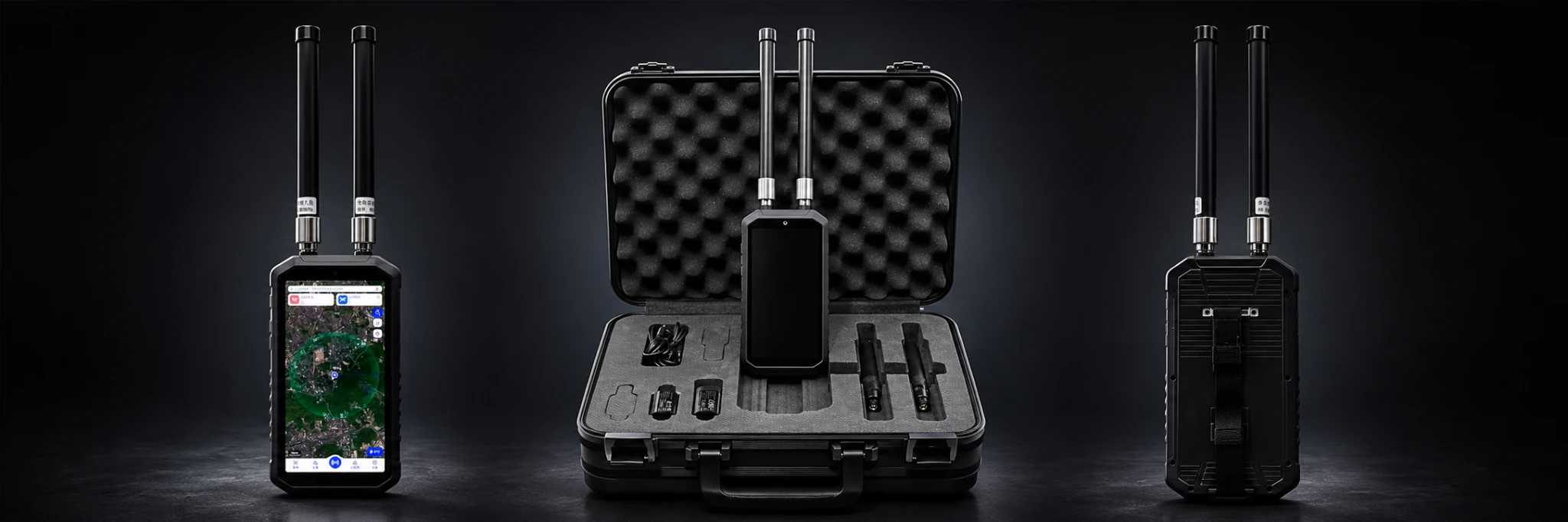


The drone detection system price depends on what the buyer needs to detect and report, where the equipment will operate, and what the supplier is contracted to deliver. A handheld receiver carried by a patrol team, a fixed installation monitored throughout the day, and a multi-sensor deployment require different equipment and support.
First identify whether each quotation covers a device, a commissioned site, or an operating system over a defined number of years. Then compare the prices against the same delivery scope.
1. What Is Included in a Drone Detection System Price?
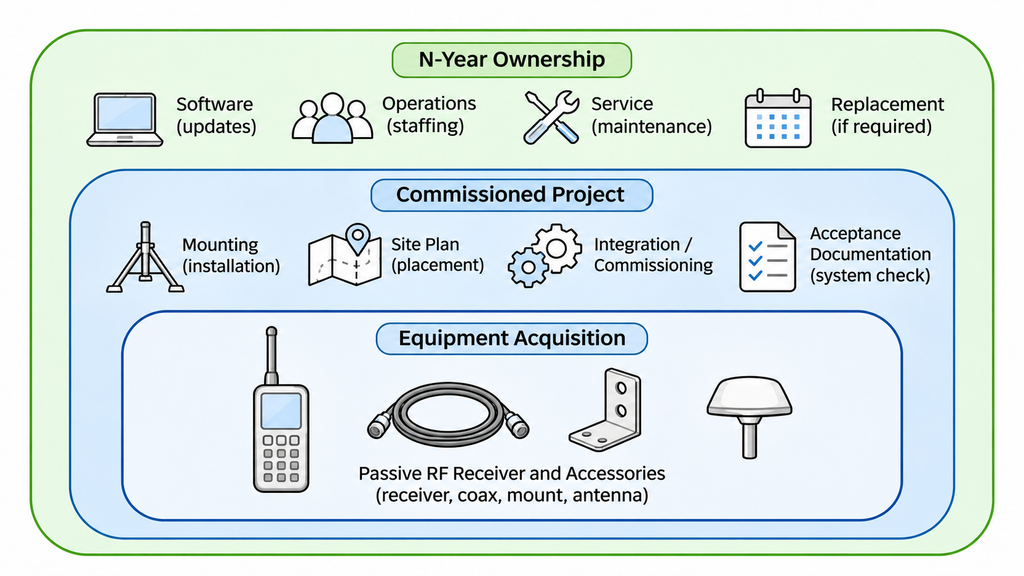
Start by identifying the unit being priced. A quote may cover one detector with its supplied accessories, several devices for a site, a commissioned installation, or equipment plus software and support for an agreed term. The equipment count alone does not define the purchased scope.
An equipment quotation covers the specified detector configuration and listed accessories, such as antennas or power supplies. A project quotation may add surveys, installation, commissioning, platform integration, training and acceptance tests. Total cost of ownership also includes applicable software, support, staffing, maintenance and replacements over the buyer’s planning period.
Keep the three cost views separate:
- Equipment acquisition: What is supplied and delivered as hardware and its stated accessories.
- Commissioned project: What it takes to make that equipment ready for the agreed site task, including assigned installation and acceptance responsibilities.
- Ownership over time: What the organization will spend to operate, support and eventually replace or expand the solution within its selected planning period.
Each quotation needs an equipment count, site count, delivery location, contract period, currency and exclusions. Mark an unlisted cost unconfirmed until the supplier assigns responsibility. Supplier A, for example, may quote detectors alone while Supplier B includes the same detectors, a site survey, commissioning and a defined software term. Compare their totals after accounting for those differences.
2. How Do Sensor Type and Required Outputs Change the Cost?
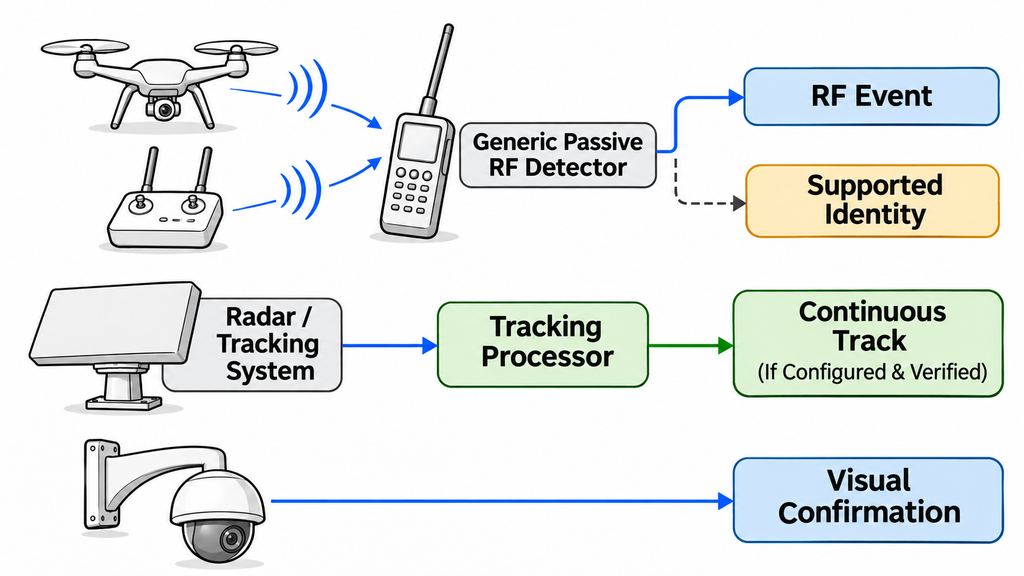
Specify the required output before requesting prices. An RF event alert, identifying information from a supported signal, a continuously updated track and visual confirmation are different deliverables. Each can require different equipment, processing, operator work or integration. Define acceptance conditions separately for an event alert and a continuous track.
For a mobile team conducting operator-managed checks, the HZ-HD03 Handheld RF Drone Detector is a passive RF option to evaluate. It uses passive RF/SDR reception and does not actively transmit an RF detection signal during detection. Assess it against the expected target signals, the information operators need and the site’s RF conditions. Include operator time in the handheld deployment budget.
A fixed installation also needs mounting positions, infrastructure, monitoring arrangements and any contracted interfaces. Radar, optical and combined-sensor proposals add their own equipment and confirmation workflows. Compare those proposals against the same required outputs and site responsibilities.
For an RF-only proposal, evaluate the target set against signals the receiver can observe and the system can recognize. If the project also requires observation of aircraft without usable supported RF transmissions, identify and price that requirement as a separate sensing capability.
If the detection approach is still open, define the required output and operating model first. The guide to choosing between RF, radar and multi-sensor detection covers that selection. Price the resulting task and system scope.
3. How Do Coverage Zones and Sensor Count Affect the Budget?
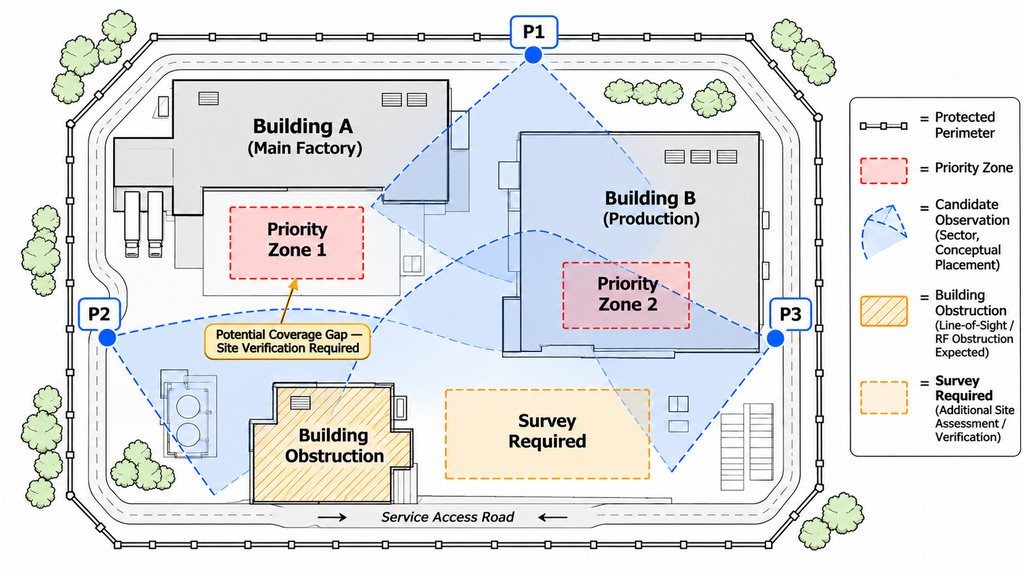
Two sites of similar size can need different budgets. Protected zones, target approach directions, buildings, terrain, mounting positions and local RF activity affect the deployment. Define coverage through agreed site conditions and evidence; an advertised maximum distance cannot establish whole-site coverage.
Mark the site boundary and priority observation areas on a plan. Specify target and signal conditions, approximate target heights, required outputs and operating hours. Ask the supplier to show its placement assumptions, necessary overlap, alternative observation points and any redundancy against equipment failure.
For an RF-based proposal, receiver and antenna position, obstruction and the site’s changing RF environment can affect where usable events are observed. Price handheld patrols against their actual routes and staffing schedules; price fixed observation against defined positions and operating hours.
Request a device count together with the zone map, survey assumptions and proposed validation scenarios. Where the supplier has not examined the site or the test conditions remain open, treat the count as provisional. That keeps the hardware budget tied to a coverage requirement the project can test.
4. What Installation and Integration Work Must Be Priced?
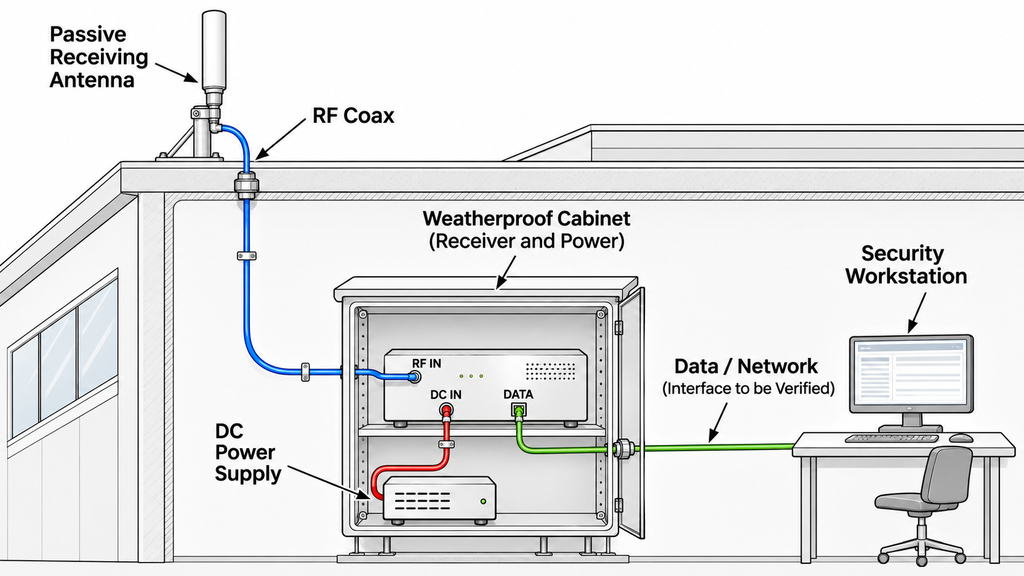
For fixed sites, the installation budget depends on who provides the mounts, environmental protection, access, power, communications, enclosures and commissioning. The detector supplier, a local installer and the customer’s facilities team may each own part of that work.
If a security platform must receive alerts or event records, specify the required interface, access controls, implementation owner and handover test. Ask for evidence that the proposed detector configuration supports that interface.
For each item, record who supplies it, who installs it, who verifies it and who pays for it. Identify customer-provided power, networking, mounting and third-party platforms. Set terms for extra survey work, commissioning visits and corrective work.
For an HZ-HD03 handheld quotation, keep its confirmed passive RF role distinct from requests for central servers, unattended networking, APIs, automatic third-party actions or long-term data storage. Require model-specific documentation before treating any such feature as included.
5. How Do Software Licenses and Protocol Updates Affect Ongoing Costs?
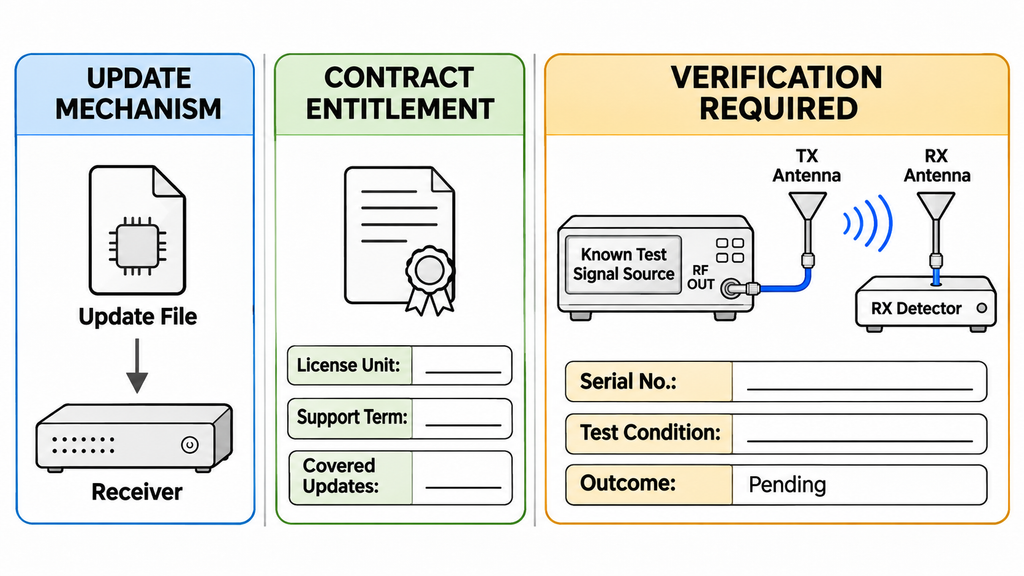
Software costs continue after hardware delivery when the contract requires renewals, support or paid updates. Ask what the license covers, whether it applies per device, site, user or platform, how long it lasts and what renewal costs apply. Use the supplier’s stated licensing unit in every comparison.
Distinguish three different forms of support:
- An equipment or software update mechanism exists.
- A particular update and support service is included in the purchased contract for a specified period.
- A newly encountered target or signal can be recognized to the agreed standard after a particular update.
An update mechanism shows how software can be delivered. The contract defines the support period and covered changes. Verification records establish whether an update recognizes a newly supported signal or target under agreed conditions. For RF detection, document the terms for firmware and protocol-library changes against the actual product.
Request a schedule of license units, initial entitlements, update types, installation responsibility, verification work, renewal charges and end-of-term rights. Price subscriptions or extensions over the same evaluation period as other bids. Mark missing terms for supplier confirmation.
6. What Do Staffing, Training, Warranty, and Service Add?
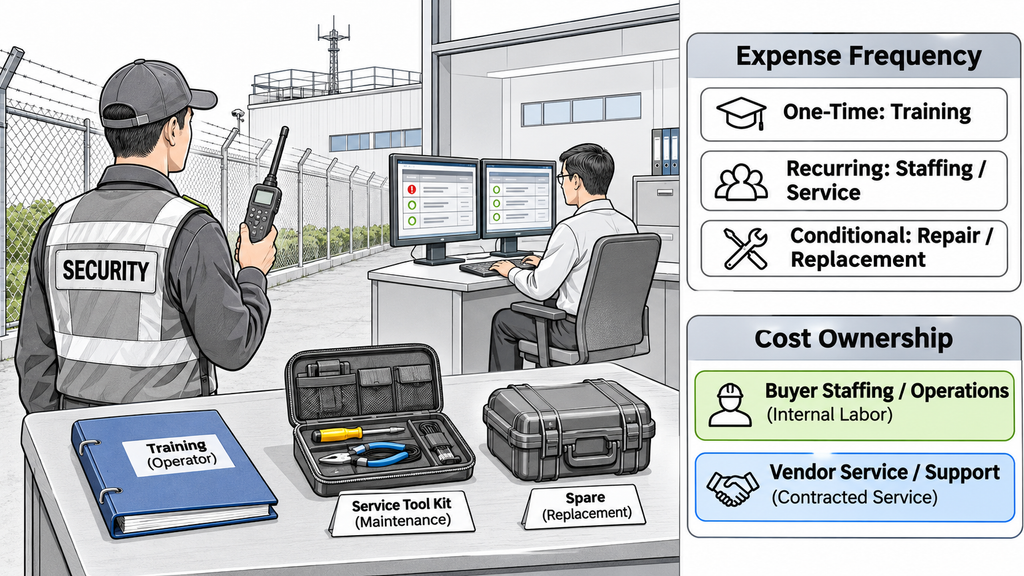
Handheld patrols need operators and a defined schedule. Fixed systems may also need staff to review alerts, maintain records and handle escalation. Budget that labor against the operating plan as a buyer-owned cost, even when the supplier’s quotation excludes it.
Training may include initial operator instruction, supervisor handover and refreshers when staff or procedures change. Specify the provider, participants, sessions, location and deliverables. Account for the buyer’s staff time separately.
For warranty and service, confirm covered components and faults, the start date and term, repair location, shipping and technician travel charges, and support during equipment downtime. Identify spares and replacement units as included, optional or separately quoted.
Classify each expense as one-time, recurring or conditional. Initial training may be one-time; staff and contracted support recur; repairs, travel and replacements depend on the agreed conditions. Keep vendor charges separate from internal operating costs and count each item once.
7. How Can Buyers Compare Total Cost Across Quotes?
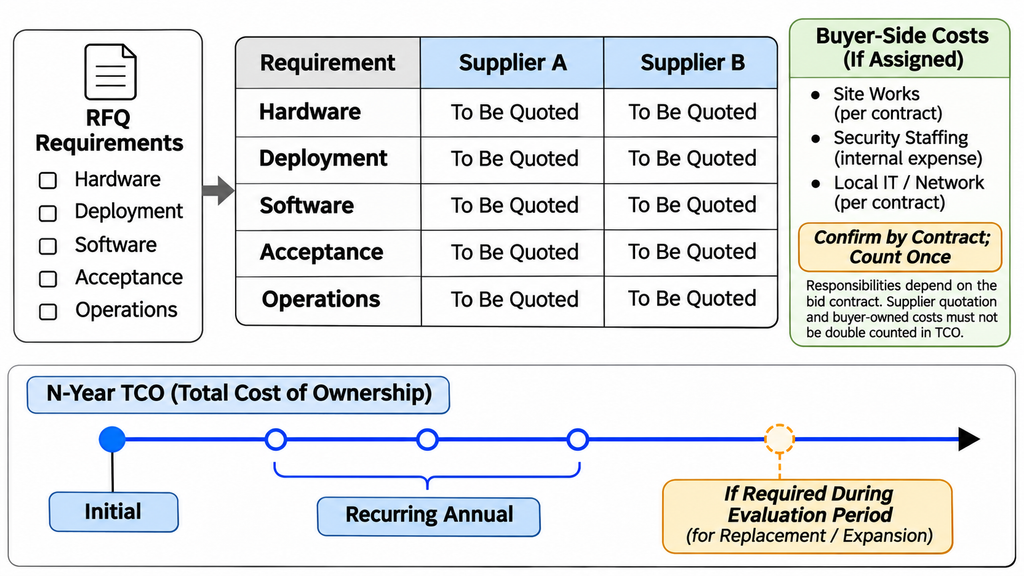
Give suppliers the same output requirements, target and site conditions, coverage zones, operating schedule, evaluation period and acceptance scope. Align currency, tax treatment, delivery location, logistics and cost ownership. Only then can a lower total support a purchasing decision.
Use the matrix to compare written quotations. Enter supplier fees in the price columns; estimate buyer-owned labor, utilities and internal expenses separately for TCO. The blank price fields remain To Be Quoted until suppliers confirm their scope.
Drone Detection System Quote Comparison Matrix
| Cost Block | Quote Basis | One-Time or Recurring | Supplier A | Supplier B | Inclusions, Exclusions & Evidence |
|---|---|---|---|---|---|
| Detector hardware and accessories | Specified model, configuration and device count | One-time; replacement if required | To Be Quoted | To Be Quoted | Included antennas, power items, accessories and product documentation |
| Coverage, site survey and deployment planning | Sites, protected zones and agreed survey conditions | One-time; repeat if scope changes | To Be Quoted | To Be Quoted | Site map, placement assumptions, survey and coverage-validation responsibility |
| Installation and infrastructure | Mounting, access, power and communications per site | Mainly one-time; utility costs may recur | To Be Quoted | To Be Quoted | Supplier, installer and buyer work packages; infrastructure exclusions |
| Integration and data interfaces | Named platform, interface and handover tests | One-time; support may recur | To Be Quoted | To Be Quoted | Confirmed interface, third-party responsibility and integration evidence |
| Software licenses and updates | License units, covered services and selected term | One-time or recurring as contracted | To Be Quoted | To Be Quoted | Entitlements, update scope, renewals and end-of-term conditions |
| Training and warranty | Included participants, sessions and coverage terms | One-time; extended service may recur | To Be Quoted | To Be Quoted | Training records, warranty exclusions and repair responsibilities |
| Operations and maintenance | Vendor service scope and buyer operating assumptions | Recurring | Vendor fee: To Be Quoted | Vendor fee: To Be Quoted | Estimate buyer staffing, utilities and internal administration separately; include each cost in TCO once |
| Acceptance and retesting | Factory/site tests and assigned corrective-work scope | One-time; retests may be conditional | To Be Quoted | To Be Quoted | Test plan, agreed criteria, evidence records and retest payer |
| Spares and replacements | Approved spare quantities and planning assumptions | Initial or conditional over the term | To Be Quoted | To Be Quoted | Ownership, replacement triggers and delivery assumptions |
Choose an evaluation period of N years before calculating total cost of ownership:
TCO(N) is an undiscounted planning total in a consistent currency and price basis. Initial cost includes equipment, deployment, integration, training, acceptance and any license or service charges paid upfront. Each annual term includes only charges due that year: recurring licenses, contracted services and buyer operating costs. Add planned replacements or expansion within the selected period. Record prepaid multi-year packages, taxes, freight and other charges once, under the applicable cost item. If payment timing differs materially between bids, use the buyer’s approved present-value method consistently for the financial ranking. A three- or five-year comparison period is a buyer’s planning choice, not a claim about equipment life or warranty length.
The comparison should end with one of three decisions:
- Comparable: Functional outputs, project boundaries, cost ownership, contract period and acceptance obligations align sufficiently for a total-cost comparison.
- Partially Comparable: Specific differences are visible and can be separately evaluated, but the totals still require a qualified interpretation.
- Not Comparable Yet: A material function, site condition, service term, price component or acceptance responsibility is missing or inconsistent. Request a revised quote before ranking prices.
For Not Comparable Yet, request the missing evidence and compare the revised quotations.
What RFQ and Acceptance Evidence Should Be Included in the Price?
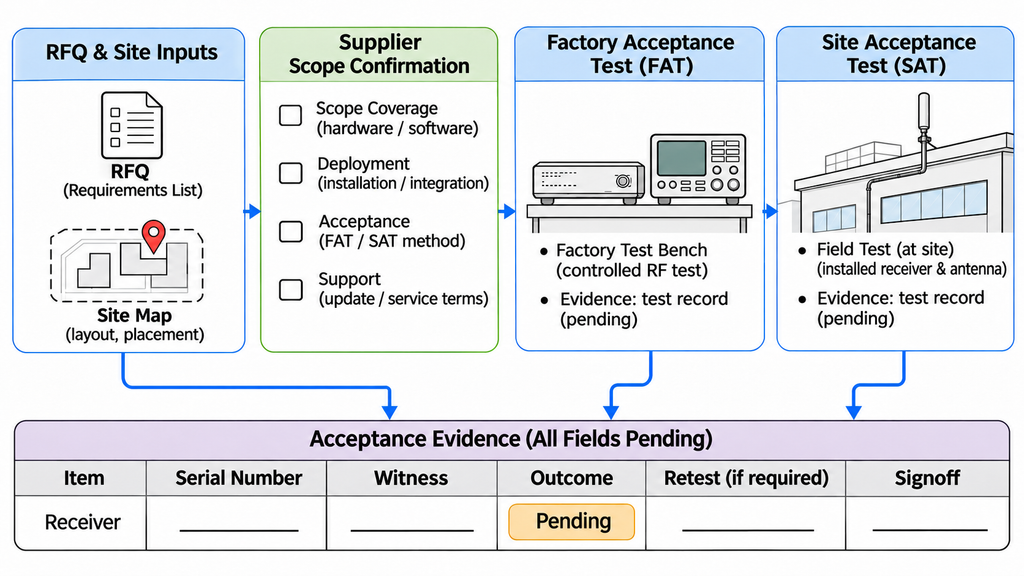
Give each supplier the same request for quotation (RFQ), including project conditions, required outputs and acceptance evidence. Require the price to identify included work, exclusions and responsible parties. Set performance targets and pass criteria in the project requirements.
Drone Detection System RFQ Scope Checklist
| Requirement | Buyer Input | Supplier Scope to Confirm | Evidence or Deliverable |
|---|---|---|---|
| Project country and sites | Country, site locations, site count and intended delivery window | Which locations, visits and deliveries are included | Site schedule and location-specific scope |
| Protected zones and priorities | Drawings, boundaries, priority approaches and constraints | Survey, proposed observation areas and coverage assumptions | Annotated zone map and survey basis |
| Target types and required outputs | Target scenarios; alert, supported identity, track or confirmation needs | Which outputs are supplied and under what conditions | Output specification and proposed test scenarios |
| Operating model | Staffed mobile checks or specified fixed observation schedule | Equipment and operating responsibilities for that model | Operating concept and role allocation |
| Device-count basis | Candidate positions, access, obstructions and reliability objectives | Proposed quantity, overlap and any redundancy | Placement assumptions and device schedule |
| Mounting, power and communications | Existing facilities, connectivity and site-access rules | Supplied infrastructure, installation work and buyer provisions | Installation scope and infrastructure exclusions |
| Platforms and interfaces | Named receiving systems, users, security and event-handover needs | Confirmed interfaces, integration owner and test responsibility | Interface statement and integration-test deliverables |
| Licenses, updates and service | Evaluation term and requested support coverage | License basis, covered updates, renewals and service scope | Written entitlement and support schedule |
| Training, warranty and spares | Operators, training locations and desired support arrangement | Training provision, warranty conditions, repairs and spare options | Training deliverables, warranty terms and spare-parts scope |
| Factory and site acceptance | Defined test conditions, required results and project-approved criteria | Factory checks, site trials, witnesses and evidence ownership | Factory Acceptance Test (FAT) and Site Acceptance Test (SAT) plans, test records and agreed sign-off documents |
| Remediation and retesting | Approval process for failed or incomplete acceptance items | Corrective-work ownership, schedule and retest charges | Remediation terms and retest records |
| Commercial and exclusions | Currency, taxes, delivery terms, logistics and required breakdown | Itemized pricing, third-party charges and exclusions | Formal quotation, assumptions and responsibility schedule |
Factory checks establish whether contracted devices, configurations and documents meet the agreed equipment requirements. Site acceptance evaluates the installed or operated solution under defined locations, targets, RF conditions, observation windows and output requirements. Site-wide coverage claims require site-specific results alongside equipment records.
The RFQ should name the people responsible for testing, witnessing, recording evidence, corrective work and retesting costs. When the contract requires serial-number traceability, link each device to its serial number, test results and delivery acceptance. Agree detection thresholds, allowed false alerts and other pass criteria before testing.
Drone detection system price reflects the specified detection task and the cost of delivering it. Compare equipment-only, commissioned-site and N-year offers on their stated scope, operating conditions and contract responsibilities. Site coverage, supported target outputs, acceptance limits and actual prices still require project-specific evidence.
Before approving a budget, mark the protected zones on a site plan, define outputs and operating hours, choose the comparison period and assign responsibility for infrastructure, support and acceptance. Use the quote comparison matrix and RFQ checklist to identify gaps.
For a project-specific quotation, send RF SKYPOWER your site locations and zones, target and output requirements, operating schedule, infrastructure and integration needs, requested software support, training and warranty terms, acceptance conditions and delivery window. The RF SKYPOWER engineering team can review the scope and confirm which equipment and services can be quoted.